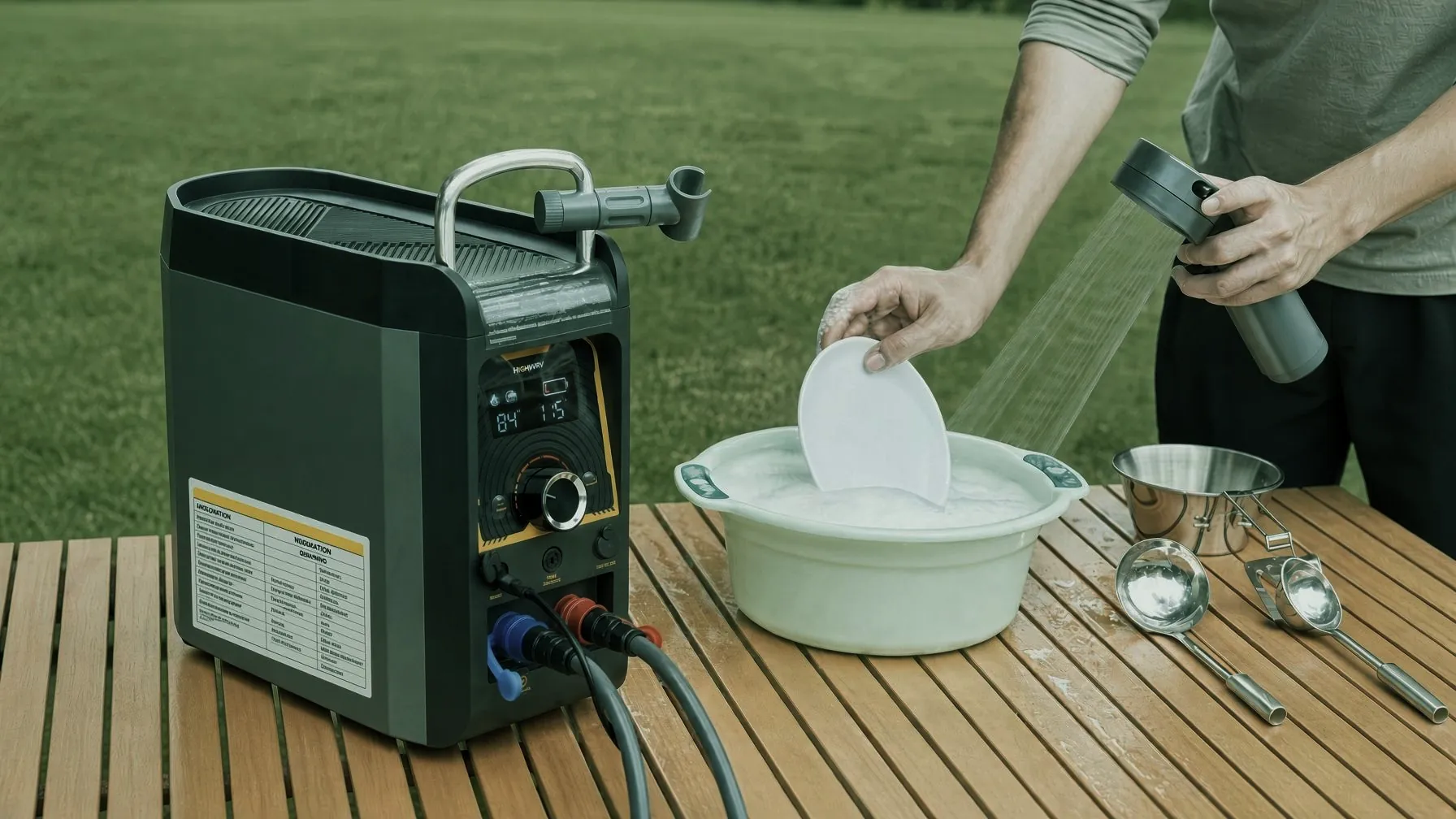
Portable water heaters · OEM / ODM
Portable Water Heaters Manufacturer, Built to Your Drawing
Gulfstone is an OEM portable water heater manufacturer in Shunde, Foshan — the district behind China’s gas-appliance cluster. Units certified for your market, one partner from first sketch to shipping container. The range runs to 20,000 BTU, the defect rate holds under 0.5%, and an engineering question gets a reply inside 48 hours.
- 4
- portable models
- 6–10 kW
- heat input
- IPX4
- enclosure rating
- 100%
- combustion-tested
The Shunde advantage
Why portable hot water comes out of one district.
Shunde, in Foshan, Guangdong, is one of the densest concentrations of gas-appliance manufacturing in the world — the district that made Foshan a household name in the category.
Within the district
- Heat-exchanger copper
- Shunde / Nanhai — mill stock and coil
- Gas valves & igniters
- Local valve and ignition suppliers
- Injection & die tools
- Tool shops within the district
- Carton & print
- Local pack and litho plants
- Test labs & certification
- Third-party and in-house chambers
- Port of departure
- Nansha / Yantian for container sailings
Parts that are not in anyone’s catalogue
A specific valve seat, a mesh grade, a masterbatch colour — suppliers here will tool a run for one appliance buyer, because two hundred other makers are on the same street.
Material provenance you can walk to
The copper and the gas-path valves come from named plants a short drive away — not through two trading layers. Ask where a batch of copper was drawn and the answer is a company and an address.
Capacity that grows next door
A volume increase in season two is met by an adjacent line in the same district, under the same audit — not a new factory halfway through your program.
The range
Compare every model on one sheet
Four portable models across camping and outdoor work — every figure below is the production spec.
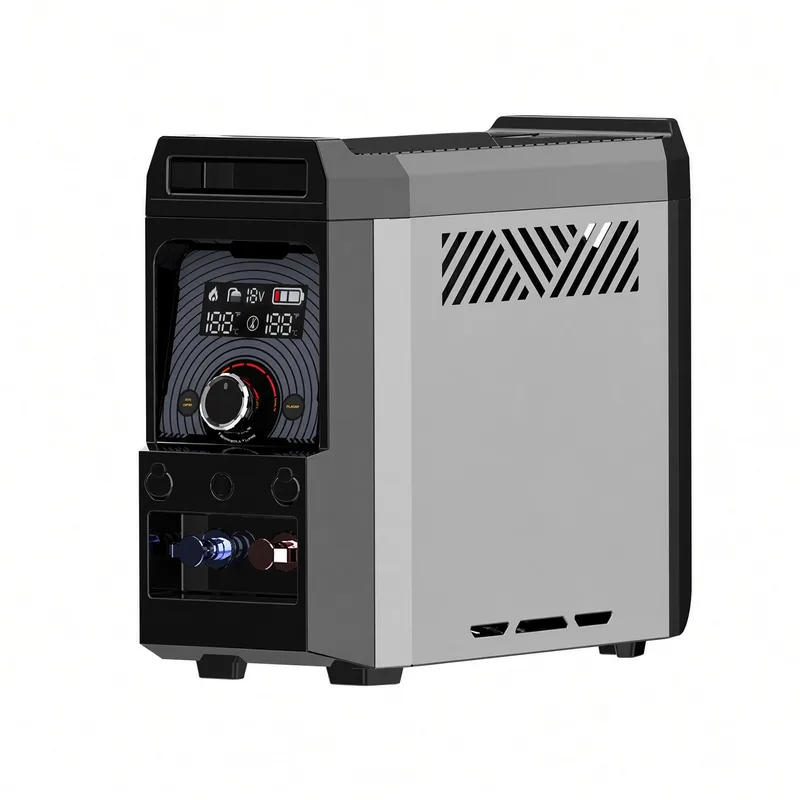
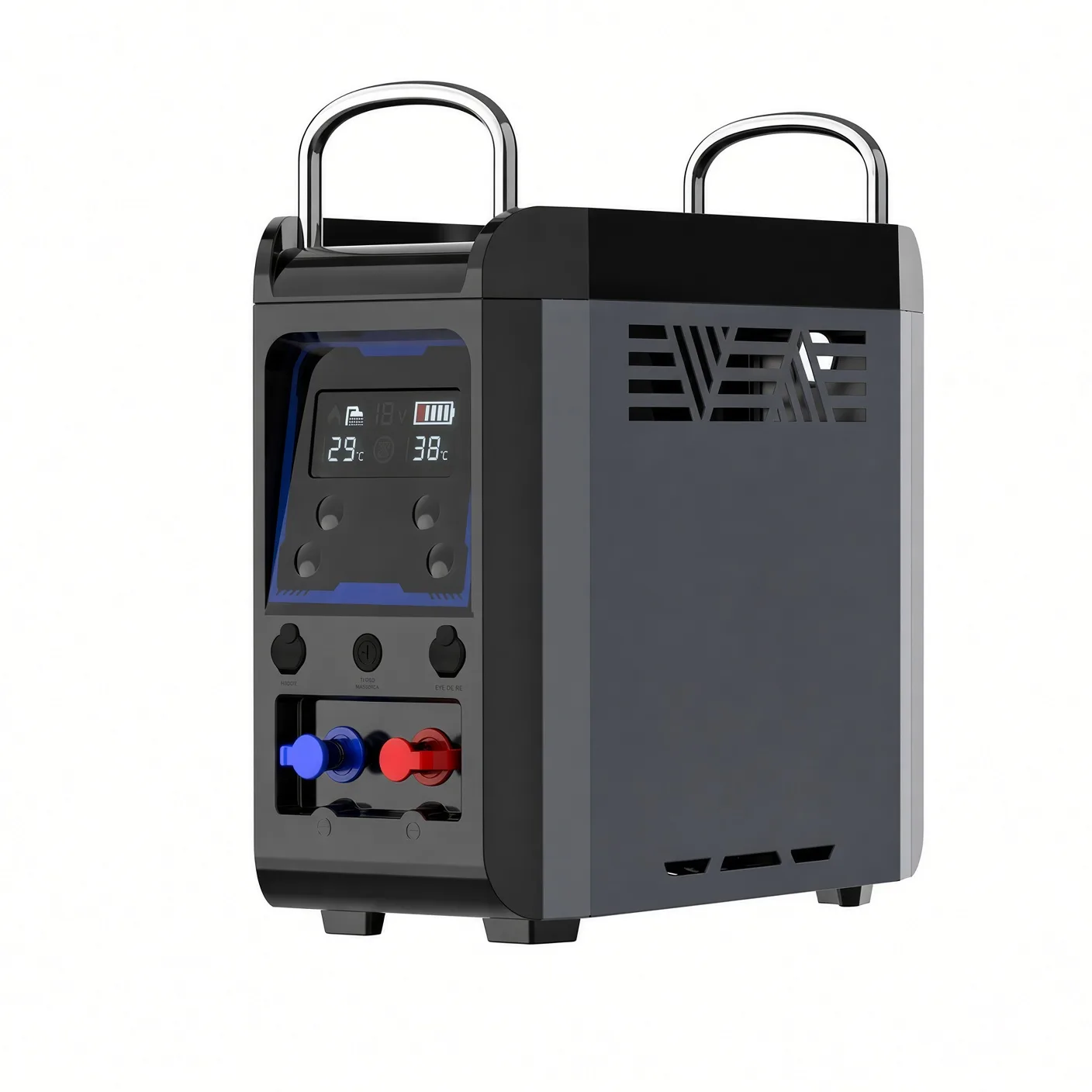
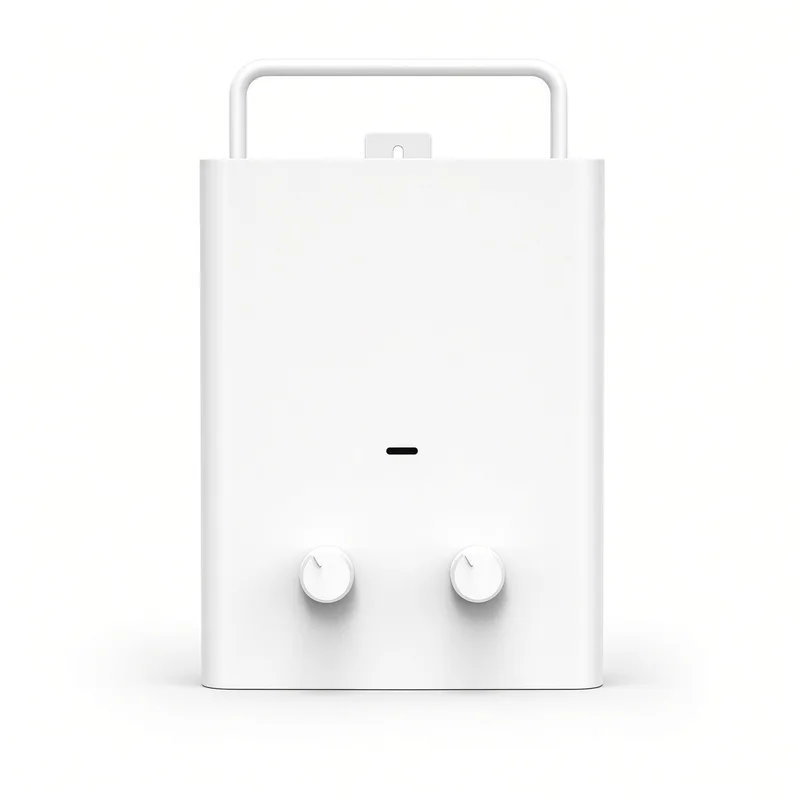
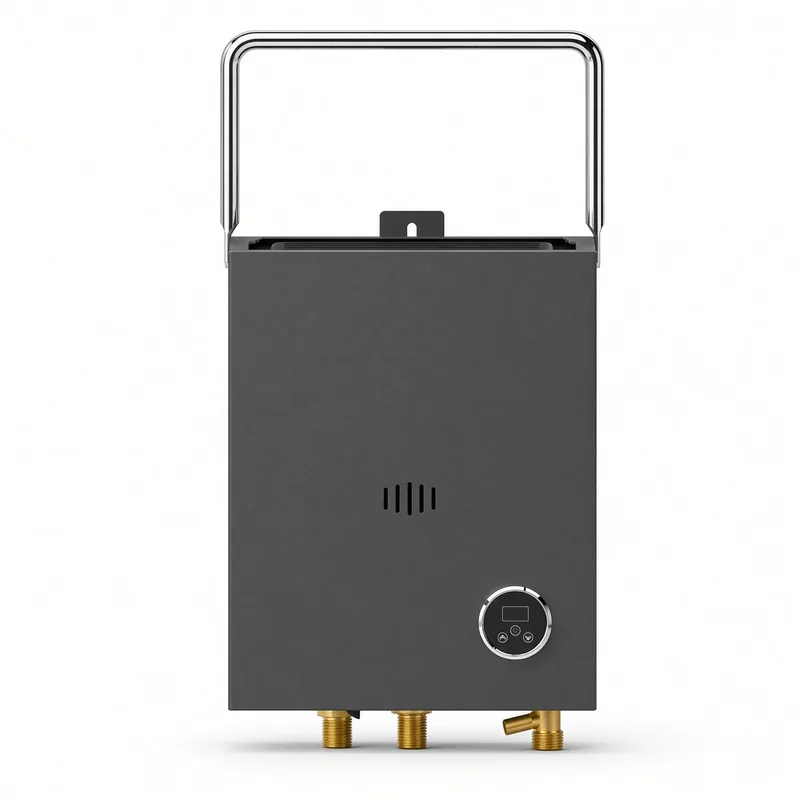
| Spec | Camping | Thermostatic | 5L Portable Gas | 4L Constant Temp |
|---|---|---|---|---|
| Dimensions | 400 × 170 × 318 mm | 400 × 170 × 310 mm | — | 370 × 290 × 116 mm |
| Application | Portable / camping | Portable / camping | Portable / camping | Portable / camping |
| Net weight | 6.1 kg | 6.2 kg | — | — |
| Material | PA66+GF | PA66+GF | Weather-resistant metal | Weather-resistant metal |
| Enclosure colour | — | — | Black / white | — |
| Heat input | 6 kW | 6 kW | 32,000 BTU/hr | 30 MJ/h |
| Gas consumption | 20 MJ/h | 20 MJ/h | — | 30 MJ/h |
| Gas type | Propane / LPG | Propane / LPG | — | Propane only |
| Gas pressure | — | — | — | 2750 Pa |
| Water flow | 2.2–3 L/min | 2.2–3 L/min | 5 kg/min (Δt=25K) | 4 L/min |
| Water pressure | — | — | 0.025–0.8 MPa | 0.06–0.45 MPa |
| Temperature setting | — | — | 35–51 °C | — |
| Main system voltage | DC 12V | DC 12V | DC 3V | DC 12V |
| Battery | 2500 / 4000 mAh | 4000 mAh | — | — |
| Battery life | 80–120 min | 100 min | — | — |
Shell colour, handle, packaging, manual language and the gas setting are set per program — tell us the market and the model and we scope it from there.
Download the packing listFigures are the production spec for the current portable build. A dash means the field is not specified for that model in the source data — ask and we will confirm it. Market certification attaches to a specific tested configuration.
Materials and engineering
A portable heater is a materials problem.
Sun, moisture, thermal cycling and a propane flame — the unit faces all four every time it runs, then gets drained, trucked and used again. Every material below is chosen against that, not a price sheet.
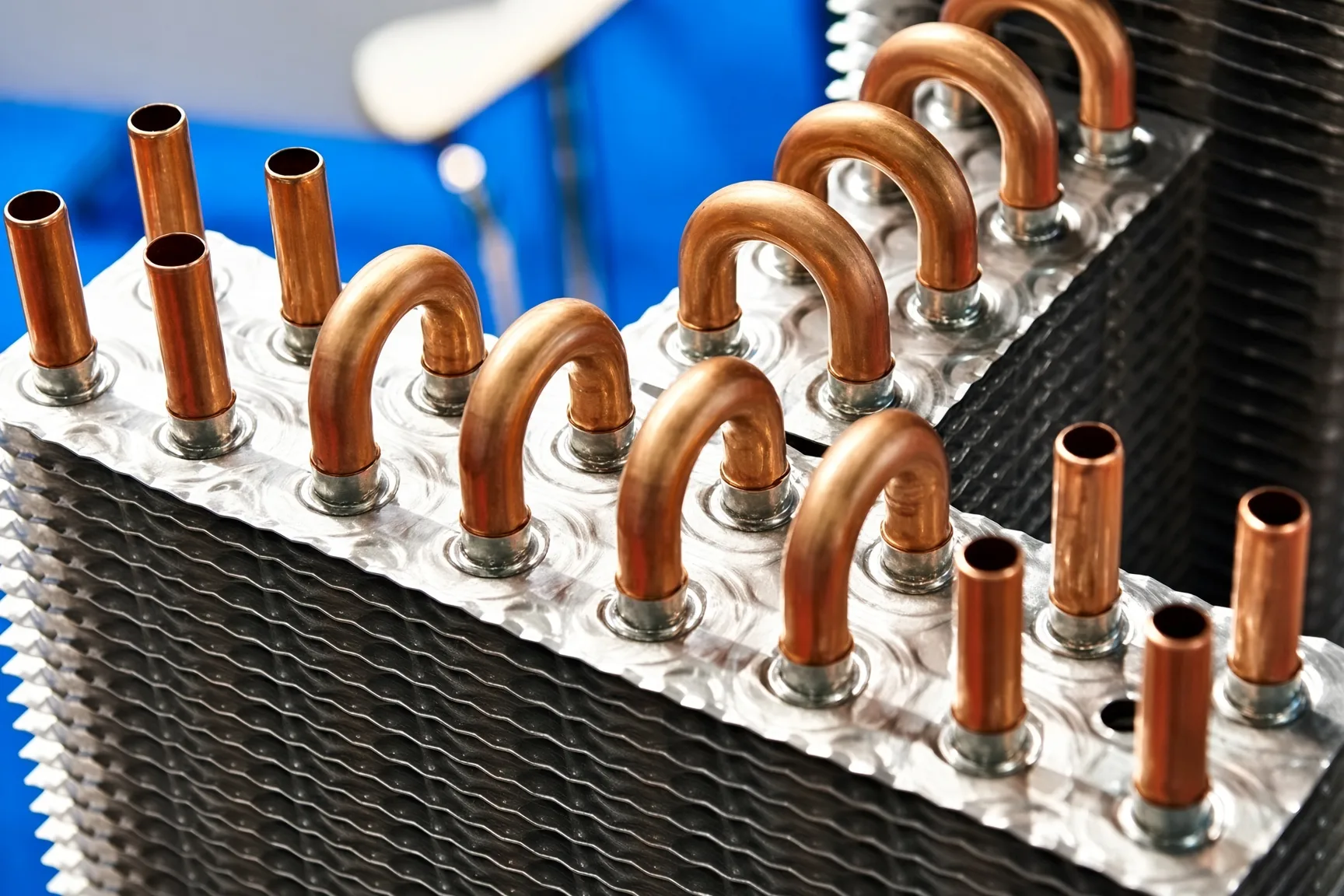
Oxygen-free copper exchanger
1.03 kg, oxygen-free copper · brazed assembly
Why this oneOxygen-free copper carries heat faster and resists the embrittlement that ordinary copper develops after repeated heating and cooling — the failure mode that turns a two-season unit into a pinhole leak.
What it means in the fieldStable heat transfer across the life of the unit, and an exchanger that can be repaired rather than replaced.
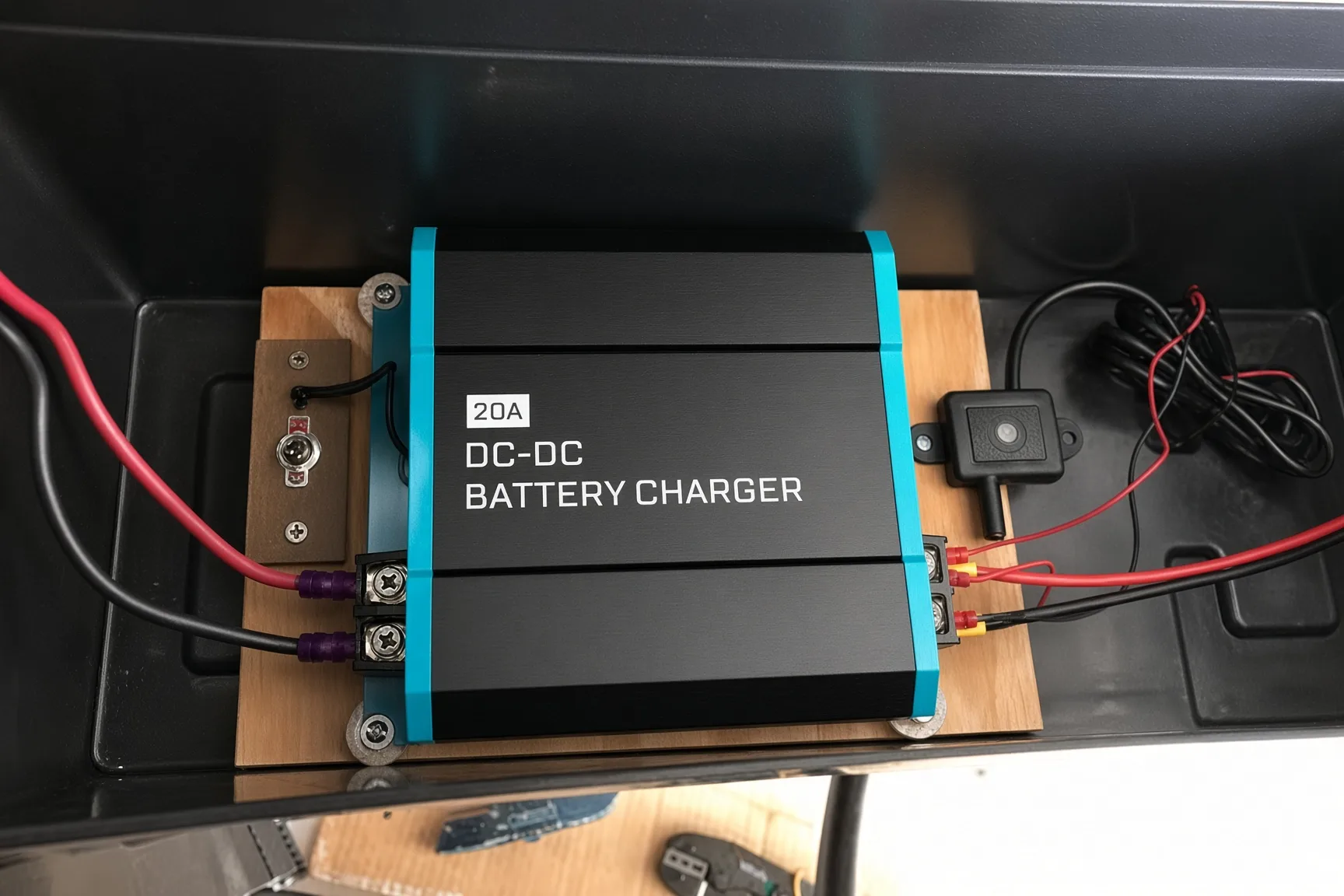
Replaceable battery ignition
Field-replaceable pack · no mains wiring
Why this oneThere is no mains power at a campsite or a job site, so ignition runs entirely off the battery. Sizing the pack against the ignition current is what decides whether one charge covers a trip or an evening.
What it means in the fieldA spent pack is a battery change, not a dead unit.
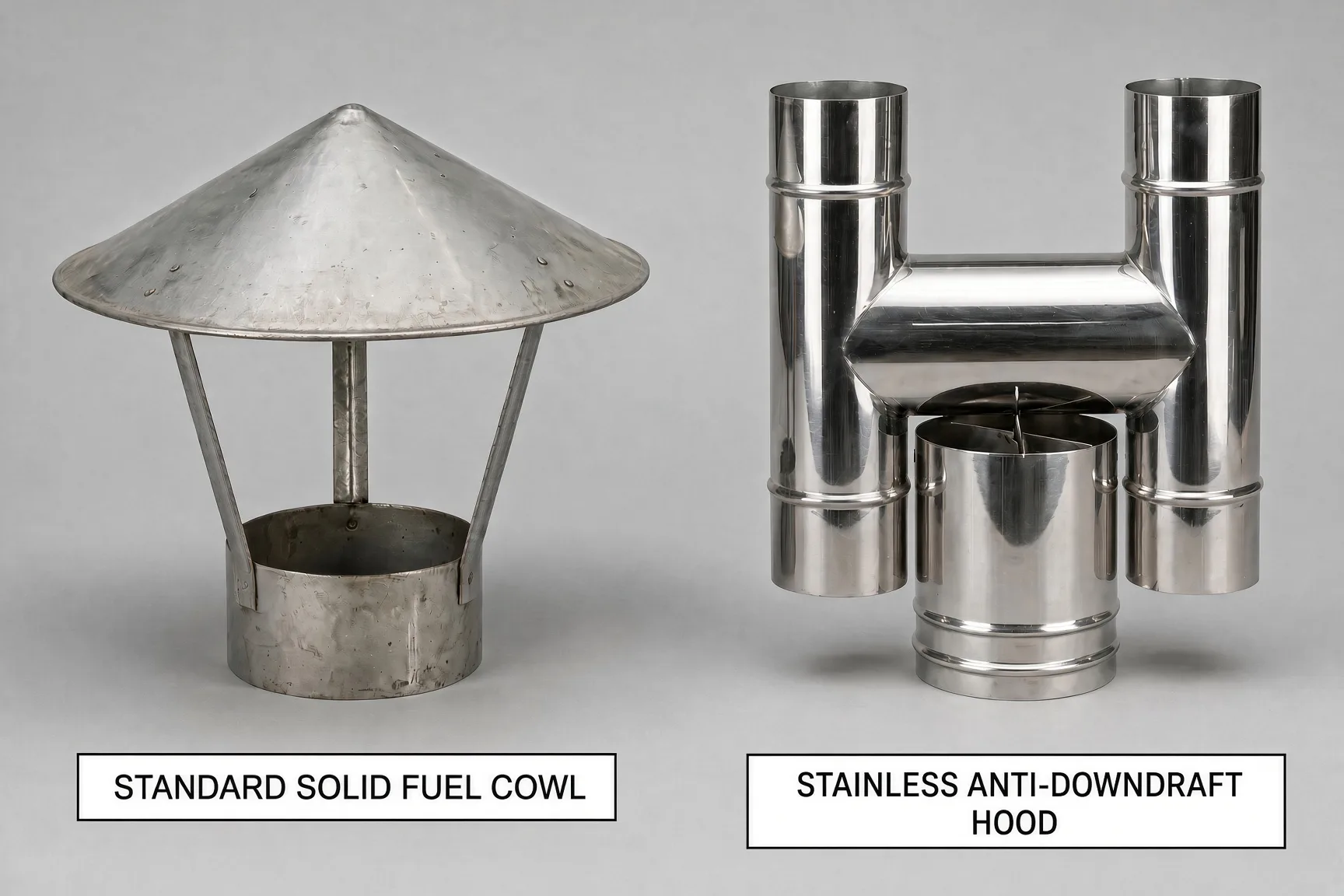
Stainless anti-downdraft hood
Stainless steel flue hood, anti-downdraft baffle
Why this oneA gust across the flue is how a portable gas heater loses its flame. The hood and baffle are shaped to keep combustion stable when the unit is used in the open, which is the only place it is allowed to be used.
What it means in the fieldFewer flame-out events outdoors, and a flue that does not rust through in coastal air.
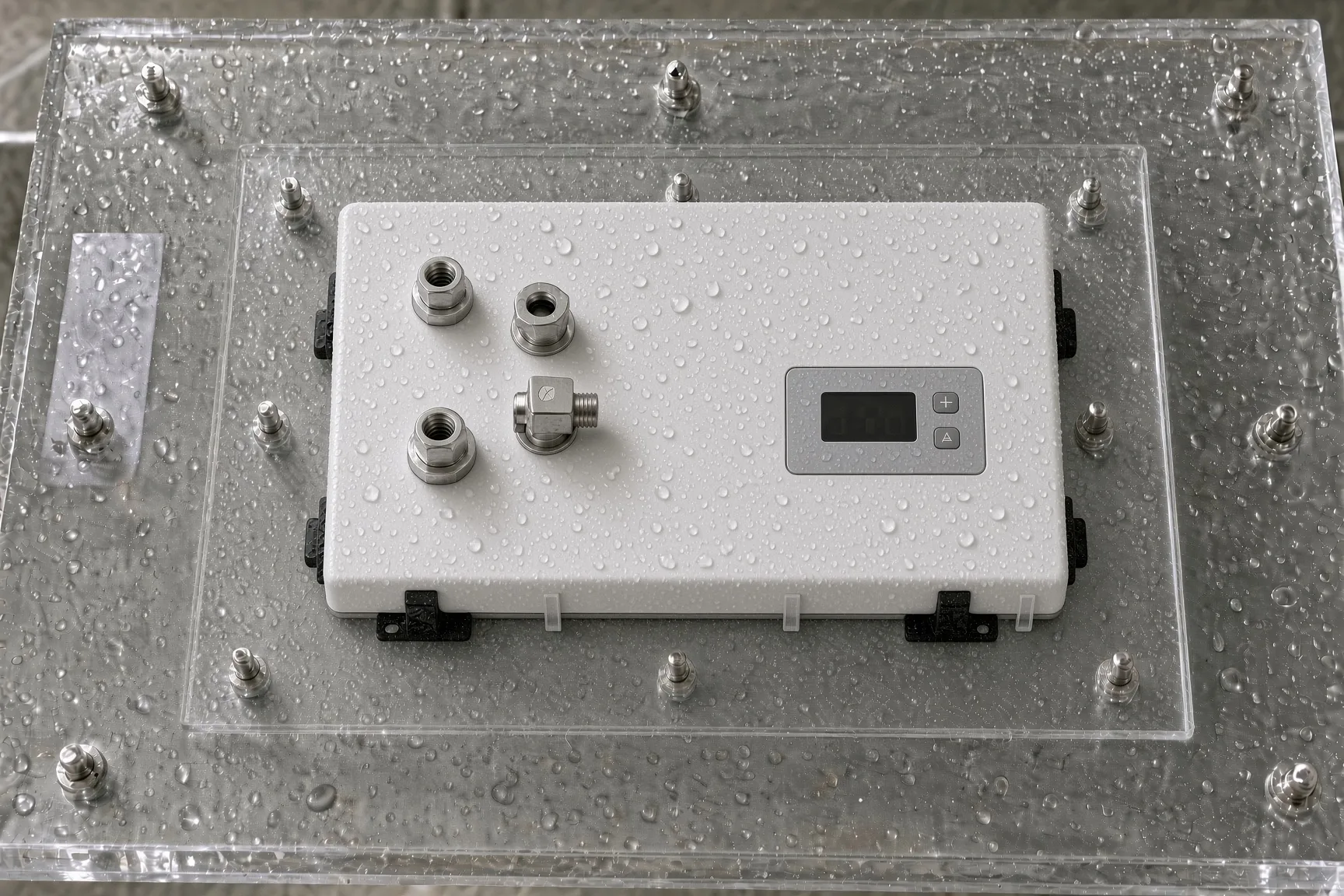
Splash-rated enclosure
IPX4 · water from any direction
Why this oneIPX4 is splash protection, not immersion — it covers the water a portable unit actually meets: rain on an open tailgate, spray off a wet bench, a rinse before the unit goes back in the van. Sealing to that standard is what keeps water away from the ignition and the connections.
What it means in the fieldThe unit can be used wet and rinsed outdoors without water reaching the parts that fail once they get damp.
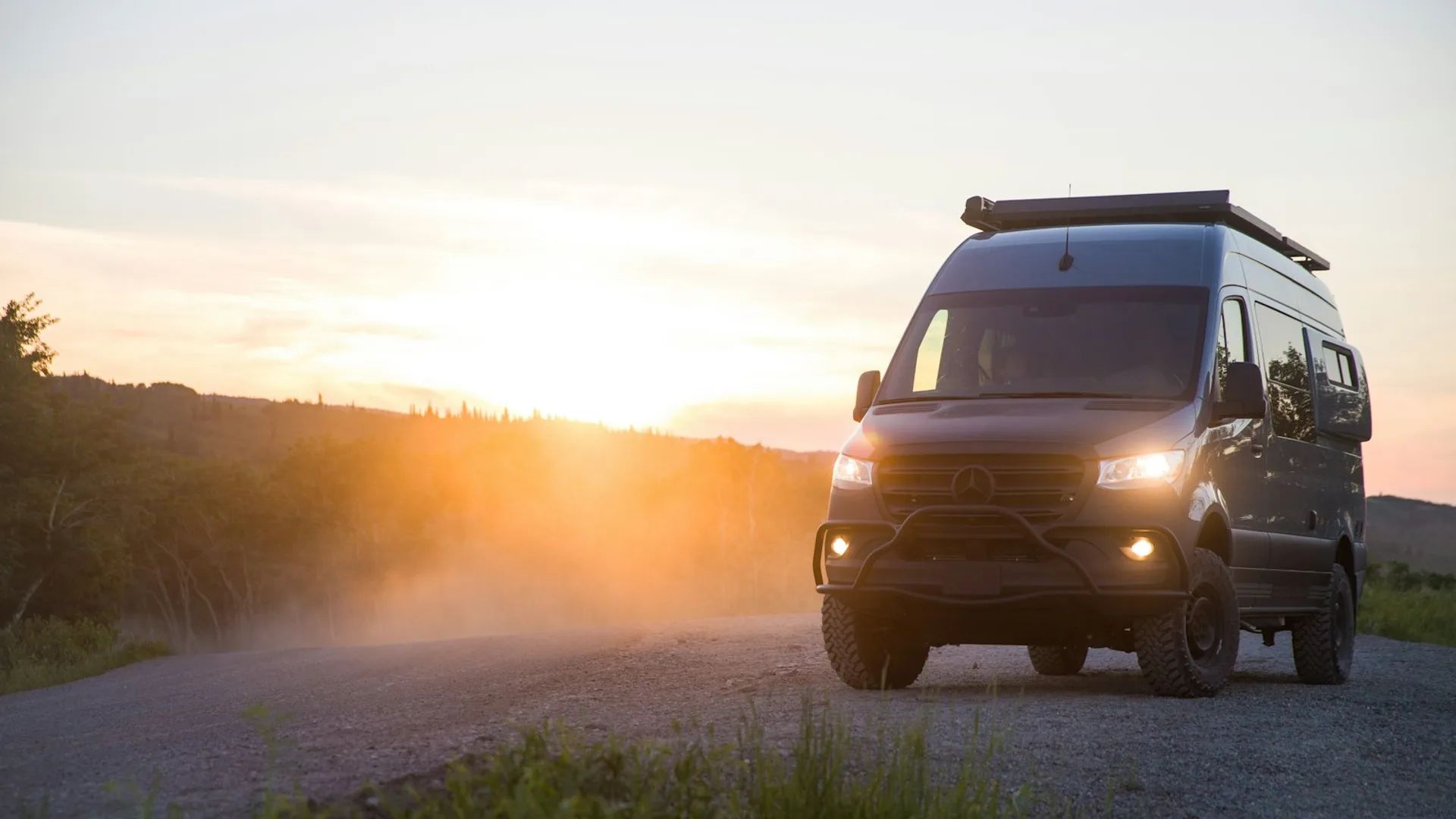
Send the drawing
Three facts are enough to scope your program.
Where the units ship, how many you need in a year, and which model or reference you are working from. Give us those and what comes back is a cost direction and a sampling plan built around your line — not a catalogue.
Customisation
Custom portable water heater OEM — what changes
A platform SKU gives you branding and pack with no tooling. A private mold gives you the enclosure itself. Most programs start on the first and step up — you are never forced to fund a mold to get your mark on the unit.
| Dimension | Standard | Optional | Private tooling |
|---|---|---|---|
| Enclosure shellA private shell needs a mold; colour and finish do not. | |||
| Handle & mount | |||
| Housing colour | |||
| Gas setting & pressureSet to the destination market and certified with the unit. | |||
| Control typeStandard dial, or thermostatic constant-temperature. | |||
| Ignition & battery | |||
| Branding & packagingBarcode, hero art and carton spec to your channel. | |||
| Manual language | |||
| Certification targetAGA, CSA or CE — mapped to the model you lock. | |||
| MOQ bandPlatform SKUs start small; a private mold steps up with volume. |
Standard and optional dimensions ship on every program. Private-tooling dimensions are quoted once the drawing is locked — send it and we come back with the tooling cost and the step-up MOQ.
Get a tooling quoteManufacturing discipline
Four gates. Every batch.
Every batch is sampled to a named standard — most faults are caught before a buyer sees them.
- Gate 01
Incoming material
- Copper, gas valves, burners and igniters
- Housing resin checked against the locked spec
- Gate 02
Sub-assembly and dimensional
- Mounting points, cut-outs, threads
- The tolerances that decide whether it drops into your bracket
- Gate 03
Combustion and gas safety
- Premixed burn-in, dual-valve ignition, flame-out
- Run on every unit, not sampled
- Gate 04
Pack and drop
- Export carton and internal bracing
- 1 m drop on the packaged unit
The difference
A trading desk looks like a manufacturer — until something goes wrong.
Both will send you a catalogue and a price. The difference shows up the first time a spec has to change, a certificate is questioned, or a batch arrives off-target. Compare the two below against what you have experienced.
| Aspect | Typical trading desk | Gulfstone standard | How you can check it |
|---|---|---|---|
| Factory access | A showroom and a catalogue. Production is a third party you never meet and cannot name. | You know which plant builds your unit, and you can walk the line before you commit. | Factory tour, on site, with your engineer |
| Material verification | The alloy and the copper are described in an email and taken on trust. | Incoming material is inspected against our standard on arrival, not accepted on a promise. | Incoming inspection records on request |
| Spec changes | A change means a new supplier, a new quote and a reset schedule. | The tooling and the component supply are inside our own base, so a change is a short trip. | Ask what a shell revision does to your lead time |
| Certification | Certificates are discussed, then chased after the container has sailed. | Certification attaches to one tested configuration, and the file pack travels inside the load. | Ask to see the pack that ships with the lot |
| Quality ownership | A defect is a conversation between you and a factory that does not answer to you. | One QC standard across the network, and a factory answer on a batch complaint in 24–48 hours. | Ask who answers a batch-quality claim — sales or the line |
| Landed cost | A competitive unit price, then freight and packing turn your margin upside down. | Cube advice and DFM notes up front, so you are pricing a landed number from the start. | Ask for units per container before you ask for a price |
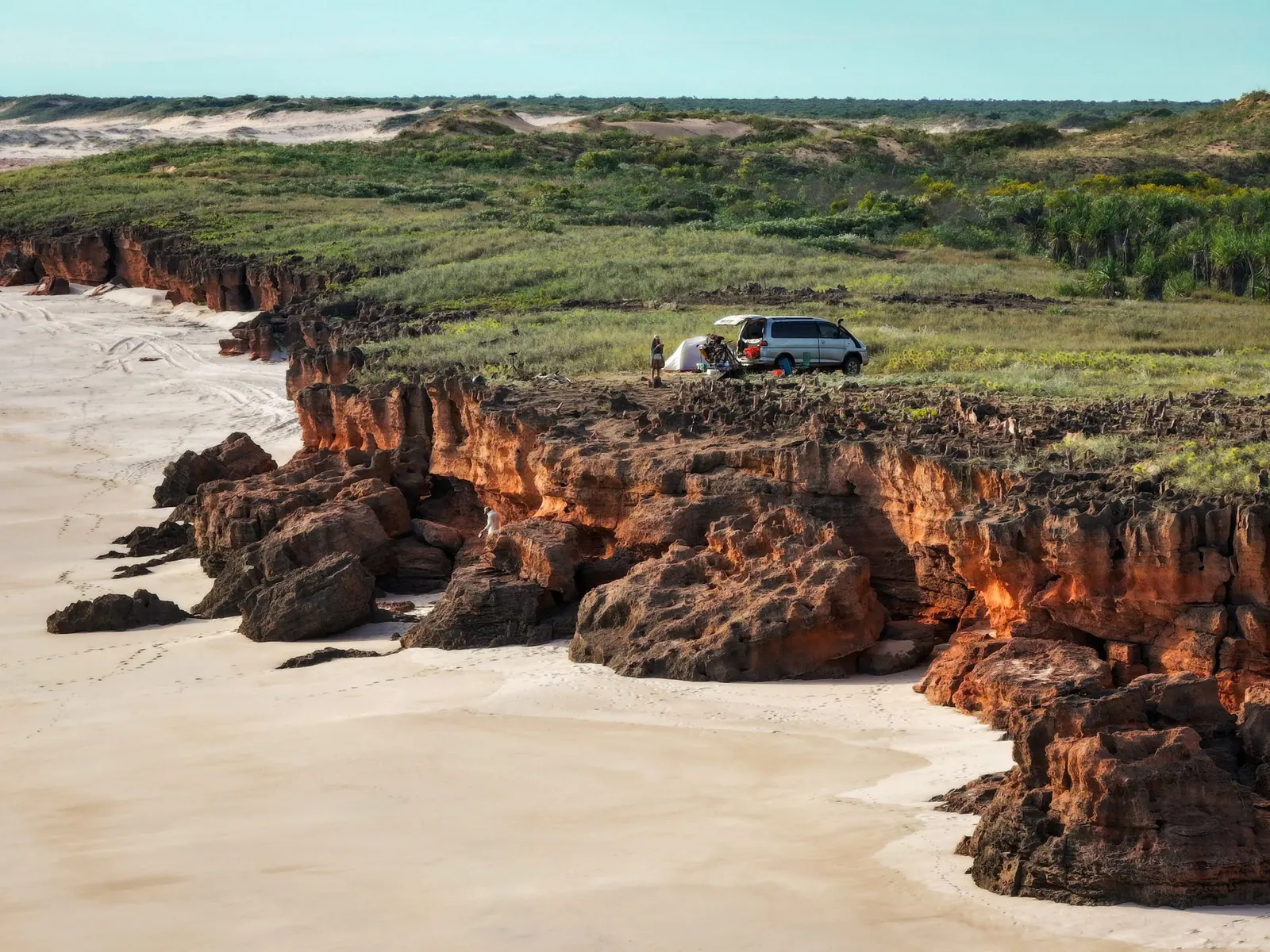
On the factory floor
You’ve seen the difference on paper. Come and watch it hold on the line.
A trading desk and a manufacturer read the same in a proposal — the tour is where that stops being a claim. Bring your engineer, your QA lead or your agent and audit the Shunde lines the way you would audit any supplier. It is also where the certification behind every unit is earned.
Plan a factory tourWhat you can put your hands on
- The 24 automatic detection platforms, in-line, on the current run
- Combustion and gas-safety test cells on the finished units
- The heat-exchanger and burner sub-assembly lines
- Incoming-material inspection and the AQL sampling station
- The export pack and the drop-test rig
- Your own sample, on the bench, with the engineer who built it
Certification
Certified for the market you sell into.
Certification attaches to one tested configuration, so it is mapped to the model and the market before the order is placed — not applied for after the container has sailed. The dossier ships inside the load.
| Market | Standard | Covers | Ships with the load |
|---|---|---|---|
| Australia / NZ | AGA · AS 2652 | Gas appliance approval for portable and outdoor units | Test report, approval certificate, declaration of conformity |
| North America | CSA · ANSI Z21.10.3 | Gas-fired water heaters, including the RV configuration | Test report, CSA certificate, DoC, install instructions |
| Europe / UK | CE · EN 26 | Gas-fired instantaneous water heaters | Test report, CE declaration, EN 26 annex, manual set |
| Where required | RoHS · REACH | Material restriction on the housing and the electrical parts | Material declarations, compliance statement |
How a program runs
From your drawing to a certified container.
Four stages, no skipped approvals. Each one ends in something you can hold or read before the next begins — so nothing is renegotiated after tooling.
- 01
Spec and fit review
48 hoursSend a drawing, a reference unit or a brief. The lab reads it against the housing, the gas path, the water supply and the market you are selling into — and tells you what will not fit before anyone quotes.
You getFit notes and a sampling plan
- 02
DFM, tooling and costing
3–7 daysDesign-for-manufacture notes on the shell and the assembly, the cube advice that decides what fits one container, the tooling position if you want a private mold, and a transparent cost direction.
You getCost direction, cube plan, tooling quote
- 03
Sample and spec freeze
10–18 daysThe unit is built to the approved line plan and you hold it. Once you approve it, that unit becomes the locked spec — colour target, gas setting, outlet temperature and pack are written onto the order, and there is no second revision to the reference afterwards.
You getA physical approval unit
- 04
Production, QC and loading
On scheduleA pilot lot if you want to test the market first, or straight to a full run. Every batch goes through the gate checks above, and certification is pinned to the locked configuration before the container is sealed.
You getCertified, container-ready lot
Customer reviews
What buyers say
Quotes from the camping retailers and hire fleets this line sells into — and what the spec sheet leaves out.
“The second season arrived as one shipment instead of three.”
We were buying a 6 kW portable and an accessory kit out of two suppliers, so every season opened with two bookings, two sets of paperwork, and one of them late.
Gulfstone took both onto the same platform and worked out a mixed load — units, kits and spare valves in one 40-ft, packed so the spares did not ride on top of the cartons.
Two bookings became one, the spare-valve line means a damaged unit gets repaired instead of written off, and the second season landed on the date we had quoted our own customers.

“Rental units come back working — that was not true of the last line.”
A hire fleet is the hardest test a portable unit gets. Ours came back with cracked housings and dials knocked off, and every write-off was a unit we had already paid for twice.
The lab looked at how the units were actually carried and dropped rather than at the spec sheet, then changed the shell and the carton bracing. Two revision rounds, then a locked pre-production sample.
Write-offs are down far enough that the fleet has stopped carrying surplus units, and every part that fails in the yard is on a priced spares list instead of a whole-unit replacement.

Questions buyers ask
Before you place an order
The questions that come up most often on a portable program — answered up front, with the standard or the number attached.
01What is your MOQ for a private-label program?
02Which markets can you certify a portable unit for?
03Do you build propane and LPG variants?
04Can you build a portable instant water heater to our drawing?
05Do you mix products in one container?
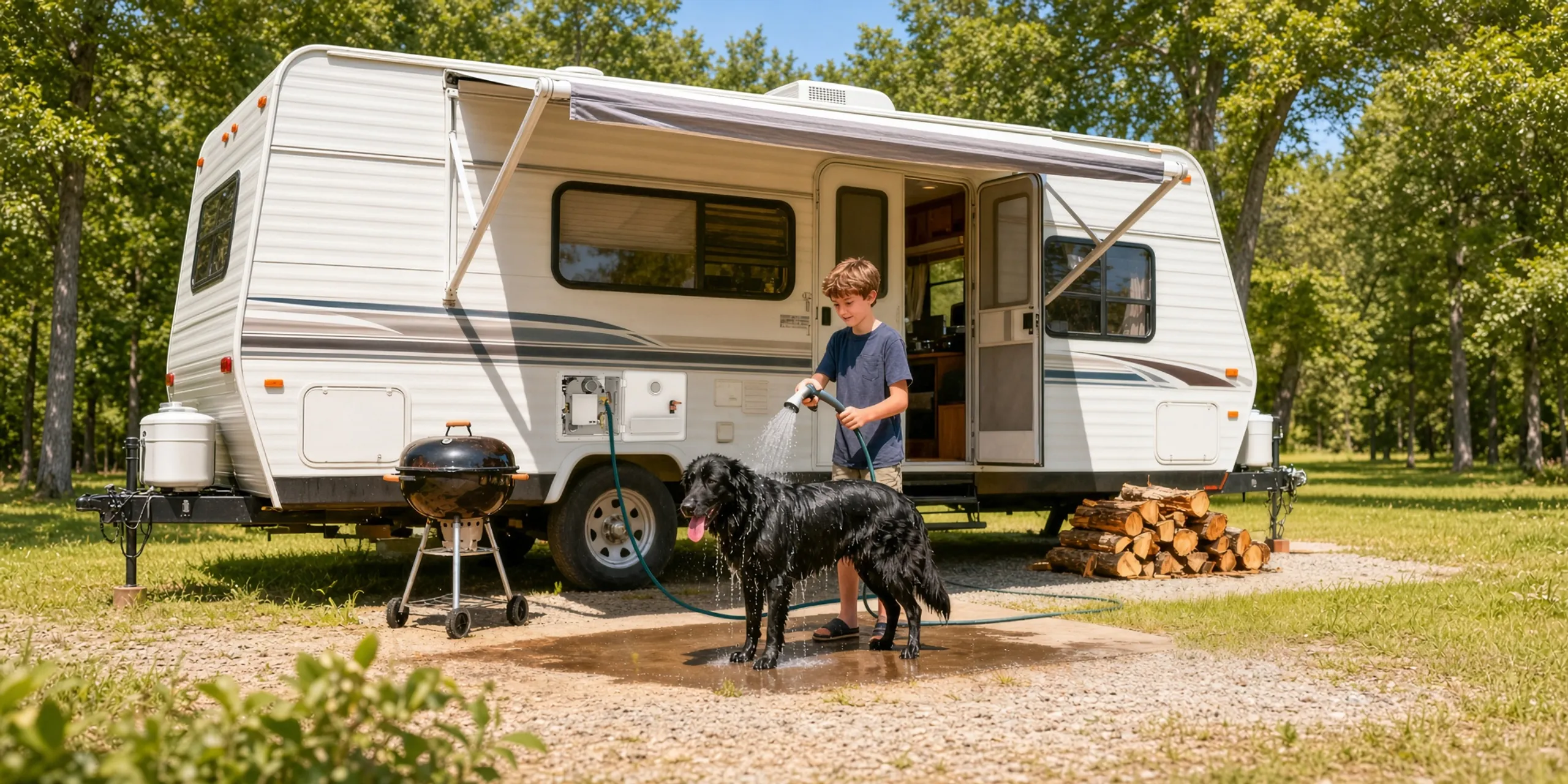
Start a program
The brief goes to the engineer who builds it.
Market, annual volume and the certification it must carry — three lines, and we have what we need. Your reply comes from the engineer who would run the line, scoped to your program rather than matched off a shelf.