WeChat

Quality control · Shunde, Foshan

Water heater quality control,
held at the gate, not promised after it.

Gulfstone builds off-grid outdoor water heaters for importers, RV builders and outdoor brands. Quality is not a final inspection we promise — it is a set of gates inside the build, each with a standard, a sampling level and a hold point that stops the lot until the check is signed.

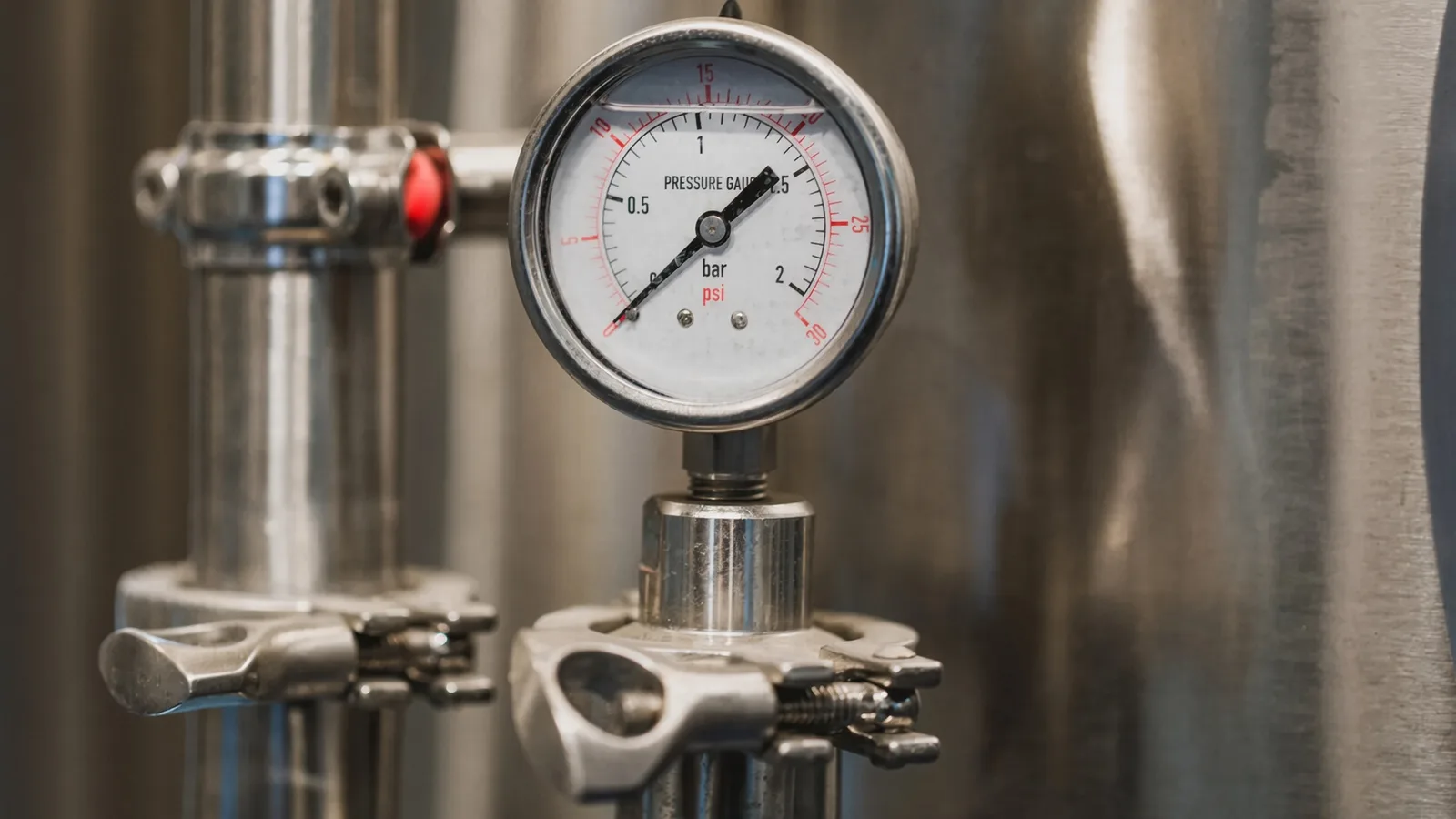
A pressure gauge reading on a stainless test panel, with a needle valve and clamp fittings behind it
Batch record
Standard
Per check, named
Sampling
AQL 1.0 – 4.0
Gas test
100% of units
Records
Per lot, retained

The gates

Four gates, each with a hold point
the lot does not move past.

A gate sits inside the build, not at the end of it — a lot does not advance until the check is signed and the record filed. Sampling is per-check, not one level for the line: the two gas checks run on every unit.

Gate 01

Incoming material

Check

Copper, gas valves, burners and igniters, and the housing resin checked against the locked specification.

StandardMPI 2.0
SamplingAQL 1.0
Hold

No material enters the line on a supplier’s word — a lot that fails the check is rejected at the door, before it can be built into a unit.

Hold point
RecordIncoming material evidence, per lot.
Gate 02

Sub-assembly and dimensional

Check

Mounting points, cut-outs and threads — the tolerances that decide whether the unit drops into your bracket.

StandardISO 2859
SamplingAQL 2.5
Hold

A sub-assembly does not move to combustion until its dimensional check passes against the released drawing.

Hold point
RecordFit and dimensional check sheet.
Gate 03

Combustion and gas safety

Check

Fully-premixed burn-in, dual-valve ignition and flame-out, run on every unit — not sampled from the batch.

StandardEN 26 / CSA 4.3
Sampling100%
Hold

A unit with a gas fault does not leave this gate, and a fault cannot be averaged away by sampling — the check runs on the whole batch.

Hold point
RecordPer-unit gas and combustion test log.
Gate 04

Pack and drop

Check

Export carton and internal bracing, proven with a 1 m drop on the packaged unit.

StandardISTA
SamplingAQL 4.0
Hold

A pack with a failed drop test is re-engineered before the container is packed — the load plan is not built around a carton that will not survive.

Hold point
RecordDrop-test report and packing record.

The test lab

The instruments behind the claims,
in our own plant.

A certificate is issued against a test, and the test needs equipment. These benches sit in the Shunde plant, so a combustion or material claim is checked here rather than sent out and waited on.

  • 01

    Combustion and flue-gas analysis

    Gas-boiler furnace performance and flue-gas analysis. The combustion that proves a burner runs clean and a flame proves out is measured here, not assumed.

  • 02

    Gas line pressure and leak test

    The gas path is pressure-tested and leak-checked on the bench before a unit is assembled around it — the rig behind the 100% gas-safety gate.

  • 03

    Spray and moisture testing

    Spray and moisture benches for the enclosure and the electrical side, held to the market a unit is built for.

  • 04

    The mute room

    A sound-controlled room for ignition and running noise, so a performance claim about how a heater sounds is measured rather than described.

  • 05

    In-line detection

    Fully-automatic detection platforms run beside the assembly, testing each unit as it is built rather than pulling a sample once the line has finished.

Tell us which model you are sourcing and we will say which of these benches it is run through — from the combustion analysis down to the test that proves the gas path.

Ask which benches your model runs on

In-line, not at the dock

A fault is caught where it is made,
not found at the dock.

A check on finished goods only sorts what the line already built — by then the cost is sunk and the cause buried. So the checks sit where the risk is created, and a lot holds until that station's check is signed.

  1. 01

    At the station

    The check runs where the operation runs, against the released drawing or the locked specification — not on a sample pulled at the end of the line.

  2. 02

    Before it is closed up

    The check a fault can hide behind happens before the unit is sealed, so a gas path or a joint is proved while it can still be seen and corrected.

  3. 03

    Held, then released

    A gate that has not been signed holds the lot. Nothing advances past an unsigned gate, so a defect is corrected at its source rather than reworked at the end.

  4. 04

    Tied to the shift

    Each result is written against the batch and the shift that produced it, so a unit in the field can be traced back to the run, the operator and the tests it passed.

What ships with the container

The quality records travel with the order,
not in a follow-up email.

Every item below is produced during the run and filed against the order it belongs to, so the compliance file is assembled from what happened on the line rather than reconstructed after the container has gone.

  • Per-unit gas test log

    The combustion and gas-safety result for each unit in the batch — the record behind the 100% claim, attached to the units it covers.

  • Batch record

    The lot traced to the shift that built it, naming who ran the checks and who signed each gate off.

  • Inspection report

    The incoming-material and dimensional results, with the measuring equipment each check was run on.

  • Compliance declaration

    The certificate and test evidence issued against the configuration approved and shipped, not the model family in general.

  • Third-party report

    Where a buyer sends SGS, TÜV or their own agent, that inspection report is filed with the order alongside ours.

A claim about a shipped unit is answered from this pack — the document a buyer holds, not a general assurance.

Inspection and audit

Send your own inspector,
or none of this is on trust.

Quality control is only useful if you can check it. A buyer is welcome to attend the gates, invite an agency, or ask for the paperwork and go through it against the line that produced it.

Attend a gate in person

Come to the plant and watch a lot pass through any of the four gates, or book the visit as part of a factory tour.

Send an agency

Third-party inspection by SGS, TÜV or your own agent is welcome at any gate — we schedule the line so the check can run alongside production.

Ask for the records

The batch record, the per-unit gas log and the inspection report are released against a lot, so a claim can be read against the evidence rather than taken on trust.

A third-party audit of the plant is already on file, and an engineer answers a technical quality question inside 48 hours.

Quality evidence

What holding the gate looks like from the buyer's side

From buyers who asked for the records and got a batch they could trace.

“Every unit came off the line gas-tested. That is the record we had been missing.”

Our previous supplier sampled the combustion check and called the batch good. Here the per-unit test log shipped with the container — one line per unit, every heater traceable to the shift that built it.

600 units in, the field failure count is zero and the dimensional rejects at our own intake are nil.

Marcus LindqvistSupply Chain Manager at a European RV components distributor
“The certificate described the build we got, not a model family.”

We import into the EU, so the CE file has to match the exact configuration on the water. The declaration shipped against our approved sample, not a document for the range — it cleared customs without a query.

Three certification cycles now, no batch held at the border and no re-papering after the fact.

Priya RamanCompliance Lead at an outdoor equipment importer

Before you order

The quality questions a buyer asks

Sampling, certification and what is in the pack — the answers a certificate alone does not give.

01What is your actual quality standard? What AQL do you hold to?
There is no single AQL across the line, and we would be cautious of any factory that tells you there is. Each check carries its own sampling level: incoming material at AQL 1.0, the dimensional and fit check at AQL 2.5, the export-pack drop test at AQL 4.0. Combustion and gas safety are not sampled at all — every unit is run and the result is logged per unit. The sampling level follows how expensive the failure is downstream, not one blanket number.
02How do I know a certificate covers the exact unit I bought?
A certification attaches to a tested configuration, not to a product name, so the certificate sample and your production sample are the same build. The declaration that ships with your order is issued against the configuration that was approved and shipped, and it is checked against the equipment and process on the line rather than a scan kept in a folder.
03Can we send our own inspector or a third-party agency?
Yes, and it is encouraged. Third-party inspection by SGS, TÜV or an agent you appoint is welcome at any of the four gates. We set the line schedule around the check so it can run alongside production, and your inspector gets access to the batch records and the per-unit test log for the lot. A third-party audit of the plant is already on file.
04What records come with a shipment?
A per-unit gas test log, the batch record for the lot traced to its shift, the incoming-material and dimensional inspection report, and the compliance declaration for the configuration shipped. Where a third party inspected the order, their report is filed with ours. The pack is produced during the run, not assembled after the container has left.
05What happens when a defect is found — before or after shipping?
In-house, a fault is caught at the gate that creates the risk, and the lot holds until it is corrected, so a defect is fixed at its source rather than reworked at the end of the line. If a genuine fault reaches you, the factory answers a batch claim inside 24–48 hours, traces it to the batch and shift, and the correction is recorded against that lot.
06How does a rush order affect the gates?
It does not move them. Added volume can be met with added inspection capacity and a compressed reporting window, but a gate is not skipped to save a schedule and no sampling level is loosened. Catching a defect at the station is what protects the delivery date — a fault discovered at the dock is the thing that slips the container.

Start a program

The brief goes to the engineer who builds it.

Market, annual volume and the certification it must carry — three lines, and we have what we need. Your reply comes from the engineer who would run the line, scoped to your program rather than matched off a shelf.