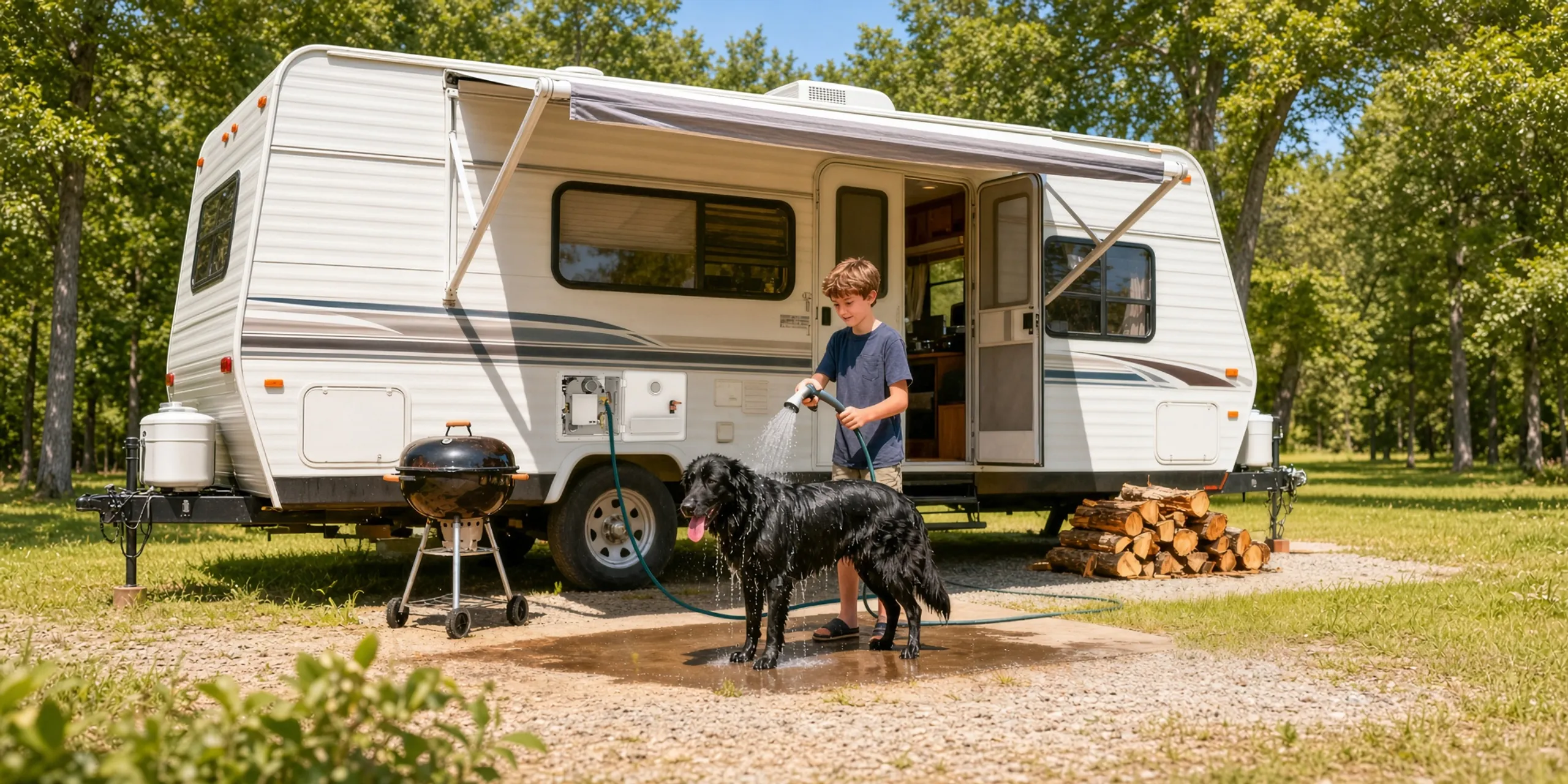
Camping shower programs
A portable, bottle-fed shower unit for basecamp, overland and job-site washing. Built to your market, your brand and your carton — the platform the camping line is already shaped around.
Explore scenarioGulfstone · Solutions
Four scenarios, one platform family. Each one is a job a buyer is already doing — a pitch, a cabin, a production line, a wash point — and the build that answers it. Start where yours matches.
Solution scenarios
Each one is a job a buyer is already doing. Pick the one that matches your line — or tell us the job and we will scope the build around it.
A portable, bottle-fed shower unit for basecamp, overland and job-site washing. Built to your market, your brand and your carton — the platform the camping line is already shaped around.
Explore scenarioWall-mounted, bottle-fed hot water for cabins, outbuildings and agricultural utility rooms. No mains power, no plumbing run — a unit built for a building that was never wired for hot water.
Explore scenarioTankless RV water heaters built to your cut-out, the electrical scheme the vehicle carries and your destination market, under your brand. A drawing question answered at the factory rather than a catalogue selection.
Explore scenarioBottle-fed hot water for outdoor rinse and wash-down points — pool surrounds, livestock and dairy stations, yard and equipment washing. Built for a point that has no supply and no supervision.
Explore scenarioHow it works
Every scenario runs the same way, from the first message to the container. One team carries it, so nothing is lost in a handoff.
The vehicle, the site or the pitch. Where it is used, who uses it and what the market is. That is enough to start — no drawings required to have the first conversation.
The lab maps your scenario to the right platform and returns a plan: what moves, what stays standard, and what the certification scope is for your market. No black boxes.
Once you approve, the line is set. In-line checks run through the run, and third-party inspection is welcome at any gate. One contact from tooling to the container.
Who this is for
Not a catalogue shopper. Every scenario on this page is written for a professional who has to justify the order, the fitment and the certification.
Engineering & purchasing
You build the vehicle and the unit has to match the bay you already have. Cut-out, 12V scheme and market certification are the conversation, not colour options.
Sourcing & category
You carry the range into a market and answer for what lands. The gas setting, the certification scope and the spares line decide whether the season goes well.
Buying & private label
You need a branded line that sells through and a supplier who will not put a SKU you own onto a competitor shelf.
Operations
Your units are used hard by people who did not buy them. Housing, spares and a priced repair list matter more than the spec sheet.
Customer reviews
Two companies that run more than one of the scenarios on this page — and what the arrangement looked like from their side.
“Four suppliers became one, and the season launched on schedule.”
Our line had four suppliers across three provinces — three POs, three containers, and coordination overhead that ate the team. Gulfstone consolidated it to one partner and a single PO.
On-time delivery went from 64% to 97% across two seasons, freight dropped 28%, and four weekly vendor calls became one.
“The reorder went back to the same partner without going out to bid.”
Three part-loads that fit a full container but never filled one — three shipments, three invoices. Gulfstone mixed them into one load and handed us a packing list that matched.
Freight fell 18% on the first container, and the 98% repeat rate came back without a competitive bid — one load turned into a line that quotes all year.
Questions buyers ask
What a solution covers, how a program starts, and who actually does the work.
Start a program
Market, annual volume and the certification it must carry — three lines, and we have what we need. Your reply comes from the engineer who would run the line, scoped to your program rather than matched off a shelf.