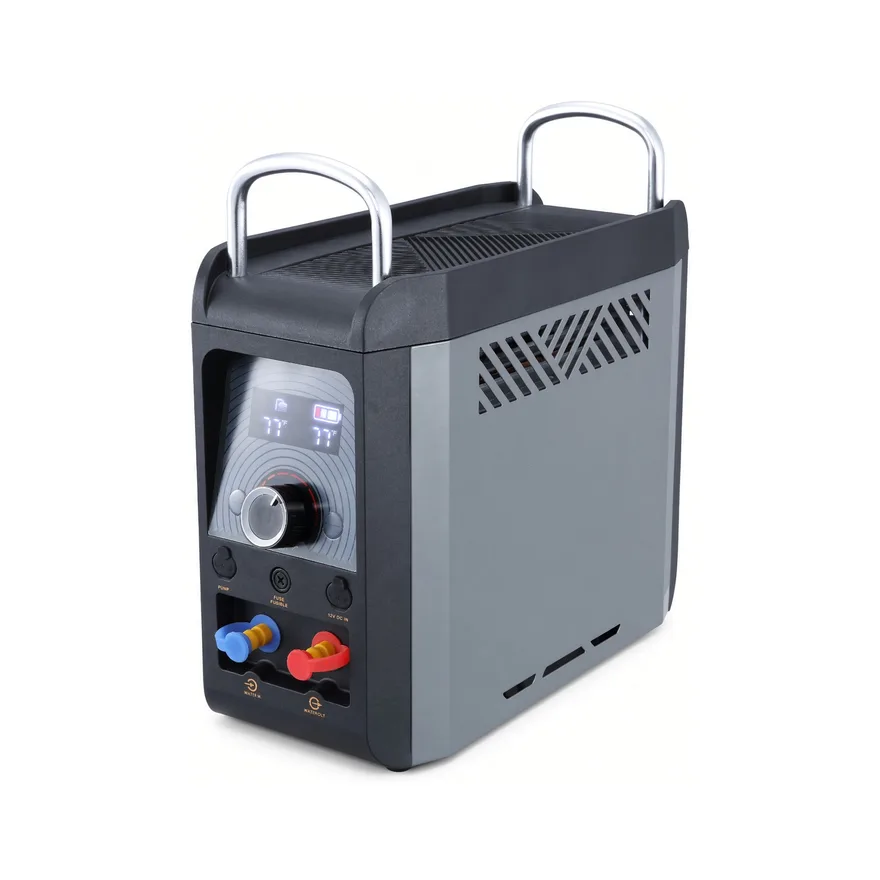
PA66 + 15% glass fibre housing
ECO
Flame-type pulse ignition
The platform at its simplest — one knob, a flame-type control and an LED that reports the state.
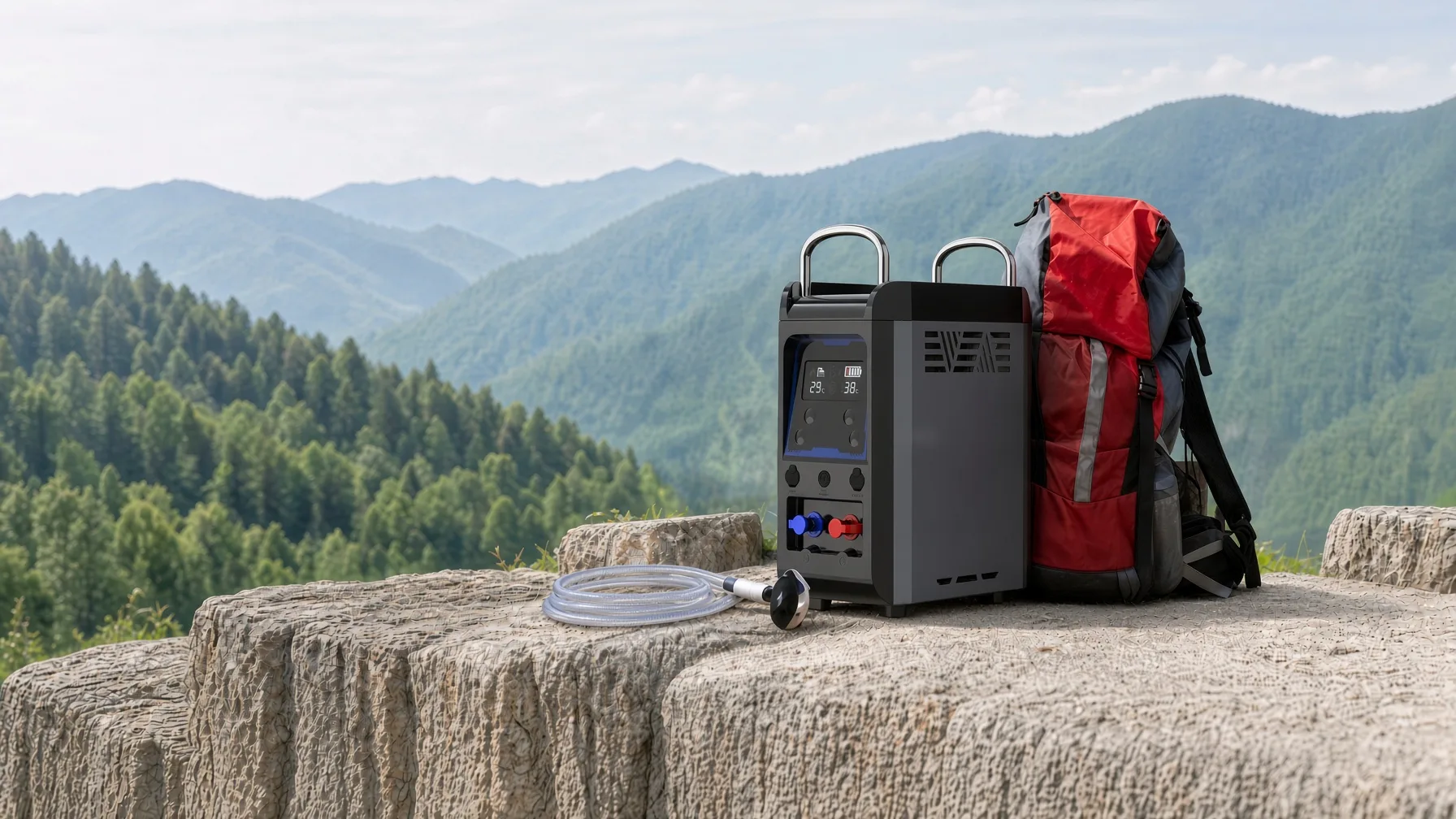
Portable gas water heater · OEM / ODM
An outdoor gas water heater built to your drawing — one platform, three control levels. 100% gas-tested, not sampled, and a 24-month warranty on the order. Shipped under your own mark.
The difference
Both send a catalogue and a price. The difference shows up when a spec changes, a certificate is questioned, or a batch lands off-target.
| Aspect | Typical trading desk | Gulfstone standard | How you can check it |
|---|---|---|---|
| Factory access | A showroom and a catalogue. Production is a third party you cannot name. | You know which plant builds your unit, and can walk the line before you commit. | Factory tour, on site |
| Material verification | The copper and the gas-path valves are described in an email and taken on trust. | Incoming material is inspected against our standard on arrival. | Incoming inspection records |
| Build levels | Each price point is a different unit, with its own gas path and spares list. | ECO, PLUS and PRO MAX share the exchanger, burner and protections. | Which parts change between builds |
| Spec changes | A change means a new supplier, a new quote and a reset schedule. | Tooling and component supply sit inside our own base. | What a shell revision costs in lead time |
| Certification | Certificates are discussed, then chased after the container has sailed. | One tested configuration, and the file travels inside the load. | The pack that ships with the lot |
| Quality ownership | A defect is a conversation with a factory that does not answer to you. | One QC standard, and a factory answer on a batch claim in 24–48 hours. | Who answers a batch claim — sales or the line |
The line
ECO, PLUS and PRO MAX are the same exchanger, the same gas path and the same protections. What changes between them is the control face and what it takes to run.
Flame-type pulse ignition
The platform at its simplest — one knob, a flame-type control and an LED that reports the state.
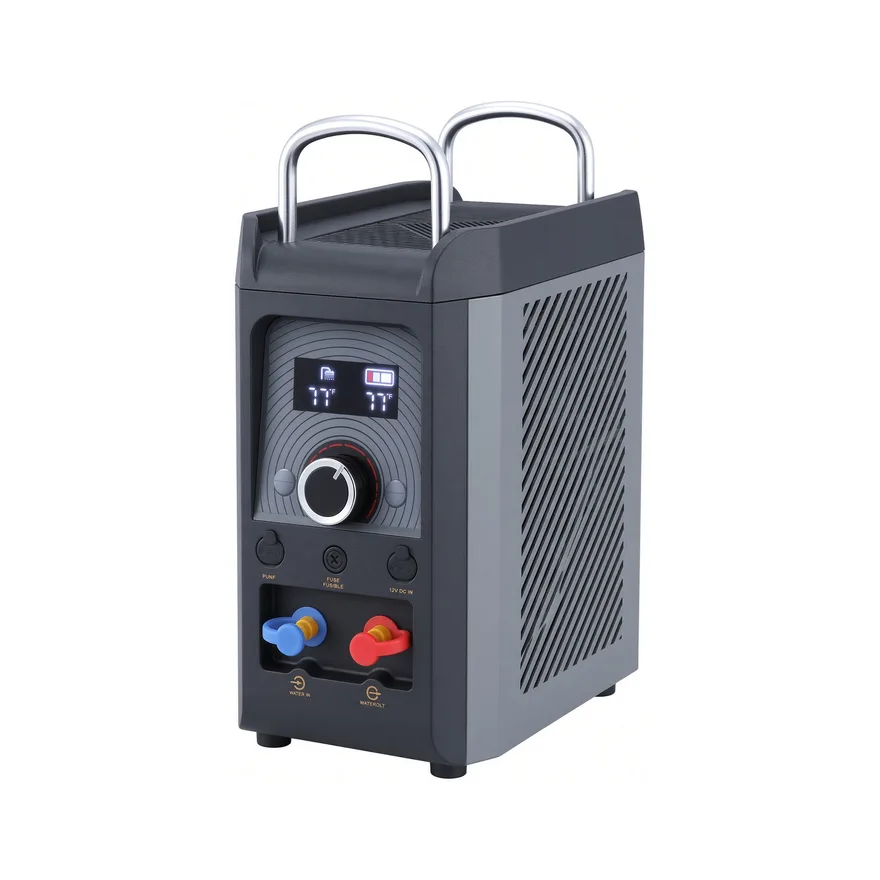
Portable controller with battery
Adds a rechargeable battery pack and a portable controller, so it runs with nothing plugged in.
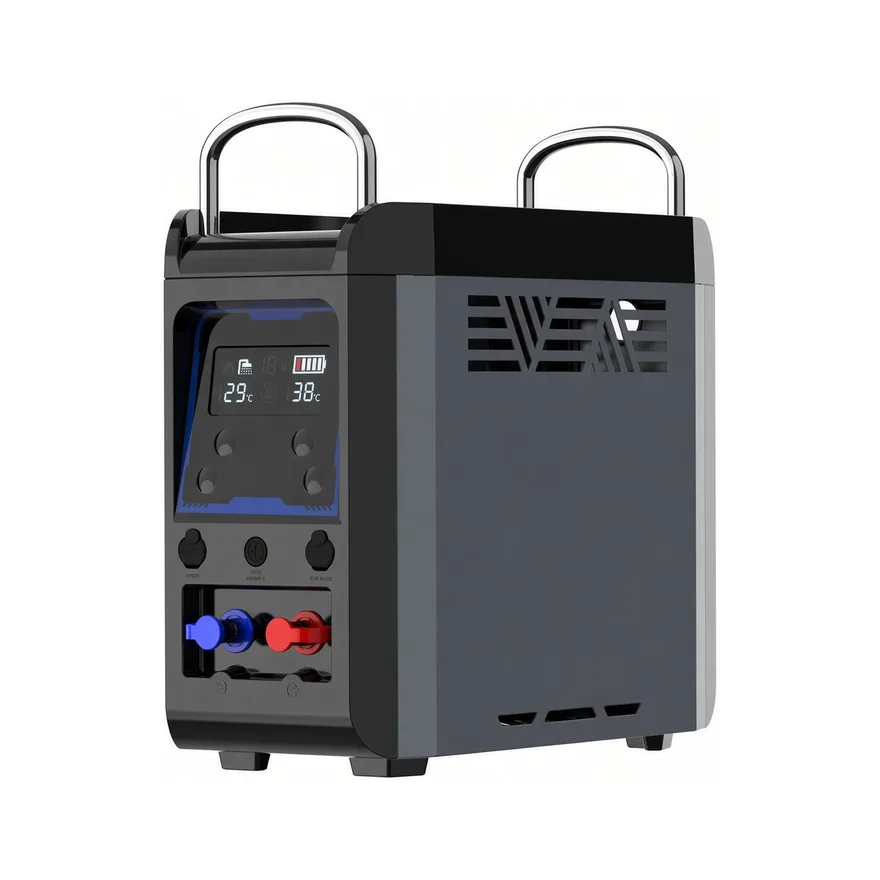
Thermostatic proportional valve
A proportional valve holds the outlet temperature steady, with a button-set thermostat and a near-zero standby draw.
The specification
Every figure the line ships to, stated once because all three builds share it, and the short list of rows that separate ECO, PLUS and PRO MAX.
What stays the same, on all three
What changes, and where
| Spec | ECO | PLUS | PRO MAX |
|---|---|---|---|
| Power | |||
| Battery packECO takes DC 12 V from an external supply; PLUS and PRO MAX carry the pack. | — | 18650 · 2500 mAh (21700 · 4000 mAh optional) | 18650 · 2500 mAh (21700 · 4000 mAh optional) |
| Run time, full charge | — | 100 min | 100 min |
| Charging time | — | About 3 h | About 1 h |
| Standby draw | — | 30 mA | < 1 mA |
| Control | |||
| Control system | Flame-type pulse | Portable controller | Proportional valve controller |
| Display | None — LED status lamps only | LED, knob and button | LED, button |
| Valve assembly | Single-axis valve | Single-axis valve | Thermostatic proportional valve |
| Adjustment | Knob | Knob | Button |
| Thermostatic control | — | — | Precise outlet temperature setting |
| Base rocker switch | ✓ | ✓ | — |
| Fault-code display | ✓ | ✓ | ✓ |
In the field
The same nine cutouts on all three builds — the control level changes what the unit does, never how it fails safe.
Knocked off a tailgate, it stops firing instead of running on its side.
The gas cuts before the outlet runs past the temperature you set.
Ignition is proved before gas stays on; a lifted flame cuts the supply.
A supply fault trips the unit, not the harness.
Stops accepting charge at full, so a left-on charger cannot cook the pack.
A spike on the DC input is clamped, not carried into the controller.
Cuts before the pack is drawn flat — what kills a stored cell.
The draw is limited at the board, so a stalled pump cannot cook the wiring.
Faults report as a code, not a dead machine with no answer.
The supply base
Shunde, in Foshan, Guangdong, is one of the densest gas-appliance clusters in the world. What that buys a buyer is not a slogan — it is what is physically next door.
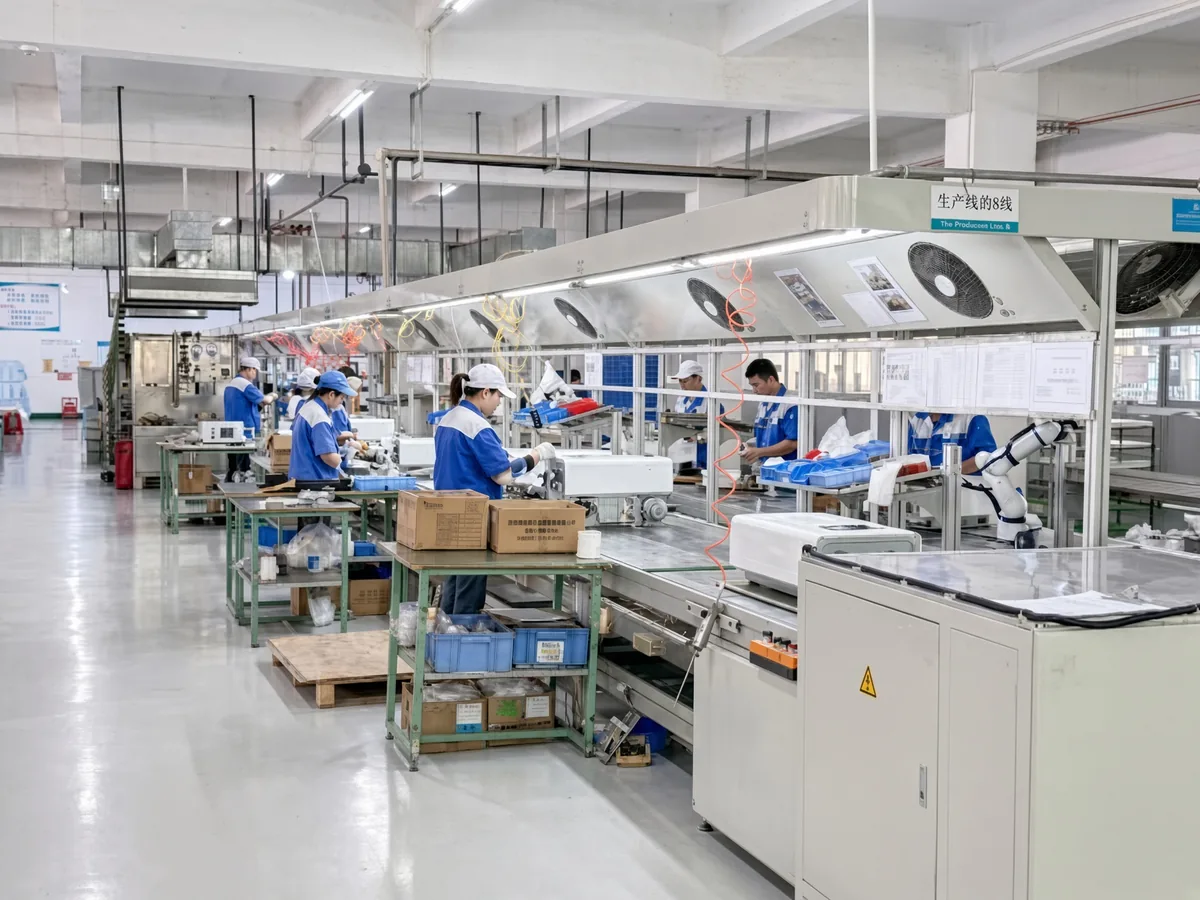
The district behind China’s gas-appliance cluster — the supply base this line is built in.
Exchanger copper, gas valves, ignition, tooling, cartons and test labs, all within the district.
Nansha and Yantian, both sailing out of Guangdong for FOB terms.
Within the district
A valve seat, a mesh grade, a masterbatch colour — suppliers here tool short runs, because two hundred other makers share the street.
Copper and gas-path valves come from named plants a short drive away — ask where a batch was drawn and you get an address.
A rise in season two is met by an adjacent line under the same audit — not a new factory found mid-program.
Certification and quality
Certification attaches to one tested configuration, so it is mapped to the build and the market before the order is placed. The file ships inside the load.
The configuration
ECO, PLUS and PRO MAX share the exchanger, the gas path, the burner and the enclosure — so they certify as one tested configuration. A buyer taking two builds, or moving from one to another, carries one set of approvals rather than three.
One standard, every build
| Check | Standard | Sampling | Method |
|---|---|---|---|
| Incoming materials | MPI 2.0 | AQL 1.0 | Metal and gas-path parts against the locked spec |
| Dimensional and fit | ISO 2859 | AQL 2.5 | Cut-outs, threads and mounting points |
| Combustion | Factory spec | 100% | Fully-premixed burn-in on the assembled gas path |
| Gas safety | EN 26 / CSA 4.3 | 100% | Dual-valve over-ignition and flame-out |
| Control side, per build | Factory spec | 100% | Valve, controller and display proven on the build they ship with |
| Anti-freeze | Factory spec | AQL 1.5 | Drain-valve residual-water check |
| Export pack | ISTA | AQL 4.0 | Packaged unit, 1 m drop and carton check |
In the shipment file
OEM / ODM
Your own mark on any of the three builds, from a drawing to a shipping container: what moves, and what stays fixed.
Free to change
No tooling. Your colour, logo and carton are quoted in the first reply.
Colour, logo, carton and manual move without tooling spend, so a first order does not have to fund a mould to carry your brand.
No tooling. The unit arrives set and certified for your market.
The gas setting and the certification scope are fixed at build, against the market you are selling into — not adjusted at the destination.
Engineering & tooling
No tooling. The fit and DFM review comes back before anyone quotes.
Send a CAD file, a reference unit or a sketch. The engineering team reads it against the housing, the gas path and your market, and comes back with what will not fit before a price is attached to it.
A private mould, quoted against your drawing once it is locked.
A private tool changes the part itself rather than the mark on it, quoted against your drawing once that drawing is locked.

Before you go further
You have seen the standard and what it takes to make the line yours. Tell us the market and the volume, and the reply is a cost direction and a sampling plan — with the documents below to check it against.
The file pack
The same pack that ships inside the container, available before you ask. Read the specs, open the bill of materials, load the cut-out into your own CAD.
Want the pack for a different build, or the certification dossier for your market? Ask for it by name and it comes back with the quote.
Terms
The commercial terms as they will read on the order — the money, the schedule and what happens if a unit comes back.
Buyer voices
Two buyers across the builds — the entry SKU that had to hit a price point without leaving the platform, and the thermostat that stopped a service call.
“We could hit the price point without leaving the platform.”
The previous supplier answered our entry-SKU brief with a cheaper line — different gas path, different spares, a second set of failures to learn. Gulfstone kept all three builds on one platform: same exchanger, same burner, same protections, without the thermostatic valve.
One spares list, one QC standard and one set of gate checks now cover the whole range. The entry SKU landed 23% under the thermostat model, and 2,400 units in it has not taken a single sale from the hero SKU.

“The thermostat is what the second order was waiting on.”
Rental customers were dialling the temperature back by hand and reporting it as a fault — two seasons of service calls. The PRO MAX build holds the outlet temperature itself, and Gulfstone ran it on the same line as the build we already carried.
Temperature complaints fell from 41 a season to 3. The 1,200-unit second order went in on the same platform, the same dock and the same paperwork as the first.

Questions on the line
The questions these three builds raise — which one to start on, what the ECO runs from, what the thermostatic build actually changes, and what a program commits you to.
Start a program
Market, annual volume and the certification it must carry — three lines, and we have what we need. Your reply comes from the engineer who would run the line, scoped to your program rather than matched off a shelf.