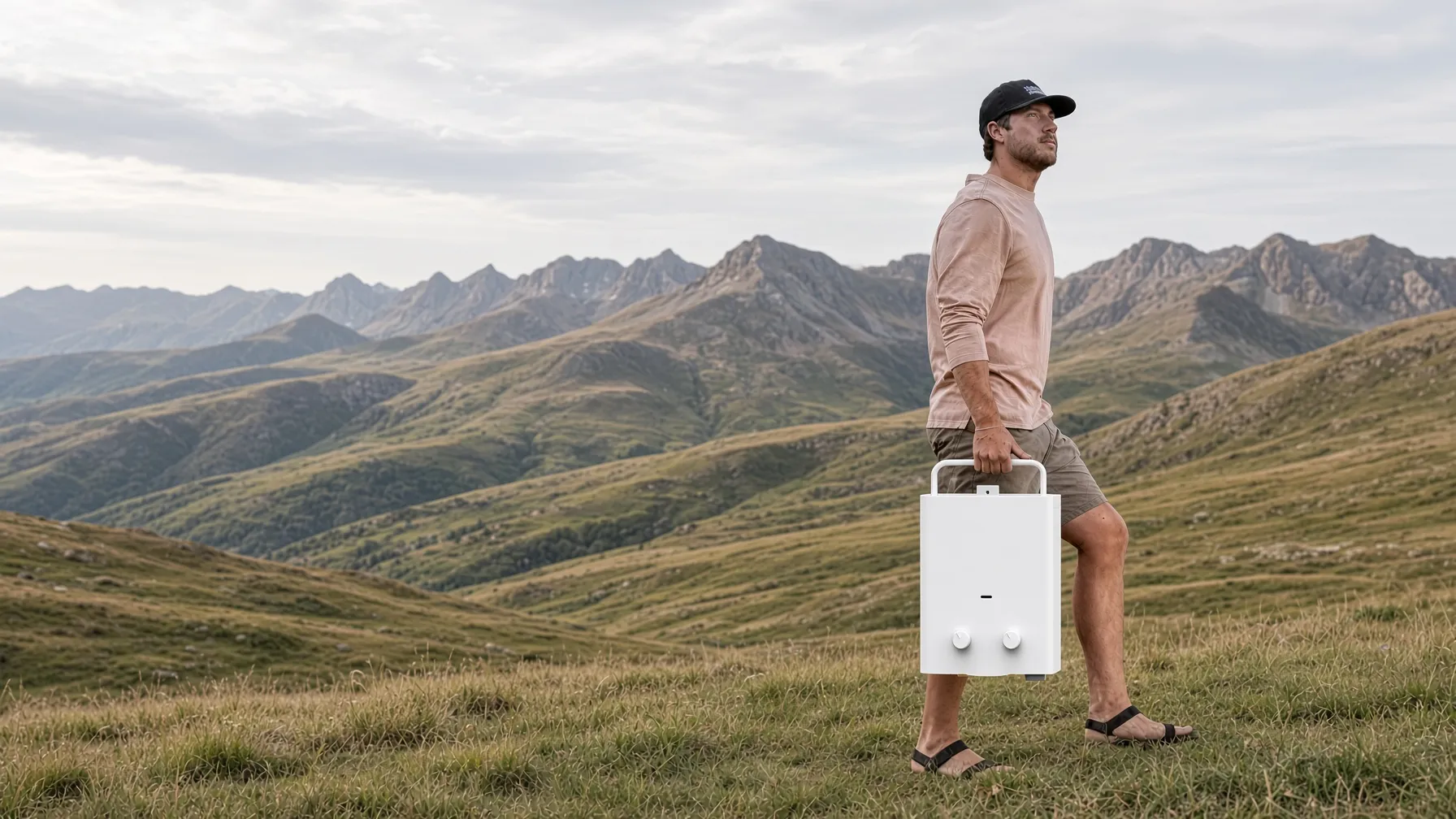
5L Portable Gas Water Heater · OEM / ODM
5L Portable Gas Water Heater Manufacturer,
built for the outdoor wash point.
A fixed outdoor gas water heater for sites with no mains supply — built to your drawing, branded for your market, and shipped under your own mark.
- 32,000 BTU/hr
- heat input
- 5 kg/min
- hot water @ Δt 25 K
- DC 3 V
- battery ignition
- 375 × 290 × 140 mm
- unit size
What it is for
An outdoor wash point,
where there is no supply to tap.
A fixed outdoor water heater for sites that run on a propane cylinder and no mains power. It heats on demand as the tap opens, and shuts the gas off the moment the water stops.
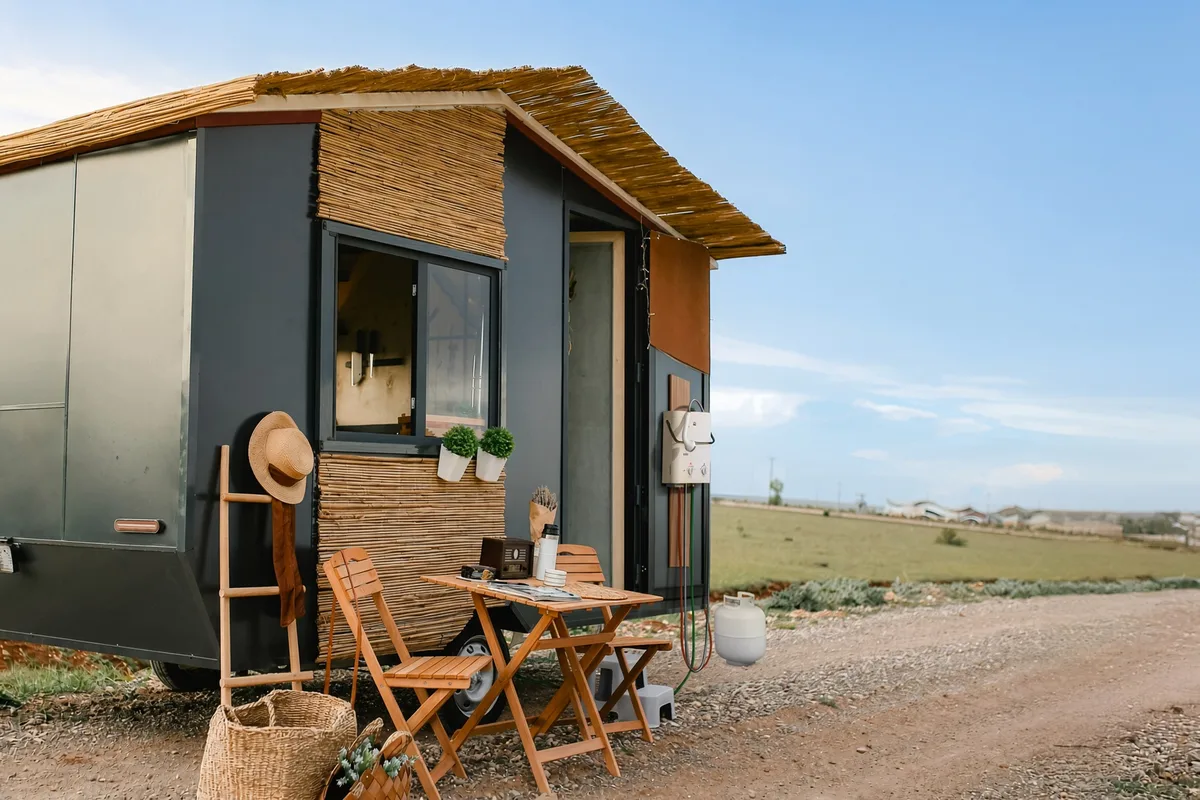
Fixed installation
Outdoor wash down
- Posts, outbuildings and workshop yards with no mains hot water
- Mounted to a wall or a stand with a weather cover over it
- Not for direct rain exposure — siting is part of the brief
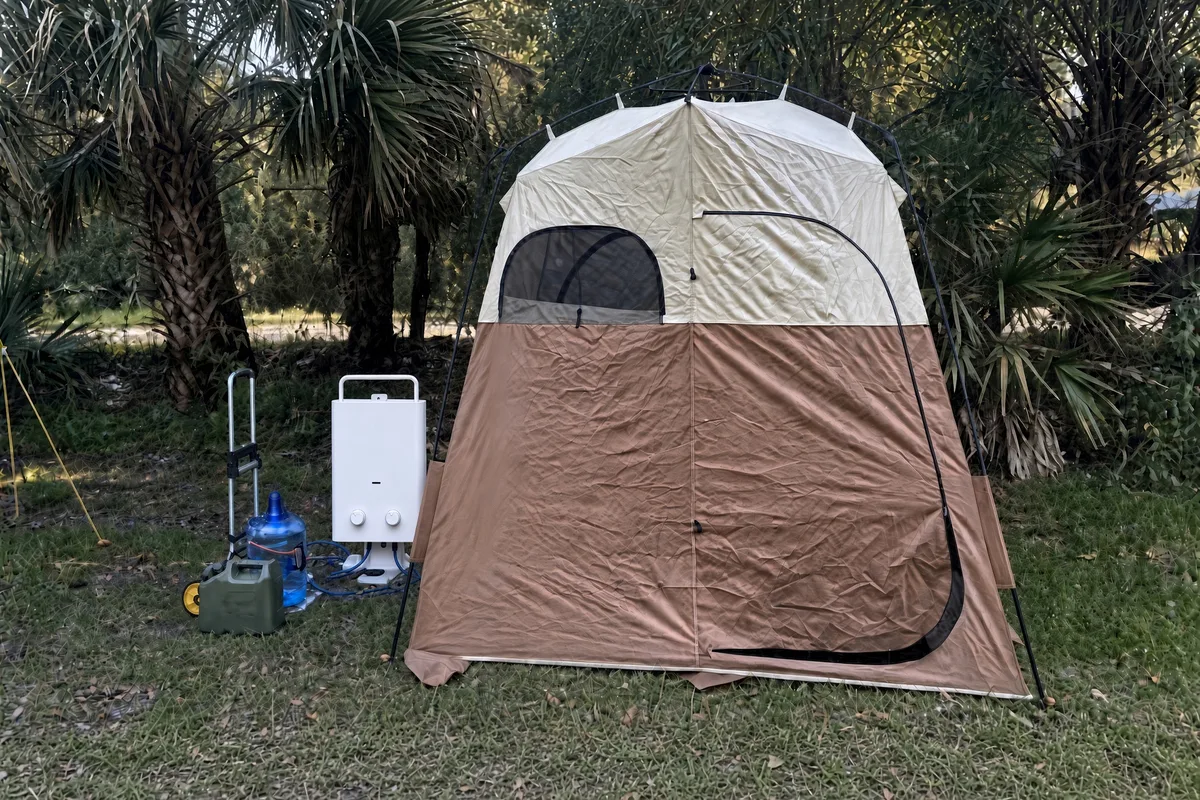
No mains power
Off-grid and remote sites
- Runs from a propane cylinder and two cells of DC 3 V ignition
- Continuous pulse ignition needs no pilot flame to keep lit
- Water–gas linkage valve starts the burner on flow, not a switch
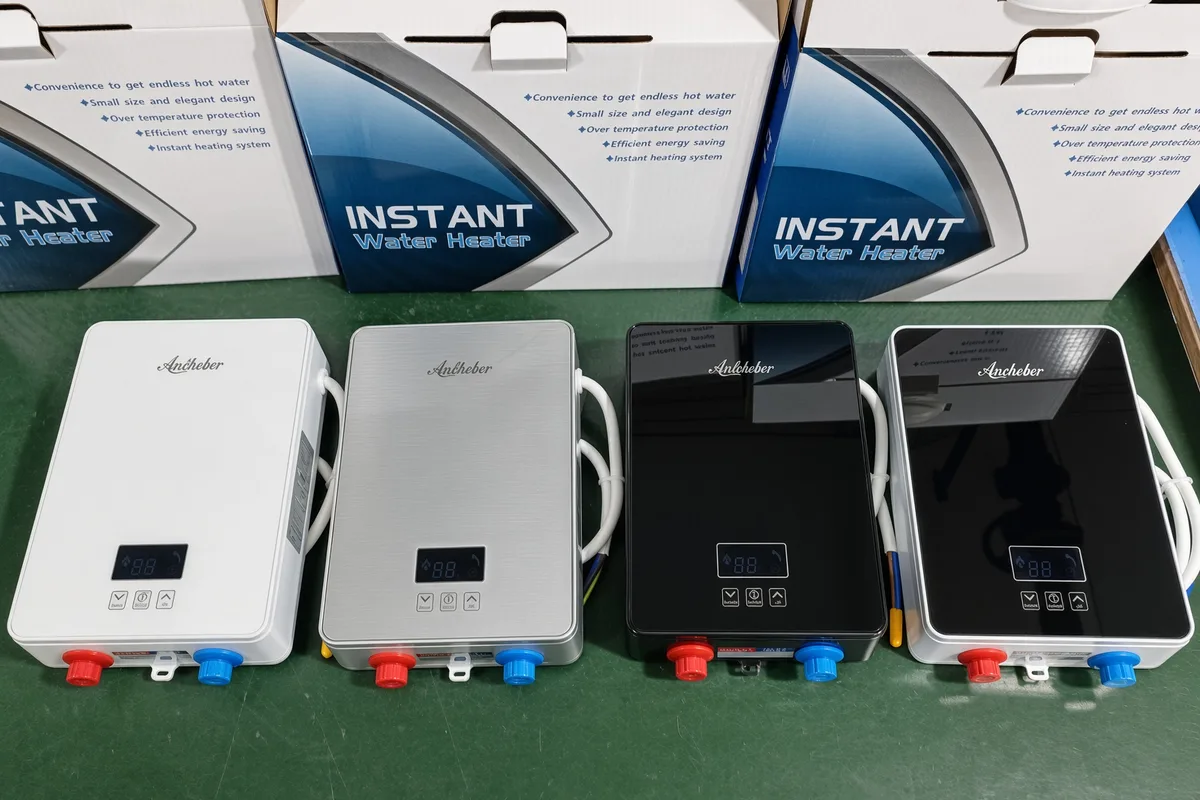
Private label ready
Retail and hire fleets
- A single-model SKU under your own brand and carton
- Carton and manual language set for the destination market
- Spares list carried against the production BOM
What it is made of
The parts behind the sheet,
named.
Each part below is a row on the datasheet further down — opened up, so the figure and the component it describes read as one thing.
Tin-dipped copper tank
A 1.0 kg copper heat exchanger, tin-dipped for corrosion resistance along the water path — the coil the flame plays across.
Water–gas linkage valve
Gas is admitted only while water is flowing. Turn the tap on and the burner lights; turn it off and the gas stops — no separate gas switch.
3-row harmonica burner
A three-row burner with 6 × Φ0.69 mm nozzles, sized to the 32,000 BTU/hr input for a stable flame across the flow range.
80 °C limit thermostat
A fixed limit that interrupts the burner before the outlet runs past 80 °C, independent of the manual knob position.
Pressure-relief valve
A mechanical over-pressure device on the water side, relieving before the tank sees a strain the coil cannot hold.
Powder-coated sheet-metal shell
Face and base in sprayed sheet metal — a painted steel housing rather than a moulded one, so it takes an outdoor fixing and a custom colour run.
The specification
Every figure this model ships to,
and the connections it arrives with.
The production figures an installer works from and a buyer reads against a PO — grouped the way the unit is built, not the order the factory worksheet lists them in.
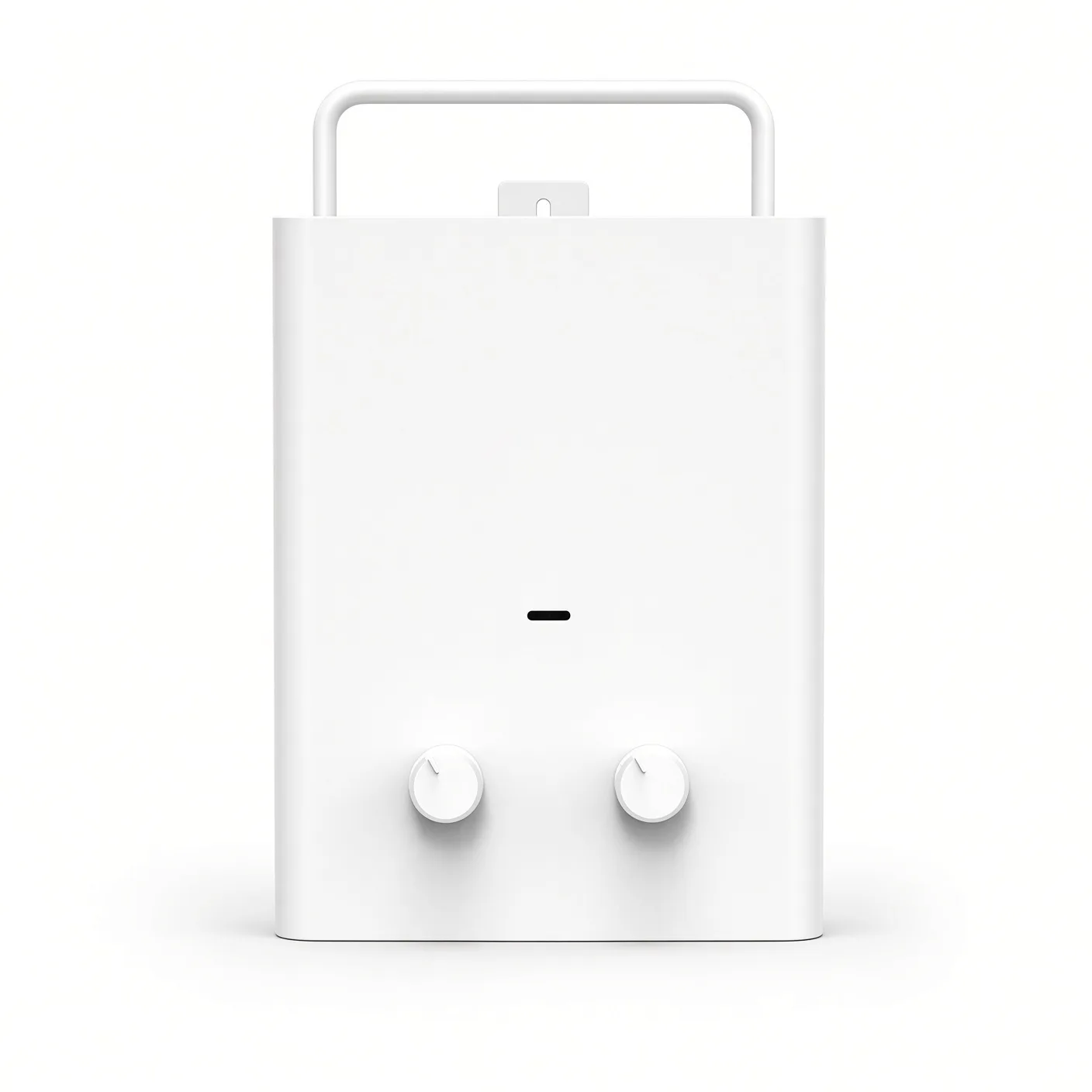
Figures are the production specification for this build. Where the source sheet leaves a value open, it is confirmed against the production sheet rather than shown as a dash.
Performance
- Heat input
- 32,000 BTU/hr (≈ 9.4 kW)
- Rated hot water output
- 5 kg/min at Δt = 25 K
- Minimum water flow
- 2.5 L/min (± 20 %)
- Maximum water flow
- ≥ 5 L/min
- Water pressure
- 0.025–0.8 MPa
- Temperature limit
- 80 °C thermostat
Gas path & control
- Gas type
- Propane (G31)
- Gas pressure
- 27.4 mbar
- Gas control
- Water–gas linkage valve, manual knob
- Water control
- Manual adjustment
- Ignition
- Continuous pulse ignition
- Supply voltage
- DC 3 V (battery)
- Button
- Mechanical
- Burner
- 3-row harmonica burner
- Nozzles
- 6 × Φ0.69 mm
Build
- Heat exchanger
- Tin-dipped copper tank, 1.0 kg
- Over-pressure protection
- Pressure-relief valve
- Housing
- Powder-coated sheet-metal panel
- Base
- Powder-coated sheet-metal panel
- Flue
- Open (direct-discharge), outdoor use
- Installation
- Outdoor fixed; not for direct rain
Dimensions & packing
- Unit size
- 375 × 290 × 140 mm
- Package size
- 565 × 335 × 210 mm
- Carton
- K = A corrugated
- Protection
- Foam-lined
Connections
- Gas inlet
- 5/8-18 UNF
- Water inlet
- G1/2
- Water outlet
- G1/2
When something goes wrong
It cuts the gas
before anything is at risk.
Four cut-outs on the water–gas path, and the running order that opens and closes the burner. None of them needs a person to act.
Flame-out protection
If the flame lifts or dies, ignition stops proving and the gas supply cuts.
Over-pressure protection
The pressure-relief valve discharges on the water side before the coil is over-strained.
Over-temperature limit
The 80 °C thermostat interrupts the burner at the set ceiling.
Water–gas interlock
No flow, no gas — the linkage valve closes the burner when the water stops.
Open the tap
Water flows through the linkage valve, which opens the gas path in proportion.
Ignition proves
Continuous pulse ignition fires on the 3 V supply and proves a flame before gas is held.
Heat the water
The burner plays across the copper coil and the outlet runs to the temperature the knob and flow set.
Close the tap
Flow stops, the linkage valve closes the gas, and the burner goes out — nothing runs until the next draw.
What you bring to it
The connections, the supply,
and the place it goes.
What the unit arrives expecting on site — read it against a drawing before the fixing point is set, not after.
- Gas inlet
- 5/8-18 UNF
- Propane at 27.4 mbar, from a regulator on the cylinder.
- Gas type
- G31 propane
- Set for propane; other gases need a different nozzle and gas setting, fixed at the factory.
- Water in / out
- G1/2
- A standard half-inch thread on both sides — feed in, hot out.
- Water pressure
- 0.025–0.8 MPa
- Below the floor it will not fire; above the ceiling it protects itself.
- Ignition supply
- DC 3 V
- Two cells drive ignition only — the unit takes no mains power.
- Siting
- Outdoor, fixed
- Open flue, mounted outdoors with a cover — not exposed to direct rain.

Before you go further
A short brief is enough: where it lands, and how many a year.
Send the destination market and an annual volume, and what comes back is a cost direction, a sampling plan and the gas setting this model ships with.
How it is made
Briefed once, in English,
and proven on every unit.
What happens between a drawing and a loaded container on this model — the brief, the test, the plant and the records that travel with the batch.
Briefed once, in English
Drawings, carton art and the market setting go into one brief, so nothing is re-explained between the sample and the production run.
100% gas-tested
Every assembled unit is burned in on the gas path and flame-proved before it is packed — not sampled.
Built at the Shunde plant
The coil, gas path, burner and shell are assembled and tested in-house in Shunde, Foshan, where the district’s suppliers sit a short drive away.
Per-batch records
Each batch carries its own inspection and combustion records, so a claim can be traced to the run that made the unit.
Make it yours
What moves on this model,
and what it takes to start.
A platform SKU under your own mark needs no tooling — the panel is sprayed steel, not a mould. Add a private shape only when the shell itself has to be yours.
No tooling
Your mark on the unit and the carton
Colour, logo, carton and manual move without a mould, because the housing is a sprayed sheet-metal panel rather than a moulded shell.
- Housing colour to a Pantone or RAL target
- Logo on the panel and the carton, with barcode and hero art to your channel
- Carton and manual in the destination language
- Retail-ready packing built to the shelf it lands on
No tooling
Set to the market, certified with the unit
The gas setting and the certification scope are fixed at build against the market you sell into, not adjusted at the destination.
- Gas setting and nozzle locked for the destination market’s gas
- Certification scope mapped before the order, not applied for after it sails
- The certified unit is the unit that ships
- Approvals evidence held against the locked configuration
Engineering
A drawing reviewed before anyone quotes
Send a CAD file, a reference unit or a sketch. Engineering reads it against the panel, the gas path and your market, and comes back with what will not fit before a price is attached.
- DFM notes on the panel, the mountings and the assembly
- Fit review against the destination market’s requirements
- A sampling plan in the first reply, not after the PO
- Your drawings covered under NDA ahead of the first one
Buyer voices
What came of the last two programs on this model
Two buyers on the 5L — a hire firm that ran it hardest, and a retailer that consolidated three outdoor SKUs onto it.
“The tank outlasted the season that killed the last brand.”
We hire these out to work crews, and the coil is what dies first on the cheap units — scale and a soft tank and the water stops coming through. The tin-dipped copper on this one holds up where the plain ones pitted through.
Across 1,800 units over two seasons the coil failure rate came in at 0.4%, against roughly 6% on the line we replaced. Service calls on the fleet fell by more than half.

“One model meant one spares list, one carton, one order.”
We carried three outdoor water heaters from as many suppliers and ran three sets of spares. Gulfstone put the whole outdoor SKU on this one build, branded for us, with the gas set for our market.
Two suppliers were dropped, the SKU count on the shelf went from three to one, and the first container landed 11 weeks after the drawing went in — 640 units, all certified for the market we sell into.

Questions on this model
What buyers ask about the 5L
The questions this build raises — the rain constraint, the linkage valve, the flow floor, the gas, and the custom panel.
01Can it be rained on?
02How does the burner start — is there a pilot light?
03What happens if the water pressure is low?
04What gas does it run on, and can it be changed?
05Do you supply spares for a single-model programme?
06Can the sheet-metal panel be customised?
Start a program
The brief goes to the engineer who builds it.
Market, annual volume and the certification it must carry — three lines, and we have what we need. Your reply comes from the engineer who would run the line, scoped to your program rather than matched off a shelf.