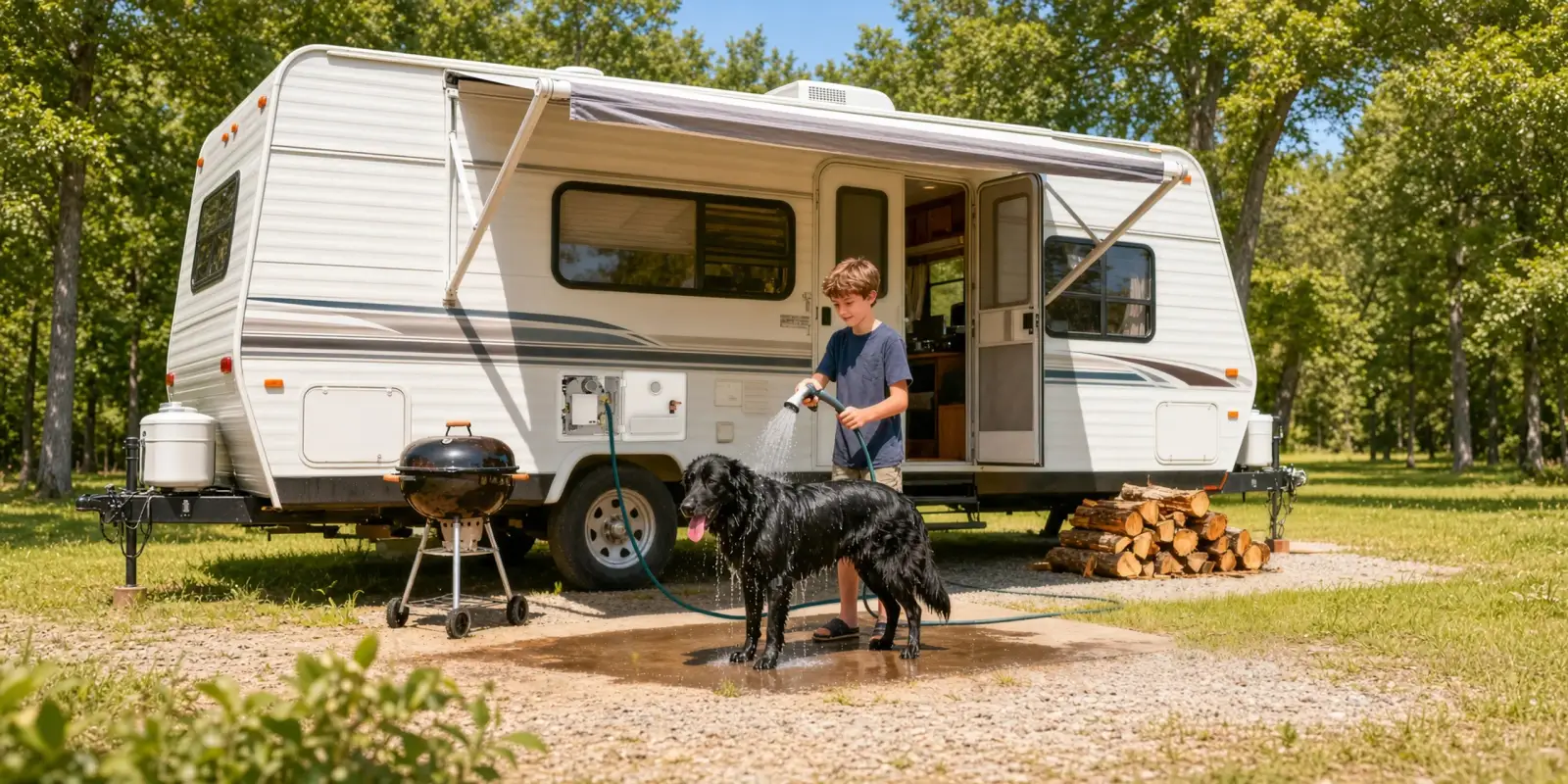
Case file 04 · Camping rental fleet
Camping Rental Fleet: Failure Rate and Write-Off Reduction
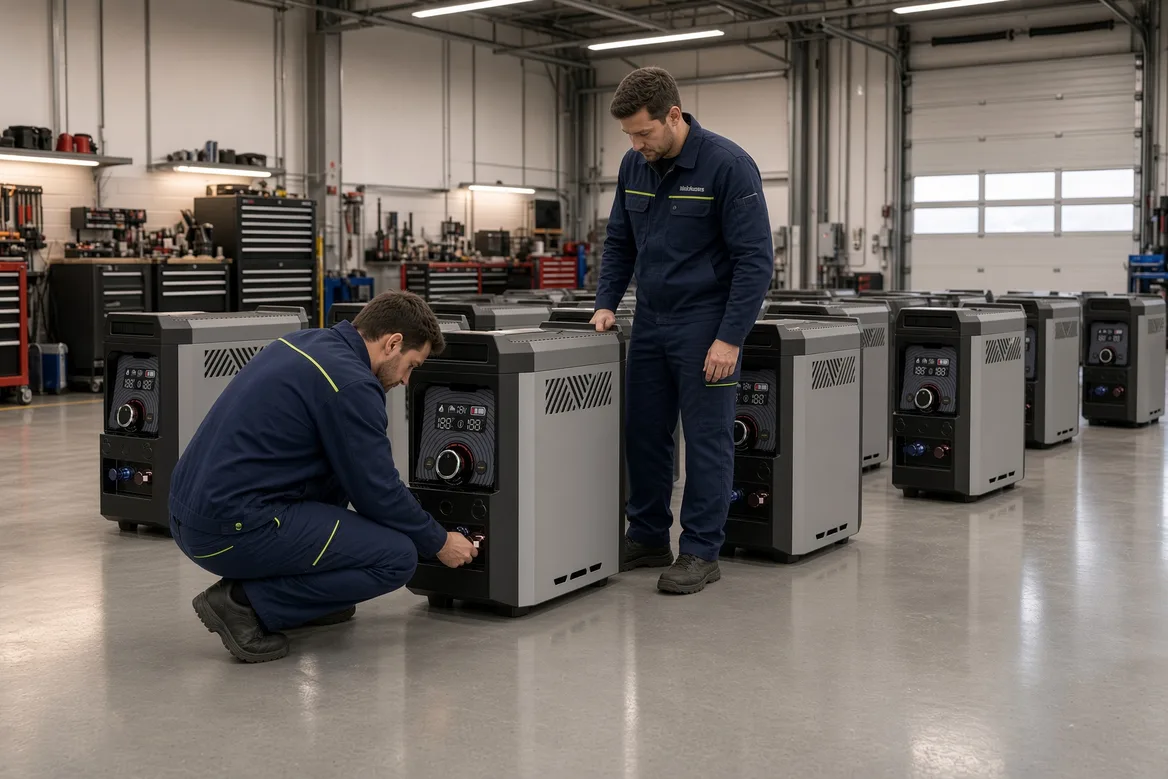
A commercial camping and glamping fleet was writing off portable heaters after 50 rental cycles. Fleet-spec hardware and a fixed turnaround routine rebuilt the ledger.
- 100% → 22%
- Share of failures written off
- 78%
- Failures converted to repair
- $12 · 10 min
- Common valve or O-ring swap
- 120
- Serial numbers audited in the portal
Client profile
Who the Fleet Program Was Built For
A camping and glamping operator running a high-turnover hire fleet of portable gas water heaters across several sites.
- Industry
- Camping and glamping hire
- Assets
- High-turnover portable water heaters in a shared pool
- Usage pattern
- Carried, used by first-time guests, returned to a yard between rentals
- Warranty portal
- 120 serial numbers audited for this case
- Forcing function
- Peak-season availability; a dead unit kills a booked weekend
- Build basis
- Gulfstone OEM fleet-spec against a retail-grade baseline
- Client name
- Withheld under NDA
Company profile linked for reference; the program figures are anonymised.
Summary
What Changed the Fleet Ledger
This case study covers one commercial camping and glamping fleet, not a claim about every rental heater on the market. Warranty tickets, teardown findings and factory telemetry from Gulfstone's lines were reviewed for the program.
The failure pattern was narrow. 42% of failures came from heat exchanger frost cracking, 28% from gas regulator fouling caused by dirty propane, and 19% from water pump dry-run burnouts. The consumer-grade unit in the fleet was written off after 50 rental cycles.
Gulfstone built a fleet-spec variant around serviceable components: modular internals, brass drain valves, reinforced O-rings and potted controllers. A printable turnaround and purge card gave every site the same routine.
The model turned 78% of failures into repairs and cut the write-off rate from 100% of failures to 22%. A common valve or O-ring swap costs about $12 and takes 10 minutes.
- 42% — Heat exchanger frost cracking
- 28% — Regulator fouling from dirty propane
- 19% — Pump dry-run burnouts
- 100% → 22% — Write-off rate, measured on the same fleet
- $12 — Parts cost of a common valve or O-ring swap
The manufacturer's published maintenance schedule sets the service intervals this program built around. Purge pressure and descale intervals are read from that document for each model, not from a site rule of thumb.
I
What Actually Fails on a Rental Fleet Heater?
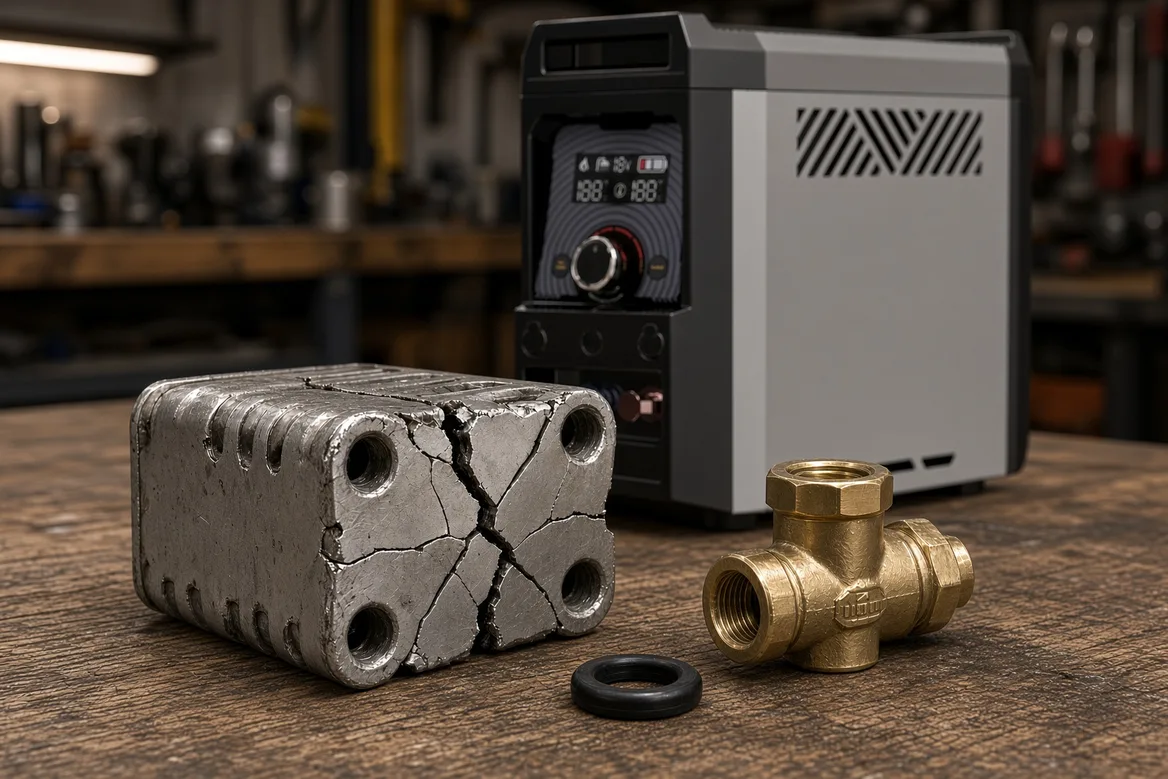
The losses sit in the workhorse units, not the seasonal stock. Gulfstone telemetry plus broader fleet-management data point to one repeatable failure stack.
Heat exchanger frost cracking drove 42% of failures. Gas regulator fouling from dirty propane accounted for 28%, and water pump dry-run burnouts added 19%. The remaining 11% spread across everything else.
A dead heater is never just a parts bill. Each failure pulls a unit out of inventory, kills a booked weekend and burns emergency staff hours. A summer breakdown strands a family at the campsite and forces a same-day swap.
Site managers pull a technician off scheduled maintenance to diagnose it. Refunds, paid upgrades and one-star reviews follow. In peak season, one dead unit cascades into a service queue no small crew can clear.
Gulfstone service engineers see this exact pattern. They find the same broken parts in returned fleet stock. One stuck valve forced them to pull the whole chassis, because the internals were not modular. Replacement economics punished repair: a $40 part sat behind three hours of labour.
“The parts cost almost nothing. The three hours of labour around them cost the unit.”
What a Dead Unit Costs the Season
- Lost inventory. A failed unit leaves the hire pool, and a weekend booking has to be moved or refunded.
- Emergency staff hours. A technician comes off scheduled maintenance to diagnose and swap a unit already booked out.
- Reputation damage. A cold shower at the campsite becomes a refund, a paid upgrade and a one-star review.
- Queue cascades. One failure in peak season pushes the whole service queue behind it, and the crew never catches up.
The Unit That Left the Fleet at 50 Cycles
A seized drain valve was logged on a consumer-grade unit after 50 rental cycles.
The valve sat behind a glued housing. Reaching it meant pulling the whole chassis, and the repair quote passed the unit's replace price.
The unit was written off. The fleet kept doing this until the loss was priced across a season instead of one ticket.
Why the Repairs Did Not Happen
- Rushed check-ins skipped purge steps, so trapped water sat in exchangers between rentals. Frost cracking follows trapped water, not cold weather.
- Winterisation varied by site, technician skill varied across locations, and photo documentation was incomplete or absent.
- Procurement over-weighted upfront unit price. Those choices hid the real cost until August, when the season could least afford it.
- A fused part assembly turns a $40 valve into a $300 replacement. Cheap hardware is only cheap until the first failure arrives.
The Bench Comparison, Side by Side
| Component | Retail-grade unit | Gulfstone fleet-spec |
|---|---|---|
| Heat exchanger | Frost-cracked tubes, weeping seam | Held pressure after purge |
| Regulator | Fouled with oily propane residue | Serviceable filter; clean and reseat |
| Pump | Seized after dry runs | Survived a documented purge |
| Drain | Moulded plastic stub, cracked | Quick-swap brass drain valve |
| Seals | Compressed and glued | Silicon O-rings, out with a pick |
| Controller | Corrosion on the board | Potted and waterproof |
Retail-grade unit in every left-hand reading; Gulfstone fleet-spec on the right.
Log purge and winterisation checks per unit at every site. A 30-second check-in photo beats an unplanned August replacement.
II
What Is Fleet-Spec Heater Engineering?
It is a build decision made before the fleet sees the unit: choose parts a technician can reach, seal the electronics against moisture, and make every repair traceable to one serial number.
The fix ran as a three-stage inspection pipeline: Return Check-In, Deep Clean and Dry, then Functionality Test and Reset. The pipeline only works on hardware that can be opened at the wash bay.
Gulfstone moved the spec away from retail replace-the-whole-unit logic toward OEM fleet survivability. Modular internals, brass drain valves, reinforced silicon O-rings and potted waterproof controllers were the four choices that carried the rest.
The Four Fleet-Spec Choices
Drain · Can the Drain Take a Wrench?
Brass beats moulded plastic at the drain because it survives heat cycling and repeated wrench work. A drain that cracks when rushed turns one failed valve into one failed unit.
Access · Can a Technician Reach the Failed Part?
Modular architecture beats glued assemblies because it shortens the path to the component. A technician works on the part, not the whole chassis.
Moisture · Does the Electronics Survive a Wet Return?
Potted electronics beat sealed electronics because the board survives moisture shock without becoming a sealed brick. Frost cracking happens when trapped water expands; potting protects the controller from the same moisture.
Seals · Do the Seals Come Out Clean?
Reinforced silicon O-rings lift out with a pick. Compressed, glued seals have to be cut, scraped and re-set, which is where repair time turns into replacement time.
When a Unit Fails, Three Paths Decide Its Fate
Repair in the field
Accessible part, stocked item, documented purge behind it: the unit returns to service the same day.
Repair in the workshop
Deeper damage but a modular chassis: the work order stays open until the QC code closes it.
Retire and strip
Downtime risk outweighs remaining cycles: demote, strip for spares or liquidate. At end of life, operators may recoup 15% to 30% of original cost.
The Terms Behind a $12 Repair
- Modular internals
- Components sit in a serviceable layout, so reaching a valve does not mean removing the chassis.
- Brass drain valve
- A quick-swap fitting that survives heat cycling and repeated wrench work, where moulded plastic cracks.
- Reinforced O-rings
- Silicon seals sized to be removed and reseated by hand, not cut out of a glued joint.
- Potted controller
- A waterproof PCB that survives a wet return without holding moisture against the board.
- Serial-number record
- QC code, photo and closed work order attach to the unit, not to a spreadsheet row.
The hardware is the same across the range. What changes is the part stock and the turnaround interval at each site.
“A $12 field repair beats a write-off only when the housing opens, the part is stocked, and the QC record proves the unit is fit to rent again.”
III
The Five-Minute Turnaround and Purge Routine
The routine runs between every rental, printed as a shop-floor card so warehouse staff can use it at the wash bay without scrolling.
Return Check-InCheck in
Capture the serial number, the QC code and photos of the unit as returned. The photo is the cheapest failure detector on the card: it shows a skipped purge or a damaged drain before the next guest sees the unit.
Shut Off and Open the PathIsolate
Shut off propane and cut the water supply. Open the downstream hot and cold taps so the line is not under pressure when the drain opens.
Drain and Clear Trapped WaterDrain
Remove the drain plug or open the drain valve, disconnect the hoses, and tilt the unit to clear water that gravity alone leaves behind. Trapped water is what frost cracking feeds on.
Purge With Compressed AirPurge
Purge the exchanger at the pressure verified in Gulfstone service documentation for that model. A supervisor fills this field from the engineering record before the card goes to the wall; nobody guesses PSI.
Descale on the Model IntervalDescale
Descale at the interval set for the model, again taken from verified service documentation. Scale builds where water sits, so a skipped interval shows up as a blocked coil months later.
Leak InspectionInspect
Run the leak inspection in order: plan, scan, confirm, document, repair, verify. Each step has a record, so a leak found at the wash bay does not become a guest complaint at the pitch.
Close the Work OrderClose
Log the repair work order and the approval back into service against the serial number. The cycle stays fixed: serial capture, QC code, photo, work order, approval. No unit returns to hire until the work order closes.
The Standard Turnaround, and the Failures It Catches
The standard path runs from return to re-hire. The exception path shows where a skipped step turns into a known failure mode.
Standard pathReturn to re-hire
Serial, QC code, photo
Propane off, supply off, taps open
Plug out, hoses off, unit tilted
Documented pressure, model-specific
Descale at the model interval
Leak check, work order closed, back in hire
Exception pathWhere turns become write-offs
Trapped water freezes: 42% frost cracking
Regulator fouls and starves the burner: 28%
Pump burns out when the tank runs empty: 19%
Moulded stub cracks under wrench pressure
IV
The Lead Engineer on Turning Write-Offs Into Repairs
The Lead Thermal and Structural Engineer owns the fleet-spec build at Gulfstone: which components are modular, what the drain is made of and how the controller is protected. The teardown bench in this case is their program. The lead engineer explained the shift. He showed us how a total write-off became a fast valve swap. The repair cost $12 and took 10 minutes.
Lead Thermal and Structural Engineer
Thermal and Structural Engineering, Gulfstone
Why does a $40 part become a $300 replacement?
Because the part sits behind a glued housing. The technician pays three hours of labour to reach a valve that costs $40, and the repair quote passes the price of a replacement unit. Modular internals are what remove that arithmetic.
Which single hardware change removed the most write-offs?
The drain. A moulded plastic stub cracks under wrench pressure, and a cracked drain is a leaking unit. A quick-swap brass valve takes heat cycling and repeated wrench work, and it comes off in minutes.
Why does potting the controller matter on a hire unit?
Guests return units wet, and units sometimes come back soaked. A potted board survives the moisture shock. A sealed board traps the moisture against the electronics and corrodes where nobody can see it until the unit fails.
What makes the repair repeatable across sites?
The serial number. The photo, the QC code and the closed work order all attach to it, so a service lead can see which unit was fixed, by whom, and whether it was proved fit before it went back out.
A valve swap on the bench takes ten minutes. A replacement unit takes a purchase order, a delivery and a lost booking.
V
Camping Rental Fleet Results: A Repair Model, Not a Replacement Model
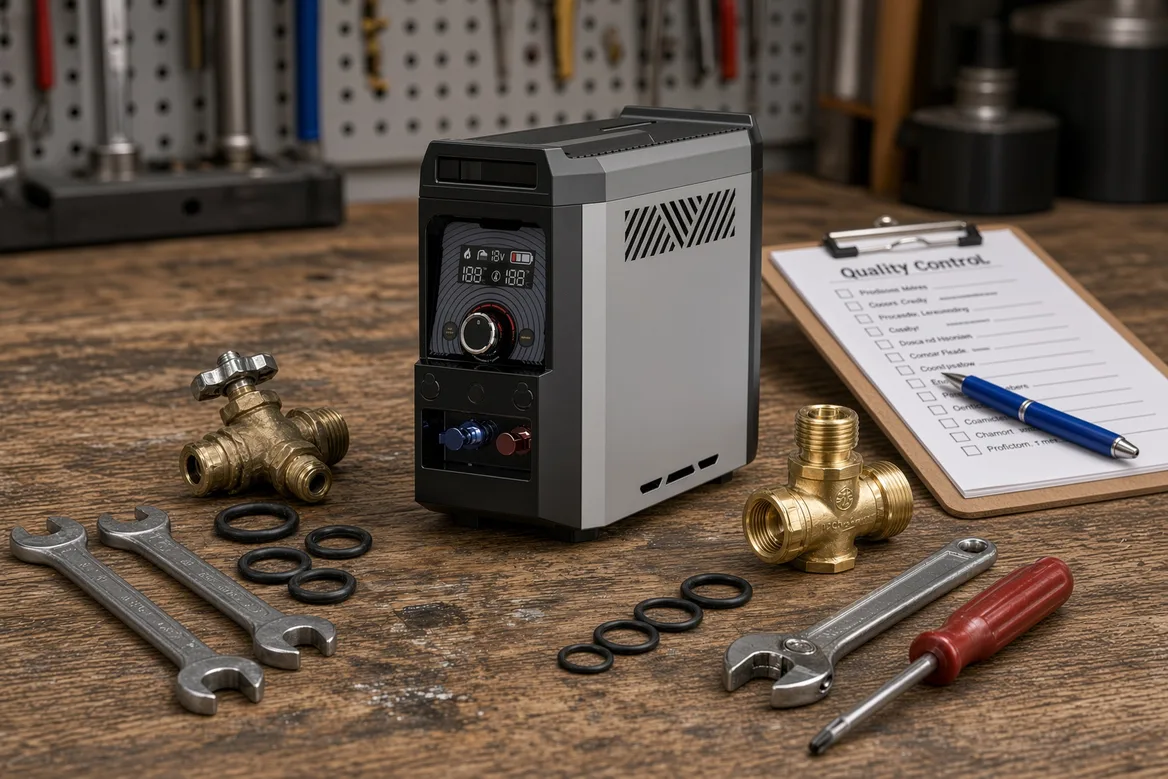
The comparison is consumer retail-grade builds against Gulfstone OEM fleet-spec builds on the same fleet, measured through warranty data, lab telemetry and repair logs over twelve months.
| Measure | Consumer retail-grade | Gulfstone OEM fleet-spec |
|---|---|---|
| Survival cycles | 50 cycles, then write-off | 320 cycles median to first repair, then back in service |
| Failure mode distribution | 42% frost cracking, 28% regulator fouling, 19% pump burns, 11% other | Same distribution, 78% converted to repair |
| Average repair cost per incident | Full replacement, about $300 | $18 average in parts; $12 for a common valve or O-ring swap |
| Average labour per incident | 3+ hours, where repaired at all | 10 minutes for a common swap; 28 minutes on average |
| Share converted from write-off to repair | 0% | 78% |
| Write-off rate | 100% of failures | 22% of failures |
Where the Ledger Turned
Retail-grade unit
$300
One seized valve behind a glued housing, quoted above replace price
Fleet-spec unit
$12
Brass valve and O-ring, pressure-tested and logged at the bench
Write-off rate
100% → 22%
Measured on the same fleet over twelve months
The $300 is the approximate replacement price of the consumer unit, not an invoice line. The repair figures are parts cost plus the labour time stated; they do not include site overhead or the value of a lost booking.
The audit covers the serial-number history of 120 fleet units in Gulfstone's warranty portal. Every repair work order carried a photo and a QC code, and no unit re-entered service without a closed work order. Mean time between failures moved from 48 rental days on consumer units to 310 rental days on fleet-spec units in the same dataset.
Gulfstone built the fleet-spec hardware and its service team gathered this data. The analysis uses Gulfstone proprietary telemetry and manufacturing observations, so treat it as a vendor-participant case study, not a neutral third-party audit. The client's name is removed.
- Fewer emergency call-outs: common failures are fixed at the wash bay instead of pulled into a workshop queue.
- Clearer procurement: the spec names serviceable parts and prices the first repair, not only the purchase order.
- More consistent uptime: same-day return replaced multi-day replacement on common repairs.
- Lower cognitive load for junior staff: one card and one serial number decide what happens to the unit.
“A frost-cracked unit that used to mean a write-off turned into a 12-minute valve swap. The serial number went back into service the same afternoon.”
VI
What Transfers From a Rental Fleet Program
Four decisions carried the result. Each one is cheaper before the fleet buys the unit than after the first season.
Buy for repairability, not just unit price
A moulded consumer drain stub cracked under wrench pressure while a brass fleet valve swapped in minutes. Price the first repair, not only the purchase order.
Standardise turnaround, purge and winterisation
Every site runs the same check-in, dry-out and purge card. A 30-second photo log after each rental is the cheapest failure detector here.
Track lifecycle by serial number
In this audit, 120 units in the warranty portal each carried a QC code and a photo on every work order. That record is what lets a fleet retire gear before a guest-facing failure.
Apply a repair-versus-retire threshold to end of life
Compare next repair cost plus downtime risk against remaining service value. A used-gear sale is an end-of-life liquidation tactic, not a substitute for engineering or preventive maintenance.
Write the card first: check-in, isolate, drain, purge, descale, leak-check, close. Then buy hardware that lets a technician run it in five minutes without opening the chassis.
VII
Why Fleet-Spec Teams Get Measurable Hire Pools
The next step is not simply a tougher heater. It is a fleet that is measurable, repairable and auditable by design: serial-number history tied to the repair economics of every unit.
Teams that make that link retire gear on service value instead of on a failed season. A used-gear sale should be the final recovery step, not the fleet plan.
Ask the Gulfstone engineering team for help. They can review your hardware design, and they can build a reliable spare-parts program for your business.
Frequently Asked Questions About Camping Rental Fleet Failure Rates
1. What specific items are failing most often?
Portable water heaters are the specific items failing most often in this camping rental fleet case. The failure stack is 42% heat exchanger frost cracking, 28% gas regulator fouling from dirty propane and 19% water pump dry-run burnouts. The remaining 11% spreads across other issues.
2. How should a rental fleet track its inventory?
A fleet should track inventory by serial number, QC code, photos and closed repair work orders. In this program every unit carried a serial-number history in the warranty portal, and no unit re-entered service without a closed work order. That record shows which unit was fixed, by whom, and whether the repair closed.
3. What does loss of use mean for a rental fleet?
Loss of use is the revenue and availability a unit gives up while it is out of service. In this case a failed heater pulled a unit out of inventory, killed a booked weekend and burned emergency staff hours. That lost availability is the downtime the fleet tracked.
4. Are rental fleet heaters a depreciating asset?
This case treats camping hire equipment as an asset with residual value and times retirement with acquisition cost, expected cycle life, residual value and cumulative repair burden. At end of life, operators may recoup 15% to 30% of original cost. Any tax treatment is a finance question for the operator, not a figure this case sets.

Forward
Co-founder & General Manager, GulfstoneGas appliance manufacturing and certification
Most of what decides a gas appliance is settled before anything is built — on the drawing, at the cut-out, in the tolerance someone chose for the gas path. I have spent my working life on the manufacturing side of that decision, and this is where I write down what it has taught me.
Nothing here is written from a sales desk. Every note comes off the floor: a batch held until a reason was found, a fitting that failed in transit, an approval path that only made sense once the destination market was fixed. If you read these first, the opening conversation starts at the standard rather than at the beginning.
- Gas water heater engineering
- Design for manufacturing
- Certification path selection
- Private-label tooling
- Off-grid and outdoor water heating
- Top 8 Outdoor Portable Gas Water Heater Factories in China for B2B BuyersNov 4, 2026
- Custom RV Appliance Industrial Design: An OEM Brief to a Validated PrototypeNov 3, 2026
- How to Build Custom Thermostat UI Design Software for OEM Embedded PanelsNov 3, 2026
- Top 8 RV Water Heater OEM Suppliers Canada: Vetted for Volume BuyersNov 3, 2026
Fifteen years in appliance manufacturing — home appliances, RV refrigeration, then gas water heating — from the drawing to the shipping container.
Leads Gulfstone's design-for-manufacturing reviews and the certification path selected for each destination market.
Works directly with OEM and private-label buyers on tooling, tolerances and the approval file.