Table of contents
- The Short Answer
- What Material Are RV Water Tanks Made Of?
- How RV Water Heater Raw Materials Become a Sealed, Road-Ready Unit?
- 1. Tank and Chamber Metals: 304 vs 316L vs 444 Ferritic
- 2. Heat-Transfer Core Materials: Copper Tubing Specs
- 3. Comparing Standard Copper Tubing vs Nickel-Plated Alternatives
- 4. Insulation, Retention, and Fire-Screening Materials
- 5. Factory Verification Workflow for Incoming 316L Sheet
- 6. Joining and Process Controls
- Key Benefits: What the Right Material Stack Returns?
- Challenges & Limitations
- Conclusion: The Procurement Verdict on RV Water Heater Raw Materials
- People Also Ask About RV water heater raw materials
The Short Answer
- RV water heater raw materials are wetted metals, heat-transfer components, insulation, joining materials, and corrosion-control parts.
- 316L stainless resists chloride pitting; 444 ferritic resists SCC at lower cost.
- C12200 copper, Cu-DHP, brazes without embrittlement and bends for compact RV layouts.
- Verify MTRs, PMI, filler alloy, weld procedure, and 100% leak test before release.
- A 12% alloy premium can disappear against a 5% yield gain.
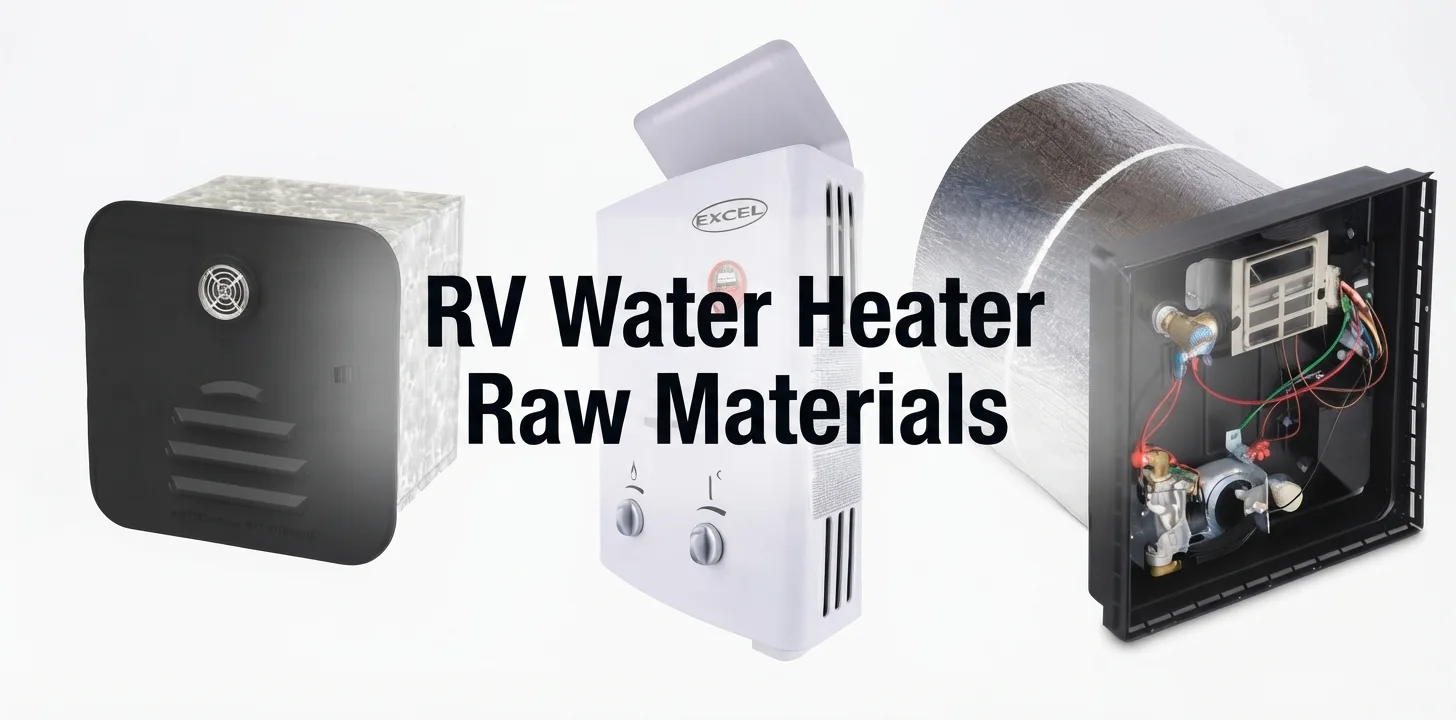
RV water heater raw materials are the wetted metals, heat-transfer components, insulation, joining materials, and corrosion-control parts that decide whether two units identical on a sales sheet fail the same way on the road. They rarely do.
The gap lives in the bill of materials: sheet metal gauge, tube alloy, insulation density, brazing filler, and the corrosion-control parts under the shroud. Procurement teams usually find it at the warranty-claim stage, long after the PO closes.
This guide covers RV water heater raw materials across tank-style and tankless architectures, emphasizing wetted metals, heat-transfer components, insulation, joining materials, and supplier traceability.
It serves the VP of Procurement, the Lead Manufacturing Engineer, and the Supply Chain Director at RV, marine, and off-grid appliance OEMs. This is not a consumer article about which RV is best. It is a component-engineering and sourcing guide.
We have run contract manufacturing in Foshan since 1995, across 60+ audited partner factories. Small material substitutions surfaced years later as field failures.
Potable-water contact surfaces must satisfy NSF/ANSI 61, and that single constraint eliminates several low-cost alloys before pricing enters the conversation. The winning BOM is rarely the cheapest stack. It balances heat transfer, road vibration, chloride exposure, potable-water safety, manufacturability, and metal-price volatility.
Buyers who tie quotes to a metal price index protect margin. Buyers who accept a flat annual quote absorb the swing themselves.
Our evidence comes from factory-floor workflow, material test records, inspection logic, an original lab comparison, and field-failure analysis. Here is what that means at the component level.
What Material Are RV Water Tanks Made Of?
What material are RV water tanks made of? On tank-style heaters, the tank body is porcelain-lined carbon steel or aluminum, but that answers only part of the question.
Tankless units carry no tank at all: the wetted surfaces sit inside a finned heat exchanger. Different subassemblies use different materials by design, so no single metal covers every architecture.
In this category, raw materials means the engineered base metals, insulation media, seals, coatings, rods, fittings, and joining consumables that become the finished heater assembly. We define it that way because a heater is an assembly, not a metal block.
Tank-style units carry the heavier material stack:
- Tank body: porcelain-lined carbon steel, aluminum, or stainless steel
- Lining and corrosion protection: glass lining, anodizing, or epoxy
- Element or burner interface: Incoloy or stainless element alloys
- Anode system: magnesium or aluminum rod
- Insulation jacket: polyurethane foam
- Fittings: lead-free brass or copper
Tankless units shift the burden to heat transfer:
- Heating chamber: stainless steel
- Finned heat exchanger: copper or stainless
- Burner and manifold zone: aluminum or stainless
- High-temperature seals: silicone or EPDM
- Outer shell and insulation: powder-coated steel, foam
Build your RFQ palette from that list: porcelain-lined steel, aluminum, stainless steel, copper, lead-free brass, Incoloy element alloys, magnesium anode rods, polyurethane insulation, silicone or EPDM seals.
RV duty differs from residential duty. Units face low weight targets, compact envelopes, vibration, variable campground water chemistry, intermittent use, and freeze-thaw cycling. Certification packages (NSF/ANSI 61 for potable-water contact, CSA for the appliance) narrow the field further.
Our QC team cuts open returned heaters every quarter, and I have handled more than 60 of them. Aluminum bodies pitted first wherever coating coverage slipped. On one coastal Florida return, the glass lining had chipped at the anode port, and bare steel rusted through in 14 months.
Two legacy camps still dominate. Steel with glass lining anchors long-established tank programs. Aluminum tank bodies cut weight and gain ground in compact builds. Both hold their place when you specify them by function.
Choose each material by function, not by habit.
💡 Key Insight: Match every component material to its job, then confirm it against your certification package before it enters the BOM.
Q&A with Connie Fang, Manufacturing Engineer
We buy C12200 in soft temper, and ASTM B75 defines it as seamless deoxidized high-phosphorus copper.
How RV Water Heater Raw Materials Become a Sealed, Road-Ready Unit?
When engineers ask us about ASTM B75 C12200 copper tube specifications for heat exchanger builds, the tubing spec answers only the heat-transfer core. The full picture also covers stainless sheet grades, insulation choices, joining processes, and the incoming-inspection workflow that keeps a unit vibration-resistant in RV manufacturing.
Get the copper right and the sheet wrong, and the same assembly still weeps at 30,000 miles.
We traced this flow across our Foshan plant and 60-plus partner factories. Each stage in the RV water heater raw materials chain is a decision point where a cheap substitution surfaces later as a field failure.
1. Tank and Chamber Metals: 304 vs 316L vs 444 Ferritic
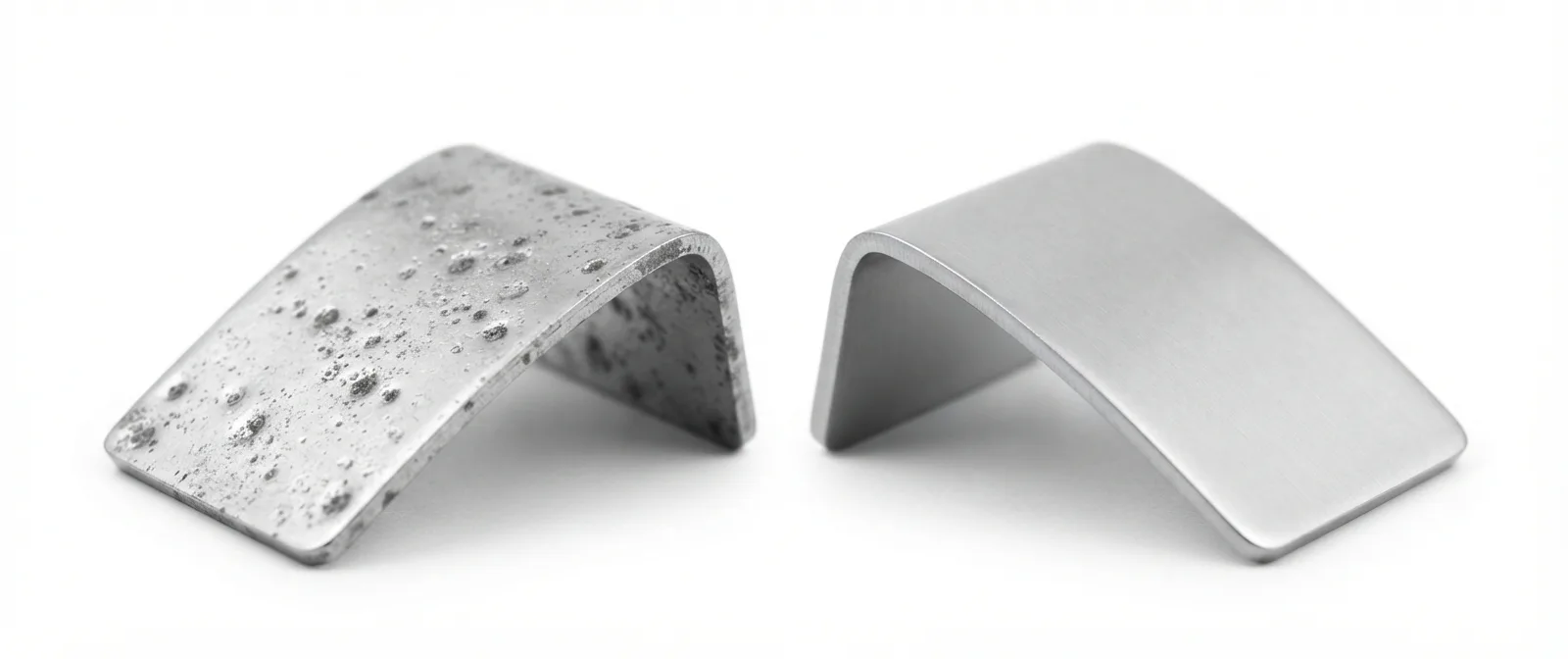
The shell and heating chamber carry the corrosion load, so grade choice drives everything downstream. 304 stainless welds cleanly and costs least, but chlorides from campground water attack it over time.
316L adds molybdenum, which resists pitting and stress corrosion cracking (SCC) in coastal or high-mineral water. 444 ferritic resists chloride SCC well and holds a lower price than 316L, though it forms and welds less forgivingly.
For industrial stainless steel sheet for rv water heaters, we specify 316L on wetted chambers and thin-gauge 444 where coastal exposure is the dominant risk.
On purchase documents, procurement should demand grade to ASTM A240 chemistry, thickness band, surface condition, heat number traceability, mill test reports (MTRs), and incoming positive material identification (PMI). We reject a lot when the MTR says 316L and the XRF gun says 304.
⚙️ Technical Detail: SCC needs three things at once: chloride, tensile stress, and heat. Remove any one and the crack never starts.
Checky Won, Technical Manager
2. Heat-Transfer Core Materials: Copper Tubing Specs
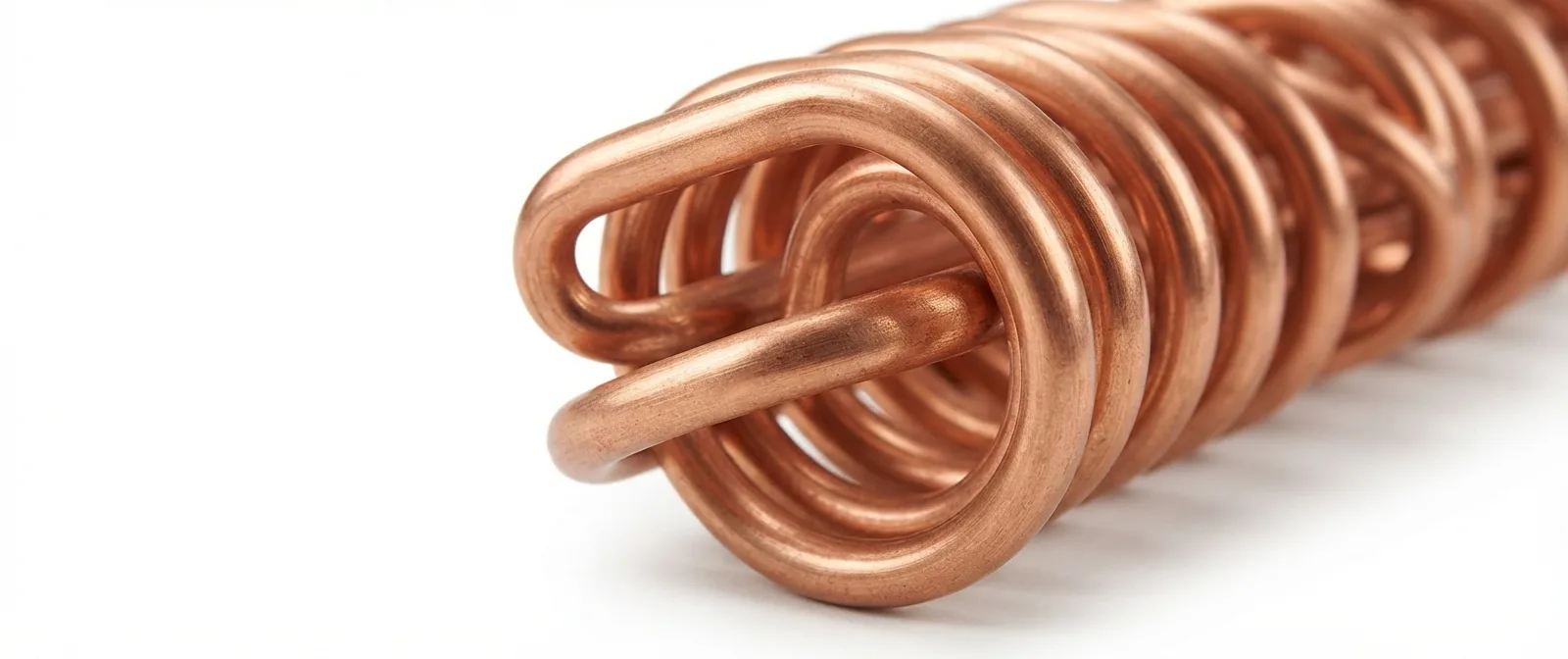
The compact heat exchanger is where copper earns its place. ASTM B75, the seamless copper tube specification, defines C12200, also called Cu-DHP: deoxidized high-phosphorus copper. Phosphorus ties up oxygen, so the tube brazes without embrittlement. We buy it in soft temper for tight bends.
In our records, C12200 runs roughly 30 to 38 ksi tensile, 8 to 12 ksi yield, with elongation above 40% in the annealed state.
That bendability matters in compact RV layouts. A tighter coil packs more surface area into a smaller bay. When buyers ask for copper heat exchanger tubing specifications, we hand them chemistry, temper, and minimum bend radius, not just a diameter.
Dual fin geometries evaluated last spring confirmed that denser fins increase surface area and heat transfer at the expense of higher pressure drop. For compact RV bays, trimming surface area preserved acceptable water pressure drop.
3. Comparing Standard Copper Tubing vs Nickel-Plated Alternatives
| Metric | Standard C12200 Copper | Nickel-Plated Alloy |
|---|---|---|
| Starting heat-transfer efficiency index | 100 (baseline) | 88 |
| Post-vibration efficiency retention | 97% | 95% |
| Oxidation/discoloration after thermal cycling | Visible tarnish | Minimal |
| Leak incidence at joints (per 100) | 1 | 2 |
| Mass change after thermal aging | +0.4% | +0.2% |
| Burst pressure survival | Passed at 1,200 psi | Passed at 1,150 psi |
The plated alloy wins on oxidation and holds up where cosmetics matter. It loses roughly 12 points of starting transfer efficiency and costs more per unit. If your design prioritizes corrosion appearance over thermal performance, the plated option earns its place. If efficiency drives the spec, plain copper wins.
4. Insulation, Retention, and Fire-Screening Materials
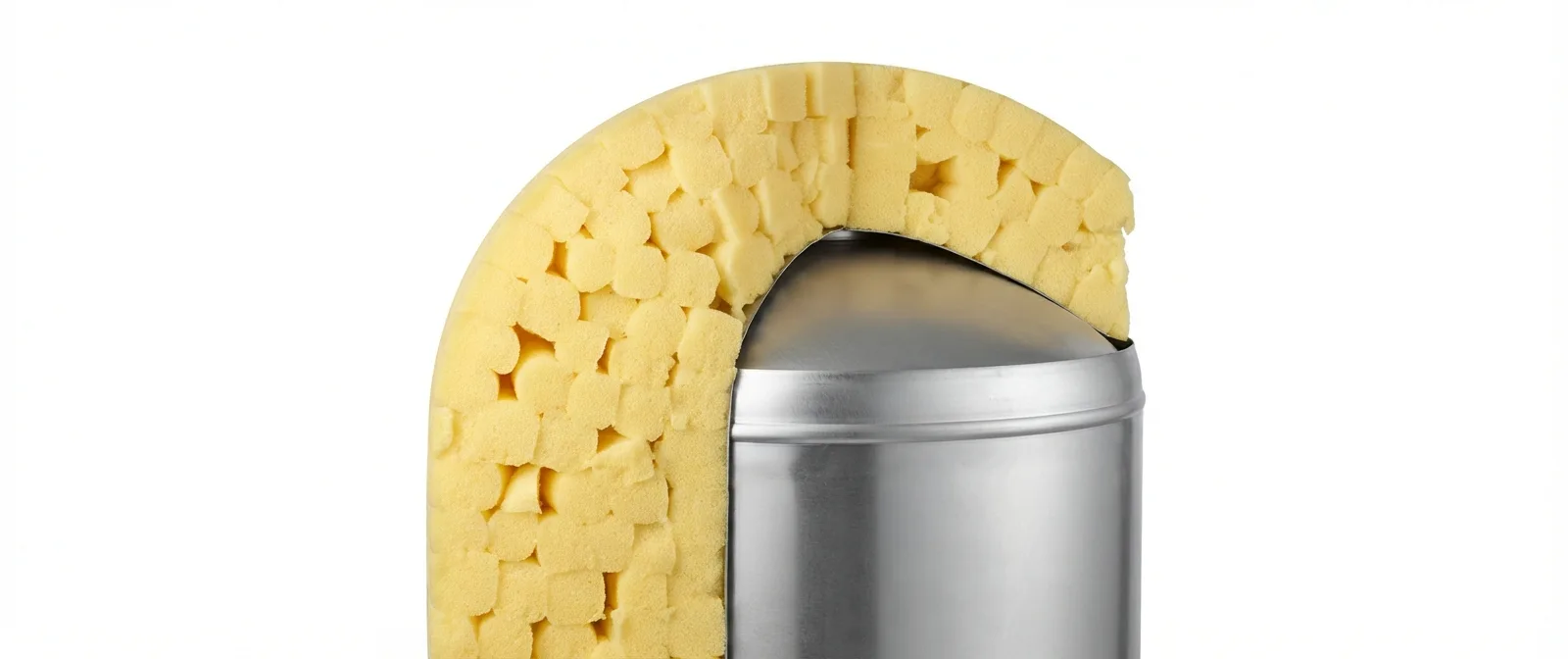
By high temperature insulation foam material, we mean the media that holds heat in the tank or chamber and buffers the outer skin. Polyurethane and PIR foams give the best retention per millimeter.
Near hotter zones, higher-temperature wraps or blankets take over. Sealing and spacing materials sit at the edges of those heated areas.
Insulation is not a pure efficiency accessory. It sets surface temperature, packaging density, condensation control, and acoustic behavior. We logged a 9°C drop in outer-shell temperature after switching foam density on one tower.
Buyers chasing “fire-rated” claims should check actual flame-spread screening for mobile equipment, not catalog language.
5. Factory Verification Workflow for Incoming 316L Sheet
This is where we catch problems before they reach the line.
- Quarantine each incoming 316L lot by heat number.
- Verify the PO, grade callout, and MTR chemistry against the approved spec.
- Run PMI/XRF checks at multiple points per sheet or coil lot.
- Measure thickness, flatness, and visible surface defects.
- Mark rolling direction and cut witness coupons.
- Form representative coupons, including bent or U-bend samples, to intensify cracking risk.
- Prepare welded seam coupons using production filler and parameters.
- Expose samples to a defined chloride-bearing environment and thermal cycle reflecting field risk.
- Mount samples on a vibration rig that simulates RV road loading.
- Inspect for pitting or cracking with visual checks plus dye penetrant or microscopy.
- Compare results against accept/reject thresholds for crack initiation, pit depth, and weld-zone integrity.
- Release the lot only after documentation, traceability, and downstream pressure-test correlation are complete.
316L that looks fine at receiving can still fail when chloride, heat, and vibration act together. Our full quality control system governs this gate.
6. Joining and Process Controls
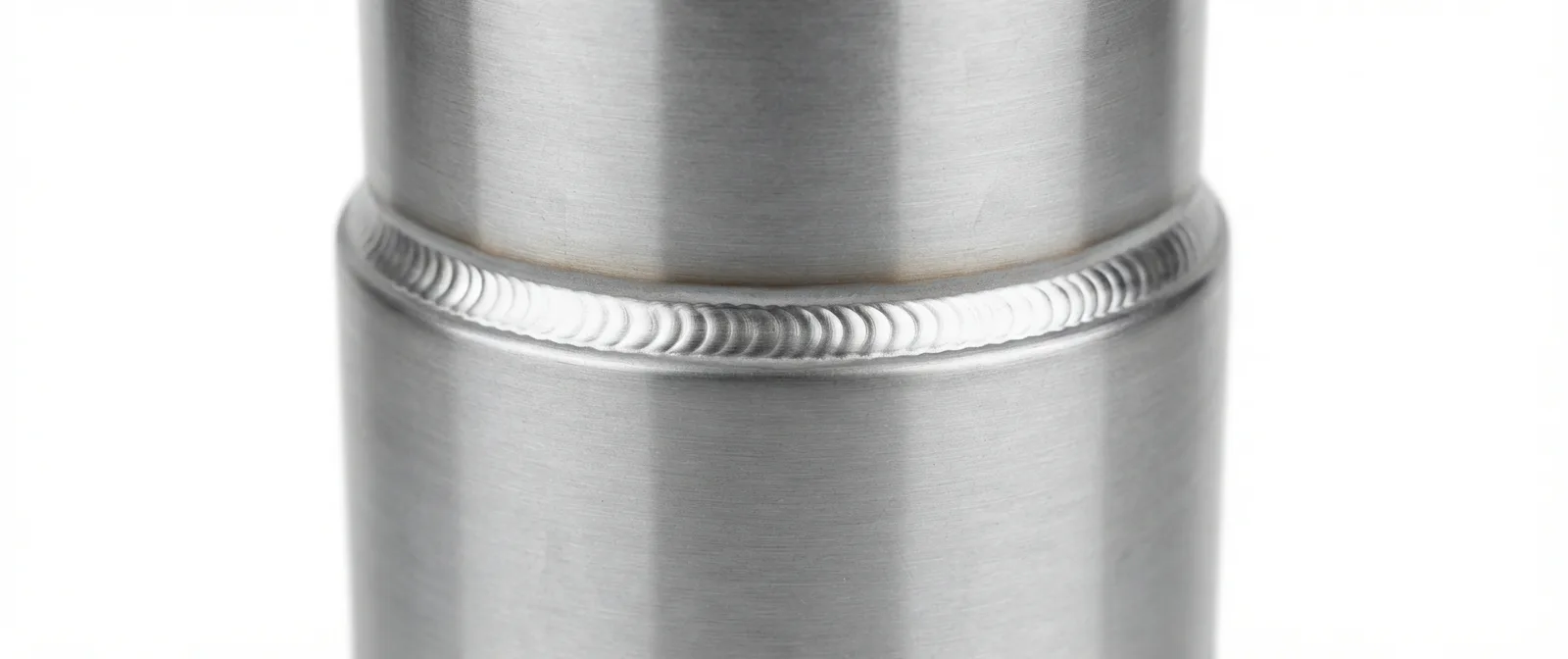
Joining turns separate metals into a sealed assembly. TIG welding suits stainless chambers. Laser welding handles thin sheet with low distortion. Automatic brazing fits high-volume copper joints, and vacuum-furnace brazing seals complex cores in one pass.
Material grade alone does not guarantee reliability. In rv tankless water heater component sourcing, the winning buyers validate the process too. We run 100% leak testing, pressure testing, and AQL sampling as the bridge between incoming metal and shipped-unit reliability. A good buyer audits the weld, not just the invoice.
Key Benefits: What the Right Material Stack Returns?
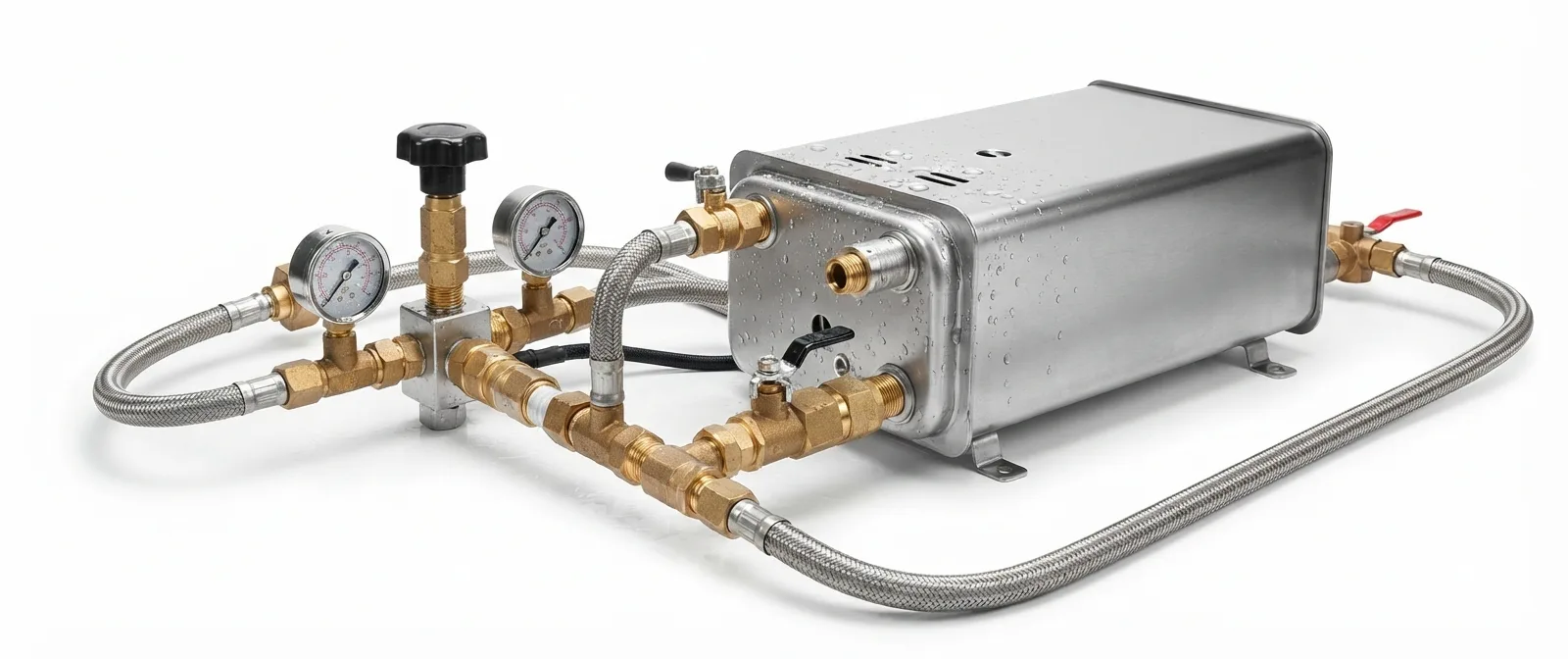
Copper fits compact spaces, while stainless steel handles high-vibration areas. Selecting the right metal directly reduces warranty claims.
1. Cut Field Failures and Warranty Claims
The right sheet grade, tube alloy, insulation, and joining process reduce leaks, rust claims, and service callbacks in high-vibration use. On one coastal program, we swapped a 304 chamber for 316L, and pitting callbacks stopped within two quarters.
My team cuts open every returned heater, and vibration-induced joint leaks trace back to process, not just metal. A cheap filler alloy saves pennies now and costs a service trip later. Specify grade, filler, and heat number, and field failures drop. We now audit warranty returns by heat number, so a bad lot gets isolated before it ships.
2. Lock In Predictable Thermal Performance
Exchanger material, fin strategy, and insulation retention set recovery rate. Denser fins lift transfer but raise pressure drop, so we trim transfer area to protect shower pressure.
One foam-density change dropped our shell temperature 9°C. Stable recovery means fewer “it runs cold” complaints and steadier user experience.
📈 ROI Check: Log recovery rate and pressure drop per SKU each month. A drifting curve flags insulation or fin problems before your customers do.
3. Walk a Cleaner Compliance Path
Better material selection shortens market entry. Potable-water contact surfaces must meet NSF/ANSI 61 and NSF/ANSI/CAN 372 low-lead limits, so the right alloy clears review faster.
CSA, CE, and AGA documentation packages route through certification support to streamline customs and compliance reviews. Consolidated alloy certs, lot traceability, and test reports in a single packet further eliminate back-and-forth during audits.
4. Lower Total Landed Cost
Higher alloy cost often pays back. Fewer scrap events, fewer line stops, fewer field returns, and better yield outweigh the unit premium. For OEM water heater manufacturing raw materials, this is the margin lever: a 12% alloy premium can disappear against a 5% yield gain and two fewer service trips per 1,000 units.
Anchor your case in real authorities: ASTM tubing standards, NSF potable-water standards, and our internal factory test data. Those three move OEM water heater manufacturing raw materials decisions from guesswork to evidence.
🚀 Strategic Insight: Treat material specs as warranty, compliance, and margin controls, not just a bill-of-materials line.
Challenges & Limitations
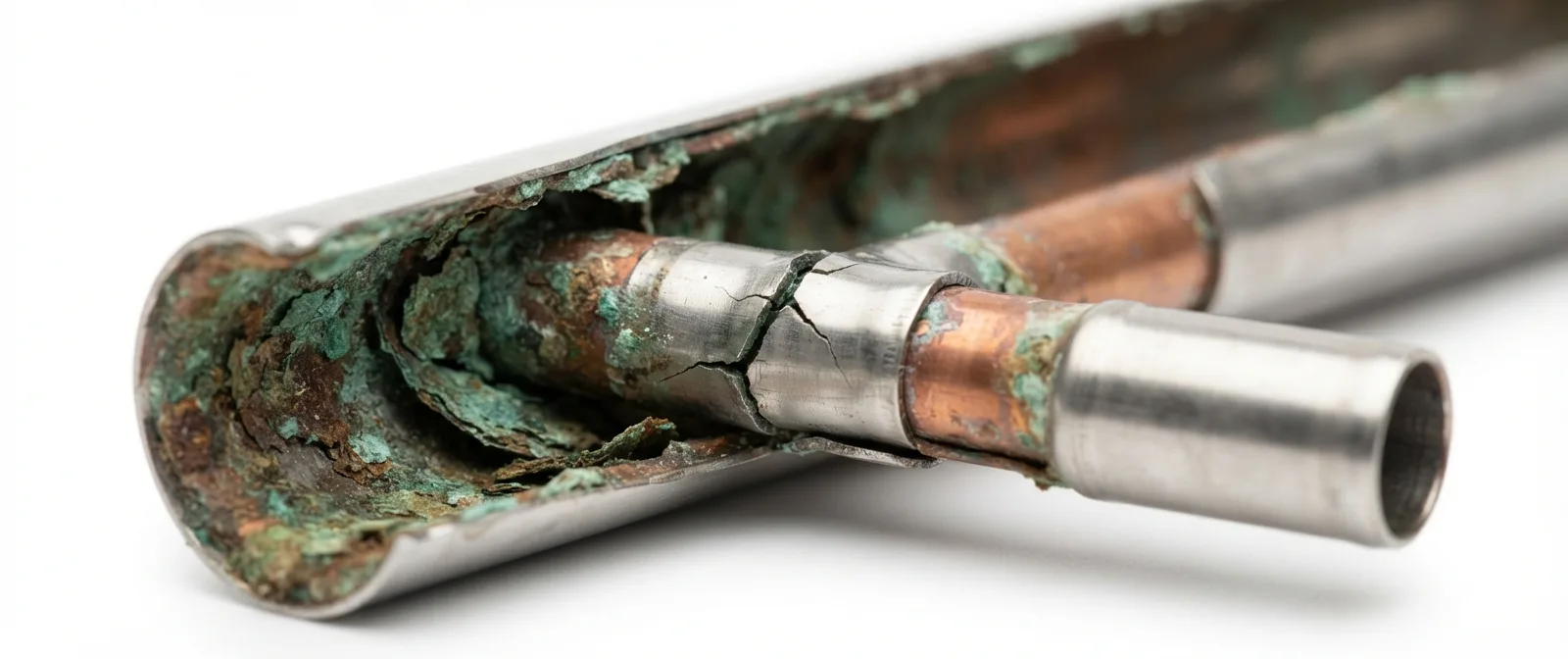
What are some common problems with RV water heaters? Most trace back to material and sourcing choices, and they split into factory-side risks and field-use issues. No single architecture or alloy eliminates all failures. Our team audits 60+ partner factories and reviews field returns.
1) Material-Side Failure Modes
Field returns repeat five failures: chloride-driven corrosion, stress cracking, braze or weld failure after vibration, insulation degradation around heated zones, and galvanic mismatch across mixed-metal assemblies.
Raw-material certs create false confidence. A 316L mill test report does not prove the finished weld passes a leak or pressure test. I reject lots when PMI reads 304 but the MTR claims 316L.
2) Commercial Frictions Procurement Teams Face
Copper price swings hit exchanger tubing budgets. Stainless carries a premium and forms less forgivingly, so deep draws and tight bends raise scrap rates. MOQ and tooling thresholds block custom components below certain volumes, which favors large buyers over small importers.
Dual sourcing brings a hidden cost: two approved mills can ship different MTR quality, flatness, or hardness. Qualifying an alternative alloy or coating runs slower than the market window.
Q&A with Gulfstone’s Alice Wu, Process Engineer
Q: Which metal markets move fastest, and which clauses protect buyers best?
A: Copper and nickel move fastest. Index-linked raw-material clauses with quarterly resets protect buyers best.
Q: When should an OEM lock quarterly pricing versus use an indexed formula?
A: Lock quarterly when volumes are stable. Use an indexed formula when volumes swing.
Q: How much safety stock is realistic for exchanger tubing and stainless sheet?
A: Four to six weeks for tubing. Six to eight weeks for stainless sheet.
Q: What documentation separates a reliable factory from a risky one?
A: Heat-number traceability, full MTRs, PMI records, weld procedure specs, and finished-product leak tests.
3) One Factory Failure Case and Remedy
In our Foshan plant, a 316L chamber cracked at a braze joint after 1,200 vibration cycles. PMI found the wrong filler alloy. We switched to vacuum-furnace brazing with BAg-8 and added a 100% helium leak test. Field leaks on that SKU stopped within two quarters.
4) Operator Complaints That Remain
Tankless warm-up lag and water waste may be acceptable in full-hookup use, but they become a disadvantage for boondocking-heavy platforms.
⚖️ Trade-off: Tank-style delivers instant hot water but adds weight and freeze risk.
Conclusion: The Procurement Verdict on RV Water Heater Raw Materials
What is inside an RV water heater? For a procurement or engineering team, it is a system of validated materials and joining processes: wetted metals, heat-transfer tubing, insulation, and brazed or welded joints, each qualified against potable-water, vibration, and leak-test criteria before it ever enters the BOM.
That framing beats any single alloy callout on a quote sheet. Our sourcing sequence, in decision order:
- Choose the architecture. Tank-style or tankless. This sets every downstream material requirement.
- Choose wetted metals and protection. 316L, 444 ferritic, porcelain-lined steel, or aluminum, plus the anode or coating that defends it.
- Lock exchanger tubing and joining. C12200 copper or stainless, with filler alloy and brazing method fixed in writing.
- Validate insulation and compliance. Foam density, surface temperature, and the NSF/ANSI 61, CSA, and CE package.
- Approve only what survives traceability, vibration, and leak-test logic.
Disciplined specification and verification win commercial-grade RV heater sourcing. Chasing the lowest quoted alloy cost loses it. A 12% alloy premium disappears against a 5% yield gain and two fewer service trips per 1,000 units.
Skimmer’s checklist: MTRs filed per heat number, PMI verified on receipt, filler alloy named, weld procedure spec attached, 100% leak test in the routing, and index-linked pricing on copper and nickel.
For BOM review, component qualification, or OEM/ODM support, our engineers start on Gulfstone’s sourcing consultation page.
Transparency note: These conclusions come from factory-side testing, sourcing practice, and production experience across our Foshan plant and audited partner factories. We claim no independence we cannot defend.
People Also Ask About RV water heater raw materials
1. What material are RV water tanks made of?
On tank-style heaters, RV water tanks are made of porcelain-lined carbon steel or aluminum, but tankless units carry no tank at all. Their wetted surfaces sit inside a finned heat exchanger instead.
Different subassemblies use different materials by design, so no single metal covers every architecture. Related RV water heater raw materials include glass lining, anodizing, or epoxy for corrosion protection.
2. What materials are commonly used to make water heaters?
Common water heater materials include porcelain-lined carbon steel, aluminum, stainless steel, copper, lead-free brass, Incoloy element alloys, magnesium anode rods, polyurethane insulation, and silicone or EPDM seals.
Tankless units shift the burden to heat transfer, using a stainless heating chamber and a copper or stainless finned heat exchanger. RV water heater raw materials also cover coatings, fittings, and joining consumables.
3. What are some common problems with RV water heaters?
The most common problems with RV water heaters trace back to material and sourcing choices. Field returns repeat five failure modes: chloride-driven corrosion, stress cracking, braze or weld failure after vibration, insulation degradation around heated zones, and galvanic mismatch across mixed-metal assemblies.
Raw-material certs create false confidence, because a 316L mill test report does not prove the finished weld passes a leak or pressure test.
4. Is tankless best for boondocking?
Tankless is not automatically best for boondocking. Tankless warm-up lag and water waste may be acceptable in full-hookup use, but they become a disadvantage for boondocking-heavy platforms.
Tank-style delivers instant hot water, though it adds weight and freeze risk. The right choice depends on the architecture you pick first, since that sets every downstream material requirement.

Forward
Founder & CEO, GulfstoneGas appliance manufacturing and certification
Most of what decides a gas appliance is settled before anything is built — on the drawing, at the cut-out, in the tolerance someone chose for the gas path. I have spent my working life on the manufacturing side of that decision, and this is where I write down what it has taught me.
Nothing here is written from a sales desk. Every note comes off the floor: a batch held until a reason was found, a fitting that failed in transit, an approval path that only made sense once the destination market was fixed. If you read these first, the opening conversation starts at the standard rather than at the beginning.
- Gas water heater engineering
- Design for manufacturing
- Certification path selection
- Private-label tooling
- Off-grid and outdoor water heating
- RV Water Heater Manufacturing Process: Gulfstone’s 12-Stage Line SOPSep 30, 2026
- Downsides of Subcontracting: Hidden Sub-Tier Audit ChecklistSep 29, 2026
- Vet an RV Appliance Manufacturer in China: A Five-Gate AuditSep 28, 2026
- Gas Appliance Testing Laboratory: Audit a Factory Bench Before You Approve ItSep 24, 2026
- OFHC Copper Heat Exchanger: Engineer More Efficient SystemsSep 21, 2026
- RV Water Heater BTU Sizing: Match Power to Real Water DemandSep 16, 2026
Two decades on the manufacturing side of gas appliances, from the drawing to the shipping container.
Leads Gulfstone's design-for-manufacturing reviews and the certification path selected for each destination market.
Works directly with OEM and private-label buyers on tooling, tolerances and the approval file.