Table of contents
- TL;DR
- The Basics: OEM, Contract Manufacturing, and the Sub-Tier Chain
- Factory Audits and Unannounced Visits: The Operational Core
- Key Benefits: Why Controlled Subcontracting Protects Your Program
- Final Verdict: Provable Control Beats Perfect Vertical Integration
- Frequently Asked Questions about Subcontracting Risks OEM Factory
A note on the figures. The counts and percentages below come from our own supplier-audit work on gas programs. Client-identifying details are withheld. Read them as evidence of a pattern, not as industry benchmarks.
TL;DR
- Hidden subcontracting puts OEM gas programs at risk when safety-critical sub-assemblies move off-site without visibility or control.
- Unauthorized Tier-2 suppliers and phantom factories break traceability, invalidate test confidence, and create recall exposure.
- Capacity math plus an unannounced visit expose hidden overflow: when the Outsourcing Pressure Ratio runs above 1.15, the claimed in-house plan is hard to believe.
- Approved outside processes are normal — but only when they are declared, audited, traceable, and covered by liability.
- Banning unauthorized subcontracting without realistic lead times and audit rights is theater.

What are the downsides of subcontracting? When it is hidden and unauthorized on safety-critical gas sub-assemblies, it destroys traceability, invalidates test confidence, delays launches, and turns a qualified supplier into a recall threat.
We have seen it up close. In one review, a client’s Tier-1 supplier had quietly moved gas heater valve production to a Tier-3 workshop. The problem surfaced only when the CE-compliance failure rate on sampled units hit 40% in the retail channel.
One hidden sub-tier decision broke everything downstream. Documentation no longer matched the physical product. Test reports pointed to a line that never touched the valve. The launch slipped six weeks. The buyer absorbed the recall cost, not the factory that caused it.
The thesis is simple. Outsourcing is not the problem. Approved outside processes are normal and often necessary. The danger is undisclosed outsourcing of crucial gas sub-assemblies, because it removes buyer visibility and control. That is the shape of the hidden-subcontracting risk OEM programs tend to underestimate.
This article draws on our post-mortem of that review, factory-floor spot checks, document reconciliation, and interviews with Sourcing Lead Zhang and Lead Technician Chen. We worked from raw test data and shipping records, not marketing claims.
CPOs, VP Supply Chain leaders, and QA teams will get clear definitions, detection mechanics, the legitimate benefits of controlled outsourcing, the hard limits of hidden sub-tier work, and next-step controls you can enforce this quarter.
The Basics: OEM, Contract Manufacturing, and the Sub-Tier Chain
Which processes are in house and which are outsourced? We ask this on every factory audit. The answer separates a controlled supplier from a risky one.
A disciplined Tier-1 supplier keeps core safety processes — valve bodies, gas-train assembly, leak testing — under its own roof, and declares every outside process in writing before mass production begins. Outsourcing itself is normal. Undeclared outsourcing is the risk.
Here are the terms we use on the floor:
- OEM: the brand that owns the design, the specification, and the legal liability.
- Contract manufacturing: a factory that builds to the OEM’s drawing and process route.
- Tier-1 supplier: the entity that signs your PO, holds the certifications, and ships the cartons.
- Authorized Tier-2 processor: an outside shop the Tier-1 declared, you approved in writing, and your liability clause covers — plating, heat treatment, brazing.
- Unauthorized Tier-2 supplier: an outside shop doing that same work with no notice, no approval, and no audit trail.
- Tier-3 workshop: a small sub-tier shop, often on manual equipment, with no gas-specific process controls.
- Phantom factory: an entity that holds the certifications and invoices while the real work happens elsewhere.
Acceptable outsourcing is declared in advance, approved in writing, auditable, traceable, and covered by the supplier’s liability clause. Unacceptable outsourcing moves off-site without notice, hides from audit records, or sits outside the approved compliance file.
During one Guangdong audit, Manager Ash walked us to a plating line the production schedule never mentioned. “This one runs the nickel for the valve stems,” he said. It was not in the compliance file.
This distinction matters far more for gas valves, regulators, burners, and ignition parts than for cosmetic trim. A mis-machined bracket looks wrong.
A mis-brazed valve body leaks. Under the EU Gas Appliances Regulation 2016/426, whoever places the appliance on the market carries the conformity duty. ISO 9001 clause 8.4 puts control of externally provided processes on the certified supplier.
Four commercial triggers push factories off-script: overloaded lines, a margin squeeze after a price concession, a missing in-house process capability, and peak-season overload before Q3 launches or Chinese New Year.
If the supplier is disciplined, the truth sits in documents you already own: the approved process map, facility list, BOM, routing sheet, engineering change log, test records, packaging specs, and shipment traceability.
🌍 Real-World Context: A clean showroom or a big workshop proves nothing about who made the parts in your container.
Factory Audits and Unannounced Visits: The Operational Core
An unannounced visit answers one question fast: did the people, machines, materials, logs, and test stations on this floor actually build the units on your PO? A surprise walk-through is only one layer. It shows you what is running today.
It does not prove your shipment came from this roof. Real proof comes from reconciling five ledgers against each other: headcount, machine output, material consumption, test records, and dispatch.
From Post-Mortem to Field Method: The Valve Case
The client believed their Tier-1 supplier machined every gas valve body in-house and assembled the full unit on one line. The paperwork agreed: one facility, one process map, one leak-test station.
CE screening said otherwise. 40% of sampled units failed.
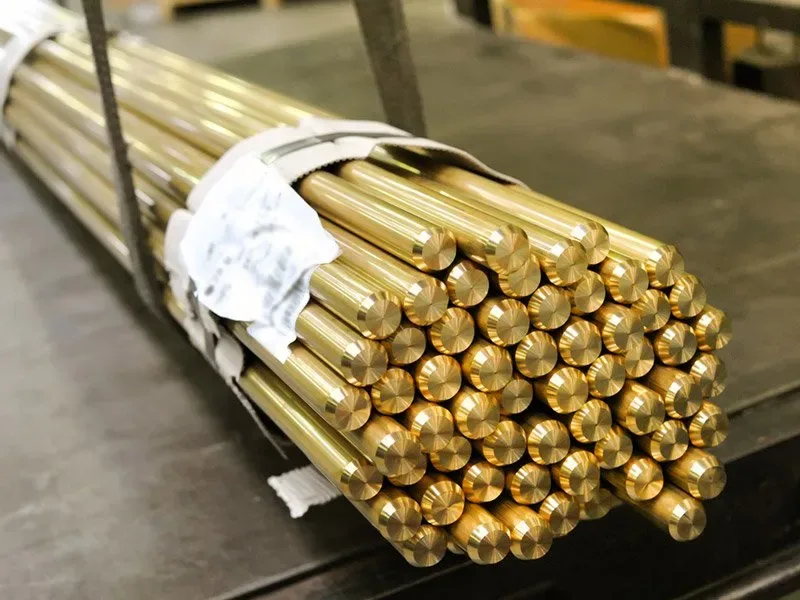
Three clues cracked the story open. Tooling marks on the same PO did not match — two different broach patterns on valve bodies from lot A and lot C. The leak-test fixture ID in the audit file read LT-04, but the machine bolted to the floor read LT-07. Raw brass inventory looked wrong too: the warehouse held enough bar stock for roughly two days at stated output, not the two weeks the supplier claimed.
We mapped the real route in a single day. Valve bodies were machined at a third-tier workshop in a nearby industrial park. Plating ran on an undeclared nickel line — Manager Liu walked us past it himself. The Tier-1 only did final assembly and leak test.
The fix ran in strict sequence:
- Freeze shipment. 6,400 units across three lots held at the port.
- Isolate suspect lots by date code and quarantine them physically.
- Remap the real flow from bar stock to carton, shop by shop.
- Re-test critical parts: 100% pressure-decay leak test at 1.5x working pressure, plus dimensional checks on every valve body.
- Requalify only after traceability matched reality.
Requalification took five weeks. The launch window lost two months.
Gulfstone’s Phantom Factory Detection SOP
This is the numbered method our sourcing team runs on every gas-component audit. It sits inside our broader quality-control process, not beside it.
- Required Daily Output = open PO units ÷ remaining working days.
- Labor Capacity = (direct operators × net available minutes per shift × shifts × efficiency factor) ÷ standard minutes per unit.
- Machine Capacity = sum of (active machines × cycles per hour × units per cycle or cavities × uptime × yield × shift hours).
- Material Capacity = usable raw material on hand ÷ material consumption per unit.
- Test Capacity = active leak-test or functional-test stations × tests per hour × shift hours × pass yield.
- True Daily Capacity = the lowest of Labor, Machine, Material, and Test Capacity. The weakest link sets the ceiling.
- Outsourcing Pressure Ratio = Required Daily Output ÷ True Daily Capacity.
Thresholds we apply:
- Green: ratio below 1.00.
- Amber: 1.00 to 1.15. Overflow risk is building.
- Red: above 1.15. The claimed in-house capacity is likely impossible without overtime distortion or hidden outsourcing.
⚙️ Technical Detail: The binding constraint is almost always test capacity or material capacity, rarely machine count. Factories buy machines. They rarely buy enough leak-test stations for a surprise volume spike.
A red ratio alone is a smell, not proof. The second layer is Traceability Match Rate = traced units supported by payroll, machine logs, material issue slips, and test records ÷ total units claimed. Any gap between claimed output and evidenced output is a red flag, especially next to thin raw-material inventory or missing engineering records. That gap is the number an executive can act on.
Four Zones a Spot-Check Must Clear
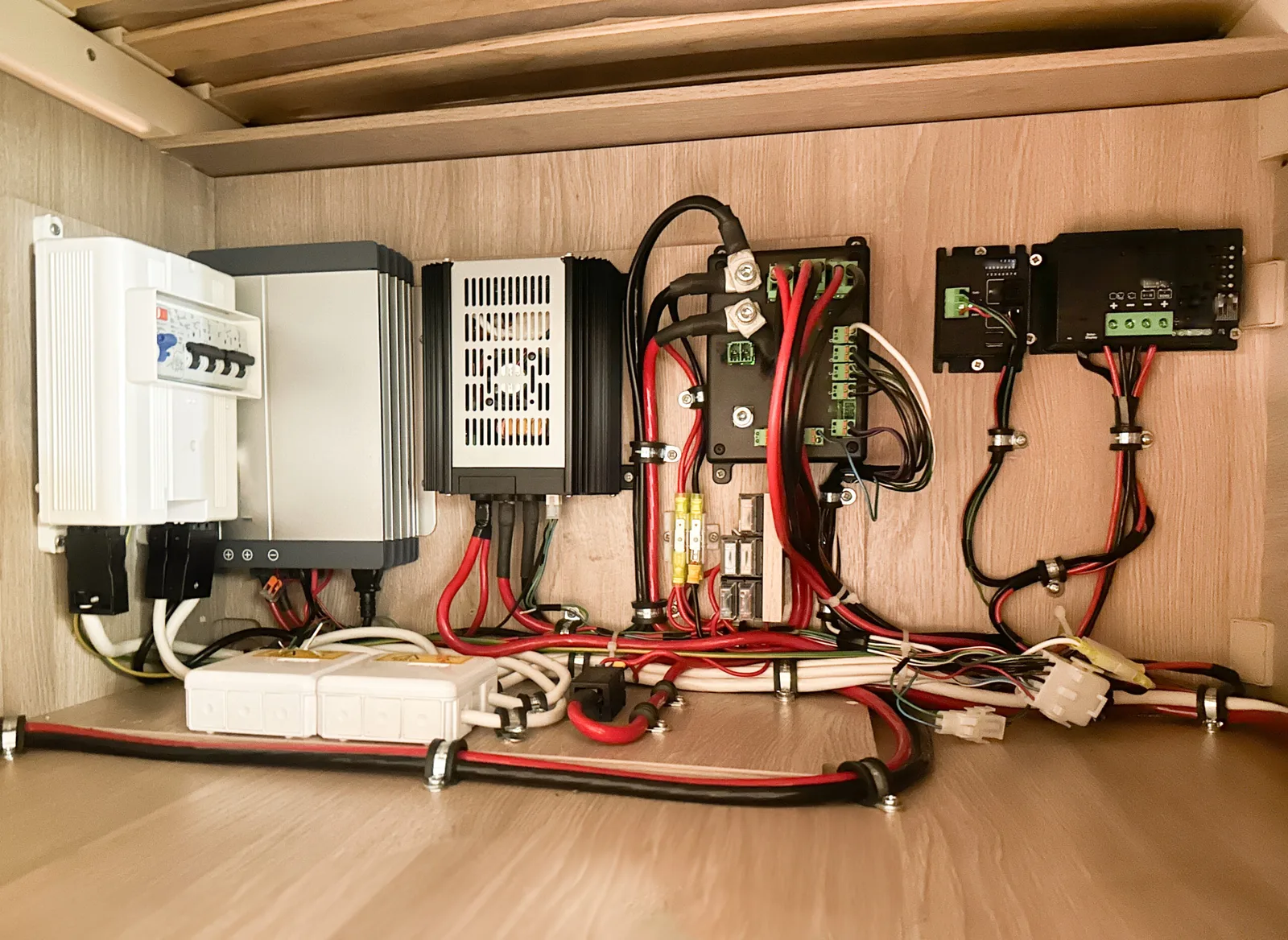
Production: mismatched tooling marks across the same PO. Operators who cannot explain the last process step. Leak-test fixture IDs that do not match the factory’s validated setup.
Testing: absent or backfilled engineering logs. Torque settings that drift from the approved spec. Expired calibration stickers.
Warehouse: raw brass, resin, or seal inventory too low for the reported output. Packaging that does not match approved artwork or corrugate specs. Labels from another industrial park or workshop.
Documentation control: dispatch records that cannot reconcile with payroll hours. Material issue slips that name a vendor the buyer has never approved.
On the Floor with Zhang and Chen
Zhang, Sourcing Lead: “The schedule said two shifts and 60 operators. I walked the line at 2 p.m. and counted 31, plus four packing. Then I pulled dispatch records: 18,000 units shipped that week. Payroll showed 1,180 direct labor hours. The math never came close.”
Chen, Lead Technician: “I look at fingerprints, not brochures. Last March I found corrugate printed with a workshop code from Zhaoqing. The Tier-1 is in Foshan. That carton should never have been on that dock.”
🧠 Expert Insight: Both findings took minutes. Neither required lab equipment. They required knowing which number to compare against which paper.
The Evidence Hierarchy
Rank proof in this order:
- Reconciled operational records: payroll, machine logs, material issue slips, and test data that all agree.
- Live floor observation during an unannounced visit.
- Warehouse consistency: material on hand, packaging, labels.
- Polished presentation materials: binders, certificates, showroom tours.
Hand this sequence to a sourcing manager tomorrow morning.
Key Benefits: Why Controlled Subcontracting Protects Your Program

How do you make sure mass production stays consistent? Not with a final inspection. Consistency comes from process control, traceability, approved routing, and change governance working together across every lot.
In our audits, that combination separates a reliable gas-appliance or RV supplier from one hiding overflow. It is also where compliance, warranty, and launch performance either hold or fall apart.
Better Compliance Confidence
Approved facility control protects your CE, CSA, and AGA files. We validate the legal manufacturer against the SAMR registry, then match every declared process to the official certification files.
Where material lots move between sites, we apply recognized chain-of-custody standards. For gas appliances, RV water heaters, and outdoor equipment, one undeclared plating or brazing site can break the integrity of the technical file. Last spring we caught a brazing sub-tier missing from a client’s technical file, months before a retail audit.
When the facility list, routing, and test records agree, paperwork confidence becomes production confidence. We run that check through our supplier audit program before a PO is released, not after customs flags the container.
Better Batch Stability and Warranty Control
Route discipline protects the approved sample. It locks leak-test behavior, material lot traceability, and component interchangeability across replenishment orders. In one Foshan audit, a supplier swapped valve-stem plating without notice, and leak-test rejects moved from 0.4% to 3.1% on the same model.
Appliance, RV, and outdoor-equipment brands feel that failure in field returns, charge-backs, and service-part chaos. Controlled routing keeps the first lot and the tenth lot the same. That cuts field failures and protects warranty margin.
Better Planning and Negotiation Leverage
True capacity changes the conversation. When buyers know real test capacity and material flow, they can forecast honestly, avoid fantasy lead times, and stop rewarding suppliers that hide overflow.
A red Outsourcing Pressure Ratio above 1.15 tells you the claimed in-house plan is impossible without hidden sub-tier work. One importer used that ratio to move 30% of peak volume to a verified dual source. That clarity improves dual-source planning and launch reliability. It also gives you leverage: you negotiate from evidence, not from a supplier’s optimistic spreadsheet.
📈 ROI Check: Track warranty claims per 1,000 units and retail charge-backs per PO. If both fall after route approval, the control is paying for itself.
Watch four windows: pre-holiday rush, post-CNY ramp-up, Q3 retail compression, and sudden reorders after a stock-out. Declared capacity breaks in those weeks. Undeclared capacity appears.
Day-Zero Response: Five Steps
- Capture photo, video, and document evidence before anyone resets the line.
- Stop production and freeze the shipment.
- Segregate in-house lots from off-site lots by date code.
- Reopen testing and run a full traceability review.
- Decide: terminate, requalify, or re-source.
Not every external process is disqualifying. Declared, approved plating or heat treatment is normal. The failure point is nondisclosure plus loss of control. Keep the response firm and proportionate.
⚖️ Trade-off: A hard ban protects traceability. It also removes flexible capacity that rescues peak-season delivery. Approve a named backup processor in advance, then hold the supplier to that list.
Final Verdict: Provable Control Beats Perfect Vertical Integration
A supply chain transparency audit does not require perfect vertical integration. It requires that every safety-critical process stay visible, approved, and provable. You do not need to own the plating line or the Tier-3 machine. You need to know they exist, approve them in writing, and prove your shipment moved through them in that order.
Three takeaways hold after our field work. Hidden subcontracting is mostly a visibility failure, not a betrayal — factories hide overflow because buyers push unrealistic lead times and prices.
Phantom factories fall to capacity math plus unannounced evidence: when payroll, dispatch, material slips, and test logs disagree, the gap is your answer. And contract language only matters when operations, timelines, and audits back it up. A ban without realistic scheduling is theater.
Your next-step checklist before the next supplier review: map the real process route from bar stock to carton; test claimed capacity against payroll, machine, and test-station evidence; and tighten anti-subcontracting controls before the next launch window opens, not after the container ships.
If you want a second set of eyes, Gulfstone runs supplier-mapping reviews and factory-risk assessments for gas sub-assemblies — before a PO is approved, not after customs flags it.
Disclosure: This view comes from Gulfstone’s own sourcing and factory-audit work. We partner with factories and earn from that work, so we are not independent of the chain we audit. We would rather say so plainly.
Frequently Asked Questions about Subcontracting Risks OEM Factory
What is OEM vs contract manufacturing?
An OEM is the brand that owns the design, the specification, and the legal liability. Contract manufacturing is a factory that builds to the OEM’s drawing and process route. In practice the OEM carries the conformity duty, while the contract manufacturer — often the Tier-1 supplier that signs your PO and holds the certifications — executes the approved process.
What are the downsides of subcontracting?
The downsides appear when subcontracting is hidden and unauthorized on safety-critical gas sub-assemblies. It destroys traceability, invalidates test confidence, delays launches, and turns a qualified supplier into a recall threat. It is also the hidden-subcontracting risk that OEM programs tend to underestimate, and the buyer, not the factory, absorbs the recall cost.
Which processes are in house and which are outsourced?
Core safety processes stay in house: valve bodies, gas-train assembly, and leak testing. A disciplined Tier-1 supplier declares every outside process in writing before mass production begins. Normal outsourced work covers plating, heat treatment, and brazing through an authorized Tier-2 processor you approved and your liability clause covers. Undeclared outsourcing is the risk.
How do you make sure mass production stays consistent?
Mass production stays consistent through process control, traceability, approved routing, and change governance working across every lot — not through a final inspection. Controlled routing keeps the first lot and the tenth lot the same. In one Foshan audit, a supplier swapped valve-stem plating without notice, and leak-test rejects moved from 0.4% to 3.1% on the same model.

Forward
Founder & CEO, GulfstoneGas appliance manufacturing and certification
Most of what decides a gas appliance is settled before anything is built — on the drawing, at the cut-out, in the tolerance someone chose for the gas path. I have spent my working life on the manufacturing side of that decision, and this is where I write down what it has taught me.
Nothing here is written from a sales desk. Every note comes off the floor: a batch held until a reason was found, a fitting that failed in transit, an approval path that only made sense once the destination market was fixed. If you read these first, the opening conversation starts at the standard rather than at the beginning.
- Gas water heater engineering
- Design for manufacturing
- Certification path selection
- Private-label tooling
- Off-grid and outdoor water heating
- RV Water Heater Manufacturing Process: Gulfstone’s 12-Stage Line SOPSep 30, 2026
- Vet an RV Appliance Manufacturer in China: A Five-Gate AuditSep 28, 2026
- Gas Appliance Testing Laboratory: Audit a Factory Bench Before You Approve ItSep 24, 2026
- OFHC Copper Heat Exchanger: Engineer More Efficient SystemsSep 21, 2026
- RV Water Heater BTU Sizing: Match Power to Real Water DemandSep 16, 2026
- Proportional Gas Valve RV: Unlock Steady Heat and ControlSep 12, 2026
Two decades on the manufacturing side of gas appliances, from the drawing to the shipping container.
Leads Gulfstone's design-for-manufacturing reviews and the certification path selected for each destination market.
Works directly with OEM and private-label buyers on tooling, tolerances and the approval file.