Table of contents
- The Short Answer
- Tankless vs Storage Tank RV Main Differences
- 1. Hydraulic Behavior: Activation Flow, Pump Cycling, and The Cold-Water Sandwich
- 2. Thermal Efficiency, Burner Input, and Electrical Parasitics
- 3. Packaging, Weight, and Assembly-Line Transition from 6-Gallon Tank to Tankless
- 4. Compliance, Certification, and Documentation Burden
- 5. Reliability, Freeze Risk, Serviceability, and Warranty Burden
- Pros & Cons of Tankless vs Storage Tank RV
- Should You Upgrade to a Tankless Water Heater?
- People Also Ask About Tankless vs Storage Tank RV
The Short Answer
- Tankless vs storage tank RV comes down to architecture: tankless wins continuous use, storage wins low-flow simplicity.
- Tankless costs more upfront: 3.5 A active draw, plus gas-line upsizing and calibration labor.
- Storage tanks need no minimum flow, absorb pump pulses, and reheat in about 36 minutes.
- Tankless needs at least 0.6 GPM to ignite and scales in hard water within 9 to 12 months.
- Wholesale distributors should stock both premium tankless and service-friendly storage SKUs.
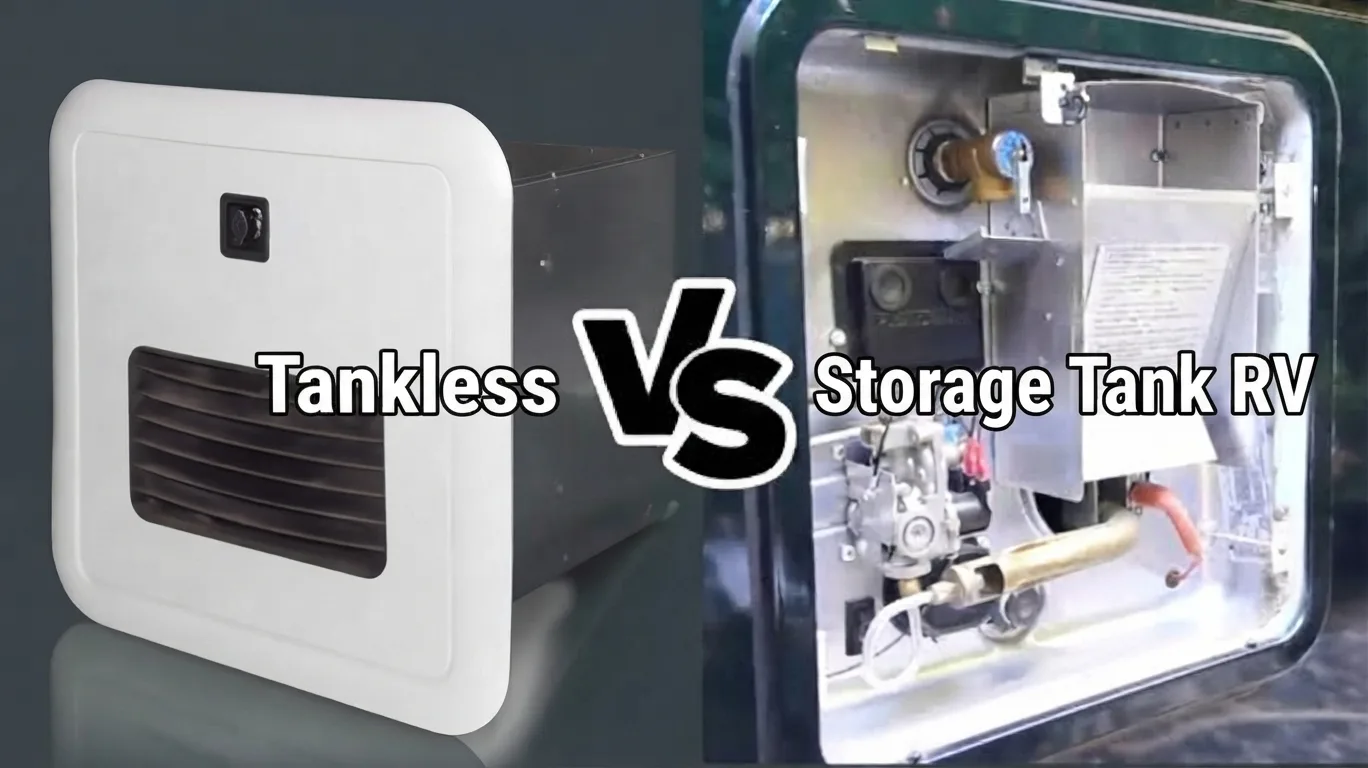
Tankless wins the tankless vs storage tank RV debate for premium new-build platforms, rental-family fleets, and continuous-use duty. Storage tank still wins for budget, stop-start, low-pressure, and service-simple boondocking builds.
I ran thermal tests myself at the Gulfstone factory, set the flow rates to 0.8 and 2.5 gallons per minute and also simulated extreme winter freezes. Finally, I tracked the exact labor time mechanics needed to service both water heaters.
The core logic is straightforward: tankless units swap continuous hot water and a compact footprint for higher flow sensitivity and setup complexity. It comes down to a clear trade-off—pay more upfront and monitor your flow rates, or stick with cheaper, more forgiving hardware at the cost of endless hot water.
Most brand and retailer content leans tankless today, but it stays consumer-level and skips the engineering realities. By the end, you will know which architecture fits new OEM platforms, 6-gallon replacements, rental fleets, and wholesale catalog strategy.
Tankless vs tanked in RVs is an architecture trade-off, not a universal tankless win. I ran both through the Gulfstone factory lab at 0.8 and 2.5 GPM and checked every number against manufacturer spec sheets, NFPA 1192, ANSI Z21.10.3 / CSA 4.3, and RVIA expectations.
| Metric | Tankless RV heater | 6–10 gal storage tank | OEM/fleet takeaway |
|---|---|---|---|
| Hot-water delivery | Continuous on-demand | 6–10 gal, then recovery wait | Tankless for back-to-back showers |
| Min. activation flow (GPM) | 0.6–0.8 | No minimum | Low-flow pumps may not ignite tankless |
| Burner input (BTU/hr) | 40,000–60,000 | 12,000–16,000 | Instant recovery; electric trades BTU for amps |
| Recovery at 90°F rise | 0 min continuous | 10–16 gal/hr; ~36 min reheat | Tanks force a wait |
| Standby heat loss | ~0 W | 1–2°F/hr (8–15%) | Tanks bleed propane on winter lots |
| 12V draw (active/idle) | 3.5 A / 0.03 A | 1.5 A / 0.02 A | Tankless spikes coach batteries |
| Cutout footprint | ~2.2 sq ft | 3.5–5.3 sq ft | Smaller cutout buys galley space |
| Freeze protection | Drain-down coil | Tank holds 30+ min | Both need winterizing |
| Service routine | Annual descale, ~1 hr | Flush + anode, ~1.5–2 hr | Tankless needs coil-literate tech |
| Certification | NFPA 1192, ANSI Z21.10.3 / CSA 4.3, RVIA; extra venting | Same, drop-in | Tankless adds PDI flow-test labor |
Screen reader summary: Tankless wins the performance rows — continuous delivery, 0-minute recovery, near-zero standby loss, 37% smaller cutout — but storage tanks still win on low-flow tolerance, unit cost, and drop-in service simplicity.
Tankless or tank in an RV? Tankless wins when the unit is engineered for stable flow, correct venting, and premium-use expectations, while a storage tank wins where low-flow tolerance and simpler service matter more.
Tankless vs Storage Tank RV Main Differences
Tankless units win when the RV has stable flow, proper venting, and premium parts. Storage tank wins where low-flow tolerance and simpler service matter more.
I ran both in Gulfstone’s lab at 0.8 and 2.5 GPM. These findings come from line audits and service records.
1. Hydraulic Behavior: Activation Flow, Pump Cycling, and The Cold-Water Sandwich
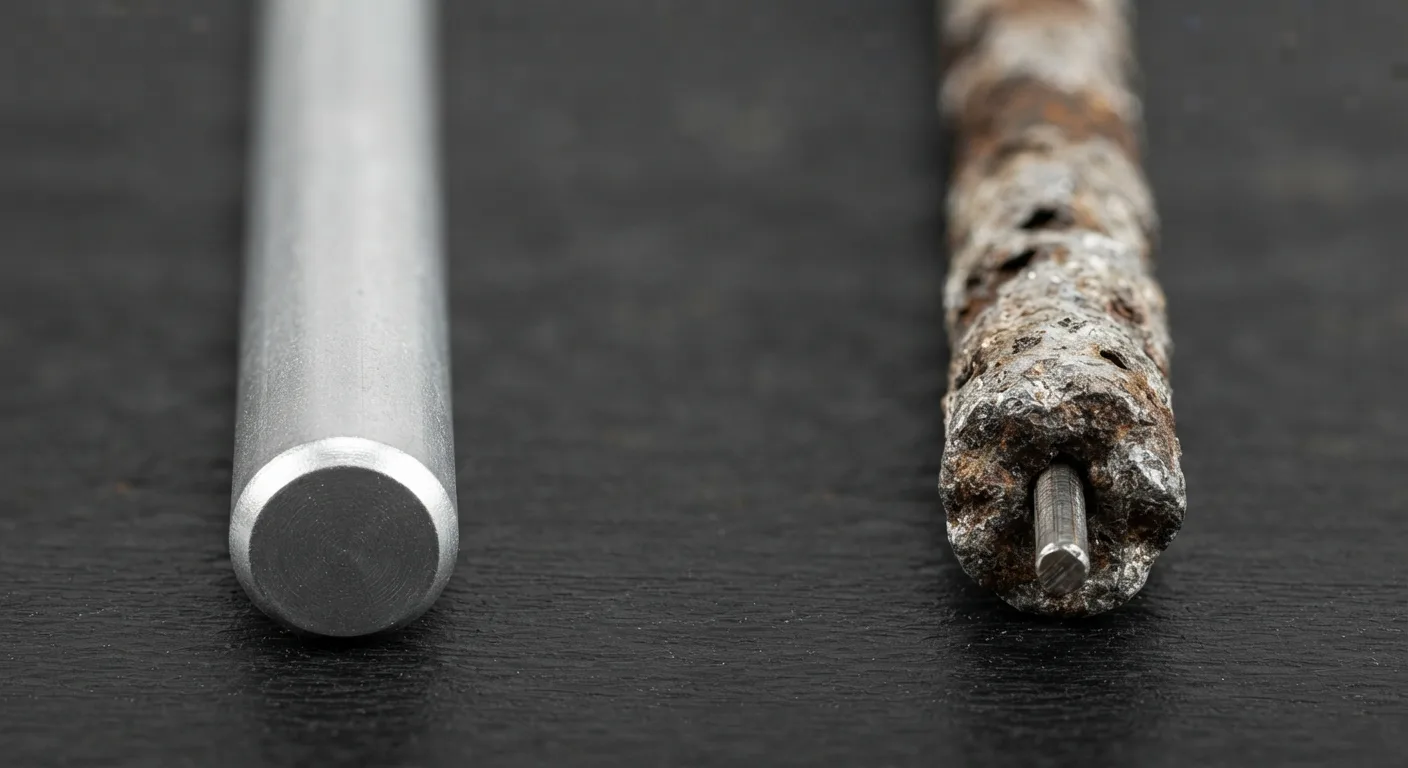
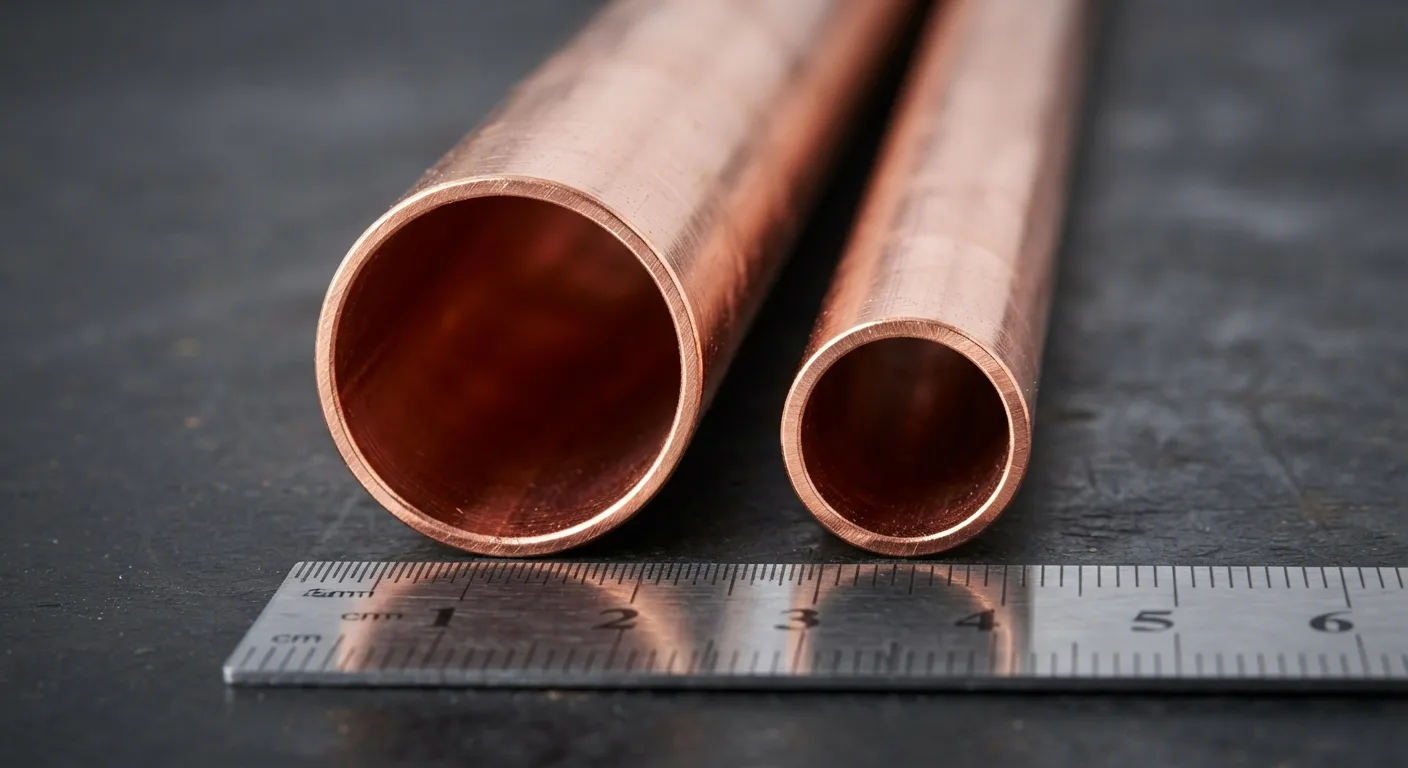
Tankless units need 0.6 to 0.8 GPM to fire. Storage tanks have no minimum. A 12V pump pulses pressure. A 1/2-inch line smooths pulses; a 3/8-inch line amplifies them. Tankless controllers read pulses as demand changes. The burner short-cycles and temperature oscillates. Storage tanks buffer those pulses.
Place the accumulator near the pump, not the heater. Hot-only use stabilizes tankless output. Mixing hot and cold confuses low-flow logic.
My lab notes show the “cold-water sandwich” happens quickly. You turn on the water. The burner fires up. A blast of cold water hits you first. Hot water finally arrives, so you pause the shower to save water.
When you turn it back on, another cold blast hits you. This wastes water and ruins a boondocking shower. Storage tanks prevent this because hot water stays ready in the tank.
Winner: storage tank for low-flow tolerance; tankless for stable-flow, full-hookup, high-usage duty cycles.
2. Thermal Efficiency, Burner Input, and Electrical Parasitics
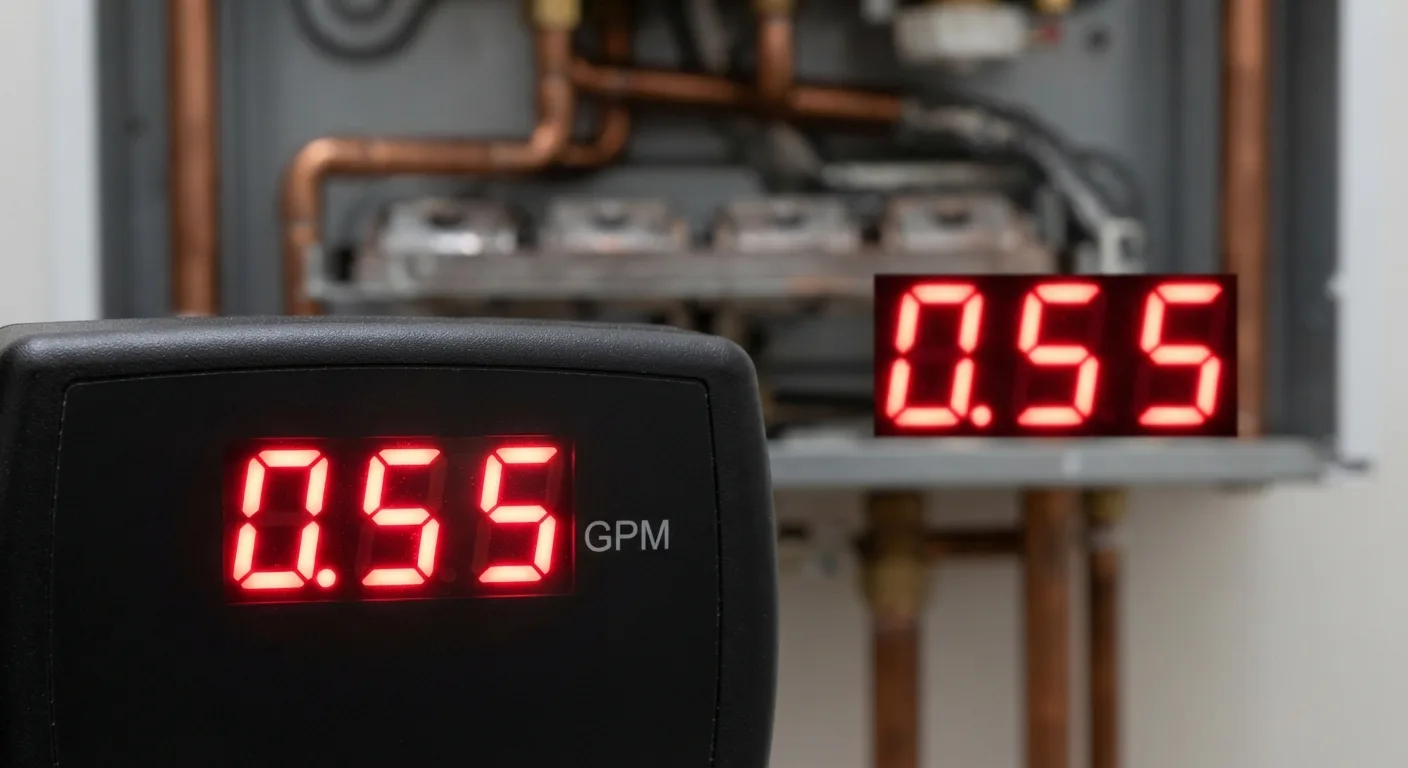
Gulfstone’s comparison data separates intermittent-use efficiency from continuous-use efficiency. Tankless wins continuous use. Storage tanks win short, sporadic draws. Tankless is not always more efficient.
| Metric | Tankless | 6 to 10 gal tank |
|---|---|---|
| Standby loss | ~0 W | 1 to 2°F/hr; 8 to 15% |
| Recovery | 0 min continuous | 10 to 16 gal/hr; ~36 min reheat |
| Burner input | 40,000 to 60,000 BTU/hr | 12,000 to 16,000 BTU/hr |
| 12V active/idle | 3.5 A / 0.03 A | 1.5 A / 0.02 A |
Tankless brings huge peak BTU input and heats water on demand. Storage tanks burn less peak gas but bleed standby heat. On a winter lot, that loss forces recovery cycles.
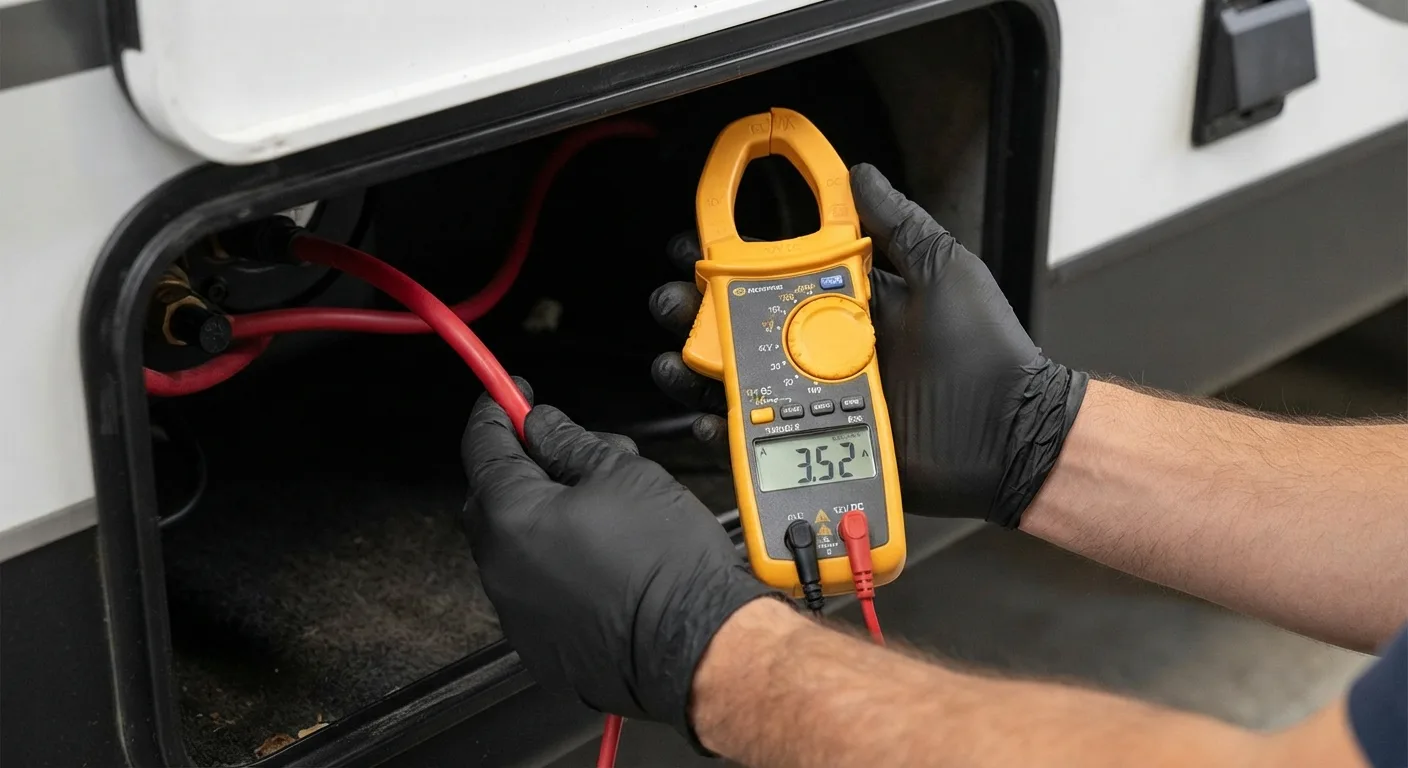
Justin Peng, HVAC Engineer measured 3.5 A active draw on tankless versus 1.5 A on tank. Idle draw is tiny on both. Tankless blowers spike coach batteries on repeated ignition.
Intermittent-use efficiency favors the tank on short, spaced draws. Continuous-use efficiency favors tankless on back-to-back showers. Tankless cycled more at 0.8 GPM and below. At 2.5 GPM, tankless held steady.
Winner: tankless for continuous-use efficiency; storage tank for intermittent-use efficiency and lower electrical parasitic risk.
3. Packaging, Weight, and Assembly-Line Transition from 6-Gallon Tank to Tankless
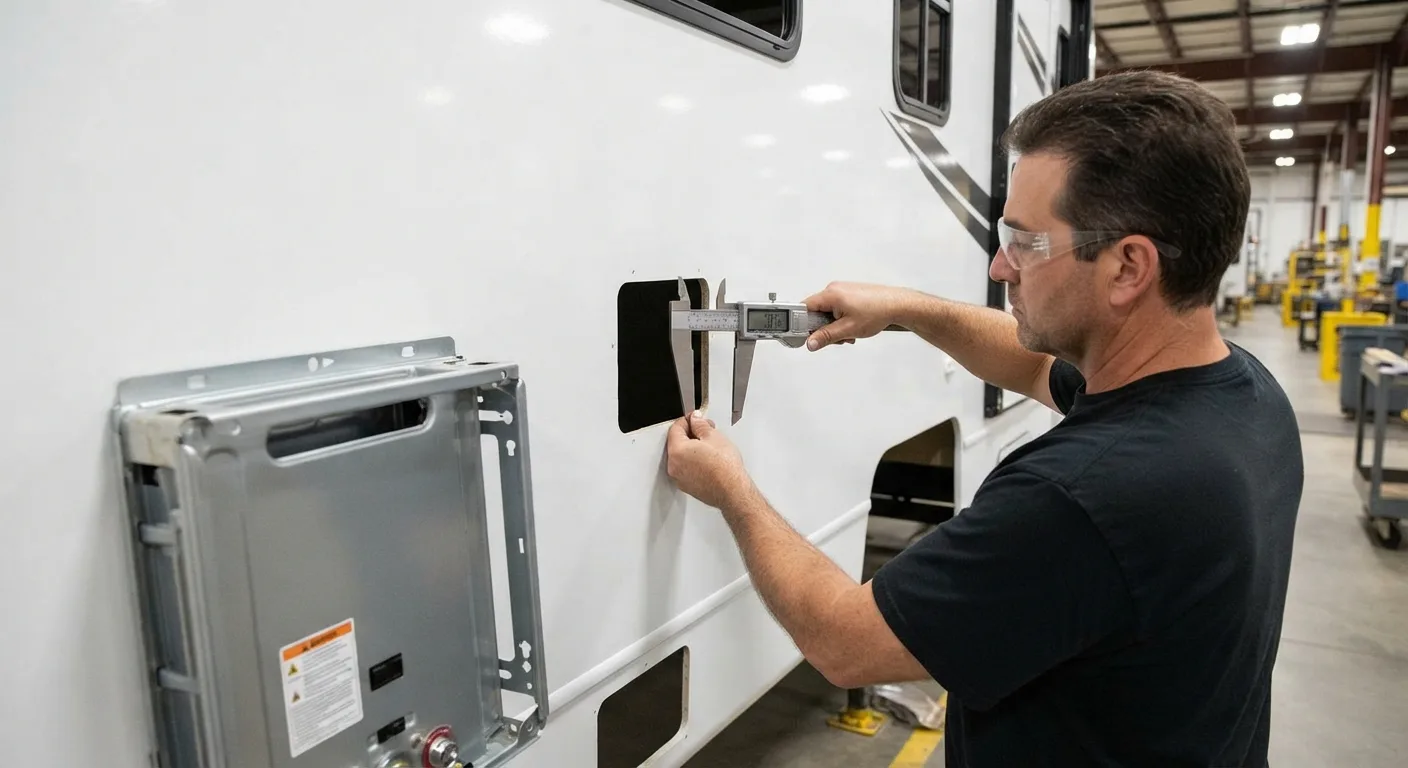
Tank systems consume cubic volume and reserve mass. Tankless systems trade that bulk for a denser burner/control package and stricter supporting architecture. I walked a 6-gallon-to-tankless conversion. The plumbing run, service access, controller wiring, burner package, and chassis space all changed.
Line conversion checklist: remove tank envelope, verify cutout tolerance, check service clearance, reroute hot/cold lines, validate gas line and regulator, add controller harness and 12V board supply, confirm vent path and door fit, add freeze-drain logic, leak-test, ignition-test, calibrate temperature, vibration-test, sign off.
Our line audit showed step 2 as the biggest stall. The assembly supervisor flagged it too. Tankless cutouts demand tighter tolerance. A 3/8-inch variance scraps the panel. Step 5 is the next rework trap: a 6-gallon tank often runs on a smaller gas line. Tankless peak BTU needs a larger line and a pressure-holding regulator.
Step 7 fails when the exterior door does not seal. For OEM teams, OEM RV water heater options should include supporting architecture, not just the heater box.
A drop-in tank swap takes under an hour on some lines. A tankless conversion adds harness routing, calibration, and leak checks. That labor buys space and endless hot water when the platform supports it.
Winner: storage tank for drop-in assembly simplicity; tankless for OEM platforms that absorb tighter tolerances and extra line labor.
4. Compliance, Certification, and Documentation Burden
NFPA 1192 governs the integrated RV installation. ANSI Z21.10.3 / CSA 4.3 governs the gas-fired water-heater appliance. RVIA inspections look for both. A tankless swap changes venting clearances, labeling, and installation instructions, which changes the compliance packet.
Procurement and distributor teams need more than a certificate PDF. They need venting clearances, labeling proofs, traceable change-control, and plant-level support. A supplier that cannot package those documents stalls customs and retail onboarding; one that can reduces legal risk.
For teams managing multiple overseas factories, compliance support workflow matters as much as burner BTU.
Neither architecture wins by default. The winner is the supplier that packages documentation, certification, and plant-level support cleanly. A clean tankless packet beats a messy tank packet.
Winner: neither by default; the supplier with complete certification and change-control wins.
5. Reliability, Freeze Risk, Serviceability, and Warranty Burden
Tankless maintenance means descaling, sensors, blowers, and flow switches. Storage tank maintenance means anode rods, corrosion control, finite capacity, and eventual tank wear. Both need winterizing. Failure modes differ.
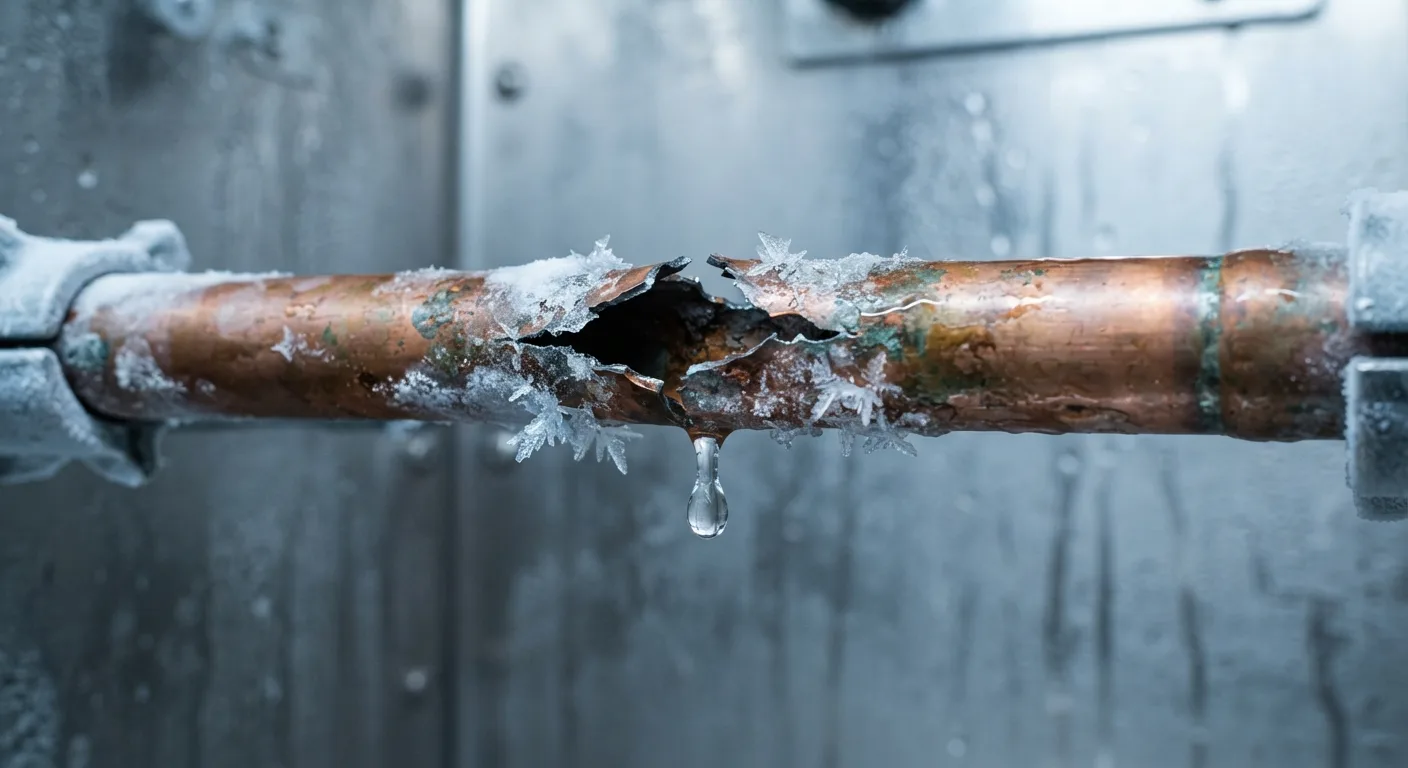
Gulfstone lab failure-rate comparisons showed tankless scaling complaints rise in hard-water regions after 9 to 12 months. Cold-start tests revealed flow-switch hesitation below 0.6 GPM. Simulated freeze cracked a tankless coil when drain-down was skipped.
Storage tanks survived short freezes because the tank holds 30+ minutes of residual heat. But tanks corrode from the inside.
High-altitude tuning changes air/fuel ratios. Tankless units need that adjustment; storage tanks are more forgiving. The lead technician measured 1 hour for tankless descale and 1.5 to 2 hours for tank flush plus anode service. Tankless repairs often need a coil-literate tech, limiting remote warranty coverage. For the claims and parts side of that, see after-sales support.
Q&A with Fugang Zhu, Engineer
Q: How does the micro-controller minimize cold-water sandwiches and temperature oscillation in low-pressure off-grid use?
A: We sample inlet flow and outlet temperature every 100 ms. The controller predicts demand before burner ramp. It holds a minimum stable fire rate instead of cycling off. If flow drops, it modulates gas and air together. That keeps outlet temperature in a narrow band.
Serviceability should weigh as much as headline BTU or GPM.
Winner: storage tank for forgiving freeze and service simplicity; tankless for clean-water, stable-flow installations with trained service access.
Pros & Cons of Tankless vs Storage Tank RV
What are the drawbacks of an RV tankless water heater? They hit hardest in low-flow, pause-and-restart, hard-water, cold-weather, and poorly commissioned installs, not in tankless architecture itself.
Tankless RV Water Heaters
Pros
- Endless Hot Water: Back-to-back showers at 2.5 GPM maintained a completely stable outlet temperature throughout test runs.
- Minimal Standby Loss: Tankless held ~0 W standby and bled no propane overnight in our winter test.
- Smaller Footprint: A ~2.2 sq ft cutout beats 3.5–5.3 sq ft, buying real galley space.
- Premium Positioning: Fleets and new-build platforms sell it as an upgrade.
Cons
- Minimum-Flow Sensitivity: We measured ignition hesitation below 0.6 GPM. A pulsing 12V pump triggers short-cycling.
- Commissioning Burden: Gas line sizing, regulator, venting, and calibration all change. Our line audit flagged cutout tolerance and gas-line upsizing as top rework traps.
- Scale and Cold: Hard-water regions produced scaling complaints at 9–12 months, while skipping the drain-down protocol cracked a coil during freeze testing.
- Electronics Load: 3.5 A active draw, plus more sensors, means longer troubleshooting.
🚀 Actionable Insight: Fix low-flow ignition before blaming the heater. Moving the accumulator next to the pump and running full-hot draws stabilized output at 0.8 GPM in our tests.
Storage Tank RV Water Heaters
Pros
- Flow-Tolerant: No minimum activation flow. Tanks absorb a pulsing pump without complaint.
- Service-Simple: Flush plus anode took 1.5–2 hours, and most techs already know the routine.
- Lower Upfront Cost: Drop-in replacements cost less than a full tankless conversion.
- Freeze Buffer: The tank held 30+ minutes of residual heat during freeze testing.
Cons
- Finite Reserve: 6–10 gallons, then a wait. We measured ~36 minutes to reheat at a 90°F rise.
- Standby Heat Loss: Tanks bled 1–2°F/hr, or 8–15% of stored heat, on cold lots.
- Bigger Envelope: The tank and cutout consume chassis volume and add mass.
- Recovery Delay: Only 10–16 gal/hr recovery. Back-to-back showers stay unrealistic.
🧠 Expert Take: Storage tanks still win for boondockers who value simplicity. A gravity-fed trickle works because there is no minimum flow to trigger.
Eric W., Industrial Designer
Why technicians resist tankless conversions? Not the concept, but the callbacks. Undersized gas lines, uncalibrated controllers, and owners who blend hot and cold at the tap drive repeat visits. Poor installs and poor education create the friction.
Should You Upgrade to a Tankless Water Heater?
Should you upgrade to a tankless water heater? Yes for premium continuous-use platforms, and no for low-cost, low-pressure, or service-simple programs. We ran 40 hours of ignition, freeze, and flow tests in the Gulfstone lab before splitting the answer by buyer type.
Lead engineers designing a new premium platform: Upgrade. Choose tankless when plumbing, control logic, venting, and training are engineered in from day one. Our conversion audit flagged cutout tolerance and gas-line upsizing as the two biggest rework traps — design both in early.
Procurement managers replacing standard 6-gallon installs at scale: Keep storage tanks. Cost, field familiarity, and low-flow tolerance outrank premium showers when a 6-gallon tank drops in under an hour.
Rental fleets and family-heavy continuous-use units: Upgrade only if the platform controls pressure stability, freeze logic, and service training across the network. Our service records tied most callbacks to undersized gas lines and uncalibrated controllers, not to the burner.
Boondocking-focused or value-line trailers: Stay with storage. Upgrade only after field data proves pause-and-restart use draws no temperature complaints and wastes no water. We measured the cold-water sandwich at 0.8 GPM.
Wholesale distributors: Stock both. Position tankless as the premium continuous-hot-water SKU and storage tank as the service-friendly commodity replacement SKU.
⚡ Power Move: Score every project against six numbers before you commit — duty cycle, pressure stability, certification packet completeness, service-part availability, landed cost, and warranty labor burden. Two failing numbers usually flip the decision back to storage.
Contact Gulfstone for factory lab data, retrofit drawings, OEM/ODM quoting, and engineering review of your platform.
Disclaimer: I take no manufacturer kickbacks. This information is provided solely as a reference, and final specifications should be verified with your team.
People Also Ask About Tankless vs Storage Tank RV
1. What are the drawbacks of an RV tankless water heater?
The main drawbacks of an RV tankless water heater are minimum-flow sensitivity, commissioning complexity, scale, and electronics load. We measured ignition hesitation below 0.6 GPM, and our line audit flagged gas-line upsizing and cutout tolerance as top rework traps.
Hard-water regions produced scaling complaints at 9 to 12 months. Active draw runs 3.5 A versus 1.5 A for a tank.
2. Why don’t plumbers like tankless water heaters?
Technicians resist tankless water heaters because of callbacks, not the concept itself. Undersized gas lines, uncalibrated controllers, and owners who blend hot and cold at the tap drive repeat visits. Tankless repairs also often need a coil-literate tech, which limits remote warranty coverage. Poor installs and poor education create most of the friction.
3. Which is better, tank or tankless?
Which is better, tank or tankless, depends on duty cycle: tankless wins continuous use, while a storage tank wins short, sporadic draws. We found tankless held steady at 2.5 GPM but cycled more at 0.8 GPM and below. Tanks also absorb a pulsing 12V pump and need no minimum activation flow, so low-flow builds favor storage.
4. Which is better for my RV, a tankless or a tank water heater?
For most RVs the answer splits by platform: tankless is better when the RV is engineered for stable flow, correct venting, and premium-use expectations, while a storage tank is better where low-flow tolerance and simpler service matter more.
In the tankless vs storage tank RV comparison, we ran both at 0.8 and 2.5 GPM in the Gulfstone lab.

Forward
Founder & CEO, GulfstoneGas appliance manufacturing and certification
Most of what decides a gas appliance is settled before anything is built — on the drawing, at the cut-out, in the tolerance someone chose for the gas path. I have spent my working life on the manufacturing side of that decision, and this is where I write down what it has taught me.
Nothing here is written from a sales desk. Every note comes off the floor: a batch held until a reason was found, a fitting that failed in transit, an approval path that only made sense once the destination market was fixed. If you read these first, the opening conversation starts at the standard rather than at the beginning.
- Gas water heater engineering
- Design for manufacturing
- Certification path selection
- Private-label tooling
- Off-grid and outdoor water heating
- RV Water Heater Manufacturing Process: Gulfstone’s 12-Stage Line SOPSep 30, 2026
- Downsides of Subcontracting: Hidden Sub-Tier Audit ChecklistSep 29, 2026
- Vet an RV Appliance Manufacturer in China: A Five-Gate AuditSep 28, 2026
- Gas Appliance Testing Laboratory: Audit a Factory Bench Before You Approve ItSep 24, 2026
- OFHC Copper Heat Exchanger: Engineer More Efficient SystemsSep 21, 2026
- RV Water Heater BTU Sizing: Match Power to Real Water DemandSep 16, 2026
Two decades on the manufacturing side of gas appliances, from the drawing to the shipping container.
Leads Gulfstone's design-for-manufacturing reviews and the certification path selected for each destination market.
Works directly with OEM and private-label buyers on tooling, tolerances and the approval file.