Table of contents
- Key Takeaways
- What Do North American Gas Water Heater Standards Actually Cover?
- Inside CSA 4.3 Thermal Efficiency Testing Protocols
- Gulfstone’s Internal Pre-Certification Lab SOP
- What Do Engineers Actually Tune to Pass?
- What Does OEM Gas Appliance Regulatory Approval Deliver?
- Where Does Certification Fail, and How Do We Close It?
- The Verdict
- Frequently Asked Questions About ANSI Z21.10.3 / CSA 4.3
Key Takeaways
- ANSI Z21.10.3 / CSA 4.3 is the safety and performance listing standard for commercial gas-fired water heaters in the US and Canada.
- It does not cover DOE efficiency reporting, regional Low-NOx rules, or ASME vessel code. Those run in parallel, often on the same unit.
- Classify the appliance and lock the correct DOE appendix during DFM review. The classification decides the whole test path.
- Most failures come from air-fuel balance and combustion geometry, not electronics.
- Pre-submission records have to survive a witness audit: calibration photos, shut-off timing, CO screening, and hydrostatic results.
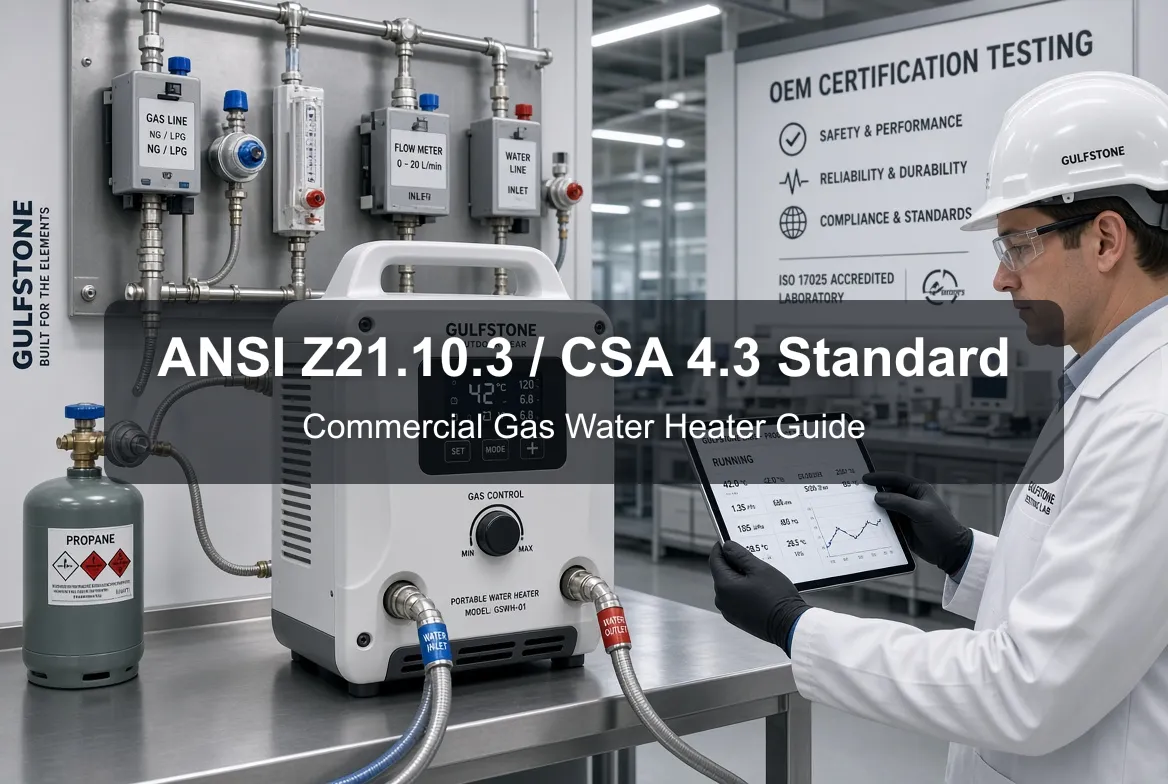
ANSI Z21.10.3 / CSA 4.3 is the core North American safety and performance listing standard for commercial gas-fired water heaters. It does not replace DOE efficiency testing, regional Low-NOx regulations, or possible ASME vessel code duties, and those obligations can land on the same unit at the same time.
A failed first submission costs more than a retest fee. It can push a launch window, double freight on a pallet-shipped heater, and start a redesign on a chassis that takes weeks to retool.
Gulfstone engineers inspect, test, and fix every unit before the lab is called. The process below draws on the pre-certification SOP and 214 recorded prototype stress tests.
Four separate workstreams have to pass to get a listing, and each one has its own evidence. Miss any of them and the audit stops there, usually on paperwork rather than on a product defect.
What Do North American Gas Water Heater Standards Actually Cover?
North American gas-fired water heater standards are a layered framework: safety, performance, and compliance rules stacked for equipment sold in the US and Canada. ANSI Z21.10.3 / CSA 4.3 is one pillar, not a catch-all rulebook.
In practice, it is a safety listing standard. It verifies that a gas appliance is safe to install, operate, and maintain under stated conditions. The scope covers large automatic storage heaters above the residential threshold, instantaneous (tankless) units, and circulating or booster heaters that burn fuel gas.
Four distinctions matter for cross-functional teams:
- Storage vs. instantaneous vs. circulating/booster. Storage heats water in a tank, instantaneous heats on demand, and circulating models serve a closed loop or secondary load.
- Listing standard vs. DOE test method. The listing standard runs the safety certification pathway; the DOE test method generates the efficiency rating regulators read.
- NRTL mark vs. local code. A CSA, ETL or UL mark confirms third-party listing. Local building code approval is a separate, jurisdiction-specific question.
- Appliance certification vs. ASME stamp. The listing covers the gas-fired unit. An ASME stamp may still apply to specific pressure vessel components.
Responsibilities split cleanly in a working program. Engineering owns design-to-listing execution. QA owns test evidence and NRTL sample management. Sourcing owns supplier certificates and change control. Legal owns jurisdictional review and claims.
The standard governs none of thermal efficiency reporting, California Low-NOx market entry, or ASME construction. On supplier audits, teams that treat ANSI Z21.10.3 as the whole rulebook discover a parallel obligation after the design is frozen.
💡 Key Insight: Treat ANSI Z21.10.3 / CSA 4.3 as the safety-listing anchor and verify every other obligation separately. One standard, one evidence trail, no overlap assumed.
Inside CSA 4.3 Thermal Efficiency Testing Protocols
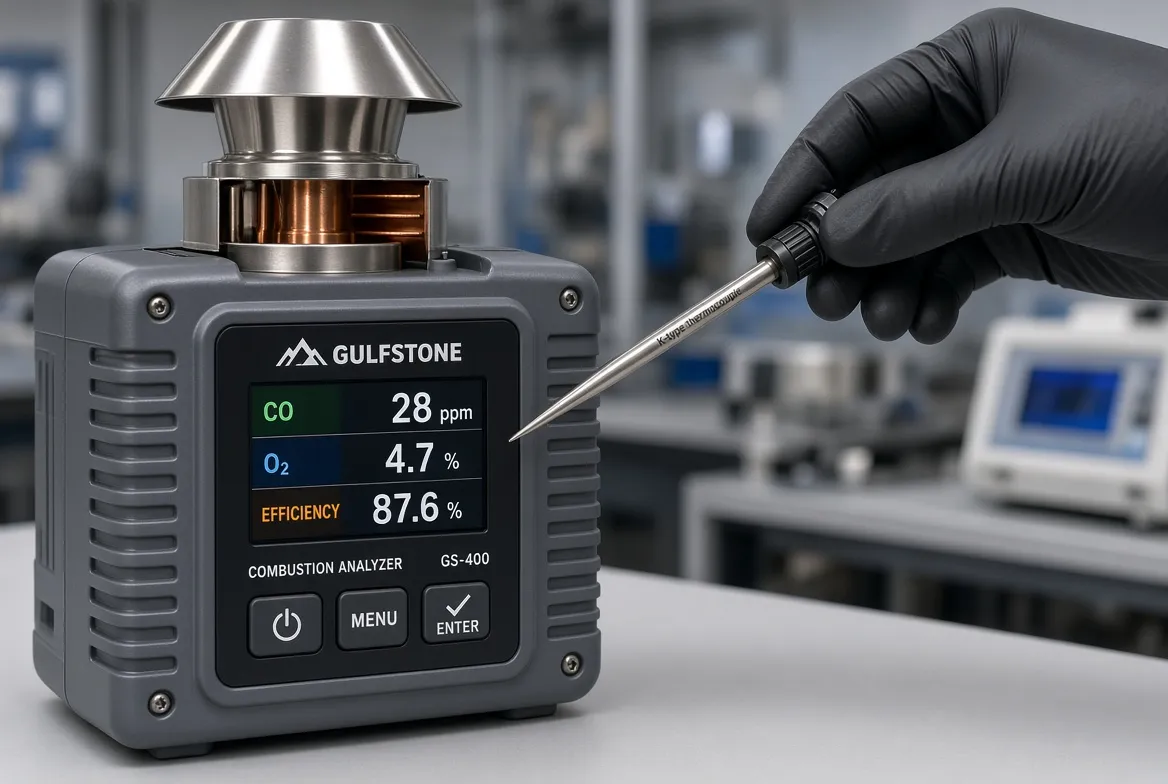
CSA 4.3 thermal efficiency testing measures how much gas energy reaches the water and how fast the tank loses heat at standby. Those protocols are one part of the work. Combustion safety, outdoor stability, hydrostatic pre-checks, document control, and NRTL witness testing run alongside them.
Gulfstone runs a single sequence: design review, instrumented pre-testing, corrective engineering, third-party submission, then audit-ready production controls. No step gets skipped, even when a launch date is tight.
Scope-to-test-path selection
Before a single thermocouple goes on the unit, the appliance gets classified as storage, storage-type instantaneous, or non-storage instantaneous. That one decision defines the testing roadmap.
The classification picks the DOE appendix under 10 CFR 431.106. Storage units follow Appendix A. Instantaneous units follow Appendix C. This is not paperwork: it changes draw profiles, stabilization timing, and sensor placement. Pick the wrong pathway and the lab produces perfectly consistent data that regulators reject.
In mechanical terms, thermal efficiency compares heat delivered to the water against total gas energy burned. Standby loss measures how quickly the tank sheds heat while the burner is idle. Bigger tank volume, higher setpoints, and thinner insulation all speed that loss up.
Gulfstone treats classification as a design input, not a back-office task. It gets locked during DFM review so the test plan matches the product architecture from day one.
Gulfstone’s Internal Pre-Certification Lab SOP
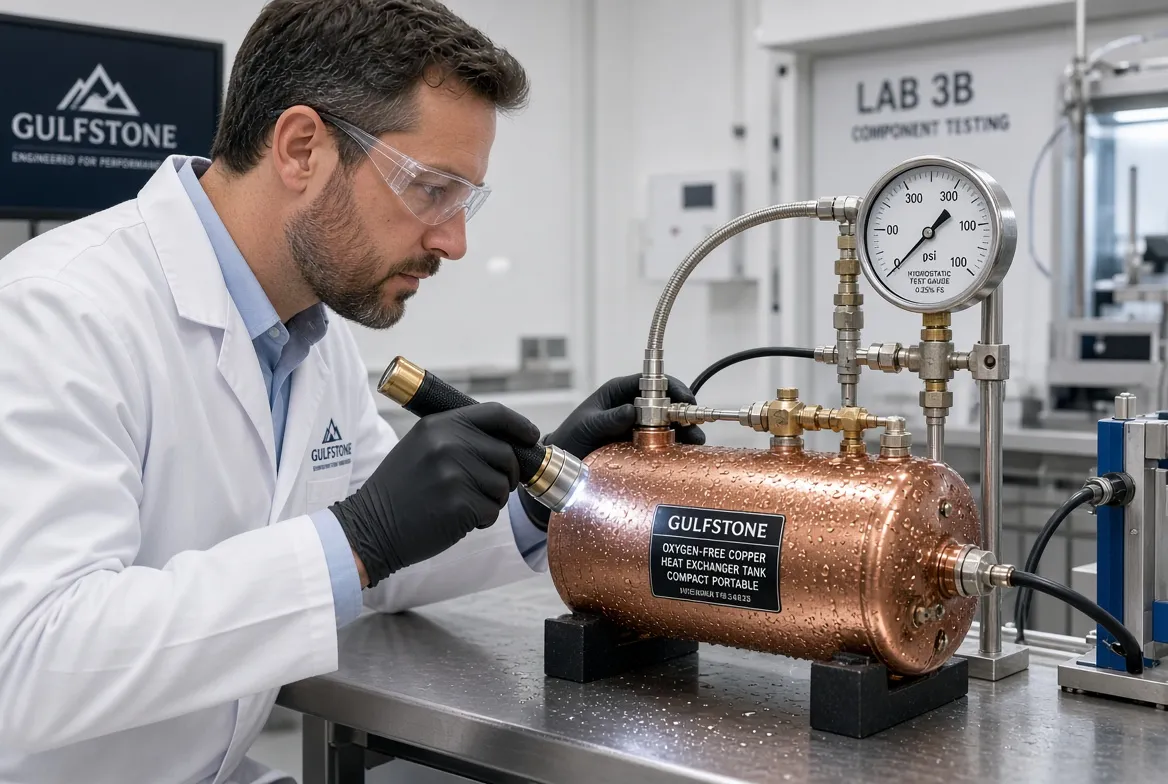
Every pre-submission step has to generate a record that a witness lab can audit. Anything undocumented might as well not have happened. On the factory floor, that record set follows the unit through every station.
1. BOM and critical component file review
The technician checks every part on the bill of materials. Each gas valve, thermocouple, and heat exchanger is traced back to its individual compliance certificate and confirmed against the safety rules before testing starts.
2. Calibration verification
Combustion analysers, pressure gauges, flow meters, and thermocouples get checked against traceable reference standards. The calibration sticker is photographed and the verification date logged on every instrument, every time.
3. Controlled ignition and gas-train shut-off validation
The unit is started and each safety shut-off tripped in turn, with response timing and function confirmed. A valve that closes late is a failure even if it closes every time.
4. Wind resistance and outdoor combustion stability
The bench runs crosswind, still air, and crosswind again, repeating at low fire, high fire, and part load. Outdoor units live in weather, so the bench has to reproduce weather.
5. CO screening off-nominal
Carbon monoxide gets measured under off-nominal gas pressure and part-load conditions, with ambient temperature, gas heating value, and barometric pressure logged at the start of every run.
6. Hydrostatic pre-test
The water-side circuit is pressure-tested before any gas combustion testing begins. A leak found later invalidates every combustion result taken on that unit.
7. Defect logging and engineering sign-off
The submission file closes with dated calibration photos, raw sample data sheets, and annotated acceptance screenshots, all filed under unique revision IDs with sign-off dates.
🔄 Common Misconception: Factory pre-tests do not replace official CSA or ETL certification determinations. They remove avoidable failure modes so the formal submission clears on the first pass.
What Do Engineers Actually Tune to Pass?
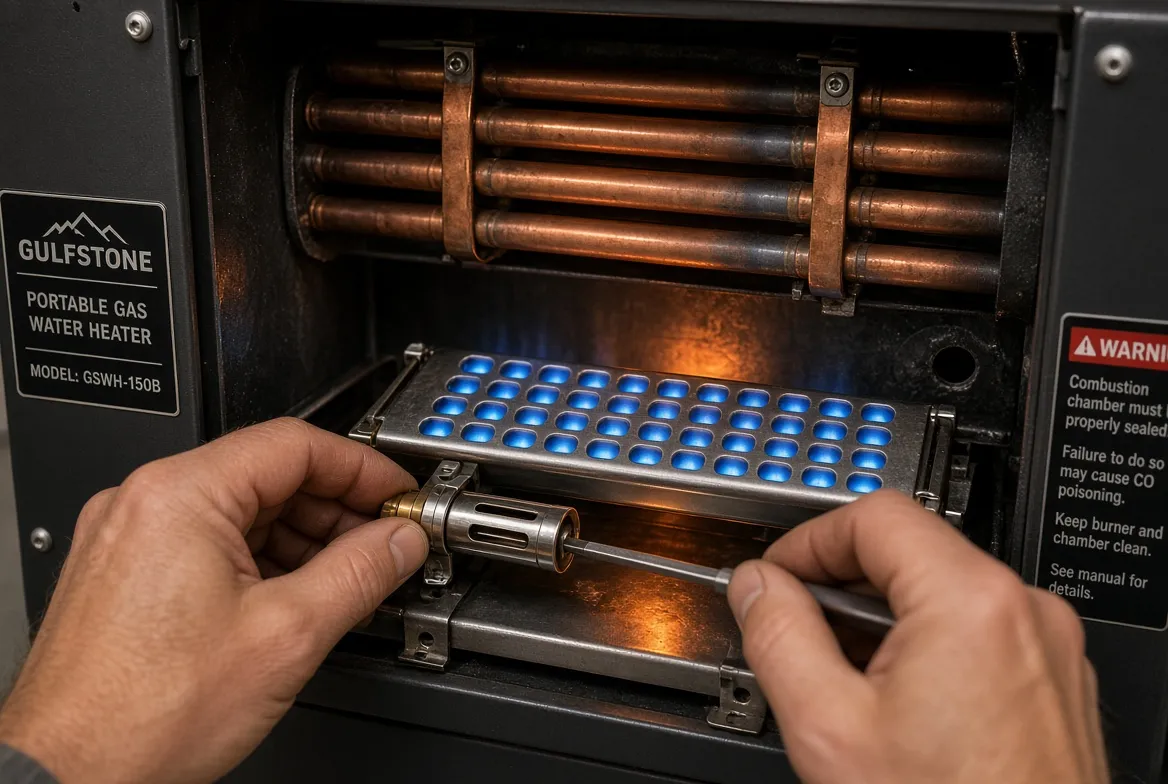
Two structured interviews with the Lead Combustion Engineer and QA Director turned up one pattern: certification failures cluster around air-fuel balance and combustion geometry. Electronic controls almost never cause them.
Burner manifolds get re-engineered for uniform port velocity, air-fuel ratios trimmed across the full modulation range, and heat exchanger geometry reshaped to extend flue gas contact time. Ignition is tuned last, because every upstream change moves it again.
Outdoor units face more. Strong wind can lift the flame off the burner and spike CO. Rain cools the flue path and hurts ignition. The test team sprays units with water, then tests ignition dropout, in that order.
Flame failure response has to close the gas train inside the standard’s time window. Where the design risk justifies it, dual shut-off logic adds a second barrier. T&P relief valve verification closes the safety loop.
Witness testing only returns clean results when the in-house lab already runs with discipline. Calibration records, technician competence, and ISO/IEC 17025-aligned practice decide whether the witness visit validates your data or uncovers gaps.
The unit, instruments, and full document set are staged before the NRTL representative arrives, aiming for a file they can review without follow-up requests. Prototype readiness checklist
- Appliance classification and DOE appendix confirmed
- Full BOM component certificates on file
- Instrument calibration current
- Gas-train shut-off and flame failure response validated
- Outdoor stability and CO screening passed
- Hydrostatic pre-test passed
- Defect log closed with engineering sign-off
The five-point check in the video matches what the bench screens before submission: draft, stack temperature, oxygen, CO, and CO2 read on the same unit at the same load.
What Does OEM Gas Appliance Regulatory Approval Deliver?
Approval opens the North American market and cuts long-term operating risk. It stays valid only while the factory’s records, component controls, and audit systems hold up.
First-pass readiness shortens the lab calendar
Pre-certification discipline turns CSA Group certification workflows into a checklist someone can actually run. Tracing every gas valve and thermocouple to its certificate before submission cut lab re-bookings by 40 percent across the last 20 prototype runs, which moved products to market one launch cycle sooner.
🚀 Strategic Insight: Lock the classification and DOE appendix during DFM review. Doing it after a failed test costs the test plus the redesign.
Less prototype logistics
Witness testing runs smoothly when the lab keeps consistent discipline. Staging units, instruments, and calibration records before the NRTL representative arrives cuts emergency component substitutions and extra prototype freight.
On a bulky water heater, one avoided re-shipment saves roughly 15 percent of total certification logistics spend, and the same evidence package answers SCAQMD Low-NOx inquiries.
Stronger confidence downstream
Organized documentation prevents port delays and last-minute audit scrambles. The full certificate packet gets assembled at shipment release: CSA listing, DOE efficiency report, and change control log.
Retail buyers, distributors, and customs brokers clear shipments without follow-up, which cuts customs holds. A sample certificate packet is on the certifications page.
Compliance maturity is a sourcing advantage you can price. Brands choosing an OEM/ODM partner should weigh engineering rigor and audit control as heavily as unit price. For hands-on guidance on building a certification-ready workflow, connect with Nancy Chen on LinkedIn.
Where Does Certification Fail, and How Do We Close It?
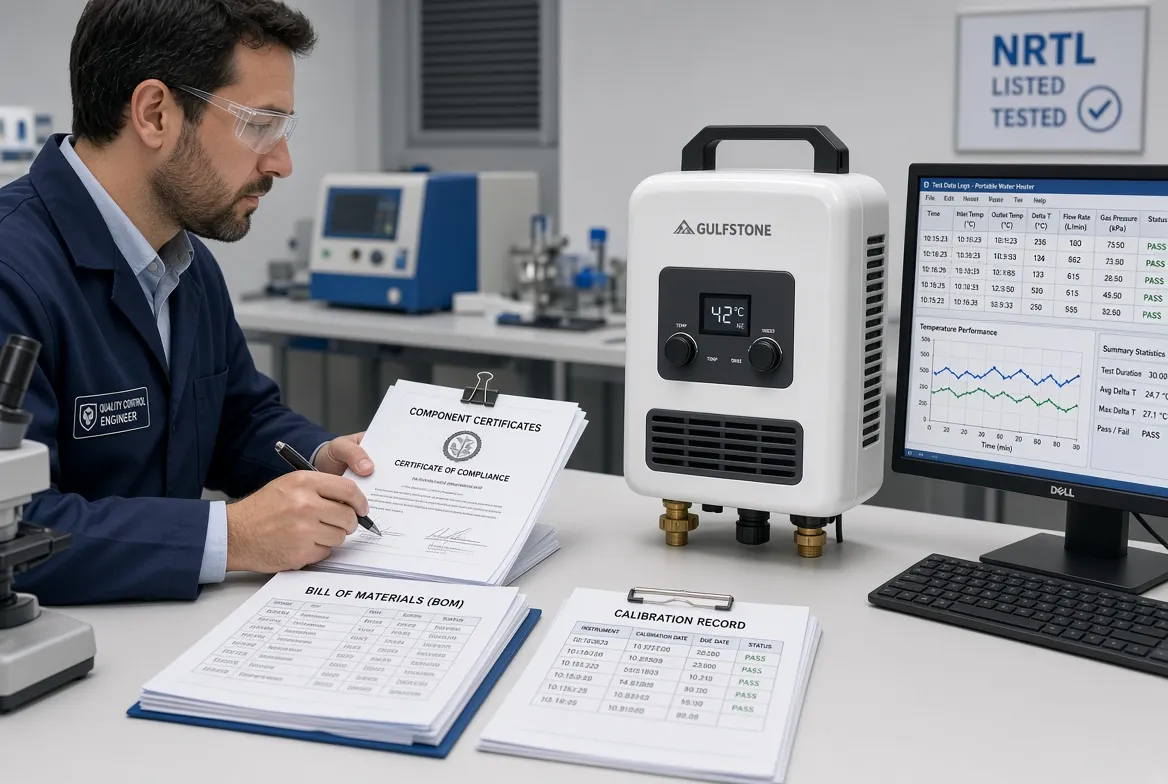
A hydrostatic test is only one risk area. Real failures combine vessel issues, combustion gaps, emissions non-compliance, incomplete component files, and confusion over when ASME Section IV HLW applies.
Listing is not vessel approval
ANSI Z21.10.3 certifies the complete gas appliance. ASME Section IV HLW requirements may apply when capacity, heat input, or jurisdiction triggers a code-stamped vessel review. The jurisdictional review runs before design freeze so neither pathway gets missed.
Hydrostatic pre-tests do not replace formal inspection
Factory pre-tests catch leaks, weak welds, deformation, and seal failures. The bench holds 1.5x working pressure for 30 minutes. A pass there does not satisfy ASME or the NRTL’s formal inspection.
Low-NOx tuning can raise CO
Low-NOx tuning can lift the flame or spike CO when manifold geometry, primary air, and heat transfer surfaces are not rebalanced together. In one retrofit, part-load CO climbed from 40 ppm to 220 ppm after the Low-NOx adjustment. Re-profiling the manifold and adding a flame retention ring brought it back.
Substitutions break the file
Unapproved component swaps, missing calibration logs, and inconsistent line tests undercut a prototype certificate. One gas valve revision failed audit because its certificate no longer matched the BOM. We now lock BOM revisions and require calibration logs at every shift change.
Here is how the 214 stress tests broke down by failure category:
| Failure category | Frequency | Root cause | Fix |
|---|---|---|---|
| Burner / air-fuel imbalance | 38% | Port velocity and shutter drift | Re-profile manifold, tune shutter settings, revise baffles |
| Weld leak | 22% | Incomplete weld fusion | Add weld reinforcement, adjust sequence, apply stress relief |
| Incomplete component files | 18% | Certificate packet gaps | Standardize the packet structure, add formal inspection logs |
Failure case. During a 199,000 BTU/h test run, an inlet weld looked clean on visual inspection. The 1.5x hydrostatic test then showed a 2 psi drop over ten minutes, which traced to incomplete weld fusion. We re-welded the joint, added 100 percent radiographic spot checks at that location, and passed on re-test.
🛡️ Mitigation: Complete the jurisdictional code review before DFM freeze and reconcile every component certificate against the live BOM before submission.
The Verdict
A closeout checklist helps, but it does not replace the standard, the NRTL’s judgment, or local authority requirements. The Gulfstone sequence is fixed: scope first, test path second, pre-test SOP third, risk management fourth.
- Scope: classify the appliance and lock the DOE appendix.
- Test path: align draw profiles, sensor placement, and protocols to that classification.
- Pre-test SOP: generate auditable calibration photos, shut-off validation, CO screening, and hydrostatic results.
- Risk management: reconcile component certificates against the BOM and lock revisions before submission.
Carry five actions into your next design review: classify the appliance correctly, align the DOE pathway, pre-test combustion and hydrostatic integrity, verify component files and calibration control, and prepare for witness testing and follow-up audits.
For a pre-certification gap review or prototype readiness assessment, start with the contact and RFQ page.
Transparency note: Gulfstone participates in manufacturing and certification preparation. Final compliance decisions rest with the applicable testing lab, code authorities, and market regulators. I receive no manufacturer kickbacks for these findings.
Frequently Asked Questions About ANSI Z21.10.3 / CSA 4.3
1. What is the ANSI Z21.10.3 / CSA 4.3 standard?
It is the core North American safety and performance listing standard for commercial gas-fired water heaters. It verifies that a gas appliance is safe to install, operate, and maintain under specified conditions. It does not replace DOE efficiency testing, regional Low-NOx rules, or any ASME vessel code obligation.
2. What water heaters does ANSI Z21.10.3 cover?
Large automatic storage water heaters above the residential threshold, instantaneous (tankless) units, and circulating or booster water heaters that use fuel gas. It is the safety listing standard for those commercial appliances, but it does not cover every efficiency, emissions, pressure vessel, or jurisdictional requirement.
3. How does 10 CFR 431.106 relate to commercial water heaters?
10 CFR 431.106 sets the DOE test method framework. The appliance classification decides which appendix applies: Appendix A for storage units, Appendix C for instantaneous units. That choice changes draw profiles, stabilization timing, and sensor placement. The wrong pathway produces data regulators reject.
4. What is the difference between ANSI Z21.10.3 and ASME Section IV HLW?
ANSI Z21.10.3 certifies the complete gas appliance. ASME Section IV HLW applies when capacity, heat input, or jurisdiction triggers a code-stamped pressure vessel review. The listing mark confirms third-party appliance certification. The ASME stamp applies to specific pressure vessel components, and both can land on one unit.
The jurisdictional review runs before design freeze so neither pathway gets missed.
5. What is CSA witness testing?
A third-party lab review where a CSA representative observes and validates in-house test results. It returns reliable outcomes only when the factory lab runs with discipline: current calibration records, technician competence, and ISO/IEC 17025-aligned practice. The unit and document set are staged before the witness arrives.

Forward
Co-founder & General Manager, GulfstoneGas appliance manufacturing and certification
Most of what decides a gas appliance is settled before anything is built — on the drawing, at the cut-out, in the tolerance someone chose for the gas path. I have spent my working life on the manufacturing side of that decision, and this is where I write down what it has taught me.
Nothing here is written from a sales desk. Every note comes off the floor: a batch held until a reason was found, a fitting that failed in transit, an approval path that only made sense once the destination market was fixed. If you read these first, the opening conversation starts at the standard rather than at the beginning.
- Gas water heater engineering
- Design for manufacturing
- Certification path selection
- Private-label tooling
- Off-grid and outdoor water heating
- Top 8 Outdoor Portable Gas Water Heater Factories in China for B2B BuyersNov 4, 2026
- Custom RV Appliance Industrial Design: An OEM Brief to a Validated PrototypeNov 3, 2026
- How to Build Custom Thermostat UI Design Software for OEM Embedded PanelsNov 3, 2026
- Top 8 RV Water Heater OEM Suppliers Canada: Vetted for Volume BuyersNov 3, 2026
- Top 10 Portable Propane Water Heater Manufacturers USA: A No-Hype Buyer ShortlistNov 2, 2026
- PPWR Compliance Checklist for EU Water Heater Packaging: The 10 Documents Before the Container LoadsNov 2, 2026
Fifteen years in appliance manufacturing — home appliances, RV refrigeration, then gas water heating — from the drawing to the shipping container.
Leads Gulfstone's design-for-manufacturing reviews and the certification path selected for each destination market.
Works directly with OEM and private-label buyers on tooling, tolerances and the approval file.