Table of contents
- Key Takeaways
- What Is PPWR and What Does It Mean for EU Water Heater Packaging?
- What Are the Requirements for Packaging Under the EU PPWR Regulation?
- The 10 Documents in the Order a Compliance File Is Assembled
- 1. Packaging Material Declaration
- 2. Heavy Metals and Restricted Substances Test Report
- 3. Recycling Marks and Material Code Artwork Review
- 4. Multilingual Label Completeness Check
- 5. Packaging Minimisation and Empty-Space Proof
- 6. Disassembly and Design-for-Recycling Confirmation
- 7. Supplier PPWR Declaration of Conformity
- 8. Batch Traceability File
- 9. Export Packaging Pre-Shipment Checklist
- 10. Customer Compliance Support File Pack
- How Do You Create PPWR Technical Documentation? A Factory Walkthrough
- How Do You Build a PPWR Compliance File? 4 Steps to a Released Pack
- Frequently Asked Questions About the PPWR Compliance Checklist
- 1. Does the PPWR apply to you?
- 2. Are these files third-party certified or self-declared?
- 3. Do transport packaging like pallets, wrap and straps need to comply?
- 4. What can a Chinese factory realistically provide, and what stays with the EU importer?
- 5. How long do you keep the PPWR technical documentation?
- 6. Do you need separate technical documentation for the packaging and the product?
- 7. What type of packaging materials do you primarily use?
Key Takeaways
- A PPWR compliance checklist is the factory-side document list assembled before EU water heater packaging ships.
- It covers transport packaging, including pallets, stretch wrap and cartons, not just the retail box.
- The legal empty-space cap is 50 percent; the Gulfstone house rule is under 40 percent.
- The manufacturer drafts the Declaration of Conformity per packaging type, while EU importer duties stay with the importer.
- Keep technical documentation and the DoC for 5 years on single-use packaging, and 10 years on reusable packaging.

Shipping packaged water heaters into the EU in 2026? This PPWR compliance checklist is the factory-side document list you need, not a generic legal memo for every packaging format.
It comes from Gulfstone’s RV water heater packaging workflow and buyer audit requests, then was cross-checked against Regulation (EU) 2025/40. That regulation entered into force on 11 February 2025, applies from 12 August 2026, and covers all packaging, including transport packaging.
The list below previews the 10 documents assembled before goods move. The companion explainer, what PPWR is and what applies in 2026, covers the legal scope in more depth.
What Is PPWR and What Does It Mean for EU Water Heater Packaging?

PPWR is the Packaging and Packaging Waste Regulation, Regulation (EU) 2025/40. It replaces the Packaging and Packaging Waste Directive 94/62/EC and applies directly across every member state.
For a water heater exporter, the scope question is where the rule stops. It does not stop at the retail carton. The pallet, the stretch wrap, the edge protectors and the straps are packaging components too, and the same file has to cover them.
That changes what a factory delivers. A buyer who asks for “the packaging certificate” is asking for a document set, not a single page. The ten items below are that set, in the order a compliance file is assembled.
💡 Key Insight: If the pallet and wrap are missing from your file, the file is incomplete, whatever the carton paperwork says.
What Are the Requirements for Packaging Under the EU PPWR Regulation?
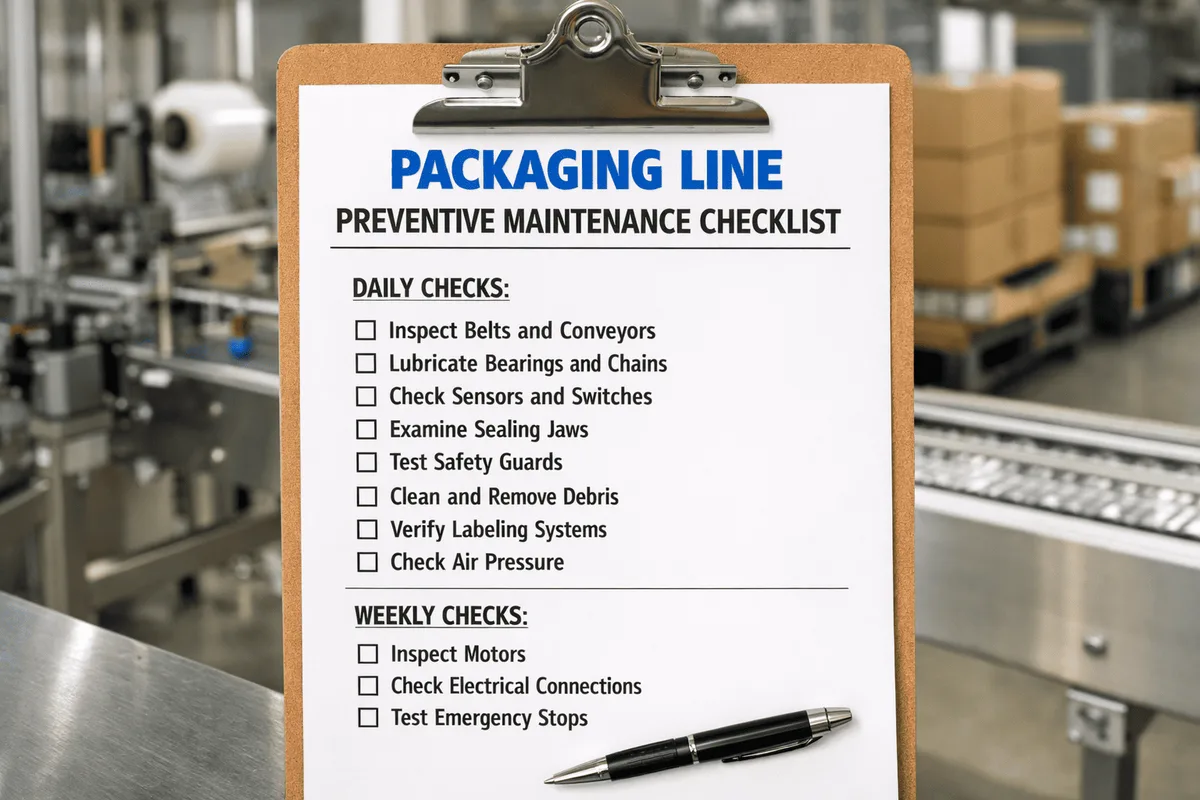
The requirements fall into four groups: substance limits, minimisation and empty space, labelling and data carriers, and the conformity file. Each of the ten documents below answers at least one of them.
Two dates decide the priority. Substance limits and documentation duties are live from 12 August 2026. Harmonised labelling arrives in 2028, which is why the artwork check here covers recycling marks rather than the new label.
The 10 Documents in the Order a Compliance File Is Assembled
Material data first, then test evidence, artwork control, the empty-space proof, and finally the declarations and traceability records. Each answers a question an importer or auditor will ask, and a skipped one resurfaces later as a held container.
1. Packaging Material Declaration
PPWR technical documentation starts with the supplier-written material declaration for each packaging component, not with a single document covering the whole dossier.
It lists every item line by line: outer carton, molded pulp, honeycomb board, PE bag, tape, ink, labels, unit weights, material grades and supplier identity. Each row ties to the SKU and to the actual pack architecture.
A vague blanket statement is weaker than a signed, line-item declaration. The supplier’s QA lead or authorised signatory signs and dates it, and buyers match it to the SKU, the bill of materials and the pack drawing.
🛡️ Our Verdict: Declarations that say “paper and plastic” are rejected. Each component must be named, weighed, graded and signed.
2. Heavy Metals and Restricted Substances Test Report
The hard limit applies to packaging substances: lead, cadmium, mercury and hexavalent chromium must stay under a combined 100 mg/kg (Article 5(4)). Those four are summed, not tested one at a time.
PFAS thresholds apply only where a packaging component is food-contact. A water heater shipper is not food-contact packaging, so the PFAS burden stops at the scope line.
The file needs a current lab report, or a tightly referenced supplier-backed test packet, for the four metals. It must map to the exact carton, pulp, tape, ink and PE bag in use, not to a generic “paper packaging” family.
🛡️ Our Verdict: Expired reports are rejected, and so is any report that does not map to the live SKU. One supplier reused a pulp report after switching tape, and the audit failed on that alone.
3. Recycling Marks and Material Code Artwork Review
This item is artwork-control evidence for the actual packaging set. It is not a promise that a downloaded PDF makes the shipment compliant.
Printer-ready carton, insert, bag and pallet-label files get checked against the signed pack drawing. Recycling symbols, material identifiers and placement must match. Legal must-haves from retailer requests are kept in separate columns.
A missing legal mark blocks shipment. A customer logo or shelf-format tweak does not.
🛡️ Our Verdict: Release is frozen for a missing legal mark. Retailer formatting goes back to commercial review.
4. Multilingual Label Completeness Check
Language requirements on labels and inserts vary by market, and PPWR does not create one EU-wide language rule. The checklist item is a market-by-market verification sheet.
Before printing, the sheet logs target country, required languages, warning text, disposal instructions, importer details where applicable, and revision date. Every label and insert line is compared against it.
Skip the sheet and missing or inconsistent language can delay customs clearance, trigger retailer non-compliance, or force relabelling inside the EU. One stale revision date is enough to hold the file.
🛡️ Our Verdict: A completed sheet is a release gate before print, not a formality after it.
5. Packaging Minimisation and Empty-Space Proof
Does transport packaging like pallets need to comply? Yes. Transport packaging is in scope under PPWR, so the empty-space rule reaches pallets and cartons alike.
The legal cap is 50% for grouped, transport and e-commerce packaging, per Article 24. Gulfstone’s stricter house rule is under 40%.
The measurement sheet logs four rows: carton internal volume, product volume, protective component volume, and the remaining air gap. Gap divided by internal volume gives the ratio.
On a recent RV water heater run, the carton went from 620 × 420 × 480 mm to 590 × 400 × 450 mm, molded-pulp void fill dropped by 22%, and the gap held at 31%. The unit still passed the 1.2 m drop and vibration sequence. Heavy heaters need that protection margin.
🛡️ Our Verdict: Under-filled cartons fail drop tests, and over-filled cartons breach the legal cap. Target 40% internally, then prove transit protection.
6. Disassembly and Design-for-Recycling Confirmation
This subfile documents separability and recycling logic for a specific packaging build. It supports the technical documentation; it does not replace it.
Reviewers check for easily separated paper parts, removable bags, limited mixed-material joins, and no inseparable composite structures that make sorting harder. Evidence is an exploded packaging drawing, annotated photos and an engineering note.
That note also explains why Gulfstone moved from EPS to molded pulp and honeycomb where performance still held. The manufacturing drawing set carries the same revision number.
🛡️ Our Verdict: Test one package on the line. If a sorter cannot separate the paper in seconds, the join goes back for redesign.
7. Supplier PPWR Declaration of Conformity
Who is responsible for EU PPWR compliance? The packaging manufacturer drafts the written Declaration of Conformity for each packaging type, backed by technical documentation. Importer and producer duties for market placement and EPR sit elsewhere in the chain.
In sourcing terms, a packaging type is one carton construction and material spec, not every SKU. A new board grade, pulp insert, coating or print process creates a new type.
A Chinese packaging or appliance supplier can help prepare the file. It cannot absorb the buyer’s EU importer duties.
🛡️ Our Verdict: One declaration covering mixed carton and pulp builds is rejected. One signed file per packaging type, with the technical documentation attached.
8. Batch Traceability File
Brand owners force packaging suppliers with an audit-ready traceability file keyed to SKU, lot and revision.
The minimum bundle is material lot numbers, incoming inspection records, BOM revision, linked test reports, packaging drawings, and the shipment or production batch each file belongs to. The quality-control gates generate most of this bundle already.
For packaging placed on the market, keep the technical documentation and the DoC for 5 years on single-use packaging and 10 years on reusable packaging.
🛡️ Our Verdict: No lot link, no release. The file is audited before the invoice is.
9. Export Packaging Pre-Shipment Checklist
The release sheet covers the finished export pack, including tertiary materials such as pallets, stretch wrap and corner boards. It runs at the loading dock, not at a desk.
Packaging version approved and matched to the drawing, labels printed correctly, supporting documents attached, sample photos filed, and sign-off captured before loading. Carton, pulp, bags, tape, labels, pallet and stretch wrap sit on one sheet.
Any missing item stops the load. The factory tour shows where that gate sits on the line.
🛡️ Our Verdict: No signed release, no loading.
⚡ Power Move: Hold the truck until the sheet is signed.
10. Customer Compliance Support File Pack
The handoff pack is a buyer-facing bundle assembled from controlled source documents, not a PDF export with unsupported claims.
It runs to six tabs: material declarations, test reports, DoC copy, drawings or BOM summary, traceability references, and a one-page index. The index lets the buyer’s importer and compliance team review the file quickly.
What it does not do is replace country-by-country EPR registration or importer-side legal review. That line stays in the cover note, and the OEM and ODM programme briefs it at kickoff.
📌 Gulfstone’s Verdict: Every pack is checked against the live SKU before release. A fast file is useful. A false promise is a liability.
How Do You Create PPWR Technical Documentation? A Factory Walkthrough
Technical documentation starts on the packing line, not in a lawyer’s office. Four steps follow: a line review, a space measurement, a cost check, and the file assembly that locks the pack to its SKU.
This walkthrough shows how Gulfstone supports a water heater packaging file. It does not replace legal counsel or the buyer’s importer obligations.
How Do You Build a PPWR Compliance File? 4 Steps to a Released Pack
A line review, a space measurement, a cost check and a file assembly that locks the pack to its SKU.
On a flagship RV water heater pack at the Foshan line, the team swapped non-compliant EPS void fill for molded pulp and honeycomb board. The first article pack still held ISTA 3A drop performance: the EPS block had crumbled at the corners and jammed the sorter, the pulp insert held its shape.
Step 1: Run the Line Review With QA

QA Manager Jingjing Lu starts with the physical pack, not the paperwork. She checks insert fit at each station, presses the pulp corners into the carton, and shakes the pack to listen for loose parts.
Her rule is simple: if the pack fails on the floor, it will fail in the file. One insert was rejected because it sat 4 mm too high and the carton lid would not close without force.
Step 2: Measure the Pack With Inspector Wang
Inspector Wang measures carton dimensions, product dimensions, insert volume and residual air gap, then logs all four rows on the shop floor.
The sheet records internal length, width and height, not the outer print size. Gap divided by internal volume gives the empty-space ratio.
The under-40% threshold is Gulfstone’s internal operating standard, not the PPWR legal maximum. The legal cap reaches 50% for some transport packaging. The house rule stays lower because heavy water heaters need protection. One carton was rejected at 42% even after the drop test passed.
Step 3: Cost the Change With Manager Chen
Manager Chen’s department calculated the redesign cost. Switching to molded pulp and honeycomb raised per-unit material cost by only $0.45.
That small increase cut the buyer’s exposure to rejected shipments and EU market-entry penalties. The $0.45 covered the new pulp insert and honeycomb edge boards at a 5,000-unit run.
Freight did not rise, because the smaller carton fit more units per pallet. The same logic now applies across the portable water heater range.
Step 4: Assemble the Document Pack
After the pack passes the line, the buyer file is built in five parts: packaging BOM review, supplier declaration chase, test-report matching, buyer-facing file-pack assembly, and revision control.
Each file gets a revision number and is locked to the live SKU, so an old report cannot slip through. The file is checked against the signed pack drawing before release.
For a live EU shipment, the Gulfstone team reviews the water heater pack and maps the file to that shipment. The certification library holds the evidence for files that need a certificate behind them.
Transparency note: Gulfstone builds outdoor water heaters under client brands and manufactures packaging for those programmes, so it has a commercial interest in the document set described here. I receive no manufacturer kickbacks for these findings.
Frequently Asked Questions About the PPWR Compliance Checklist
1. Does the PPWR apply to you?
Yes, if packaging is placed on the EU market. The regulation entered into force on 11 February 2025 and applies from 12 August 2026. Origin does not exempt a shipment: a pack built in China or the US and shipped into the EU carries the same file. Manufacturer, importer and producer duties stay split.
2. Are these files third-party certified or self-declared?
They are self-declared at the manufacturer level. The Declaration of Conformity is manufacturer-issued, not a third-party certificate. It still has to be backed by technical documentation and evidence, so it is not a mere unsigned supplier note. A DoC that does not link to a live BOM, pack drawing and current test report is rejected.
3. Do transport packaging like pallets, wrap and straps need to comply?
Yes. PPWR covers transport packaging, and the release sheet includes master cartons, pallet wrap, edge protectors and straps. If one item is missing, the load is held. The empty-space and documentation checks apply to this tertiary layer too.
4. What can a Chinese factory realistically provide, and what stays with the EU importer?
A Chinese factory can provide supplier-side deliverables: signed declarations, packaging drawings, test reports, material data and batch traceability. That is what the six-tab support file holds for each live SKU.
The EU importer or producer still owns market-placement responsibility and any EPR administration. A factory cannot register the buyer’s EPR account or act as the EU importer. Keep that split in writing before shipment.
5. How long do you keep the PPWR technical documentation?
Keep the technical documentation and the Declaration of Conformity for 5 years on single-use packaging and 10 years on reusable packaging, counted from when the packaging is placed on the market.
Every file is keyed to a SKU, lot and revision number so an old report cannot slip into a live shipment file during an audit.
6. Do you need separate technical documentation for the packaging and the product?
Documentation follows the packaging type rather than the individual product SKU. One carton construction and material spec counts as one packaging type, and a new board grade, pulp insert, coating or print process creates a new type.
A single declaration covering mixed carton and pulp builds is rejected. One signed file per type is required.
7. What type of packaging materials do you primarily use?
Water heater packaging uses outer cartons, molded pulp inserts, honeycomb board, PE bags, tape, ink and labels, plus pallets and stretch wrap at the transport layer.
EPS void fill was dropped because it crumbled at the corners and jammed the sorter. Molded pulp and honeycomb replaced it and still held ISTA 3A drop performance.

Forward
Co-founder & General Manager, GulfstoneGas appliance manufacturing and certification
Most of what decides a gas appliance is settled before anything is built — on the drawing, at the cut-out, in the tolerance someone chose for the gas path. I have spent my working life on the manufacturing side of that decision, and this is where I write down what it has taught me.
Nothing here is written from a sales desk. Every note comes off the floor: a batch held until a reason was found, a fitting that failed in transit, an approval path that only made sense once the destination market was fixed. If you read these first, the opening conversation starts at the standard rather than at the beginning.
- Gas water heater engineering
- Design for manufacturing
- Certification path selection
- Private-label tooling
- Off-grid and outdoor water heating
- Top 8 Outdoor Portable Gas Water Heater Factories in China for B2B BuyersNov 4, 2026
- Custom RV Appliance Industrial Design: An OEM Brief to a Validated PrototypeNov 3, 2026
- How to Build Custom Thermostat UI Design Software for OEM Embedded PanelsNov 3, 2026
- Top 8 RV Water Heater OEM Suppliers Canada: Vetted for Volume BuyersNov 3, 2026
- Top 10 Portable Propane Water Heater Manufacturers USA: A No-Hype Buyer ShortlistNov 2, 2026
- Top 8 Portable Water Heater Manufacturers and Suppliers in China for Camping/RV OEMsNov 1, 2026
Fifteen years in appliance manufacturing — home appliances, RV refrigeration, then gas water heating — from the drawing to the shipping container.
Leads Gulfstone's design-for-manufacturing reviews and the certification path selected for each destination market.
Works directly with OEM and private-label buyers on tooling, tolerances and the approval file.