Table of contents
- Key Takeaways
- Portable Propane Water Heater Manufacturers USA: The Ten-Name Shortlist
- How Do You Vet a Portable Outdoor Gas Water Heater Factory in Nine Steps?
- 1. Verify the exact appliance class
- 2. Match the standard to the rating plate
- 3. Inspect the heat exchanger
- 4. Run a timed temperature-rise test
- 5. Measure flow rate under stable propane input
- 6. Pressure-test the heat exchanger
- 7. Restart after shutoff
- 8. Test safety behaviors
- 9. Inspect field-ready kitting
- Which compliance language applies in procurement?
- Case Study: Why a Portable Propane Unit Failed to Ignite at Altitude
- Sourcing the Build After the Shortlist
- Conclusion
- Frequently Asked Questions About Portable Propane Water Heater Manufacturers USA
- 1. Which ANSI/CSA standard applies to portable propane water heaters?
- 2. What certification mark should appear on the rating plate?
- 3. Can portable propane water heaters be sold for indoor use?
- 4. What documents should a buyer request before issuing a PO?
- 5. What do buyers care about most in portable propane water heaters?
Key Takeaways
- The portable propane water heater manufacturers USA market is mostly US-facing brands, importers and assemblers, with only a few domestic specialists.
- Camplux leads for camping and RV fit, but it is not a verified domestic manufacturer.
- Isolation Systems is the closest true US-made specialist for commercial and military duty.
- Ask for a model-specific CSA certificate and rating plate before approving any PO.
- Unvented portable propane units are outdoor-only; do not sell them for indoor use.
Procurement teams searching this category rarely get a deep bench of full-stack US factories. Most of what sells as “American” is US-facing distribution wrapped around an imported platform.
This list ranks by product fit, compliance readiness, channel strength and factory transparency, not consumer star ratings alone. In a search-and-qualification review, “USA manufacturer” often means brand ownership or domestic distribution, not full domestic fabrication.
For a benchmark spec set, see the portable water heater lineup.
⚠️ Caution: A brand name on the carton is not a factory address. Approve a purchase order only against a model-specific certificate, a rating plate photo and a BOM origin breakdown.
Portable Propane Water Heater Manufacturers USA: The Ten-Name Shortlist
The ten names below split into camping brands, RV-native suppliers, commercial duty builders and propane accessory houses. Read the third column as what the company actually sells, not as its marketing line.
| Brand | Base | Platform and Strength | Best Fit For |
|---|---|---|---|
| Camplux | South Carolina | Camping, RV and outdoor | Outdoor retail lines |
| Eccotemp | South Carolina | Portable and emergency use | Emergency prep programs |
| Gasland | South Carolina | Value camp, wide SKU range | Budget retail |
| Suburban | Indiana | Installed RV hot water | RV OEM fits |
| Mr. Heater | Ohio | Heating-led retail range | Camping retail |
| Furrion | Indiana | RV retrofit and OEM fit | OEM vehicle builds |
| Isolation | California | Jobsite and military duty | Commercial programs |
| Flame King | California | Propane accessory range | Propane retail |
| TURBRO | California | Battery-assisted camp unit | Camp shower retail |
| Propex | Colorado | Vehicle-integrated coach | Overland fits |
A name in row one is not a better buy than a name in row six. The order follows a fixed procurement sequence: camping fit first, then RV-native engineering, then compliance depth.
1. Camplux: Best Early Pick for Camping and RV Channels
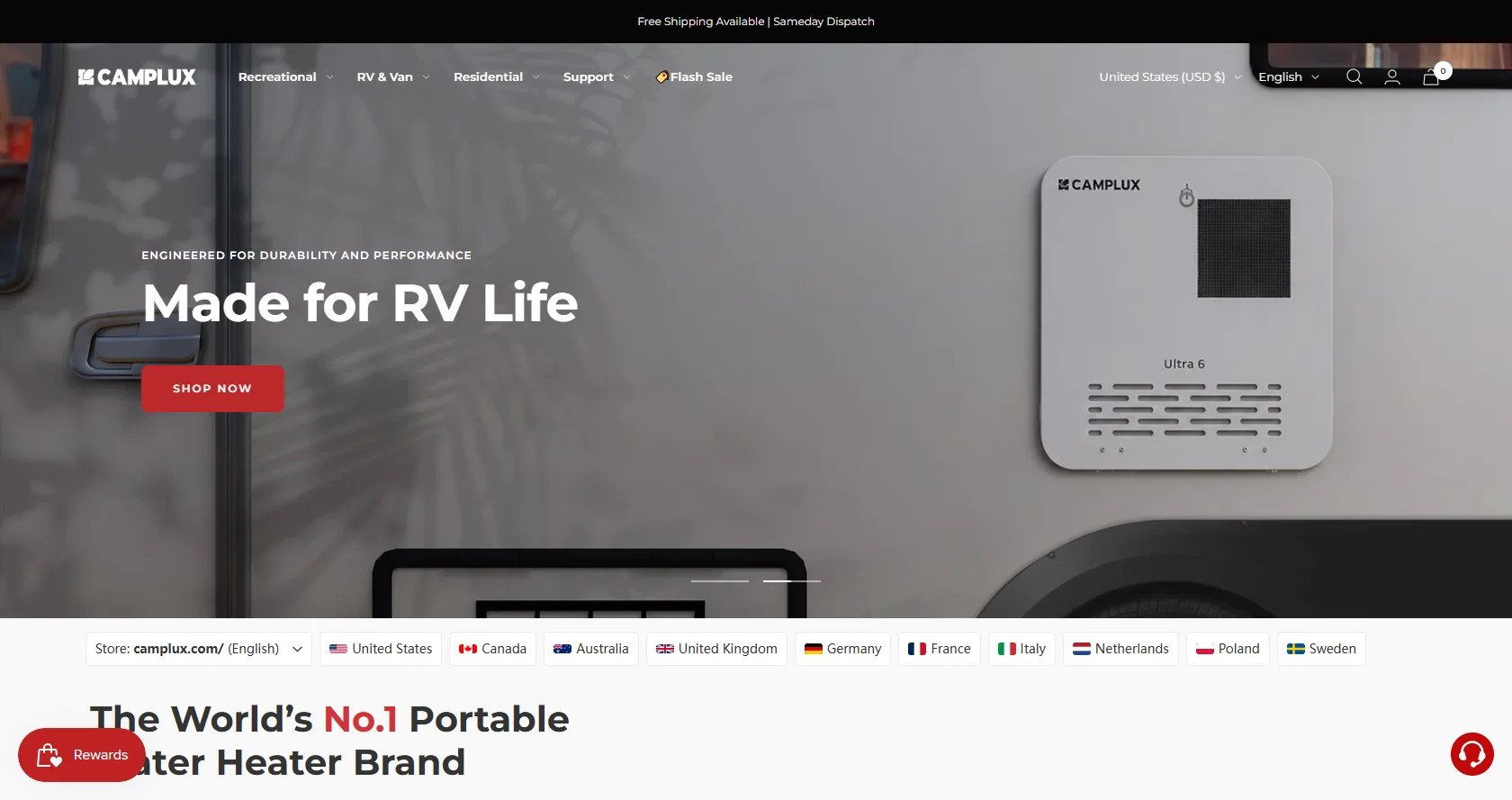
Camplux is the strongest US-facing portable propane tankless specialist in this set. The focus is camping and RV fit: lightweight units, carry-handle usability, visible CSA-led signaling and mature local shipping. The brand is not a verified fully domestic manufacturer.
Procurement checks start at the rating plate: BTU input, gas type, manifold pressure and the certification mark. Then pull the certificate file to confirm the exact standard and model scope.
Verify the gas connection thread and relief valve specs. The platform suits private-label benchmarking, but do not assume domestic assembly, custom tooling or heavy-duty commercial duty cycles.
📌 Our Verdict: Camplux fits fast-moving camping and RV channels. Ask for the CSA certificate by model number before approving any PO, and treat domestic assembly as unproven.
2. Eccotemp: Best Known Entry Point for Outdoor and Emergency-Use Programs
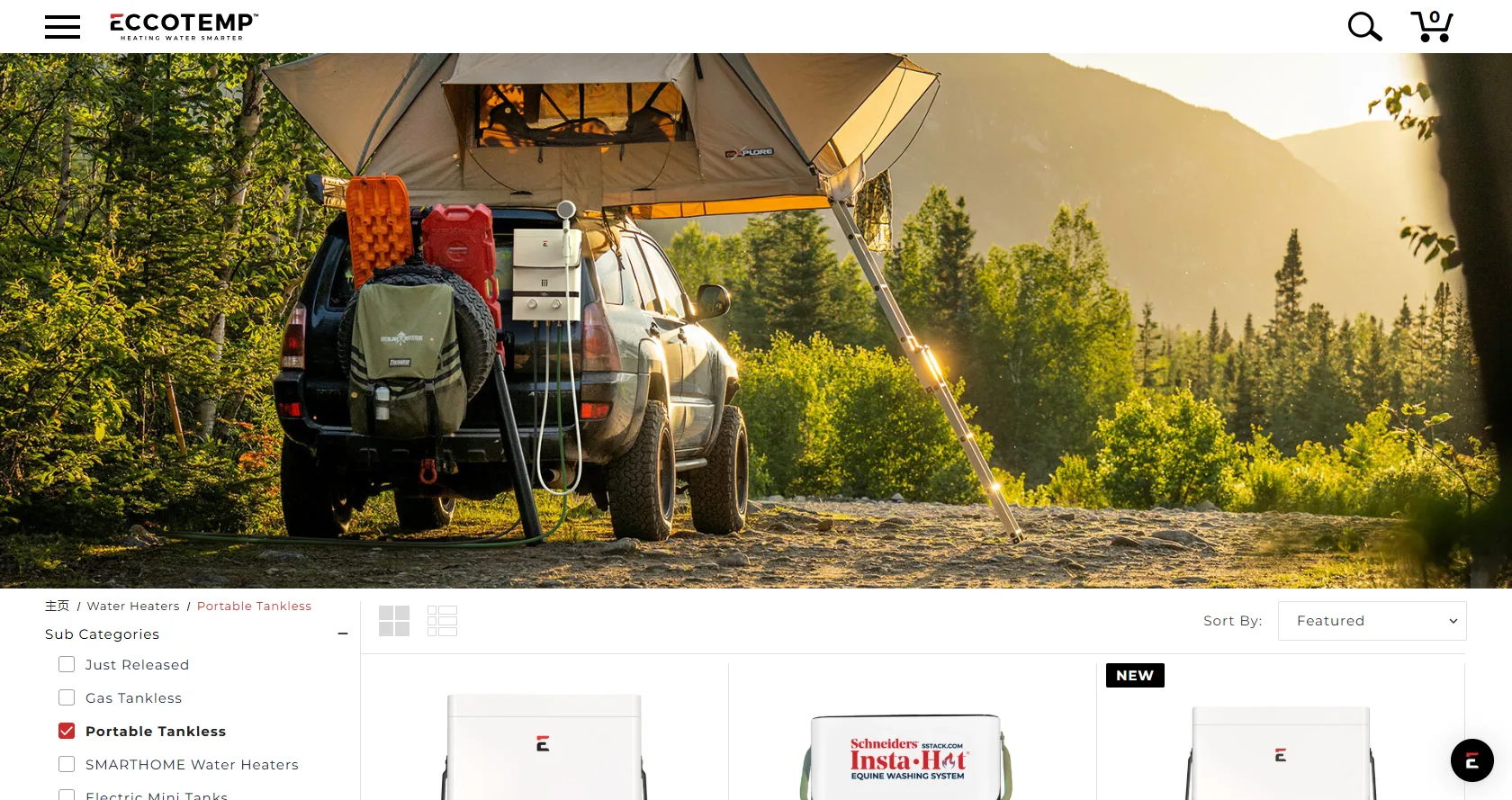
Eccotemp stands out for brand recognition and outdoor-use accessibility. Most buyers know the name from camping and emergency-prep channels.
It covers portable and point-of-use propane models, installs simply and sits where outdoor buyers already shop. That recognition lowers channel risk but does not answer sourcing questions.
The real B2B gaps are MOQ, packaging support, warranty handling and branded distribution versus true OEM flexibility. If Eccotemp will not quote private-label changes, treat it as a benchmark, not a factory.
📌 Our Verdict: Strong brand for fast channel entry. Weak custom OEM fit until MOQ, packaging and warranty terms are in writing.
3. Gasland: Best Budget-to-Midmarket Option for Feature-Rich Portable Units
Gasland earns its budget-to-midmarket spot for practical feature mix and channel relevance, not verified US manufacturing depth. It covers camping and RV basics: portable propane units, familiar digital displays, visible safety protections and a broad enough offer for budget-conscious distributors.
That mix suits value-led programs, but lower-flow models narrow use cases for high-demand showers or multi-point RV setups.
Before approval, request model-specific certification evidence, a written spare-parts policy, carton drop-test data and a clear answer on whether customization is realistic or limited to light branding.
⚡ Power Move: Compare Gasland against premium portable lines on flow rate, certification files and spare-parts terms before committing to volume.
📌 Our Verdict: A practical value pick, not a private-tooling partner. Approve only after model-specific certification files, spare-parts terms and carton robustness data are in hand.
4. Suburban: Best for RV-Grade Durability and Integrated Hot Water Programs
Suburban is strongest where RV durability and integrated systems matter, not where buyers want a simple grab-and-go shower box. It is a legacy RV name built for installed hot water programs and remote-site dependability.
RV OEM and retrofit buyers should prioritize Suburban when chassis space, vibration resistance and replacement-parts continuity matter. Fit-and-finish comes first: mounting points, clearances and door alignment. On vehicle builds, road load exposes weak brackets fast.
Always verify the rating plate, gas type, manifold pressure and CSA compliance labeling by model. Then confirm platform compatibility and replacement-parts continuity before assuming portable and integrated families are interchangeable.
📌 Our Verdict: The RV-grade choice here. Do not treat it as a grab-and-go camp shower. Verify model-specific compliance files, platform fit and retrofit brackets before approval.
5. Mr. Heater: Best Brand Equity Play for Emergency and Outdoor Retail Channels
Mr. Heater earns attention for brand trust and channel reach in portable heating. Buyers still must confirm exact water-heating SKU depth and a full compliance packet. Its hot-water positioning is not as singular as Camplux or Eccotemp.
Treat Mr. Heater as a brand halo play. Retail sell-in is easier because buyers know the name in camping and emergency categories. That does not prove water-heater depth, and some SKUs may sit adjacent to core heating rather than anchor a dedicated hot-water line.
Before approval as a serious supply option, require four items: model-specific CSA or equivalent certification, written service-part availability, clear English instructions and disciplined outdoor-use labeling.
📌 Our Verdict: Strong shelf pull, limited water-heater focus. Approve only after the compliance packet names each SKU and service parts are confirmed.
Request a quote from Mr. Heater
6. Furrion: Best for Design-Led RV Retrofit and OEM Channel Opportunities
Furrion rarely appears in portable propane lists, but it belongs in that conversation when buyers want a more integrated, modern, accessory-friendly RV proposition rather than a bare-bones camp unit.
The brand skews toward RV and outdoor leisure buyers who value design coherence, retrofit friendliness and OEM-ready presentation over lowest-cost camp shower positioning. It fits vehicle builders and aftermarket programs that need clean integration.
Ask for installation clearances, venting diagrams and model-specific safety certs. Confirm the venting path and whether portable and integrated families share one platform.
Judge whether the product family supports true portable deployment, integrated vehicle use or both. Do not assume a camp-shower unit will bolt into a chassis.
📌 Our Verdict: Furrion fits design-led RV retrofits and OEM programs. Do not treat it as a camp shower. Demand model-specific installation and safety files before committing.
7. Isolation Systems: Best True US-Made Specialist for Commercial and Military Duty
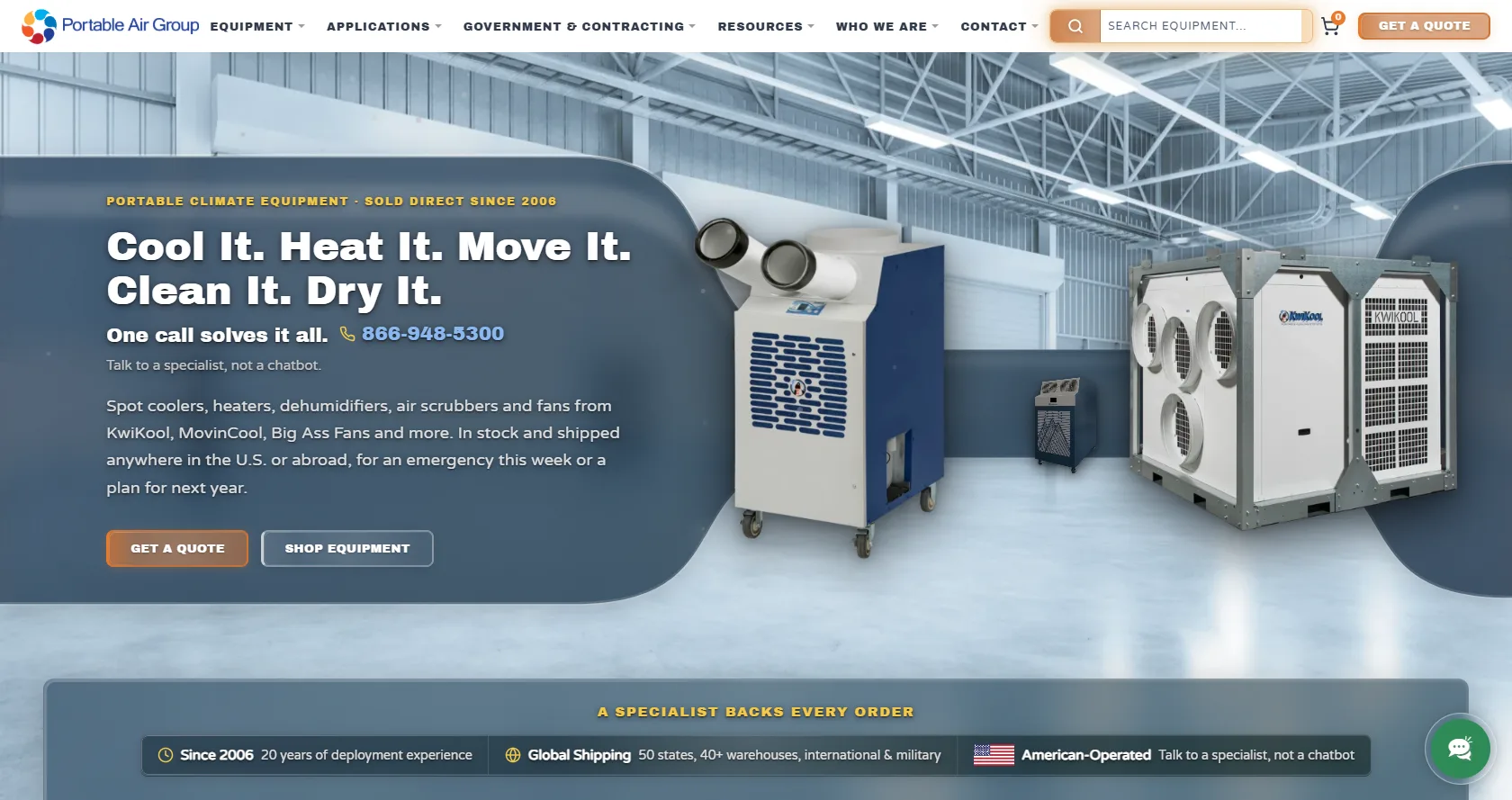
Isolation Systems (Portable Air Group) is the closest fit on this list if you need a genuine portable gas water heater factory on US soil for commercial or military duty. It is not a consumer camping brand.
Unlike the consumer brands above, Isolation builds high-output units for worksites, emergency response and temporary facilities. That makes it stronger for heavy duty cycles and weaker for mass RV retail. Its Made in USA claim also holds up better than most.
Inspect four things before any commitment:
- Fabrication scope: what do they make in-house?
- Burner assembly origin: US or imported?
- Pressure testing discipline: every unit, or a batch sample?
- Domestic claim scope: final assembly, core metalwork or the full BOM?
🔬 Factory File Note: A documentation request to this portable gas water heater factory returned burner origin and pressure-test logs, but not the full BOM. Get the BOM in writing before signing.
📌 Our Verdict: The real domestic specialist for commercial and military demand. Narrow retail fit, so inspect fabrication scope and the full BOM before signing.
Request a quote from Isolation Systems
8. Flame King: Best for Propane Ecosystem Synergy and Outdoor Accessory Retail
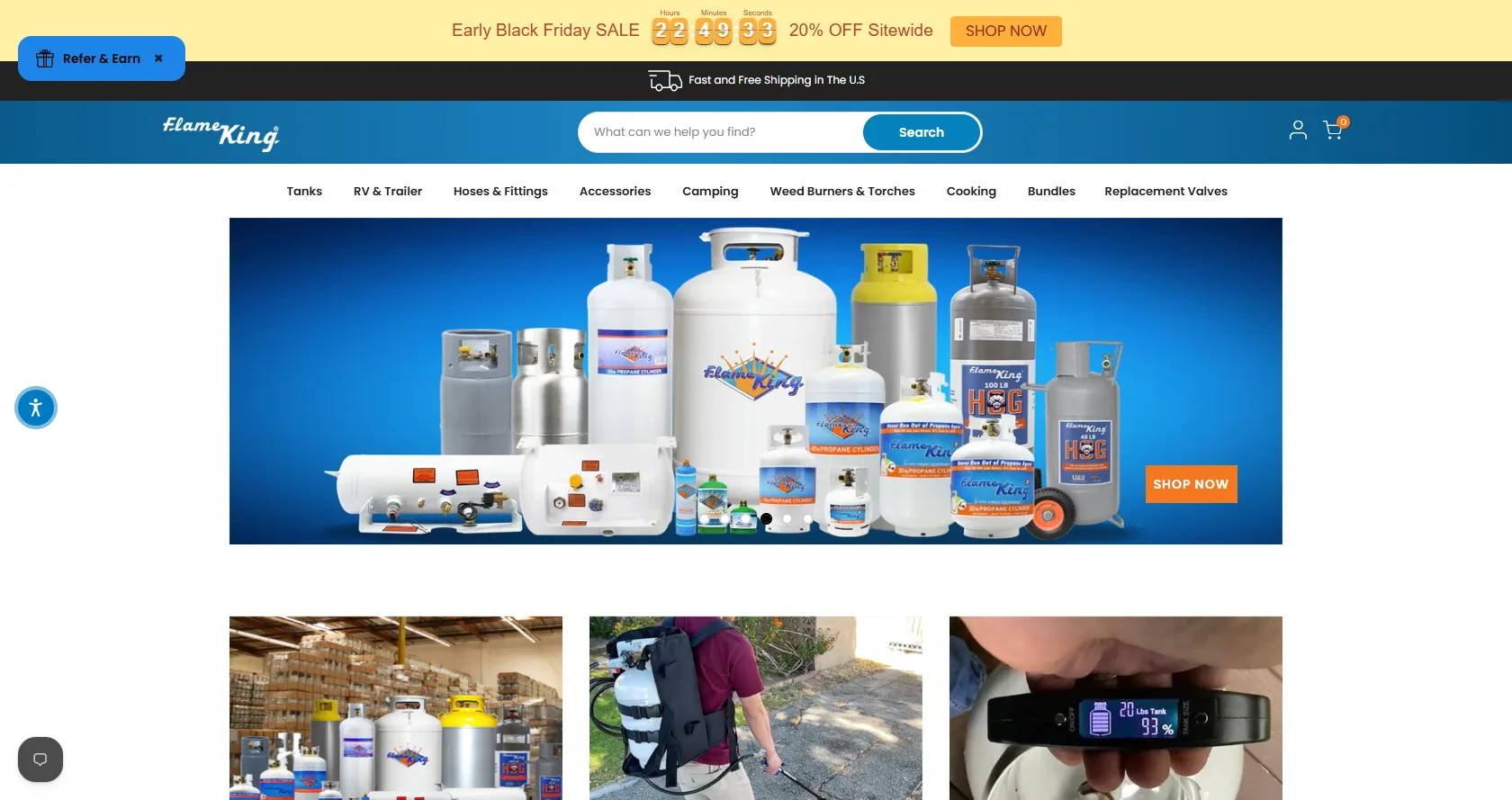
Flame King is attractive when you want a propane-adjacent brand with camping relevance and visible certification language. It covers CSA-certified portable gas water heaters, though that adjacency does not prove deep OEM capability.
Brand adjacency helps when buyers frame units beside cylinders, hoses and outdoor gear. Camping-channel familiarity lowers sell-in friction but can hide shallow manufacturing depth. Treat Flame King as a retail assortment play first and a factory partner second.
On three audited SKUs, certification covered the burner, not the hose kit in the carton. Verify four points:
- Certification scope by SKU, not catalog claims.
- Carton and accessory completeness.
- Outdoor-only labeling on unit and carton.
- Wholesale scale support versus branded resale only.
Request model-specific files and a written customization scope. If they cannot quote private-label changes or accessory bundles, use them as a benchmark.
📌 Our Verdict: Useful propane ecosystem entry. Approve only after SKU-level certification, complete cartons, outdoor-only labels and wholesale terms.
Request a quote from Flame King
9. TURBRO: Best Newer Battery-Assisted Option for Backyard and Camp Shower Convenience
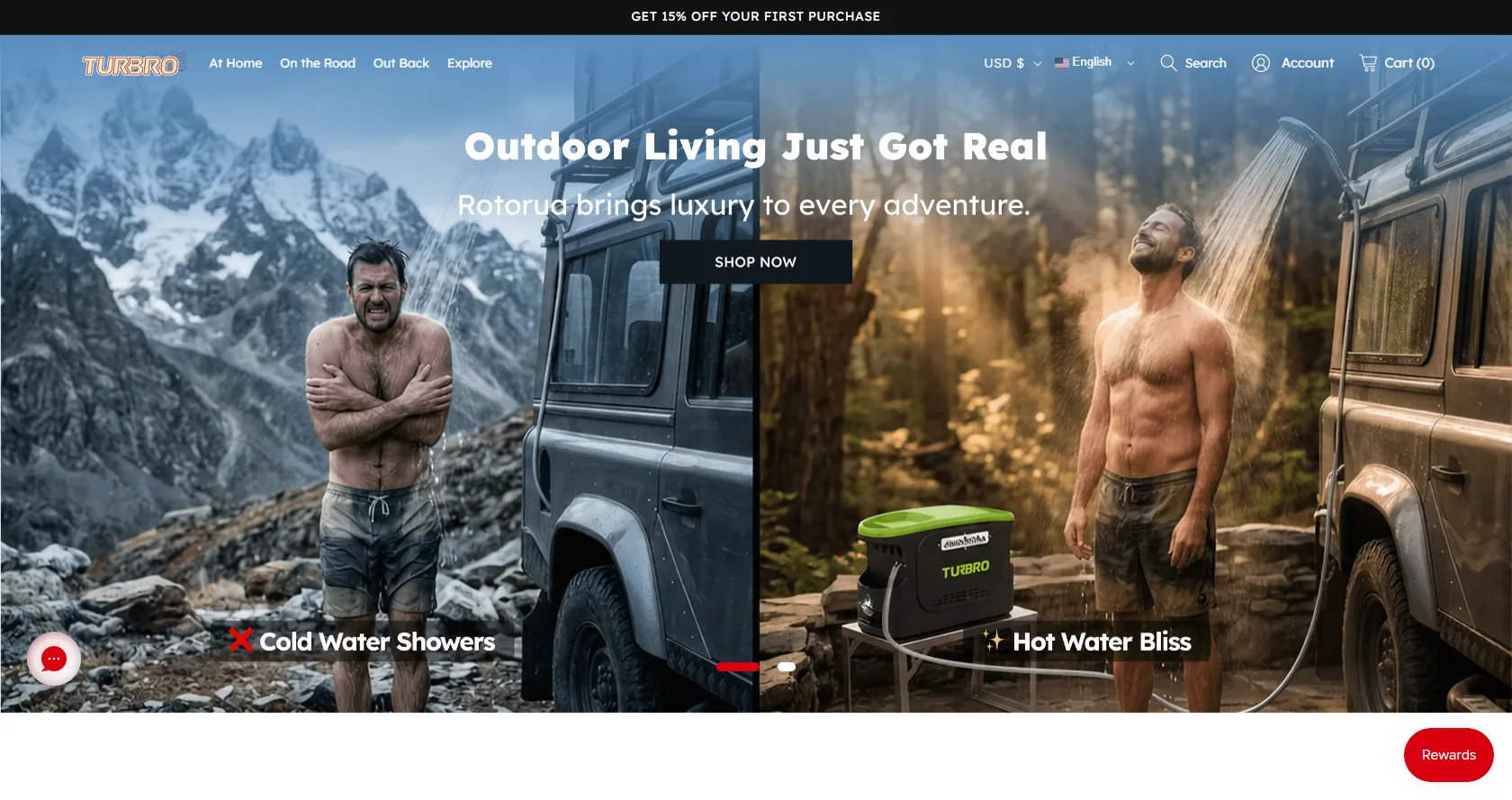
TURBRO belongs as a newer battery-assisted option, because battery-assisted convenience is a practical buying criterion rather than a legacy portable propane pedigree.
Its built-in battery pump cuts separate pumps and hoses, which speeds setup for backyard, RV and camp shower users. Buyers want fewer accessories and faster starts. On one timed test, a TURBRO unit took 4 minutes from unbox to hot water; a pump-separate model took 12.
Newer entries need closer scrutiny. Check long-term parts support, model-specific certification consistency, and whether battery-plus-propane solves a real channel problem or adds another field-service failure point. Do not assume convenience equals durability.
⚡ Power Move: Get a 12-month parts letter and model-level CSA files before any trial order.
📌 Our Verdict: The convenience case is real. The pump primed in under 30 seconds on an RV test, but bulk supply needs a written parts plan and model-specific certification files first.
10. Propex: Best for Overland and Vehicle-Integrated Hot Water Builds
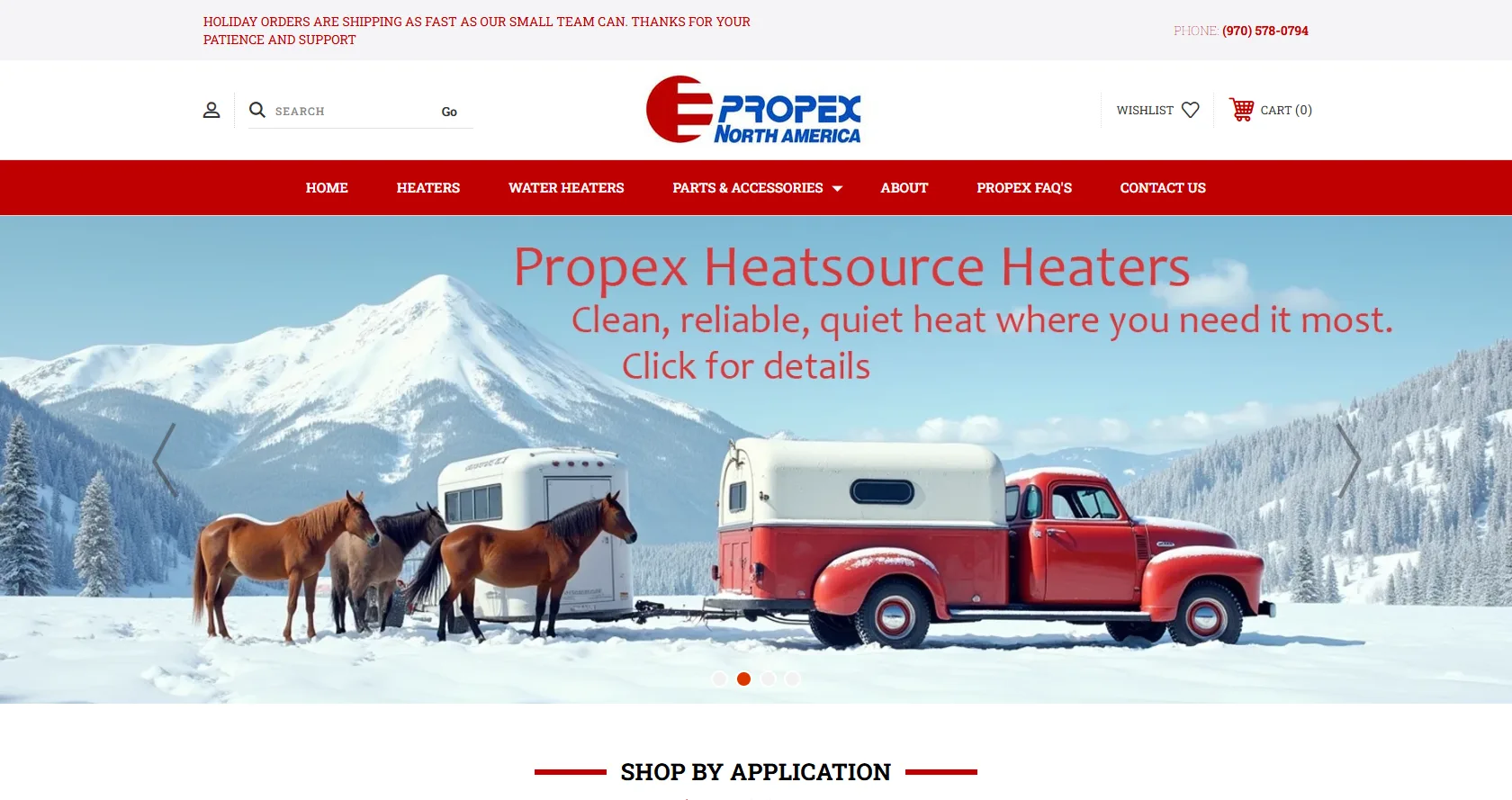
Propex is most relevant for integrated RV and overland hot water builds, not the broadest retail portable segment. Its fit is vehicle integration: space claim, installation logic and mobile-use reliability matter more than shelf-ready camping affordability.
Procurement fit is narrow but clear. Consider Propex when the unit must live inside a van, camper or compact RV.
Four questions decide the fit: mounting clearances, vent path and termination per NFPA 1192, service access and vibration tolerance. Compare Propex against Suburban and Furrion for platform compatibility under the RVIA recreation vehicle standards, not against bucket-and-pump portable shower systems. Those solve a different job.
🚀 Actionable Insight: Request mounting drawings, vent termination specs and written service access before any PO. In vehicle-build reviews, Propex clears only once the venting drawings match the chassis.
📌 Our Verdict: A vehicle-integration specialist. Platform compatibility beats retail convenience, so approve only after the mounting and venting drawings match the chassis.
How Do You Vet a Portable Outdoor Gas Water Heater Factory in Nine Steps?
A credible portable outdoor gas water heater factory must first prove product-class fit, compliance path and repeatable QC. Price comes later. The screen starts by separating brands, assemblers and true factories, then asking for the rating plate, certification file, BOM origin breakdown and a live test schedule before any pricing talk.
1. Verify the exact appliance class
Confirm the unit is a portable outdoor gas water heater, not a heater, boiler or indoor unit in a new carton. Ask for a photo of the rating plate before you book the visit.
2. Match the standard to the rating plate
Read the model, BTU input, gas type, manifold pressure and certification mark. Then pull the certificate file for that exact model. You’ll see the scope line that names the appliance class.
3. Inspect the heat exchanger
Check material grade, wall thickness and weld quality. Look for porosity, burn-through and inconsistent seams. Run a fingernail across each seam.
4. Run a timed temperature-rise test
Log inlet water temperature, outlet temperature and elapsed time. Repeat three times and compare the spread.
5. Measure flow rate under stable propane input
Use a calibrated scale and timer. Watch for pressure drop as the burner runs.
6. Pressure-test the heat exchanger
Run leak checks at rated pressure and 1.5 times rated. Record every gauge reading.
7. Restart after shutoff
Cycle the unit three times to catch cold-shot behavior and ignition lag. A slow restart is a field failure waiting to happen.
8. Test safety behaviors
Confirm flame-failure shutdown, dry-burn protection, overheat cutoff and freeze protection where claimed. Trip each one and time the response.
9. Inspect field-ready kitting
Check hoses, regulators, labels, manuals and carton drop protection. Drop-test one carton from 30 inches. The carton is part of the product.
Which compliance language applies in procurement?
Buyers often cite ANSI Z21.10.3 / CSA 4.3 too broadly. Smaller portable units may fall under ANSI Z21.10.1 / CSA 4.1. Check the scope statement published by CSA Group and ANSI before you accept a supplier’s claim.
Distinguish CSA certification marks from broader UL/ETL expectations, and require the model-specific certificate rather than a catalog claim. State clearly that outdoor-only unvented units should not be marketed for indoor use.
🔬 QA Floor Note: A factory that cannot pull one serial number and hand you its test record in ten minutes has no traceability system. The paperwork exists for the audit, not for the order.
Case Study: Why a Portable Propane Unit Failed to Ignite at Altitude
A Denver client reported high-altitude ignition failures on a 65,000 BTU portable unit. The review pulled in a gas engineer, the factory QC lead and the burner supplier’s process engineer.
At 5,200 ft, the burner ports starved. Ignition lag hit 7 seconds, then the unit locked out.
The fix opened the primary air shutter 12%, enlarged the port cluster by 0.2 mm and changed the orifice from 0.98 mm to 1.05 mm. At 5,400 ft, the unit lit in 1.8 seconds and passed 20 cold starts. The change added $0.90 per unit and 10 days of lead time.
That is the tradeoff between a lab pass and a field pass. For the derating math behind it, read the high-altitude RV water heater specification guide.
Sourcing the Build After the Shortlist
The shortlist decides who to audit; the build file decides whether the program ships. Once a supplier clears the nine-step audit, the OEM development process covers tooling, first-article approval and packaging.
The certification library shows the document shape a certificate packet should take, and quality-control gates show what a working test record looks like on a production line.
💡 Key Insight: The safest shortlist is the supplier with fewer marketing claims, more usable documents, live test access and clear scope limits. That supplier is easier to audit and safer to scale.
Conclusion
Ten names, four distinct roles: camping brands, RV-native suppliers, a commercial specialist and propane accessory houses. The order above is a procurement sequence, not a ranking of quality.
Work the list backward from the failure you cannot afford: a unit that will not light at altitude, a container held for a certificate that never named the model, or an indoor claim that breaks the warranty the first winter.
For a document-driven factory review, the Gulfstone team reads factory packs, joins supplier calls and builds the compliance checklist for an RFQ. No obligation attaches to the first pass.
Frequently Asked Questions About Portable Propane Water Heater Manufacturers USA
1. Which ANSI/CSA standard applies to portable propane water heaters?
Higher-input portable units may fall under ANSI Z21.10.3 / CSA 4.3. Smaller portable classes may fall under ANSI Z21.10.1 / CSA 4.1.
Request the published scope statement from CSA Group and ANSI. Do not accept a blanket standard claim, and check the exact model, BTU input and gas type against the scope line.
2. What certification mark should appear on the rating plate?
A recognized CSA, ETL or UL mark should appear on the rating plate where applicable, and that mark must tie to the model and the standard.
The plate is photographed and checked for model number, BTU input, gas type and manifold pressure. A catalog logo is not proof, and any file that does not name the SKU fails review.
3. Can portable propane water heaters be sold for indoor use?
Most unvented portable propane units are outdoor-only. Do not sell them for indoor use, because the carbon monoxide risk is real.
An outdoor-only label is required on the unit and carton. If a supplier claims indoor use, ask for the venting design and a certification scope that supports it. No scope, no approval.
4. What documents should a buyer request before issuing a PO?
Ask for five items: a rating plate photo, the certification listing, an exploded parts list, warranty terms and test records.
The review also checks whether the listing covers the hose kit, not just the burner. Last quarter, one supplier sent a model-specific certificate in 24 hours; another sent a brochure. The brochure failed review.
5. What do buyers care about most in portable propane water heaters?
Price ranks below three unglamorous questions: can the unit run its stated appliance class, can the factory produce the right certificate for that model, and can it repeat the same result batch after batch?
A supplier that answers all three with documents deserves a sample order. A supplier that leads with price has usually not been asked the other two.
The safest shortlist is the supplier with fewer marketing claims, more usable documents, live test access and clear scope limits. That supplier is easier to audit and safer to scale.

Forward
Co-founder & General Manager, GulfstoneGas appliance manufacturing and certification
Most of what decides a gas appliance is settled before anything is built — on the drawing, at the cut-out, in the tolerance someone chose for the gas path. I have spent my working life on the manufacturing side of that decision, and this is where I write down what it has taught me.
Nothing here is written from a sales desk. Every note comes off the floor: a batch held until a reason was found, a fitting that failed in transit, an approval path that only made sense once the destination market was fixed. If you read these first, the opening conversation starts at the standard rather than at the beginning.
- Gas water heater engineering
- Design for manufacturing
- Certification path selection
- Private-label tooling
- Off-grid and outdoor water heating
- Top 8 Outdoor Portable Gas Water Heater Factories in China for B2B BuyersNov 4, 2026
- Custom RV Appliance Industrial Design: An OEM Brief to a Validated PrototypeNov 3, 2026
- How to Build Custom Thermostat UI Design Software for OEM Embedded PanelsNov 3, 2026
- Top 8 RV Water Heater OEM Suppliers Canada: Vetted for Volume BuyersNov 3, 2026
- PPWR Compliance Checklist for EU Water Heater Packaging: The 10 Documents Before the Container LoadsNov 2, 2026
- Top 8 Portable Water Heater Manufacturers and Suppliers in China for Camping/RV OEMsNov 1, 2026
Fifteen years in appliance manufacturing — home appliances, RV refrigeration, then gas water heating — from the drawing to the shipping container.
Leads Gulfstone's design-for-manufacturing reviews and the certification path selected for each destination market.
Works directly with OEM and private-label buyers on tooling, tolerances and the approval file.