Table of contents
- Key Takeaways
- Prerequisites: The Inputs a Specification Needs
- Specifying an Extreme-Conditions RV Water Heater: 5 Steps From Mission Profile to Signoff
- Step 1: Define the Mission Profile Before Comparing Specs
- Step 2: Verify the Altitude Rating and Combustion Stability
- Step 3: Specify Live-Use Freeze Protection, Not Storage Winterization
- Step 4: Harden the Mechanical and Plumbing Package
- Step 5: Run the Factory Validation Sequence
- Troubleshooting Extreme-Condition Water Heater Failures
- Conclusion: Validation Discipline Beats a Specification Sheet
- Frequently Asked Questions About Extreme-Condition RV Water Heaters
A note on the figures. The chamber data, voltage thresholds and failure points below come from Gulfstone’s own validation runs and anonymized client programs. Treat every figure as a modeling checkpoint, not a performance guarantee, and confirm certified ratings against the unit’s own spec sheet before you buy.
Key Takeaways
- Sourcing extreme-condition RV water heaters is an engineering validation exercise, not consumer product shopping.
- Define the environmental mission profile and pass/fail criteria before comparing unit specifications.
- Specify active live-use freeze protection: passive winterization drain-down is not sufficient for sub-zero operation.
- Reject marketing BTU claims that arrive without altitude derating curves, lockout logs and cold-ignition test data.
- Follow an eight-step factory validation sequence, and halt evaluation at the first failed metric.
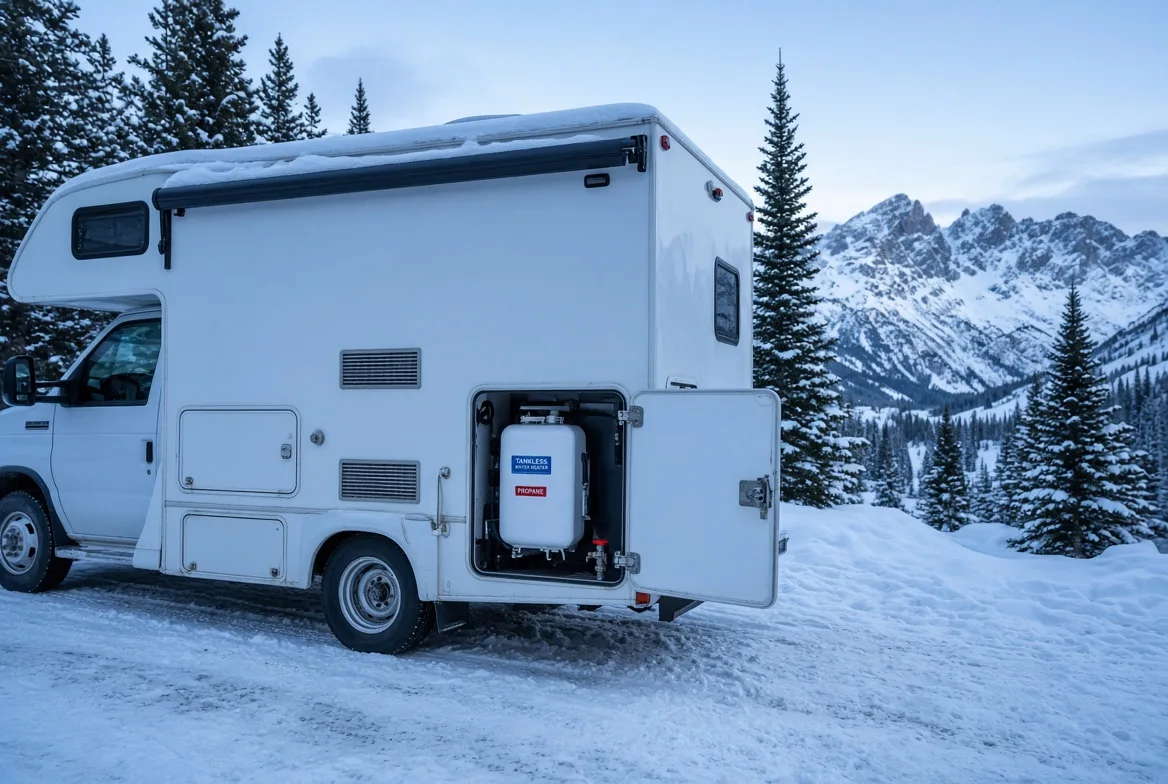
Most extreme-environment RV water heater failures are not product defects. They are specification failures. After a client’s entire fleet shut down repeatedly at 2,800 meters in Colorado high country, Gulfstone built the OEM-grade validation workflow that follows.
This guide removes the guesswork from high-altitude, sub-zero and high-vibration overland builds. It is grounded in 72-hour sub-zero environmental chamber testing, interviews with line technicians and assembly-line QC audits.
It is advanced engineering validation for engineers and procurement teams, not basic DIY installation copy.
Prerequisites: The Inputs a Specification Needs
Reliable RV hot water performance depends on validated system inputs, not operational trial and error. Most OEM field failures trace back to unconfirmed environmental, electrical and mechanical specifications.
Confirm these non-negotiable inputs before evaluating any unit:
- Min/max ambient temperature and maximum operating altitude
- Fixture count and required GPM flow rates
- Propane fuel quality, 12V system architecture and battery chemistry
- Physical installation envelope, weight limits and noise restrictions
Gather the supporting technical evidence: installation drawings, combustion spec sheets, wiring schematics, freeze-protection logic tables, environmental chamber reports, vibration test records and official certification packets. Design and validation align with ANSI Z21.10.3 / CSA 4.3 for gas water heaters and NFPA 1192 for RV safety.
⚠️ Warning: Gas water heater performance and venting must always match certified factory limits, and passive winterization is not active live-use freeze protection. Low system voltage also disables cold-start ignition: chamber testing showed consistent ignition failure at 10.5V during sub-zero starts.
Compliance and certification verification follows standardized factory QC protocols documented on the Gulfstone certifications page.
The prerequisite-check workflow also incorporates practical insight from Amy Lam, an RV-grade thermal-system procurement specialist who focuses on specification validation and supplier risk assessment for off-grid heating hardware.
🧠 Expert take: Match a unit’s certified altitude rating to your worst-case route elevation before you review BTU or performance specs.
Specifying an Extreme-Conditions RV Water Heater: 5 Steps From Mission Profile to Signoff
The five steps below define the mission profile, verify altitude combustion, specify live-use freeze protection, harden the mechanical package and run factory validation, stopping at the first failed metric.
Step 1: Define the Mission Profile Before Comparing Specs
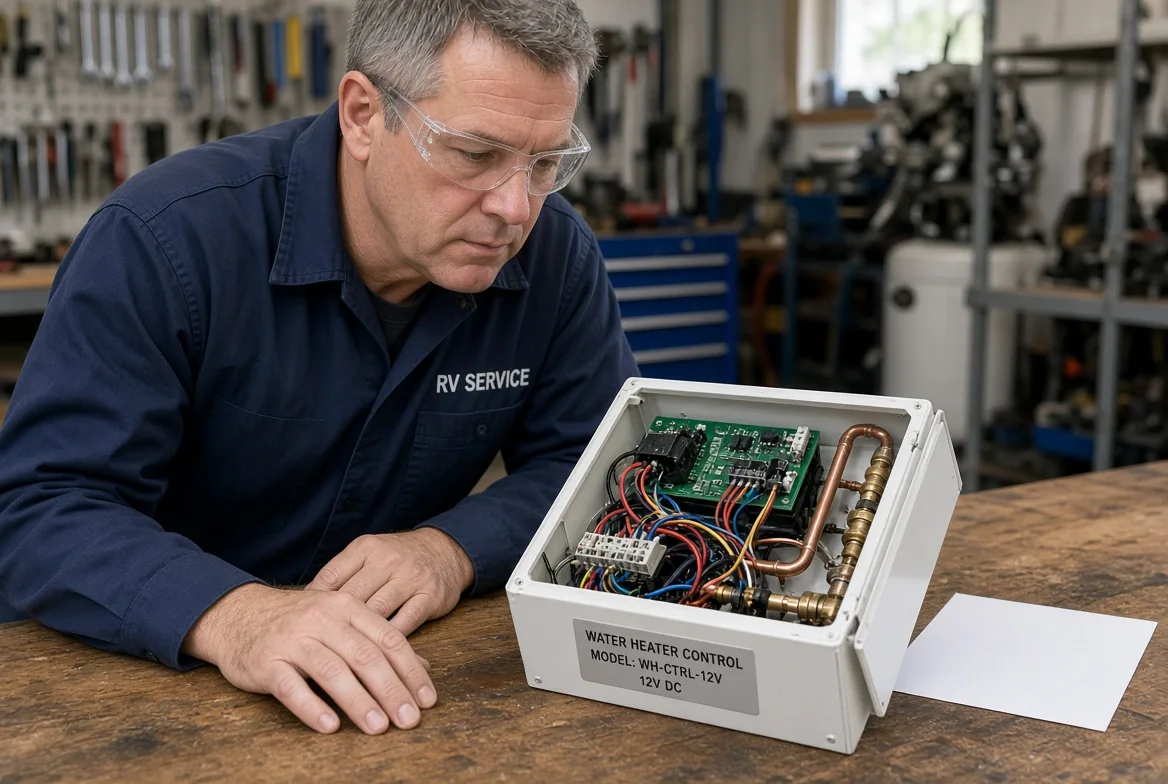
Never evaluate extreme-condition RV water heaters on BTU output alone. High-rated units fail consistently when mismatched to real ambient temperatures, altitude, duty cycles and chassis constraints.
Classify the exact use case: winter parked storage, shoulder-season camping, live sub-zero deployment, high-altitude mountain travel or commercial fleet service. Each scenario needs its own validated heater configuration.
Define the full environmental operating envelope:
- Ambient high and low temperature range (°F)
- Maximum operating altitude (meters or feet)
- Inlet water temperature and required GPM demand
- Exterior wall wind exposure and chassis vibration and shock loads
Write formal pass/fail performance criteria before reviewing supplier quotes. Competitive procurement leans on headline BTU numbers, which hides the freeze and altitude risks that surface in later audits.
Score every candidate against one decision matrix: altitude tolerance, freeze resistance, DC power compatibility, serviceability, certifications and spare-parts availability.
A unit that looks like a drop-in fitment often is not. Chassis mounting, gas connections and cutout geometry all move per vehicle, as covered on the RV OEM solutions page and in the cutout measurement guide.
Red flags in supplier documentation: a missing altitude ceiling, vague “winter ready” language with no test data, and no distinction between storage winterization and live operational freeze protection.
Verification check: complete a written performance requirement brief before you request pricing or samples. OEM and ODM programs start from that drawing set, not from a catalogue part number.
Step 2: Verify the Altitude Rating and Combustion Stability
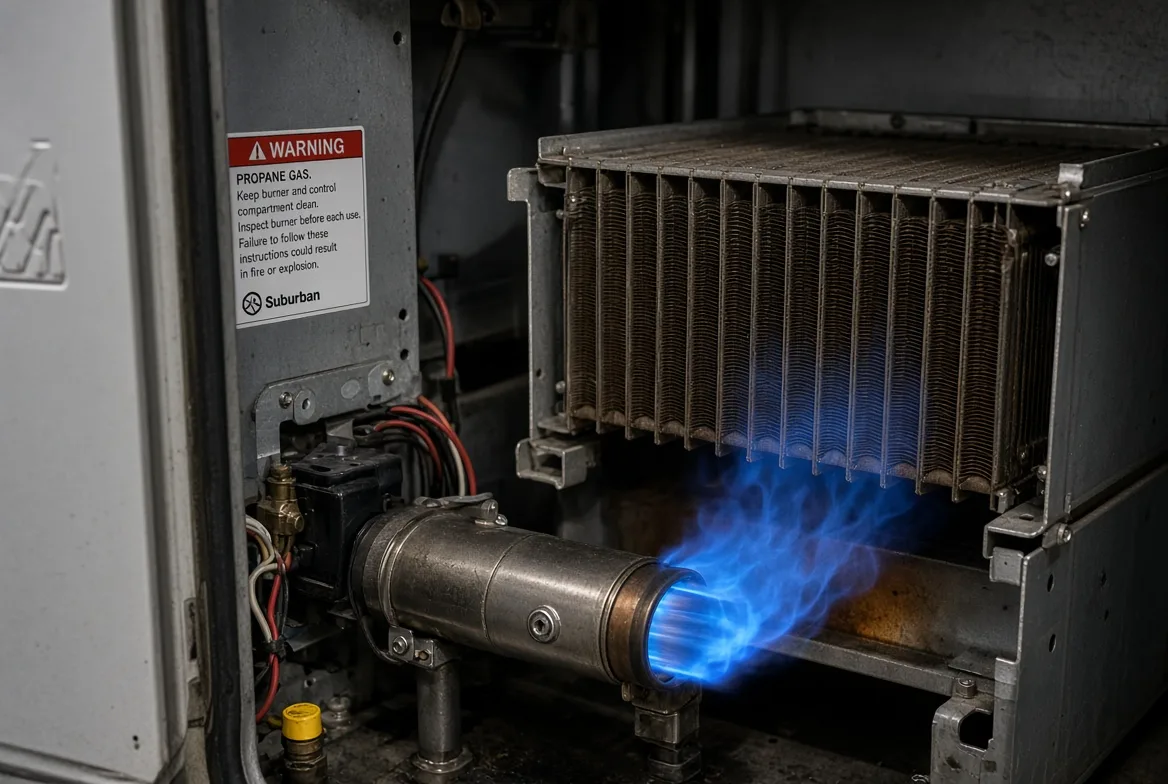
A high-altitude RV water heater is not a standard propane unit repurposed for thin air. Valid high-altitude models carry factory-rated combustion recalibration, optimized air-fuel ratios and altitude-compensated ignition logic that a generic unit lacks.
Run five mandatory altitude checks:
- Confirm the altitude ceiling: source the explicit maximum certified elevation from the spec sheet.
- Inspect combustion air pathways: verify intake sizing handles reduced oxygen density.
- Test forced-draft stability: confirm the blower holds air-fuel ratio under low atmospheric pressure.
- Evaluate ignition tolerance: validate spark energy and flame sensing on cold high-altitude starts.
- Check recalibration: confirm whether a factory altitude kit is required.
Size units on derated high-altitude output, not sea-level BTU figures. Field failures usually trace to oxygen depletion and pressure loss at elevation. NFPA 54, the US fuel gas code, requires input adjustment above 2,000 ft (610 m), which is why a sea-level rating never travels unchanged.
Field validation cues: an unstable flame, soot buildup, delayed ignition and repeated lockouts point to a combustion architecture that was never calibrated for altitude.
Verification check: reject any supplier that offers only BTU marketing figures without altitude derating curves, lockout logs and cold-ignition test data.
Step 3: Specify Live-Use Freeze Protection, Not Storage Winterization
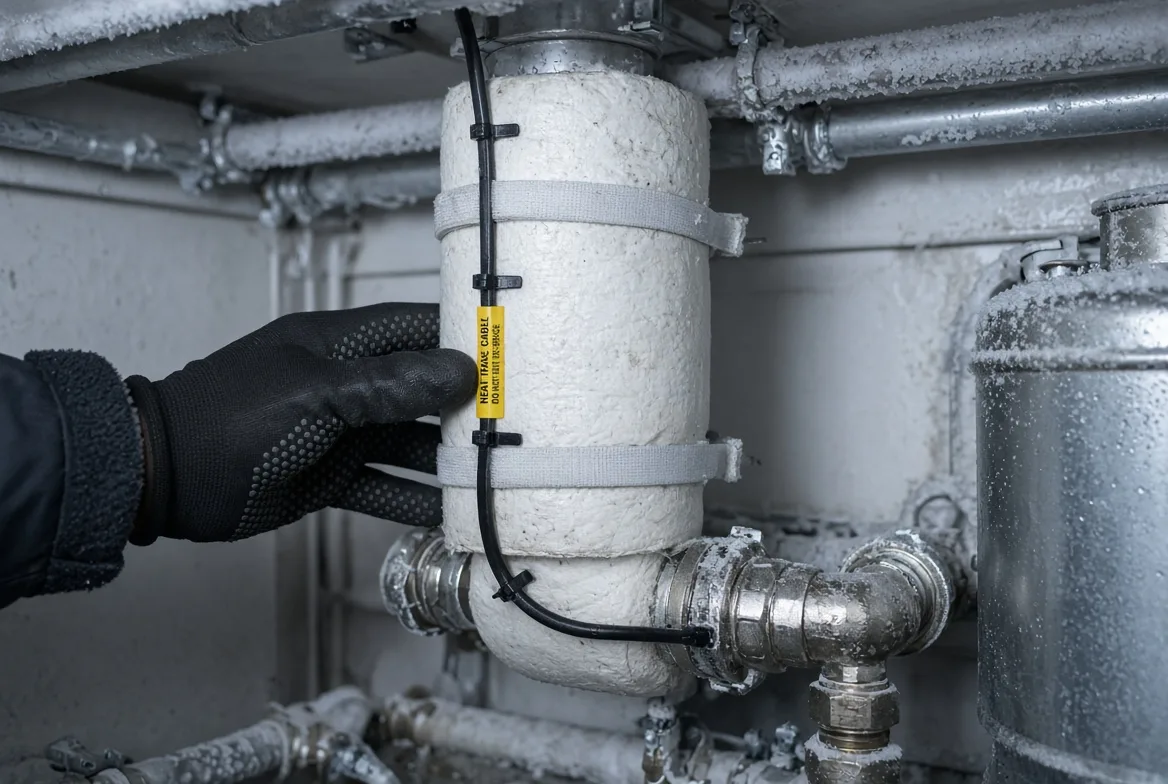
The most common extreme-condition failure is a specification confusion. Passive drain-down winterization protects idle units in storage only. It cannot stop cracking during active sub-zero operation.
True extreme-weather freeze protection is a full system architecture, not an aftermarket accessory. Validate low-voltage-tolerant control boards, thermostatically regulated heat tracing, protected solenoid drain logic, targeted cavity insulation and shielded low-point plumbing.
⚠️ Warning: Chamber testing confirmed the draw behind freeze protection. A 60W heat trace at a 40% duty cycle pulls roughly 24Ah overnight at 15°F; at -5°F the duty cycle passes 70% and nearly triples that. Validate the load against your battery bank and charging system, not a lab bench.
Focus heat tracing and insulation on the high-risk zones: heat exchangers, end fittings, control valves and exposed underbelly lines. The architecture that carries this load is covered on the RV tankless water heater page.
Many consumer-grade systems warm the wet bay cavity while leaving remote supply lines exposed to freezing air.
Verification check: separate products that claim genuine live sub-zero operational protection from kits that only winterize storage.
Step 4: Harden the Mechanical and Plumbing Package
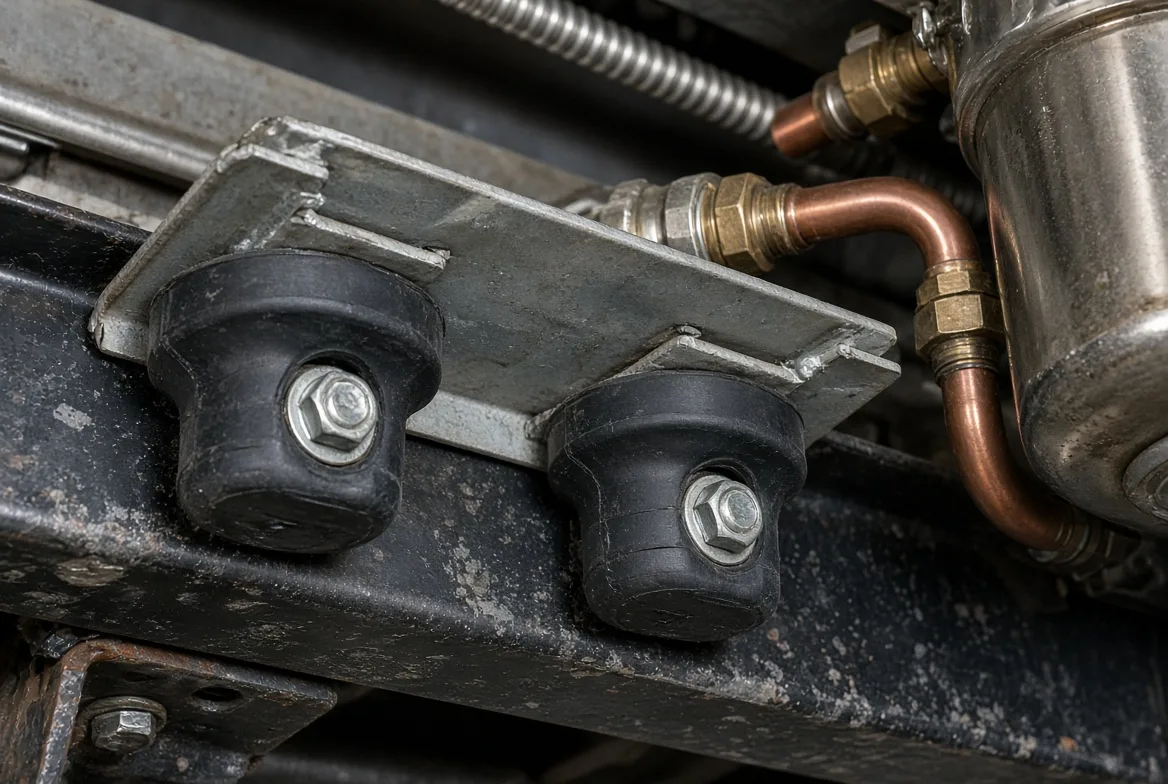
Most long-term extreme-condition failures come from weak mechanical design and poor routing, not from faulty heating components. Vibration, thermal cycling and road shock degrade unengineered brackets and unsupported plumbing runs.
Validate this five-part hardened package before production tooling:
- Heat-exchanger material corrosion and freeze-burst resistance
- Industrial-grade fittings and vibration-resistant connections
- Chafe-protected hose and PEX routing with no unsupported spans
- Isolated mounting brackets matched to unit mass
- Shielded intake and exhaust pathways
Avoid low plumbing points that trap standing water, sharp frame-rail routes that chafe a line, and fully exposed exterior runs that freeze under wind chill.
Specify chassis-integrated mounting frames, rubber isolators and thread-locked fasteners. Vibration qualification usually follows a published test standard such as SAE J1455 or the relevant ASTM method, so ask which one the unit was validated against.
Verification check: finalize auditable mechanical specification sheets and installation drawings before tooling and mass production. That drawing-sheet workflow is documented on the manufacturing page.
Step 5: Run the Factory Validation Sequence
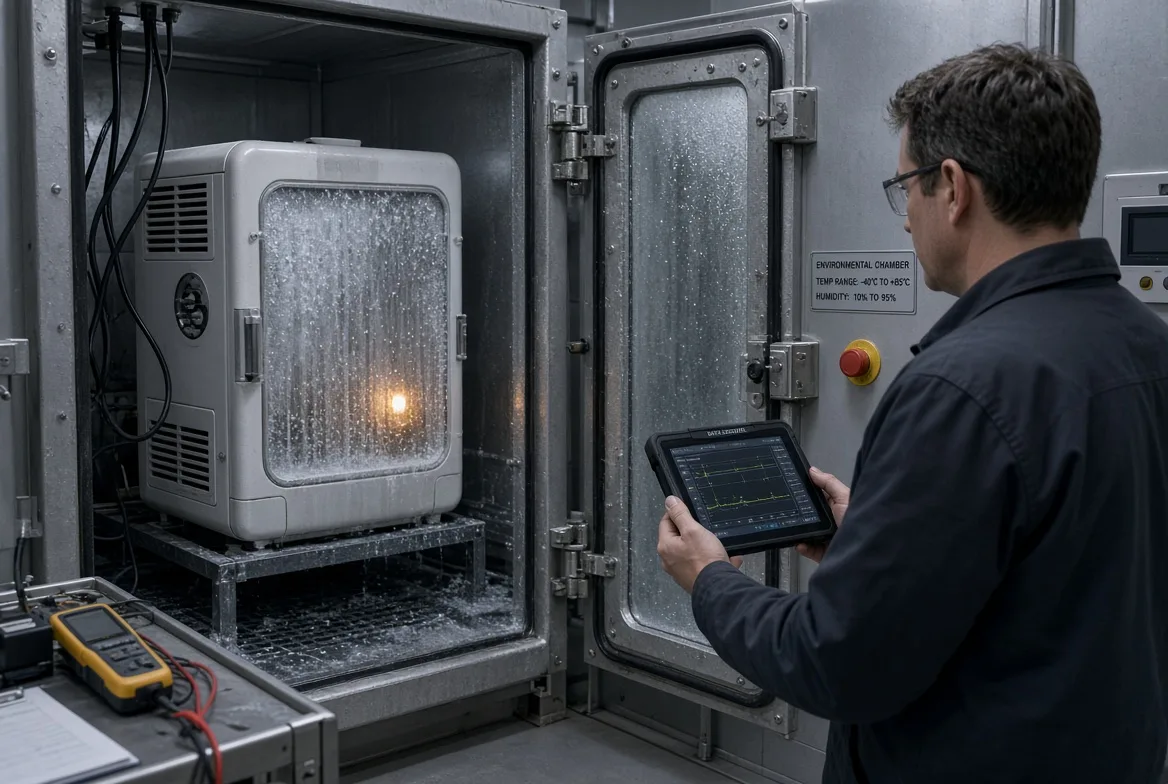
Sequential OEM validation removes field-failure risk. Stop at the first failed metric, because a failed sample invalidates every test after it.
- Incoming component verification: cross-check alloy grades, fitting specs and valve batch numbers against the approved BOM.
- Assembly audit: verify torque values, bracket isolation and fastener security.
- Pressure retention leak test: document full pressure-hold logs for traceability.
- Combustion performance test: record CO levels, flame stability and cold-start ignition consistency.
- Sub-zero chamber soak test: hold the unit at -20°C while logging freeze-protection duty cycles.
- Low-voltage restart test: confirm clean ignition at minimum operational system voltage.
- Vibration and shock cycling: simulate road loads and inspect for chafe, looseness or structural drift.
- Final documentation signoff: tie every report to the unit serial number for audit traceability.
The chamber benchmark separates severe-environment units from standard builds. This is anonymized Gulfstone data from a 72-hour hold:
- Severe-environment unit pressure retention: 68 hours
- Standard unit benchmark pressure retention: 41 hours
- First failure point, severe unit: exchanger inlet fitting
- First failure point, standard unit: pressure relief valve
NFPA 58, the LP-gas code, sets the gas-side envelope every one of these tests confirms, alongside the RV safety standard the sequence was built to. The quality control page owns the gate criteria, and the factory page owns the plant-side audit trail.
Independent test houses such as TÜV can re-run a chamber report against the standard it claims, which is how a buyer catches over-stated self-reported data.
Verification check: build a full sourcing packet: certification status, lead times, MOQ rules, spare-parts strategy and formal corrective action protocols. Spare-parts and corrective-action commitments are published on the after-sales page.
Troubleshooting Extreme-Condition Water Heater Failures
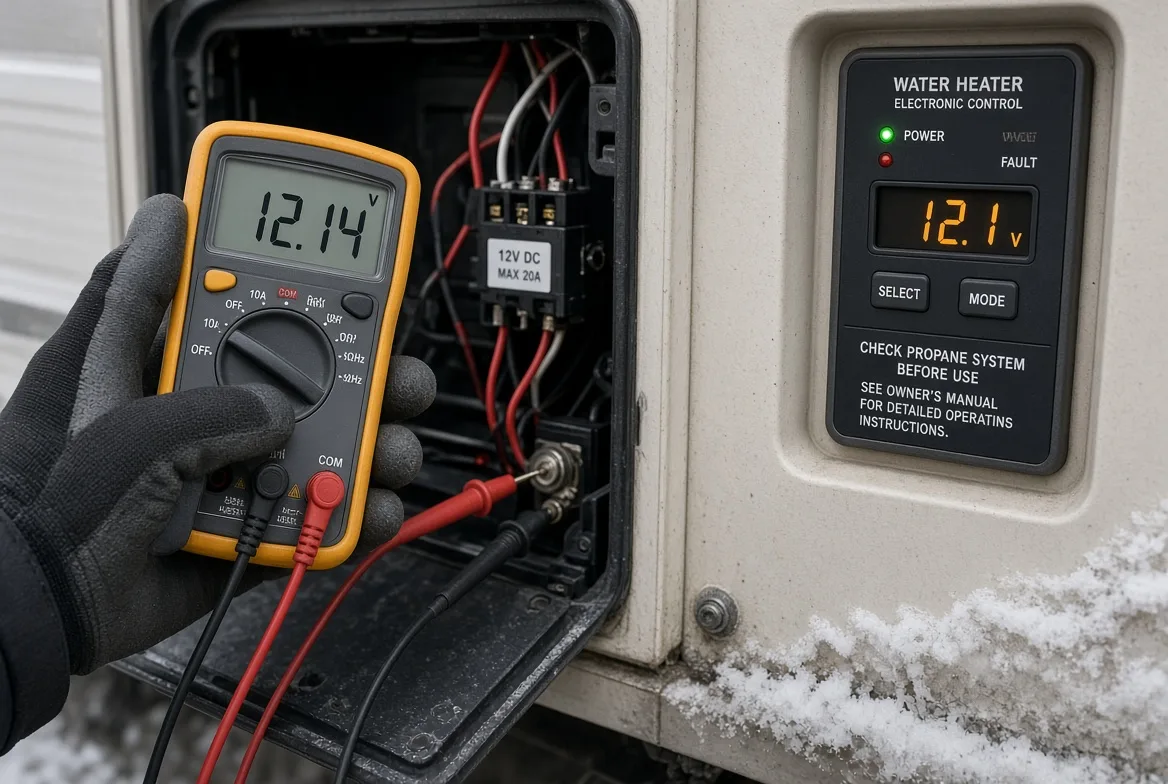
Extreme-condition field failures cluster into four causes. Each is diagnostic-first: confirm the cause before you replace parts.
1. Unexpected burner cycling with no open fixtures
Cause: normal thermal maintenance cycling, or a faulty flow sensor, seeping check valve, recirculation error or control-board fault.
Diagnosis: test flow-sensor output, monitor return-line temperature, verify recirculation logic, inspect check valves and pull the control-board fault log.
Resolution: sensor and valve issues are field-repairable; logic or board faults require component replacement. Persistent cycling in sub-zero conditions points to insufficient factory freeze validation.
2. Gurgling noise and limited hot water runtime
Cause: trapped air, incomplete filling, scale buildup, debris contamination or unstable flow mixing.
Diagnosis: purge air at high fixtures, confirm full fill, test GPM flow rates, and inspect inlet filters and scale traps.
Resolution: air and scale are field-correctable; debris damage to a heat exchanger requires a component swap.
3. Freeze cracking with active protection enabled
Cause: heat-trace dead zones, uninsulated remote plumbing, overnight battery voltage sag, or a supplier that marketed live-use freeze capability it never validated.
Diagnosis: log overnight battery voltage and heat-trace current, map full thermal coverage, and cross-check the supplier claim against chamber data.
Resolution: remediate dead zones with added insulation and heat tracing, or upgrade the charging system. A unit with no live sub-zero validation needs a full specification replacement.
4. High-altitude hard starts, soot and lockouts
Cause: missing altitude-derating calibration, blocked intake or exhaust pathways, or unstable thin-air combustion.
Diagnosis: verify the certified altitude ceiling, inspect vent pathways, test CO output and flame stability, and confirm factory recalibration.
Resolution: clear blocked vents in the field; reject or redesign units without validated high-altitude combustion architecture.
💡 Diagnostic signal: overnight testing confirmed that 10.5V system voltage disables standard 60W freeze-protection heat tracing even with full propane and water supply. Voltage sag, not the heater, is often the root cause.
Conclusion: Validation Discipline Beats a Specification Sheet
Nearly every extreme-condition RV water heater failure traces to poor upfront specification and incomplete factory validation, not defective hardware.
Severe-environment deployment rests on five pillars: environmental mission matching, altitude-calibrated combustion, active freeze protection, hardened mechanical packaging and timestamped test data.
Turn the workflow into a supplier scorecard. Demand raw chamber and QC data, and run pilot builds before full-scale production.
For a second-opinion review of a candidate unit or an engineering drawing set, bring both to the Gulfstone contact page.
Sourcing disclosure: The chamber and voltage data here come from Gulfstone validation runs and anonymized client programs. Results vary with unit architecture, altitude, battery capacity and duty cycle, so recreate the benchmark from your own test records. I receive no manufacturer kickbacks for these findings.
Frequently Asked Questions About Extreme-Condition RV Water Heaters
1. How do you ensure reliable hot water in extreme-condition RVs?
Reliable extreme-weather performance rests on five verified inputs: certified altitude rating, active freeze protection, stable 12V controls, consistent propane delivery and validated flow rates, not basic operational testing.
2. Why does my RV water heater cycle with no water running?
Minor cycling is normal thermal maintenance behavior. Excessive or irregular cycling points to a stuck flow sensor, a leaking check valve, a recirculation fault or a faulty control board that needs diagnosis.
3. What causes gurgling noises in RV water heaters?
Gurgling usually comes from trapped air, incomplete filling, scale buildup or flow inconsistency. Full purging and filter maintenance resolves most field cases.
4. What features matter most for extreme-weather RV water heaters?
Prioritize factory-validated altitude derating, live operational freeze protection, vibration-hardened mechanical packaging and verified chamber test data. Reject units sold on inflated BTU marketing claims alone.

Forward
Co-founder & General Manager, GulfstoneGas appliance manufacturing and certification
Most of what decides a gas appliance is settled before anything is built — on the drawing, at the cut-out, in the tolerance someone chose for the gas path. I have spent my working life on the manufacturing side of that decision, and this is where I write down what it has taught me.
Nothing here is written from a sales desk. Every note comes off the floor: a batch held until a reason was found, a fitting that failed in transit, an approval path that only made sense once the destination market was fixed. If you read these first, the opening conversation starts at the standard rather than at the beginning.
- Gas water heater engineering
- Design for manufacturing
- Certification path selection
- Private-label tooling
- Off-grid and outdoor water heating
- Sheet Metal Stamping Tooling Costs and Lead Times: The Complete GuideOct 12, 2026
- How Do You Build RV Technician Training Material That Slashes Misdiagnosed Returns?Oct 11, 2026
- How Do You Build a High-Coverage RV Water Heater Spare Parts Kit for Fleets and Dealers?Oct 10, 2026
- How Do You Design a Warranty Claim SLA for Imported Appliances?Oct 9, 2026
- 12V RV Electrical System Appliance: An OEM Integration GuideOct 8, 2026
- RV Water Heater Cutout Size: A Factory-Grade Measurement GuideOct 6, 2026
Fifteen years in appliance manufacturing — home appliances, RV refrigeration, then gas water heating — from the drawing to the shipping container.
Leads Gulfstone's design-for-manufacturing reviews and the certification path selected for each destination market.
Works directly with OEM and private-label buyers on tooling, tolerances and the approval file.