Table of contents
- Key Takeaways
- Prerequisites: Gather the Inputs Before You Define Any Timeline
- Warranty Claim SLA Design: 5 Steps From Defect to Recovered Cost
- Step 1: Build the Remedy Ladder Around a Local Spare Parts Buffer
- Step 2: Run the Scrap-in-Field Intake Sequence
- Step 3: Lock the Bilingual Manufacturing Agreement Clause Stack
- Step 4: Route Exception Returns Under the Repair Goods Supervision Code
- Step 5: Turn the SLA Into a Monthly Management System
- Troubleshooting Warranty Claim SLAs
- Conclusion: Buy the Brand You Can Get Serviced
- Frequently Asked Questions About Warranty Claim SLAs
A note on the figures. The acknowledgment delays, transit windows and cost figures below come from Gulfstone’s own RMA audits and anonymized client claim files. Client-identifying details are withheld, so read each figure as evidence of a pattern, not an industry benchmark.
Key Takeaways
- A warranty SLA sets how fast a supplier acknowledges, triages, approves and remedies a claim; the warranty defines only what is covered.
- Keep routine defects on a local remedy ladder. Returning a unit to China costs roughly 40 days in ocean transit and stays the exception.
- Start the defect liability period at delivery or installation, never at shipment.
- Name one primary approver and one backup, with automatic escalation at 24 and 48 hours.
- Review seven scorecard metrics monthly, because a quarterly cadence lets aging claims accumulate out of sight.
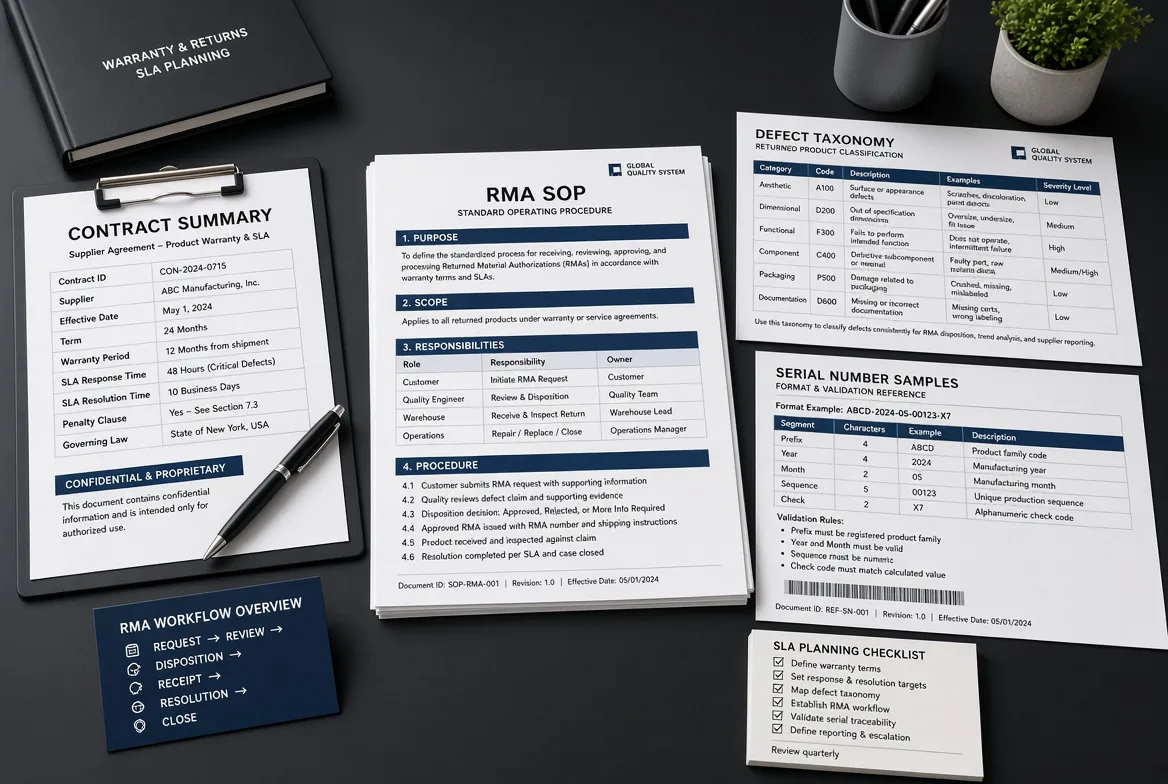
The time to acknowledge a claim is the window that starts when a buyer files a valid claim and ends when the supplier confirms receipt in writing. Warranty defines which failures are covered; the SLA defines how quickly each one is acknowledged, triaged, approved and resolved.
This framework is built for upstream B2B agreements between an importer and a manufacturer. It is not a substitute for consumer warranty legislation in the destination market, such as the EU consumer guarantee rules or the Magnuson-Moss Warranty Act in the United States.
The framework draws on structured interviews with Gulfstone’s Head of Procurement, a full RMA SOP audit and anonymized data from a 24-month supplier audit. That audit found an average claim acknowledgment delay of 11 days.
You will finish with a scalable SLA that keeps most defects out of transoceanic returns. The work spans procurement, legal, service operations and trade compliance, and aligns with ISO 10002.
It turns a vague warranty commitment into measurable timelines, evidence standards, remedy workflows and enforceable financial consequences.
Prerequisites: Gather the Inputs Before You Define Any Timeline
Original export and import rules apply only to exception-only repair returns into China. That is not the default process, and the traceability requirements cover only units marked for return, not every field failure. Most faulty units are repaired locally and never shipped back overseas.
The input list below comes from reviewing a client’s RMA SOP against its internal quality control process. Audit your own workflows before finalizing defect definitions, then collect the contract and data inputs before setting any SLA timeline.
- Current OEM agreement, product specification sheets and a defect classification taxonomy.
- DLP and warranty term history, plus the serial number formatting rules.
- Lot code mapping, service network contacts and a finance lead accountable for chargebacks.
- A traceability package, required only for units entering the cross-border repair flow: PO number, factory batch code, serial range, shipment date, destination warehouse, and customs and export documentation.
Review China Customs guidance for repair goods and CIETAC arbitration rules before drafting any return clause. Both clarify who owns a returned unit.
⚠️ Two caveats: First, separate downstream statutory obligations from upstream factory liability — do not assume the manufacturer covers every consumer remedy. Second, never authorize teardown, disposal or repair until the contract defines inspection responsibility and evidence retention rules.
🧠 Expert take: Most teams ignore the traceability package until their first China repair shipment stalls at customs.
Warranty Claim SLA Design: 5 Steps From Defect to Recovered Cost
The five steps below set the remedy path, standardize intake evidence, lock the contract clauses, control exception returns and govern the program monthly, so every claim closes on a defined clock.
Step 1: Build the Remedy Ladder Around a Local Spare Parts Buffer
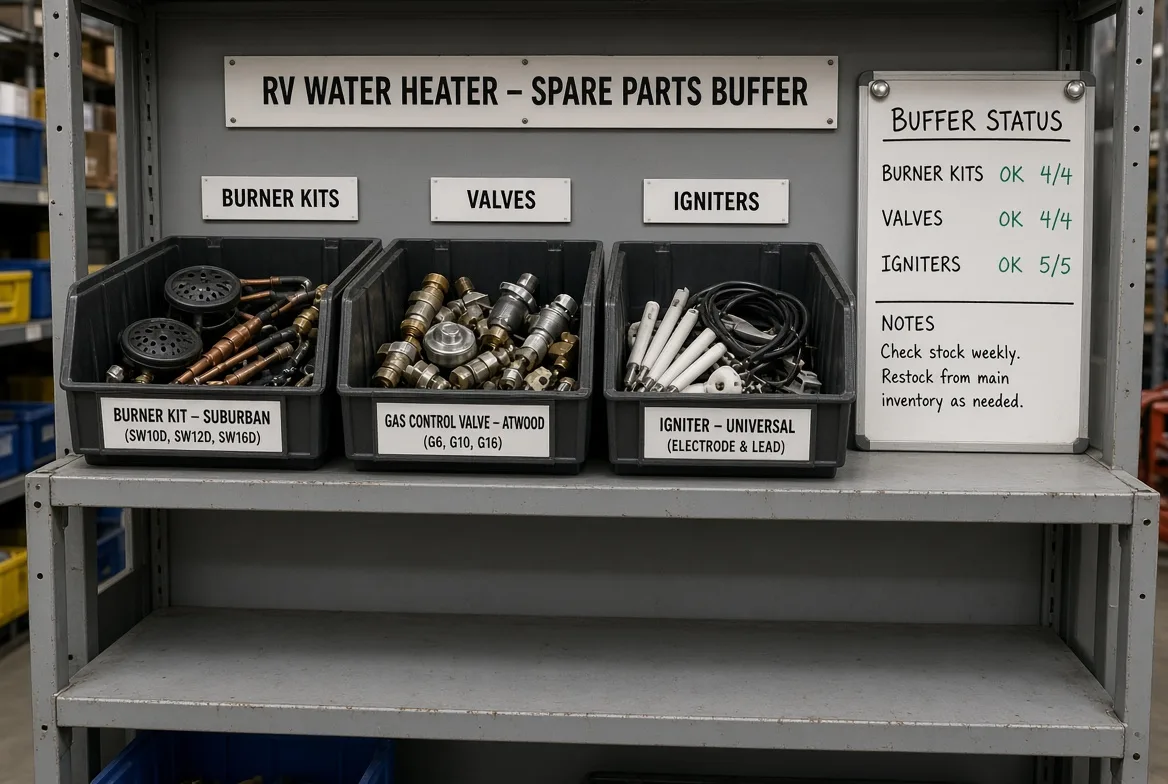
A local spare parts buffer is the primary resolution path for routine defects. Full-unit returns to China stay the exception case.
During a site visit to a client’s Sacramento warehouse, a technician pulled a burner kit from shelf B12 and logged the repair. The claim dashboard turned green the same afternoon, with no wait for ocean freight.
Define five sequential remedy tiers. Each tier carries four accountable roles: approver, funder, inventory administrator and case closer.
- FOC spare parts. The warranty manager approves, supplier reserve funds the part, service operations logs inventory, and a signed repair report closes the ticket.
- Local repair bench or authorized service provider. Same approver. The buyer covers labor upfront and recoups it later. Service operations manages the work order.
- Unit swap from domestic buffer stock. Service operations logs the swap, and finance reconciles serial numbers monthly.
- Local scrap with supporting proof. Serial number photos, a disposal certificate and a finance credit note. Finance closes the claim.
- Cross-border return. Reserved for defined exceptions: repeated failures on a single unit, safety incidents or engineering teardown. Requires legal co-approval and compliance with China Customs repair goods guidance.
Size the buffer by SKU family, not a flat percentage. Three inputs set the level: dominant failure modes, field service lead times and service season duration. On one water heater line, igniter and valve failures drove most warranty claims, so a blanket 3% allocation understocked that line while overstocking showerhead kits.
The ladder keeps warranty cases out of reverse ocean logistics, where a 40-day round trip ruins the customer experience.
Every replacement part on the ladder needs a valid safety listing — UL for electrical components, CSA Group for gas-side assemblies — or the repair voids the warranty it is meant to serve.
✅ Verification: The ladder is complete only when every defect code maps to one default remedy and one escalation path. Multiple default options mean the workflow is unfinished.
⚠️ Experience warning: One pilot program stalled because no stakeholder owned scrap credit reconciliation. Finalize role assignments before launch.
⚡ Speed benchmark: Drafting the remedy ladder took two team workshops, roughly four hours. One client’s legal review added two weeks.
Step 2: Run the Scrap-in-Field Intake Sequence
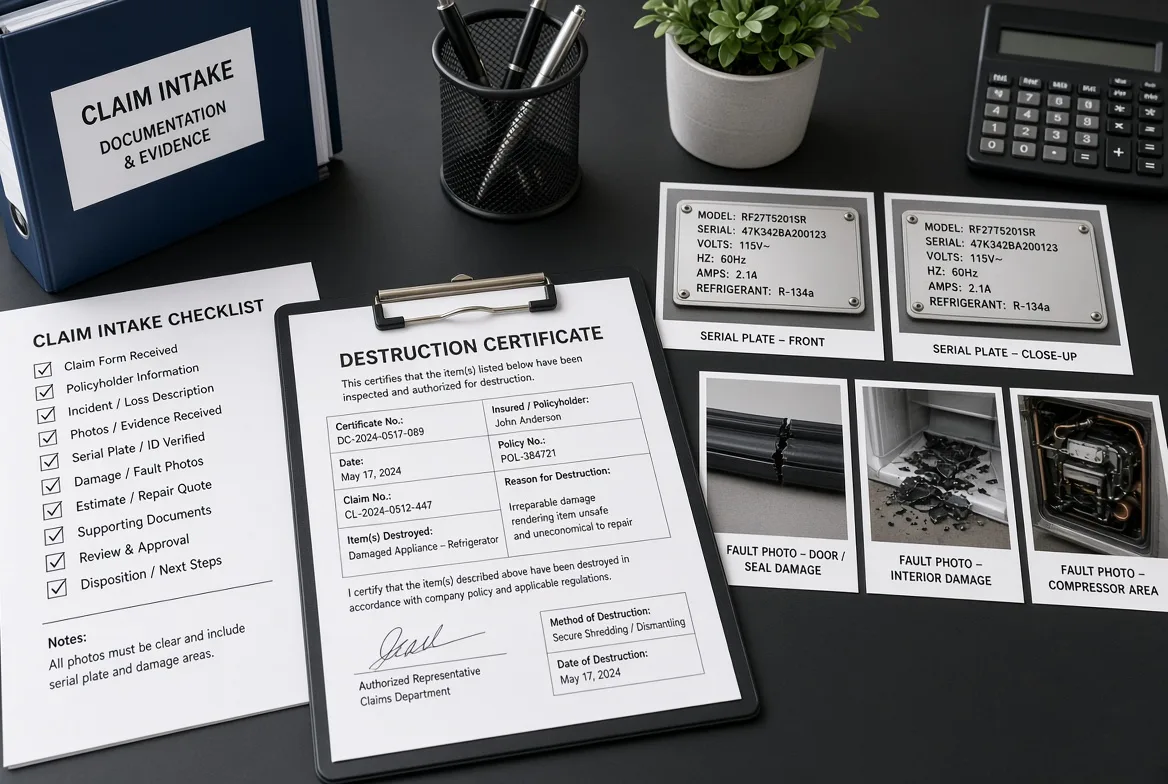
Field scrap disposal is permitted only for pre-approved defect categories, with a complete evidence package and an auditable record trail. Scrap is never a shortcut around evidence requirements.
At a Foshan depot desk, a claims coordinator checked a digital submission — a legible serial plate, a timestamp on the fault video and a close-up of the defect — against the original PO. The ticket was approved in four minutes.
The intake logic follows the approval workflow in the aftermarket service SOP, which rests on the plant-side controls documented on the factory page. Follow this fixed sequence; do not improvise.
- Open the claim ticket.
- Validate PO, serial number and lot code against shipment records.
- Classify the failure type.
- Collect the required evidence package.
- Assign the applicable remedy tier.
- Approve part dispatch or the resolution action.
- Close the ticket and assign a cost code.
Require this photographic evidence for every claim:
- Outer carton and shipping label
- A clear close-up of the model or serial plate
- A wide shot of the fully installed unit
- A close-up of the failure point
- A short power-on video or fault code recording where applicable
- A technician service note or inspection form
Required fault description fields: customer complaint summary, first observed failure date, installation environment, runtime or usage context, and one failure classification — cosmetic, performance, safety or dead-on-arrival.
Escalate to a third-party lab for disputed root cause analysis, repeated failures within a production batch, safety incidents, certification concerns, or any case where field evidence cannot resolve the disagreement.
⚠️ Scrap-in-field rule: Assign one authorized approver, list the approved defect classes, accept photo evidence plus signed destruction certificates in place of physical returns, and archive destruction records inside the claim file.
✅ Verification: A new claims coordinator can run this workflow unaided, without inventing custom evidence standards or approval routes.
⚠️ Experience warning: One coordinator approved scrapping 40 pump assemblies on carton photos alone. The supplier credit was lost, and the SOP was rewritten the same week.
Step 3: Lock the Bilingual Manufacturing Agreement Clause Stack
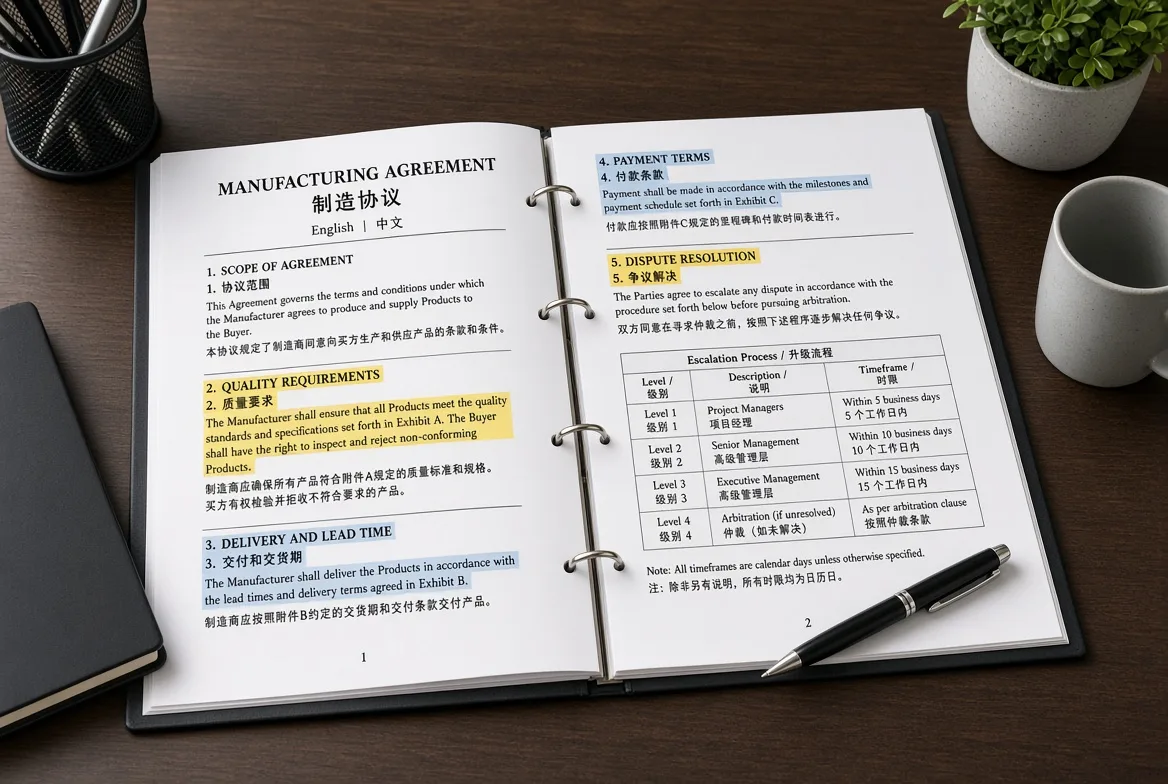
A bilingual manufacturing agreement fixes defect liability, evidence rules, payment holdbacks and arbitration terms before a dispute starts. It has to be enforceable by both the Foshan factory and your domestic legal counsel, in the same spirit as the OEM/ODM development file.
Validation check: matching English and Chinese definitions, no blank remedy fields, and one escalation table that finance and legal teams can both read.
Define these clauses before negotiating price: defect definitions, warranty exclusions, DLP duration, inspection window, SLA timelines, remedy priority order, parts return rules, scrap authorization, freight allocation, dispute venue and governing language.
In one contract review, the DLP clause read “12 months from shipment” — revising that single line came first, because the whole timeline hangs on it.
Gulfstone’s Head of Procurement, Wen Tommy, sets his positions this way. On extended DLP terms: “We trade higher order volume for longer warranty periods — a longer DLP on core units, a shorter term on accessories — and it starts at delivery or installation, never shipment.”
On spare parts allocations: “We require 2% of total order value in spare parts shipped alongside each PO. No spare parts allocation, no contract signature.”
On dealbreakers: “No blank remedy clauses. No unilateral scrap approval rights. No factory-selected arbitration venue inside a bilingual agreement.”
Build financial accountability into the terms with rolling retainage: hold batch holdback funds until the DLP expires, issue debit notes after the inspection window closes, and apply liquidated damages only where local law and the agreed venue permit.
Use this variable chargeback formula rather than an arbitrary flat amount:
Chargeback = Replacement Freight + Field Labor + Third-Party Inspection + Scrap or Disposal Cost + Admin Fee − Recovered Value − Returned Core Credit
Add an epidemic-failure escalation placeholder. Legal counsel ties batch failure triggers to objective evidence and predefined remedies; there is no universal percentage threshold that fits every case. Freight allocation follows the Incoterms you set here, which the landed-cost model then prices.
✅ Validation test: If the factory rejects a claim, the buyer must have a contractual path that avoids informal goodwill talks and costly domestic litigation. The primary route is binding bilingual arbitration with a defined seat; other venues are fallbacks.
⚠️ Experience warning: One client signed a DLP clause written only in Chinese. When a valve batch failed, the English translation left loopholes the manufacturer walked through. The full clause stack was rewritten in both languages, with a formal escalation table added.
Step 4: Route Exception Returns Under the Repair Goods Supervision Code
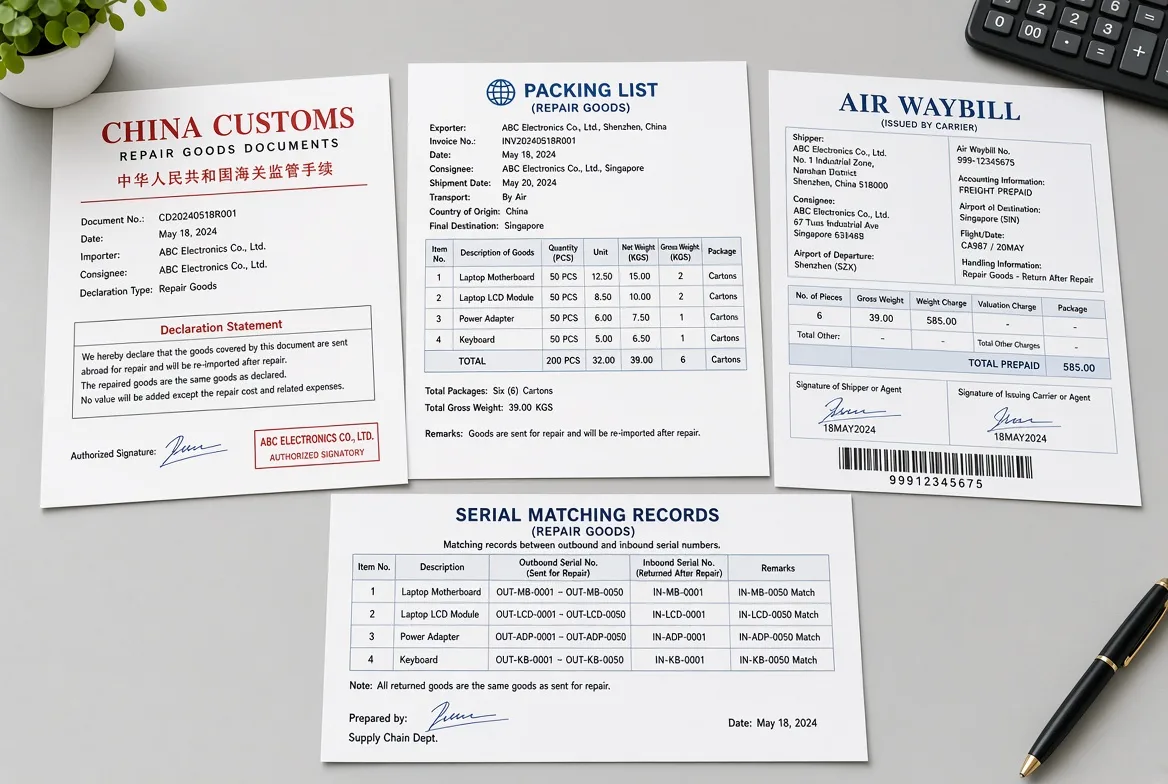
The repair goods supervision code is China Customs’ classification for units imported for repair, and it locks in the obligation to re-export them later. In a working program it stays an exception path: reserved for high-value goods, safety investigation or critical engineering analysis, never routine field failures.
Validation check: a compliant return file is short and precise. Every serial number matches the original export records, the repair purpose is stated in one sentence, and the invoice, packing list and airway bill all align. The same record discipline carries through import clearance on the inbound leg.
Approve a unit return only when product value, safety risk, engineering insight or certification exposure outweigh the customs complexity and lead time. A $40 valve will never qualify. A failed heater batch that needs a safety investigation will.
- Confirm full traceability back to the original export records: PO, batch code, serial range, shipment date.
- Validate that the unit qualifies for repair-return customs treatment.
- Prepare the repair agreement, commercial invoice, packing list and airway bill wording.
- Assign responsibility for any required deposit or financial guarantee.
- Review customs requirements before approval.
The workflow demands exact serial matching and mandatory re-export deadlines. Missing the deadline triggers full duty liability on the returned goods. One file was detained eight days over a single wrong digit in a serial number.
Define freight responsibilities in writing: who pays outbound return freight, re-export freight after repair, brokerage fees, duties, deposits, and liability if re-export does not happen.
✅ Verification: If the team cannot prove batch origin, serial identity and repair purpose, the unit cannot use this return pathway.
💡 Implementation note: This is not the only resolution route. Local destructive testing, on-site engineering analysis or component-only returns often cost far less.
⚠️ Experience warning: One client approved a return before checking the re-export deadline. When the window closed, they paid full customs duty on a unit worth less than the duty charge.
🧠 Author’s take: Fewer than 1 in 20 claims use this customs code. The documentation burden is heavy, but the engineering insight justifies it for a flagship failure.
Step 5: Turn the SLA Into a Monthly Management System
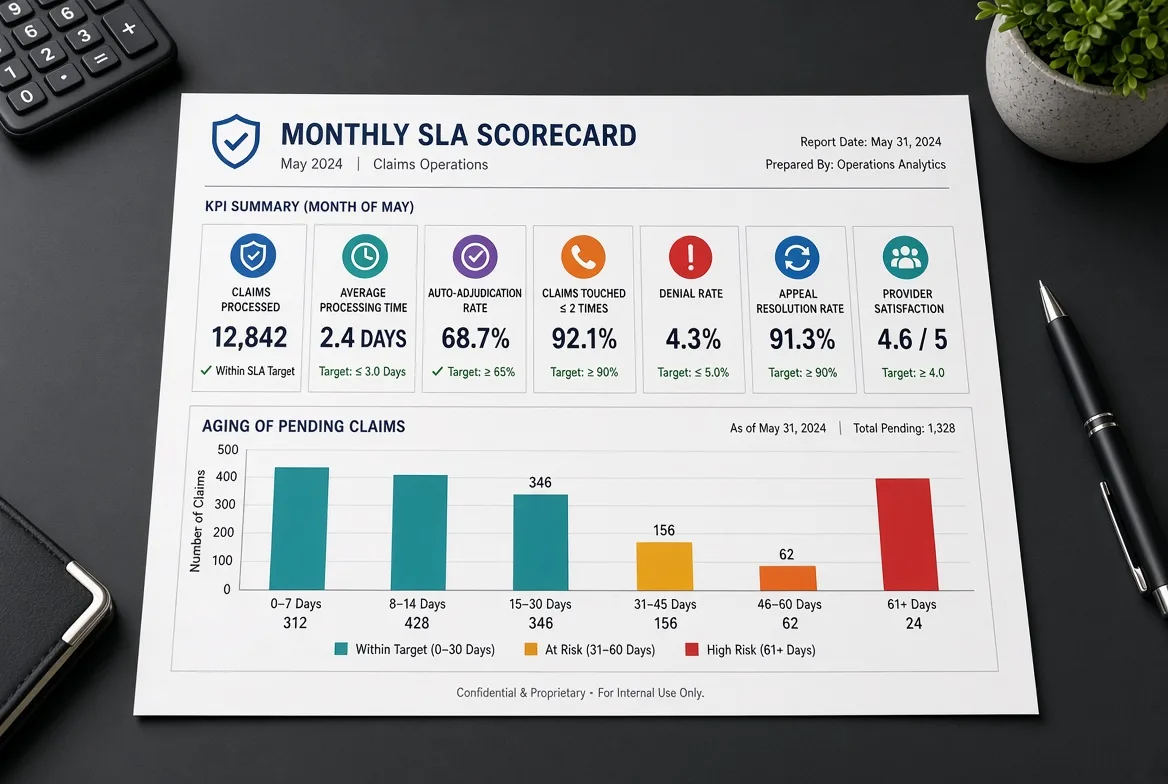
Repair speed is the headline metric, but it holds up only when the workflow also tracks parts availability, claim quality and supplier accountability.
In one program, acknowledgment lag fell from 11 days to 3. The same dashboard exposed parts stockouts, incomplete claim evidence and four suppliers withholding repeat-failure data. A fast acknowledgment clock without supporting metrics simply pushes delays downstream.
Define the scorecard before the first review. Seven KPIs: time to acknowledge, time to approve, time to dispatch parts, time to restore service, claim rejection rate, repeat-failure rate and chargeback recovery rate.
Run a monthly governance loop with three stakeholders. Procurement reviews commercial performance, service teams evaluate field bottlenecks, and legal reviews disputed claims and persistent non-compliance.
Escalation runs on four trigger levels:
- First batch quality issue: contain the affected lot and notify the supplier.
- Recurring batch issue: activate batch holdback and demand a root-cause report.
- Safety or certification non-compliance: stop shipments and engage legal and compliance.
- Epidemic failure: appoint an executive sponsor and pursue full financial recovery.
✅ Validation check: The SLA is working when aging claim volume shrinks, repeated faults trace back by production lot, and escalation emails become exceptions rather than a daily habit. A supplier audit framework, such as the manufacturer vetting process, gives that loop its evidence.
Publish supporting data alongside the scorecard, including an anonymized 24-month supplier audit snapshot. That data showed a correlation between enforced SLA penalty clauses and lower dead-on-arrival rates. The correlation is observational, not proven causal, and the footnotes say so.
Record unrecovered warranty leakage openly in these meetings rather than hiding it inside freight or service overhead costs.
🧠 Author’s take: Two clients cut chargeback leakage in half after moving this data out of private spreadsheets and onto a standing meeting agenda.
⚠️ Experience warning: Suppliers will push to move reviews to a quarterly cadence. Monthly reviews keep aging claims visible; quarterly reviews let them pile up unseen.
Troubleshooting Warranty Claim SLAs
“Leave the water off” is an operational principle: eliminate preventable failure sources and unnecessary claim friction. It is not a literal instruction for every appliance category.
Across a 24-month supplier audit, slow service restoration traced to parts shortages, approval delays and communication bottlenecks far more often than to gaps in warranty coverage.
1. Claim covered but no approval owner
Problem: the claim is covered by contract but stalls for days. Root cause: no assigned approval owner. Fix: appoint one primary approver and a backup, and set automatic escalation — backup at 24 hours, procurement lead at 48 hours. In one Foshan review, this cut approval lag from 6 days to 1.
2. Every claim requires a part return
Problem: the factory demands the failed component on every claim. Root cause: a blanket return rule that favors the factory over the buyer. Fix: restrict physical returns to defined categories — safety hazards, recurring failures, engineering teardown — and accept field scrap proof for pre-approved low-value failures.
3. Weak evidence blocks root cause analysis
Problem: the buyer cannot prove root cause. Root cause: poor field evidence. Fix: enforce the photo and video checklist before triage, and trigger third-party lab inspection for safety incidents, repeat batch failures or disputed root cause. No complete evidence packet, no claim approval.
4. A failure-prone feature keeps drawing service
Problem: teams keep servicing a feature that drives excessive claims. Root cause: no stakeholder owns product de-scoping. Fix: apply the “leave the water off” principle — redesign, disable or remove preventable failure sources where it is commercially viable. One client removed an optional drain valve and cut total warranty claims by 18%.
5. Claim acknowledged but no parts shipped
Problem: the supplier acknowledges the claim but never ships replacement parts. Root cause: no financial consequence for the supplier. Fix: tie part dispatch deadlines to retainage release, debit notes or batch holdback funds, and release retainage only after the parts ship and the claim closes.
💡 Diagnostic: Audit approval lag monthly. If it runs past 48 hours, the problem is ownership, not contract wording.
🧠 Expert verdict: Workflow bottlenecks break speed and control long before warranty language fails. Design them out of the process.
Conclusion: Buy the Brand You Can Get Serviced
“Buy the brand you can get serviced.” That means choosing an overseas appliance partner that can acknowledge, diagnose, remedy and financially reconcile defects at scale.
You now have a complete framework: a local remedy ladder, field scrap intake rules, a bilingual contract clause stack, exception return controls and monthly SLA governance.
Next, audit one active supplier agreement against the five steps. Flag missing timelines, evidence requirements, remedy paths and chargeback terms, and close the gaps before your next production run.
Gulfstone reviews candidate agreements and after-sales workflows through the contact page, alongside the standing after-sales service commitments the SLA is built to enforce.
Sourcing disclosure: This framework comes from procurement interviews, RMA SOP reviews and 24-month audit data. All findings are drawn from anonymized client records, with no manufacturer kickbacks for these findings.
Frequently Asked Questions About Warranty Claim SLAs
1. How do I handle defective units without transoceanic returns?
Resolve them on the remedy ladder: FOC spare parts, local repair bench service, unit swap from domestic buffer inventory, then verified local scrap disposal. Cross-border return stays the exception, reserved for repeated failures, safety incidents or engineering teardown, given the roughly 40-day ocean round trip.
2. What is China Customs code 1300?
Code 1300 is the repair goods supervision code — the customs classification that lets goods be imported for repair with a mandatory re-export requirement. It is used only as an exception path for high-value units or root-cause-critical returns, never routine field failures.
It requires exact serial matching and strict re-export deadlines; missing the deadline triggers full duty on the unit.
3. Do warranty returns to China need a deposit?
They may require a deposit or financial guarantee, and the contract must state who carries it. The return workflow also needs exact serial matching and time-bound re-export obligations.
Written freight terms must cover outbound return freight, post-repair re-export freight, brokerage fees, duties, deposits and liability if re-export does not happen. Confirm all customs requirements before approving a return.
4. What should an FOC spare parts agreement cover?
It defines who approves the part, who funds it and who logs inventory. In this framework the warranty manager approves, supplier reserve funds the part, service operations logs inventory, and a signed repair report closes the claim.
Suppliers typically ship 2% of total order value in spare parts alongside each PO as a condition of signature.
5. How do I make warranty claims enforceable against a Chinese OEM?
Anchor them in a bilingual manufacturing agreement finalized before disputes arise. It should lock in defect definitions, DLP duration, SLA timelines, remedy priority order and dispute venue.
When the factory rejects a claim, the primary path is binding bilingual arbitration with a defined seat. Rolling retainage, batch holdback and timed debit notes strengthen enforcement.

Forward
Co-founder & General Manager, GulfstoneGas appliance manufacturing and certification
Most of what decides a gas appliance is settled before anything is built — on the drawing, at the cut-out, in the tolerance someone chose for the gas path. I have spent my working life on the manufacturing side of that decision, and this is where I write down what it has taught me.
Nothing here is written from a sales desk. Every note comes off the floor: a batch held until a reason was found, a fitting that failed in transit, an approval path that only made sense once the destination market was fixed. If you read these first, the opening conversation starts at the standard rather than at the beginning.
- Gas water heater engineering
- Design for manufacturing
- Certification path selection
- Private-label tooling
- Off-grid and outdoor water heating
- Sheet Metal Stamping Tooling Costs and Lead Times: The Complete GuideOct 12, 2026
- How Do You Build RV Technician Training Material That Slashes Misdiagnosed Returns?Oct 11, 2026
- How Do You Build a High-Coverage RV Water Heater Spare Parts Kit for Fleets and Dealers?Oct 10, 2026
- 12V RV Electrical System Appliance: An OEM Integration GuideOct 8, 2026
- How to Specify an Extreme Conditions RV Water Heater: An OEM Engineering GuideOct 7, 2026
- RV Water Heater Cutout Size: A Factory-Grade Measurement GuideOct 6, 2026
Fifteen years in appliance manufacturing — home appliances, RV refrigeration, then gas water heating — from the drawing to the shipping container.
Leads Gulfstone's design-for-manufacturing reviews and the certification path selected for each destination market.
Works directly with OEM and private-label buyers on tooling, tolerances and the approval file.