Table of contents
- Key Takeaways
- The Basics of 12V RV Appliance Systems
- How the 12V RV Architecture Actually Works
- The OEM Integration SOP for Harness Design
- Deep Dive: 12V Water Heater Integration
- Q&A with Gulfstone’s Lead Technician
- Network Integration and Microcontrollers
- The Manufacturing Lens: About Production-Line Validation
- Key Benefits of Native 12V RV Appliance Integration
- Challenges and Limitations of the 12V System
- Conclusion: The Architecture-First Verdict
- Frequently Asked Questions About 12V RV Electrical System Appliances
A note on the figures. The bench numbers, voltage thresholds and failure points below come from Gulfstone’s own load testing and anonymized client programs. Read them as modeling checkpoints, not performance guarantees, and confirm certified ratings against the unit’s own spec sheet.
Key Takeaways
- A 12V RV electrical system appliance runs directly from the coach DC bus, not through an inverter-fed AC circuit.
- A genuine 12V electric water heater draws 15–25 amps and runs for 45 to 60+ minutes per heating cycle.
- Native DC avoids inverter conversion losses: one bench test measured a 5.8A fridge draw on DC versus 8.1A through an inverter.
- Many marketed “12V appliances” use 12V only for control circuits, not the high-power thermal load.
- Circuit design must comply with NFPA 1192, ABYC E-11 and ISO 10133 for RV low-voltage wiring.
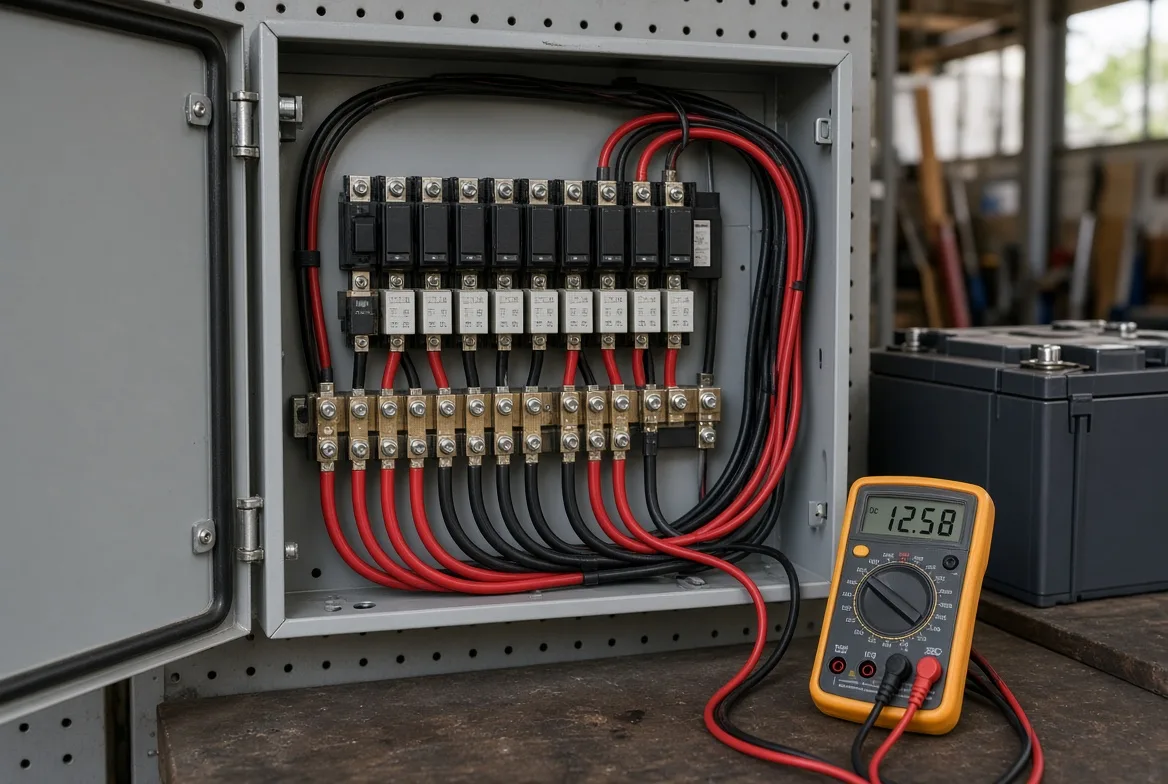
A true 12V RV appliance runs straight from the vehicle DC bus. It never uses an AC inverter. This specific choice prevents dangerous field failures. It also saves your battery power.
RV manufacturers and fleet upfitters keep shifting more loads onto the DC bus to cut inverter count, simplify controls and improve off-grid efficiency.
After years integrating water heaters and DC loads into OEM chassis and fleet vehicles, one limit keeps surfacing: sustained amperage draw under a low battery state of charge. On production lines, bus voltage sag below 11.5V under load has derailed more projects than datasheets disclose.
This guide defines 12V system architecture, describes behaviour under voltage fluctuation and load stress, and flags the integration pain points that raise manufacturing cost. It is written for engineers and procurement teams, not for consumer appliance selection.
Four details distinguish it from typical comparison articles: raw amperage load modelling, DC water heater integration logic, the compliance language buyers audit, and load balancing during manufacturing validation.
The Basics of 12V RV Appliance Systems
Common native 12V loads for RV and overland builds include compressor refrigerators, water pumps, ventilation and circulation fans, LED lighting and controllers, tank and safety monitors, furnace control circuits, and select DC water heating assemblies.
Fitted into a purpose-engineered platform, these stop being simple camping accessories.
A true 12V RV appliance is a native DC load powered directly from the coach battery bus or a regulated DC distribution network. Related hardware splits into three categories:
- 12V-controlled propane appliances: the 12V circuit powers control boards, igniters and fans, while propane supplies the heat.
- AC appliances powered by inverter: 120V/230V loads that need a DC-to-AC conversion, which adds inverter losses and standby draw.
- Mixed-voltage appliances: units with internal converters that accept both DC and AC supply rails.
Only the first category is a native DC load; the other two are not true 12V appliances.
For OEM and upfitter stakeholders, seven equipment families matter: compressor refrigerators, water pumps, vent and circulation fans, lighting and control hardware, tank and safety monitoring, furnace and heater control circuits, and selected electric water heating or hydronic auxiliary components.
Key terminology:
- Amp draw: current consumption at an instant.
- Amp-hour: current sustained over a defined period.
- Duty cycle: the share of time the appliance runs.
- Voltage drop: power lost across wiring and connectors.
- Low-voltage disconnect: protection that prevents battery over-discharge.
- Inrush current: the temporary current spike at startup.
- BMS ceiling: the maximum output current the battery management system allows.
- DC distribution: the fused bus network that feeds every DC load.
NFPA 1192 governs these low-voltage RV circuits. Low voltage does not equal low engineering risk. On the factory floor, one 12V compressor fridge pulled 14A of inrush current before settling to a steady 5.8A draw. A 15A load on 16 AWG wire, meanwhile, drops roughly 1.2V over a 20-foot run.
Low-current convenience loads such as lighting and monitoring behave very differently from high-current thermal loads. Many products labelled “12V water heaters” use 12V only for controls. Genuine resistive heating elements need far more current, covered below.
💡 Key Insight: Low voltage does not mean low engineering risk. A 12V bus can become a high-current system the moment thermal loads are added.
How the 12V RV Architecture Actually Works
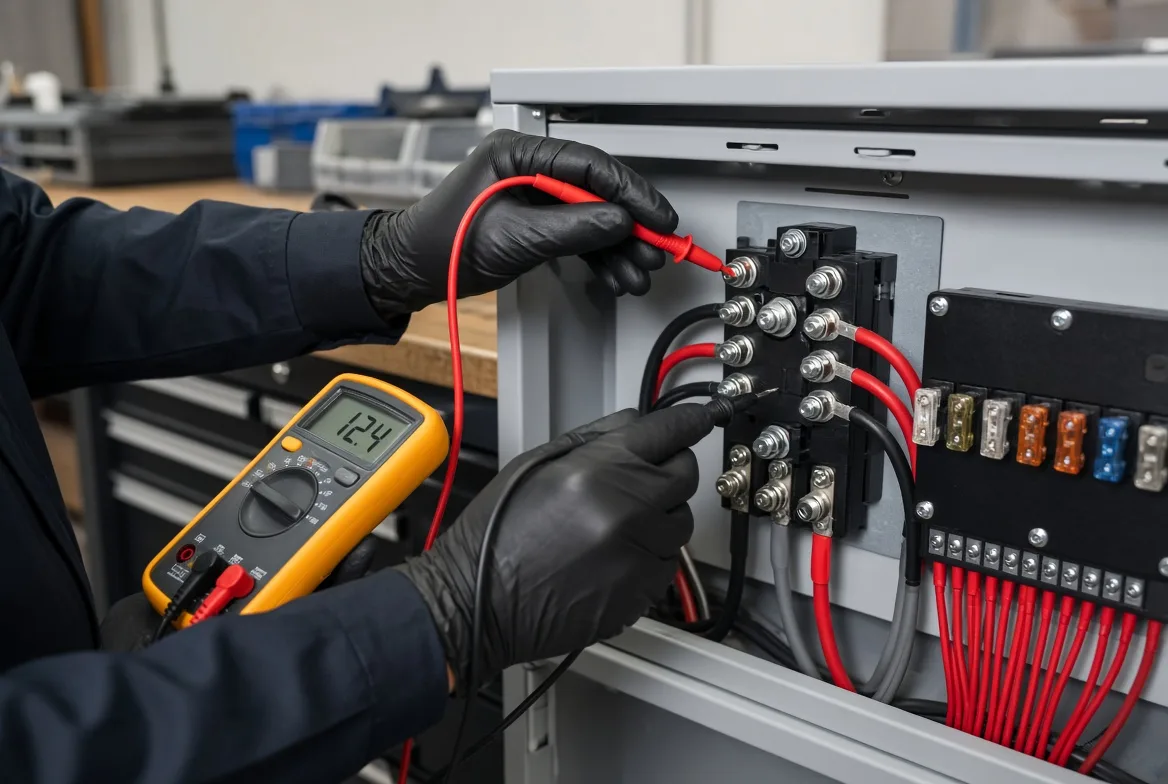
RV 12V loads fall into three engineering categories: always-on low-draw loads, switched utility loads, and intermittent high-current loads. Not every appliance can share the same branch circuit, fuse rating or control strategy.
The grouping was confirmed with shunt meters clamped to the coach DC bus at every build stage, the same drawing and harness discipline used across manufacturing.
The load map: sorting loads by draw profile
- Always-on control and monitoring loads: continuous low draw. Smoke detectors, propane sensors, logic boards, tank monitors, display modules, telematics units and appliance microcontrollers draw small constant current. Group them on a shared 5–10A circuit.
- Routine utility loads: activated on demand. LED lighting, vent fans, circulation fans, water pumps, slide-out controls, awnings and actuators. Each draw is modest, but concurrent use can exceed 30A.
- High-draw or thermally intensive loads: compressor refrigerators, select air-conditioning systems and true DC electric water heaters. These draw tens of amps continuously and need dedicated branch circuits, matched fuse ratings and often independent relay control.
Bucket classification sets branch protection, wire routing, brownout resilience and diagnostic speed during bench service. Vehicle-level routing decisions belong on the RV OEM side of the program.
The electrical flow, step by step
Power moves in sequence: battery bank → main disconnect → primary fuse → busbar or distribution block → branch circuit protection → local relays or MOSFET switches → appliance controller → end load.
Every positive conductor must be fused as close to the battery terminal as possible. Cable ampacity must exceed the fuse rating, not the other way round. A 100A fuse on 8 AWG wire is a fire hazard the moment a short occurs.
Distribution hardware built for light accessory loads cannot carry a compressor fridge and an inverter on the same panel. Thin busbars and push-on spade terminals cap out near 30A. High-current panels use threaded studs, marine-grade components and heavy copper rated for 200A+ without excessive temperature rise.
Voltage fluctuation and why electronics care
A mobile 12V bus is never stable. A charging cycle lifts bus voltage to 14.4V; resting voltage sits at 12.6V; heavy discharge pulls it below 11.5V under load. Transient dips and electrical noise from pumps and compressors add further disturbance.
Sensitive control boards fail in predictable ways under poor voltage stability:
- Microcontroller resets triggered by voltage dips.
- Relay chatter from insufficient coil voltage.
- Inaccurate sensor readings from a shifting ADC reference.
- Reduced thermal output from heating elements running at low voltage.
- Premature low-voltage shutdowns.
Regulated sub-circuits, buck converters and local signal filtering resolve most of these. On every water heater Gulfstone builds, control boards are fed through buck converters to hold stable 9V or 5V rails.
🧠 Expert Insight: If a furnace control board resets the moment the water pump starts, the fault is a shared-branch voltage drop, not a furnace defect.
The OEM Integration SOP for Harness Design
Partner factories follow this workflow before finalizing wiring harness designs:
- Classify the appliance: native 12V electric, 12V-controlled fuel-fired, or hybrid architecture.
- Document continuous current, surge and inrush current, and operating duty cycle.
- Calculate worst-case simultaneous load on the coach DC bus.
- Select conductor gauge for a 3% maximum voltage drop on sensitive and high-current circuits.
- Specify fuses, breakers, relays or contactors based on branch hazard risk.
- Complete bench validation on temporary test setups before vehicle integration.
- Validate performance at high ambient temperature and low battery.
- Freeze the harness specification and the quality-control checklist for mass production.
Before CAD wiring design, a Python script generates block diagrams mapping batteries, fuse blocks, relays, controllers, heating equipment and telemetry paths. It catches logic errors that CAD schematics hide.
This harness-development workflow also draws practical feedback from Nick Kang, a mobile-vehicle electrical integration specialist who focuses on DC-bus load validation and production-grade wiring-hazard mitigation for RV-grade hardware.
For the water heater engineering behind these figures, see the RV tankless water heater range.
Deep Dive: 12V Water Heater Integration
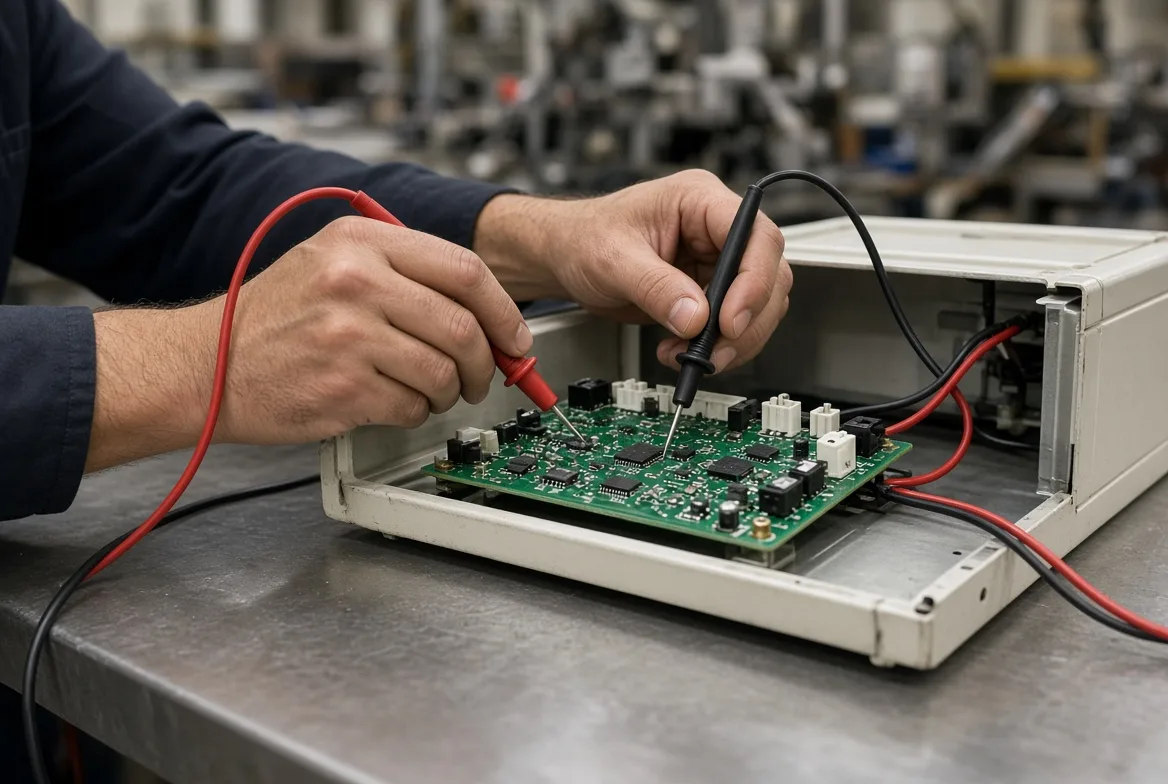
Three designs get confused at procurement:
- Gas water heater with 12V control: under 1A on the 12V circuit, for the control board and igniter only.
- Hybrid heating system: DC controls paired with non-DC heat sources such as propane, engine coolant or diesel.
- True electric 12V water heater: a resistive heating element powered directly from the DC bus.
The third configuration imposes a heavy DC load. Rated 200W–300W, the heater draws roughly 15–25A at 12V and often runs 45–60+ minutes from a cold start.
Use 8 AWG wire up to 10 feet and step up to 6 AWG beyond that. Fit a 30A fuse for a 25A continuous load. A 200Ah–300Ah lithium bank is the realistic baseline for off-grid use. Tank insulation and a mixing valve extend usable hot water without raising power draw.
Q&A with Gulfstone’s Lead Technician
Q: What undocumented amp-draw issue appears most often in solar-heavy RV builds?
Answer: “Customers see rooftop solar and assume the DC bus has unlimited capacity. Then the inverter, fridge and a 300W heater all switch on at 7 a.m. on a cloudy day. Bus voltage has dropped to 10.8V, with telematics modules rebooting three times before noon. Solar performance looks excellent on paper. The shunt meter reveals the truth.”
Network Integration and Microcontrollers
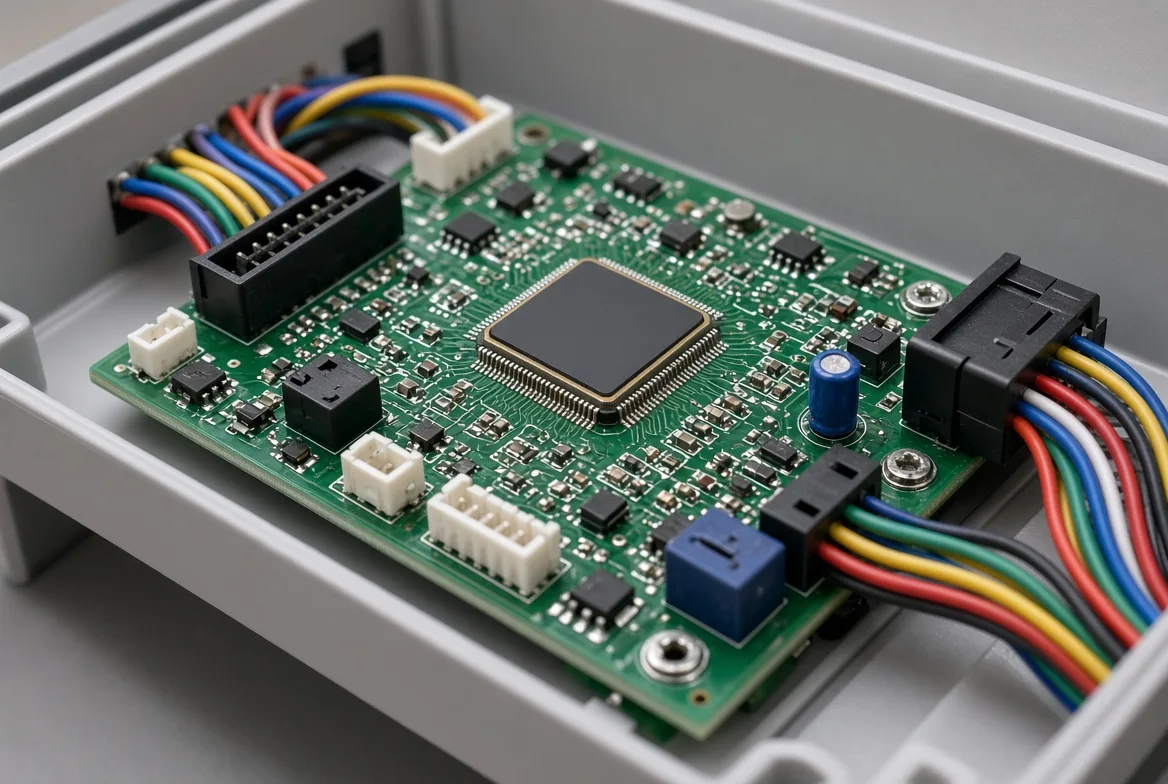
Modern RV appliances carry data. Displays, battery monitors and supervisory controllers pull fault logs, operating status and setpoints from the appliance control board. Procurement teams should put five questions to every supplier:
- Does the control board store historical fault codes?
- Can a supervisory system remotely enable or disable the load?
- Is the communication interface CAN, UART or proprietary?
- How does firmware behave during low-voltage events?
- Is there a service diagnostic mode for field troubleshooting?
Smart communication cannot compensate for undersized wiring or an inadequate battery. A CAN bus running on 16 AWG power wiring stays vulnerable to brownout failures. The coupling between pump loads and appliance controls is covered in the 12V pump and tankless pairing note.
The Manufacturing Lens: About Production-Line Validation
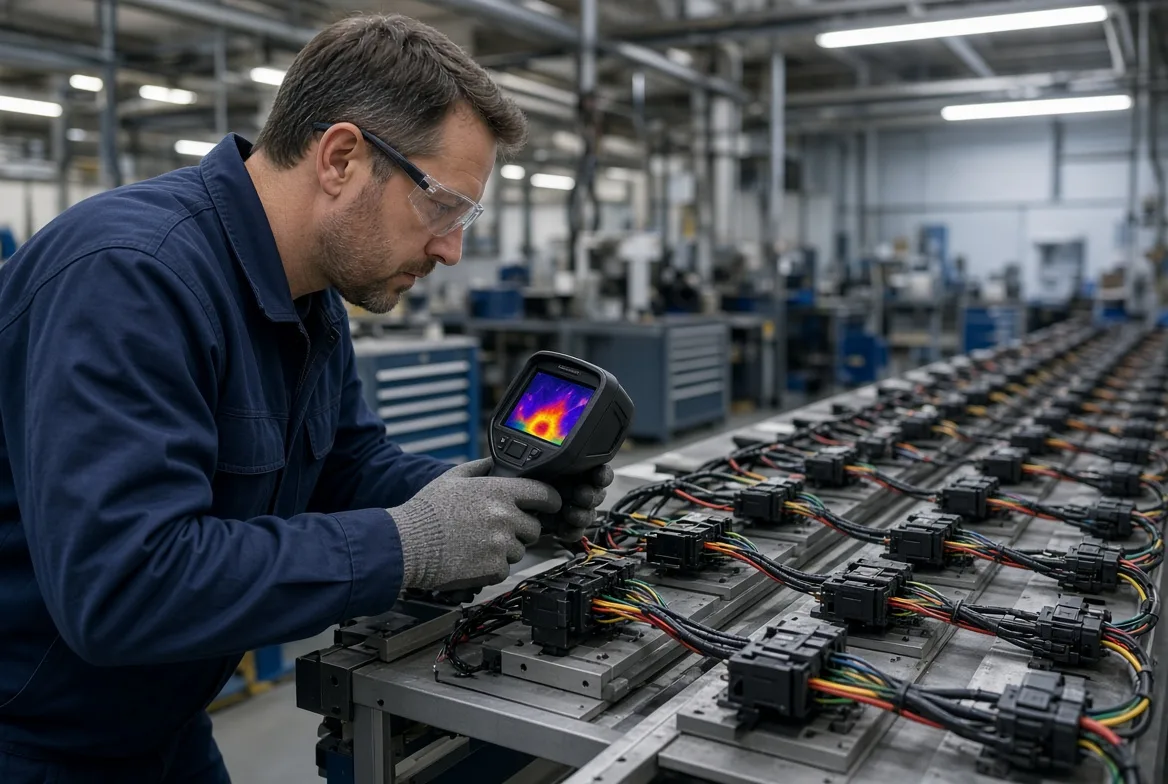
Production-floor decisions decide long-term field reliability. Cable length raises voltage drop, low-quality connectors corrode, poor crimps loosen under road vibration, and heat sources near signal wiring induce noise.
Every production batch is approved against three benchmarks:
| Check | Target |
|---|---|
| Voltage at appliance terminals (under load) | ≥ 11.8V |
| Connector temperature rise after 30 min | < 20°C |
| Behaviour after simulated brownout | Zero false resets |
⚙️ Technical Detail: A harness that passes on the bench at 25°C can fail in a chassis reaching 45°C. Validate high-temperature and low-battery conditions together, never separately.
Key Benefits of Native 12V RV Appliance Integration
A fully native 12V system cannot copy every shore-power capability, but a well-engineered hybrid with load management comes close. Native DC cuts conversion losses and improves off-grid capability; it does not remove fundamental power-capacity limits.
Cuts off-grid energy losses
Native 12V loads avoid inverter conversion losses. On the bench, a 12V compressor fridge drew 5.8A; the same load through a 120V inverter drew 8.1A, roughly a 40% penalty. Low-current loads run for long stretches without waking the inverter.
Anonymized Gulfstone QC data shows battery drain rising 9% at 45°C ambient and heating duty cycles stretching 15% at -10°C.
Improves service and fault isolation
Separating critical DC loads from non-essential AC loads simplifies diagnosis. A shorted water pump should trip only its own branch circuit, without taking down refrigeration, telematics and safety monitors. A clamp meter isolates native DC faults quickly; inverter-fed AC systems hide faults behind conversion stages.
In a 12-vehicle pilot, a pump failure stayed on one circuit, leaving refrigeration, lighting and safety systems fully operational. That isolation is the same discipline documented across the after-sales service files.
📈 ROI Check: Track service-call duration before and after separating critical DC loads. Cutting a call from 90 minutes to 35 minutes pays back within one quarter.
Expands product planning options
Procurement teams can treat native 12V hardware as its own category. Refrigeration, fans, control systems and select thermal applications all offer a viable native DC path. A well-designed native DC layer can shrink or remove the inverter sizing requirement.
Across three 2024 OEM builds, moving fridges, vent fans and controls to native DC cut inverter sizing from 3000W to 2000W, lowering hardware cost and standby draw. High-current AC appliances still need an inverter.
Keeps critical loads alive longer
Priority-managed DC outputs protect refrigeration, lighting and safety systems when energy runs low. A compact Class B camper sheds non-essential AC loads first to protect the fridge and CO detectors, while larger towables keep furnace control boards and tank monitors running through long cloudy spells.
In a 3-day off-grid test, prioritized DC outputs held fridge temperature at 38°F and kept safety monitors powered throughout. Mobile service fleets use the same priority ladder to protect telematics, lighting and tool power.
Challenges and Limitations of the 12V System
Native 12V systems easily handle low-current loads. However, high power levels expose dangerous limits. Heavy loads melt cheap wires and cause system crashes.
1. Current rises fast and copper costs follow
Ohm’s law does not negotiate: halving voltage doubles current for the same wattage. A 300W heater drew 25A at 12V, against 6.25A on a 48V system. That raises the bill of materials.
8 AWG cable covers short runs; beyond 10 feet the build steps up to 6 AWG. Larger fuse ratings and marine-grade bus hardware cost two to three times a light-duty accessory panel. In a 30-minute load test, one poorly crimped terminal reached 22°C while every other connector stayed under 8°C.
⚖️ Trade-off: Low-voltage 12V components save cost, but heavy copper wiring and high-current protection hardware cost more.
2. Mixed-voltage rails multiply failure points
Adding 24V or 120V rails needs step-down converters. Every conversion stage adds a failure point, a heat source and extra service documentation. A mixed-rail pilot used four conversion stages; when one buck converter failed, the fridge, telematics and tank monitor all lost power at once.
3. Marketing labels hide real architecture
Many “12V” products power only the control board with 12V while the thermal or main load runs on another supply. This is the most common procurement trap.
Request continuous draw, surge draw, duty cycle, fuse recommendation, input-voltage window, shutdown thresholds, plus EMC and vibration test reports. A supplier unwilling to share this data is hiding a design limit.
4. Compliance is non-optional
For RV low-voltage wiring, NFPA 1192 is the governing document. DC design also follows ABYC E-11 through the American Boat & Yacht Council and ISO 10133.
Environmental robustness and transient immunity rest on ISO 16750 and ISO 7637-2. Safety evaluation references UL/IEC 60335-1 and UL/IEC 62368-1, with CE EMC emissions and IEC 60529 ingress ratings.
RoHS, REACH and durability testing sit alongside. These are validation requirements, not paperwork, and they are recorded on the certifications page.
🛡️ Mitigation: Under-sized wiring, weak battery banks or poor thermal design can make a sound 12V appliance look defective. Validate the DC bus before blaming the hardware, especially on off-grid builds where voltage sag bites hardest.
Conclusion: The Architecture-First Verdict
A solar generator can power a full-size camper with disciplined system design, but it cannot run every high-demand appliance at once. Performance depends on architecture, not marketing labels.
Every 12V RV platform follows the same rule. Successful builds integrate appliance selection, battery-bank sizing, protection hardware, control logic and compliance pathways as one system. Failure lands on the weakest link, usually under heavy load and low state of charge.
Before approving a supplier or an architecture, verify five deliverables:
- Continuous and surge current data, not only nameplate wattage.
- Actual operating voltage window and low-voltage shutdown behaviour.
- Production harness specifications: crimp standards, strain relief, routing rules.
- Environmental and EMC test evidence: ISO 16750, ISO 7637-2, emissions reports.
- Serviceability and spare-parts support across the full OEM contract lifecycle.
A supplier that withholds these documents is not ready for mass production. Verified test evidence protects build quality and warranty margin.
I receive no manufacturer kickbacks for these findings. The figures come from bench testing, production QC records and integration reviews, not supplier marketing.
For OEM/ODM support, integration reviews or a compliance document package, start a technical discussion with Gulfstone through the OEM/ODM page. Bring the load list, the operating voltage window and the target certification requirements. Serious projects deserve an engineering review; reach the team directly via the contact page.
Frequently Asked Questions About 12V RV Electrical System Appliances
1. What are some good 12V appliances for camping?
Good 12V appliances for camping include compressor refrigerators, water pumps, vent and circulation fans, LED lighting and controls, tank and safety monitors, and furnace control circuits. Selected DC water-heating assemblies qualify too.
Once fitted into an engineered RV platform, these stop being simple camping accessories; they run natively from the coach DC bus.
2. What all runs on 12V in an RV?
RV 12V loads fall into three groups. Detectors, tank monitors and logic boards are always-on control loads. Lighting, fans and water pumps are switched utility loads. Compressor fridges and true electric water heaters are high-draw intermittent loads.
Each category needs its own branch circuit and a matched fuse rating.
3. What are the advantages and disadvantages of the 12V system?
12V systems perform well for low-current loads, but drawbacks increase with higher power, longer cable runs and mixed-voltage designs. Native DC reduces conversion losses and simplifies fault isolation.
The trade-offs are rapidly rising current, higher copper and protection-hardware cost, and extra failure points when more supply rails are added.
4. What is the best electrical system for a camper van?
There is no universal best system for camper vans; performance depends on architecture rather than appliance marketing labels. Successful builds co-design appliance selection, battery banks, protection hardware and compliance from the start.
Native 12V DC reduces conversion losses, can reduce inverter size, and keeps critical loads powered, while a well-designed hybrid system still needs an inverter for high-power AC appliances.
5. Can a solar generator actually power a full-size camper?
Yes, a solar generator can power a full-size camper in a carefully designed setup, but it cannot run all high-demand appliances at once. System architecture decides performance, not the appliance label.
A 200Ah–300Ah lithium bank is the realistic baseline for off-grid use of high-current 12V RV appliances such as electric water heaters.

Forward
Co-founder & General Manager, GulfstoneGas appliance manufacturing and certification
Most of what decides a gas appliance is settled before anything is built — on the drawing, at the cut-out, in the tolerance someone chose for the gas path. I have spent my working life on the manufacturing side of that decision, and this is where I write down what it has taught me.
Nothing here is written from a sales desk. Every note comes off the floor: a batch held until a reason was found, a fitting that failed in transit, an approval path that only made sense once the destination market was fixed. If you read these first, the opening conversation starts at the standard rather than at the beginning.
- Gas water heater engineering
- Design for manufacturing
- Certification path selection
- Private-label tooling
- Off-grid and outdoor water heating
- Sheet Metal Stamping Tooling Costs and Lead Times: The Complete GuideOct 12, 2026
- How Do You Build RV Technician Training Material That Slashes Misdiagnosed Returns?Oct 11, 2026
- How Do You Build a High-Coverage RV Water Heater Spare Parts Kit for Fleets and Dealers?Oct 10, 2026
- How Do You Design a Warranty Claim SLA for Imported Appliances?Oct 9, 2026
- How to Specify an Extreme Conditions RV Water Heater: An OEM Engineering GuideOct 7, 2026
- RV Water Heater Cutout Size: A Factory-Grade Measurement GuideOct 6, 2026
Fifteen years in appliance manufacturing — home appliances, RV refrigeration, then gas water heating — from the drawing to the shipping container.
Leads Gulfstone's design-for-manufacturing reviews and the certification path selected for each destination market.
Works directly with OEM and private-label buyers on tooling, tolerances and the approval file.