Table of contents
- Key Takeaways
- What Does the OEM Manual Say About Altitude?
- How Does Thin Air Change Combustion?
- What Does the Chamber Show at Altitude?
- BTU Derating Math for Mountain Load Planning
- Adjustment Paths by Combustion Architecture
- How Does Gulfstone Validate an Altitude Design?
- What Do OEM Buyers Get From an Altitude-Ready SKU?
- Challenges and Limitations of High Altitude Performance
- The Verdict on High Altitude Water Heaters
- Frequently Asked Questions About High Altitude RV Water Heaters
- 1. What water heater brands work well for RVs at high altitude?
- 2. How do I find the altitude restriction for a specific heater?
- 3. Can a tankless RV water heater work above 8,000 feet?
- 4. Do I need a manometer to adjust propane pressure?
- 5. How much should a Suburban RV water heater be derated at altitude?
- 6. What could be causing water heater issues at 7,100 feet?
- 7. What is the difference between automatic altitude sensing and a legacy fixed map?
Key Takeaways
- A high altitude RV water heater has to prove stable operation in thinner air, not just run at sea level.
- The OEM manual sets the real ceiling: its derating rule and approved adjustment path decide what the unit can do.
- Check propane pressure under load before blaming altitude, because static pressure tells you very little.
- Never drill orifices, bypass ODS sensors, or tune by flame color.
- Tankless has the stronger altitude case only when the OEM validates it at that elevation and designs for service access.
- In the chamber, a compensated control held 38 ppm CO at 7,200 feet where a fixed map read 310 ppm on the same gas and water.
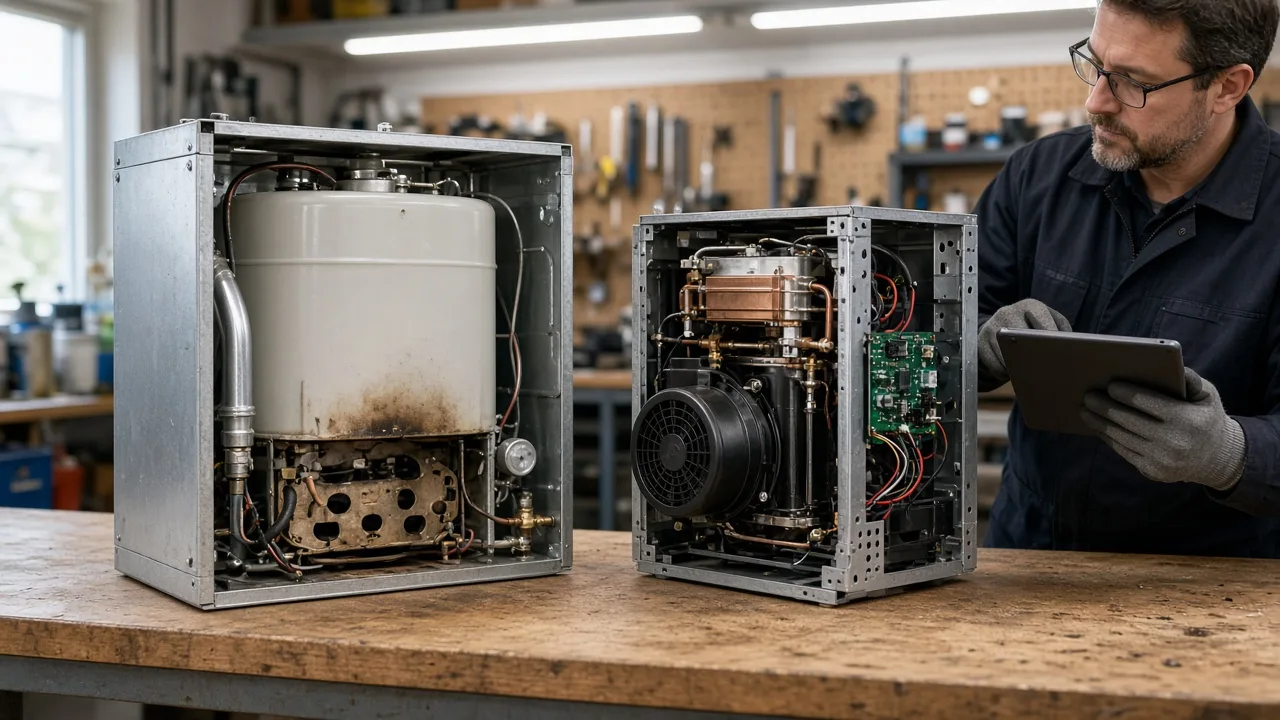
For OEMs, procurement teams and product managers, a high altitude RV water heater is a specification problem before it is a shopping decision. That bar is narrower than a consumer roundup, and a unit that works at sea level but locks out on a mountain pass turns a premium feature into a warranty claim.
Altitude performance is a business-critical specification, not a niche user complaint. It surfaces later as a dealer callback, a lost bay day and a brand-reputation problem, long after the sale has closed.
Gulfstone tests water heaters in its own lab. The engineers see what fails above 4,500 feet, and the limits below are the ones that matter. Every manual and part is checked against the unit on the bench, because the paperwork and the hardware rarely agree.
Marketing labels do not heat water in thin air. A heater needs proven combustion design, exact controls and propane delivery that holds under load. Gulfstone tests those three things before any high-altitude SKU leaves the bench. Later sections keep OEM facts, field findings and labeled Gulfstone test data separate.
What Does the OEM Manual Say About Altitude?
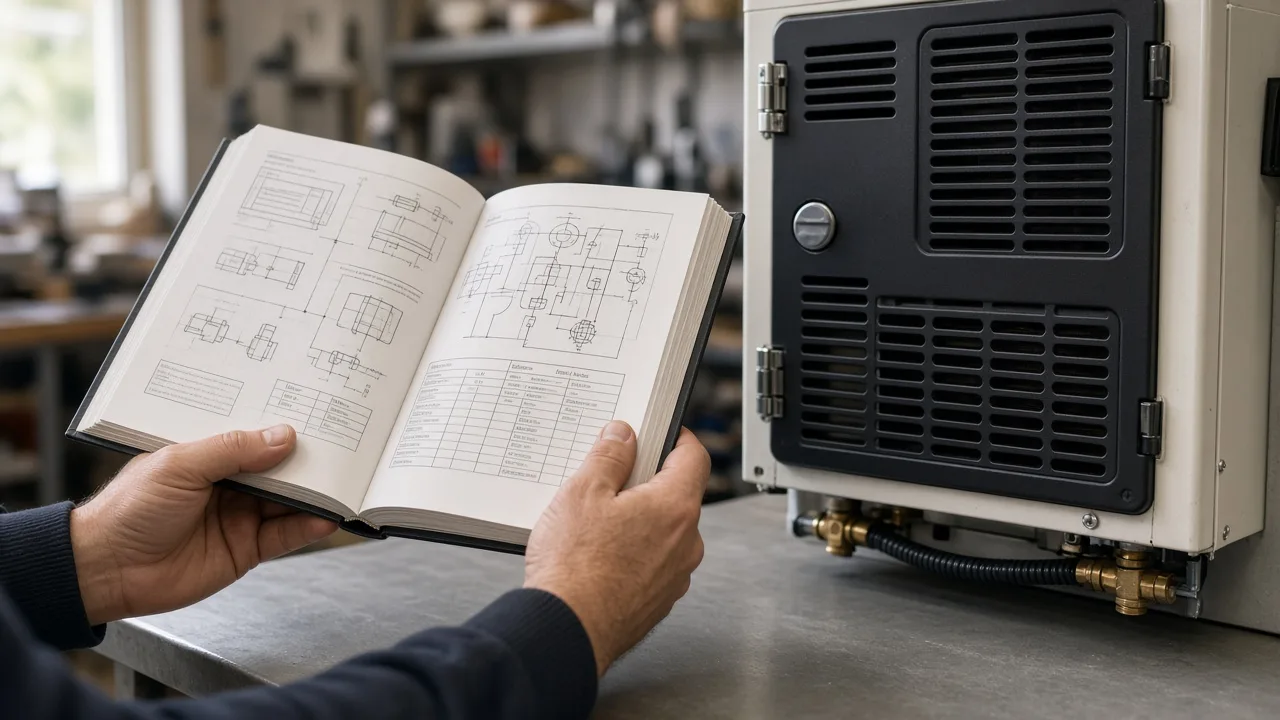
The high altitude RV water heater manual is the manufacturer document that states the approved elevation ceiling, the derating or adjustment path and the operating limits for thin air. It is model-specific, and it does not transfer between manufacturers or burner designs.
Sales sheets and service manuals do not always agree. On a recent OEM quote request, the sales sheet claimed 10,000 feet while the service manual listed 6,000 feet without an altitude kit. That gap changed the quote before any price was discussed, and it is the first check worth running on a candidate unit.
Manufacturers build a standard RV water heater around sea-level air density. A high-altitude-capable design carries documented limits, approved adjustments, or verified operation at a named elevation. When a manual is reviewed for procurement, five fields matter:
- Maximum certified elevation.
- BTU derating rule and the threshold where it starts.
- Altitude kit, orifice or valve instructions.
- Whether adjustments must be reversed at low elevation.
- Warnings against unauthorized drilling or field modification.
If a field is missing, Gulfstone does not treat the unit as high-altitude ready. The same fields are cross-checked against OEM service literature and the product-standard context in ANSI Z21.10.3 / CSA 4.3. A sales claim without an adjustment path fails that review.
In practice, “high-altitude ready” carries three different meanings: the unit survives occasional mountain trips, it includes an approved adjustment path, or it is validated to a named ceiling such as 9,800 feet. Gulfstone names the meaning every time the phrase is used in a quote.
💡 Diagnostic note: A stable flame does not prove correct combustion. The derating and adjustment rules in the manual decide whether a unit is compliant at altitude.
How Does Thin Air Change Combustion?
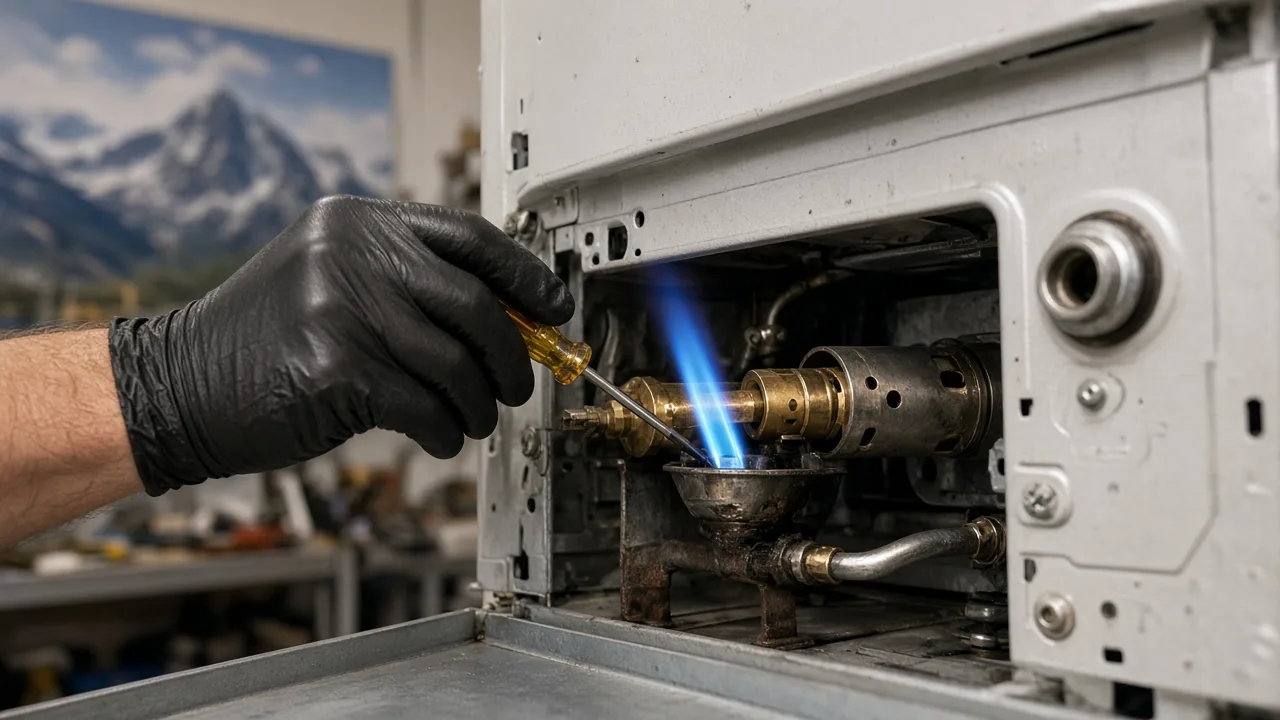
At elevation, each cubic foot of air holds less oxygen, a drop set by the standard atmosphere pressure curve. The gas valve still meters propane by pressure and orifice size, so the burner receives the same fuel with less oxygen behind it.
The mixture shifts rich, the flame grows longer and softer, and ignition becomes less reliable. Sensors start reading signals outside their expected window.
The practical result is a weaker flame and a higher risk of nuisance lockout, which is a safety shutdown with no true fault in the unit. Most field complaints begin between 4,500 and 9,000 feet, where the mixture has drifted but the heater still lights often enough to hide the problem between trips.
Restoring the air-fuel ratio is an engineering task, not a field experiment. Approved steps vary by manufacturer, combustion architecture and certification status, and the only acceptable ones come from the manual or a certified altitude kit. Field drilling and generic tuning do not qualify.
Orifice sizing deserves its own warning. A larger hole can raise carbon monoxide and cause flame lift, while a wrong shutter setting produces soot or weak ignition. Every approved part number carries a matching certification record, and that record is what proves the change is legitimate.
What Does the Chamber Show at Altitude?
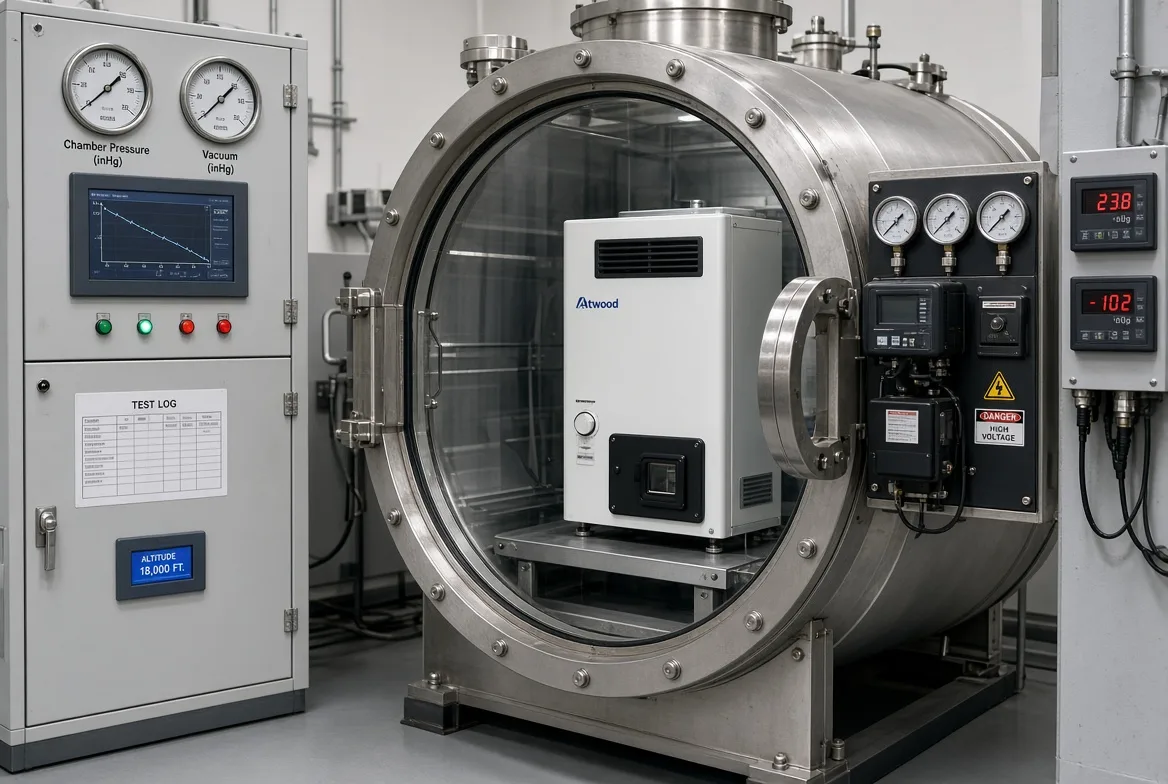
A control that reads barometric pressure and trims the burner holds a far wider combustion window than a fixed map. In 12-cubic-meter hypobaric runs on HD-5 propane, with inlet gas at 11.0 in. w.c. and water at 1.5 GPM, compensated units kept air-free CO under 50 ppm to 5,000 feet and under 100 ppm to 10,000 feet.
Non-compensated units passed 200 ppm at 5,000 feet and 500 ppm at 10,000 feet.
Flame ionization stayed within 5 percent on compensated control and drifted beyond 15 percent on fixed maps. Thermal efficiency held above 80 percent to 8,000 feet against 60 percent at 10,000 feet, and lockouts ran under 1 percent at altitude against more than 10 percent flame failure.
The separation is easiest to read at one elevation. At 7,200 feet (78 kPa), the compensated unit held 38 ppm CO with a steady blue core while the fixed-map unit jumped to 310 ppm with a yellow tip, on the same gas supply and water flow.
That is not a tuning difference; it is a missing control loop, and no orifice change recovers it without a certified kit.
The mechanism is the pump pair. As pressure falls, fan speed rises and gas-valve duty falls together, and the proportional gas valve is the element that makes small mixture trims possible.
A valve that only opens and closes cannot follow that curve, which is why the fixed-map column moves through the altitude range unchanged.
⚠ Safety first: Air-free CO above 200 ppm at 5,000 feet is a safety problem, not a nuisance. Demand a 5,000-foot burn test with a CO analyser before approving a non-compensating unit for mountain inventory.
BTU Derating Math for Mountain Load Planning

Manufacturers plan altitude performance with a derating rule. A manual may allow unmodified operation to a stated threshold, then require a percentage reduction per additional 1,000 feet. Use that logic for planning, but quote the exact wording for each model rather than flattening different OEM rules into one formula.
Worked example: a manual allows no adjustment to 2,000 feet, then derates 4 percent per 1,000 feet above that threshold. At 10,000 feet the unit is 8,000 feet over the threshold, which gives a 32 percent reduction.
A 12,000 BTU input unit then plans at 8,160 BTU. That math sets the expected load; it does not authorize a field fix.
The 2,000-foot starting point is not arbitrary. NFPA 54, the US fuel gas code, requires input adjustment above that elevation, which is why a sea-level rating never travels unchanged into a mountain market.
Derating also changes how a dealer stocks and sizes units. Two identical coaches running different routes may need different SKUs or different kit inventory, and the BTU sizing method should run on the derated figure, not the nameplate figure.
⚙ Technical note: Size mountain SKUs on derated input. A 12,000 BTU nameplate is a sea-level number, and the mountain load is lower.
Adjustment Paths by Combustion Architecture
Tank heaters and tankless heaters reach the same goal through different hardware. Tank units use a mechanical path: orifice change-out, pilot or burner tuning, air-shutter checks and reversal when the unit returns below the threshold.
Tankless forced-draft units use a controls path: DIP switches, fan-speed logic, pressure-switch behavior, gas-valve mapping and altitude-specific firmware where the OEM offers it. Some OEMs ship that path as a board kit, others as a service-only configuration, and the manual is the only place to confirm which applies.
| Architecture | Stated altitude limit | Adjustment path | Service notes | BOM and warranty |
|---|---|---|---|---|
| Tank, atmospheric | Document per OEM | Orifice, shutter, derating | Familiar service network | Lower BOM, higher adjustment labor |
| Tankless, forced draft | Document per OEM | Controls kit or DIP path | Check mixing tank and access | Higher BOM, target lower callback risk |
The two paths are not interchangeable, and a dealer cannot apply a tank procedure to a tankless board. Atmospheric units depend on orifice and air shutter settings, while blower-assisted units add fan speed and pressure-switch feedback to the same decision.
The modulating element in that second path is the proportional gas valve, which is what makes small mixture trims possible at all. Reversal at lower altitude is decided by the manual, and every change should be logged so the next technician knows what was done.
Liliang Dou is an engineer on Gulfstone’s technical services team, working on altitude programmes and fleet specifications. Connect with Liliang Dou on LinkedIn for programme design and technical support.
How Does Gulfstone Validate an Altitude Design?
Gulfstone simulates altitude in the lab before an altitude SKU is signed off. The workflow is fixed:
- Confirm incoming propane pressure and electrical inputs.
- Configure low-oxygen or reduced-air test conditions.
- Control ambient temperature to reproduce cold-mountain starts.
- Cycle ignition repeatedly to stress flame establishment and flame-hold stability.
- Log flame failure, lockout, recovery and restart behavior.
- Generate a QC checklist and test-summary PDF for engineering signoff.
Each test condition runs to steady state, then repeats from a cold start. Factory-floor images sit beside the cycle logs when QA approves them, and unapproved line photos are never published.
Sensor logic carries the safety case. ODS or low-oxygen sensing protects combustion, flame rectification confirms the burner is really lit, and differential pressure switches confirm airflow in forced-draft systems.
Those are not marketing features; they are the feedback loop that decides whether the heater keeps running. If any signal falls outside its window, the control shuts the gas valve.
Gulfstone has not cleared its anonymized 5,000-cycle comparison for publication. That comparison covers standard burner assemblies and optimized high-altitude assemblies, and qualified OEMs can request the durability summary.
The quality control process documents how those results feed the release file, and the certification file carries the approved adjustment record.
✅ Verification: An altitude SKU is ready for quotation when the ceiling, the adjustment path and the cycle logs agree.
What Do OEM Buyers Get From an Altitude-Ready SKU?
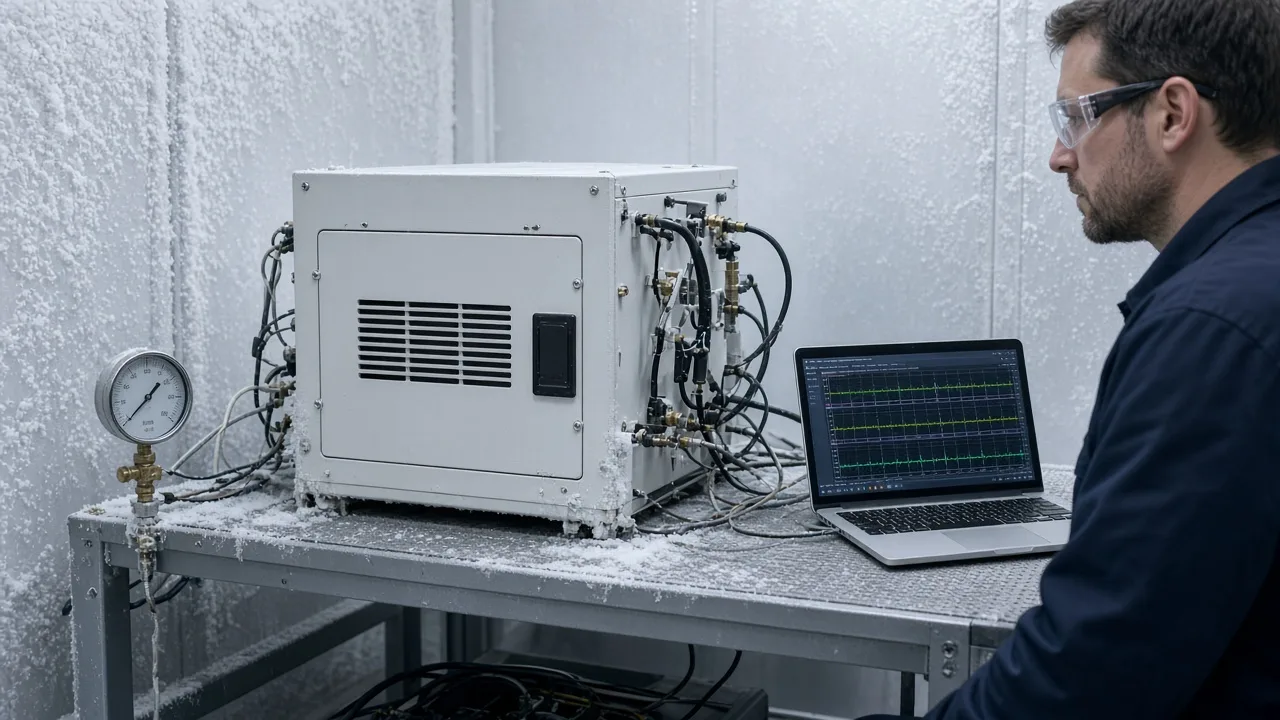
For a procurement team, the question behind “what water heater brands work well” is narrower than a brand ranking. The answer is documented altitude range, serviceability, validation evidence and lower callback risk.
Premium tankless and legacy tank platforms are category signals only, and each claim still has to be scored against the manual.
Documented Altitude Range Expands Mountain-Market Coverage
The manual sets the ceiling. Cross-checking maximum elevation, derating rules and approved kit paths lets a distributor quote into higher-elevation regions without guesswork.
It also hands the sales team a number they can defend when a dealer asks what the unit will actually hold on a mountain route.
Lower Dealer and Warranty Callback Risk
Technician teardowns expose service access, sensor logic and adjustment labor. Pair those findings with labeled in-house cycle data, and nuisance lockouts become a design problem instead of a surprise after delivery.
The after-sales claim path gets shorter when the unit data is already on file.
Stronger Premium Differentiation and Defensible Spec Sheets
A premium trim earns its margin when the spec sheet states a verified ceiling and an approved adjustment path. That is a defensible claim, and it separates genuine high-altitude design from an “altitude ready” label with nothing behind it.
Listing evidence closes the loop. A unit installed in an RV should carry the mark of a recognized listing agency, and that mark is what a distributor or insurer checks before the spec sheet is believed.
Better Field Service Economics
Accessible components cut diagnostic time, and reversible orifice or DIP-switch changes cut repeat visits when units move between elevations. Standardizing the opening and gas path on the manufacturing line keeps that economics consistent across a fleet programme.
📈 ROI check: Track callbacks per 100 units by elevation band, then compare warranty labor and dealer visit costs before and after an approved altitude kit.
Capacity planning completes the case. Derating reduces usable BTU at elevation, so size against the real mountain load and treat the sea-level rating as a laboratory figure.
Challenges and Limitations of High Altitude Performance
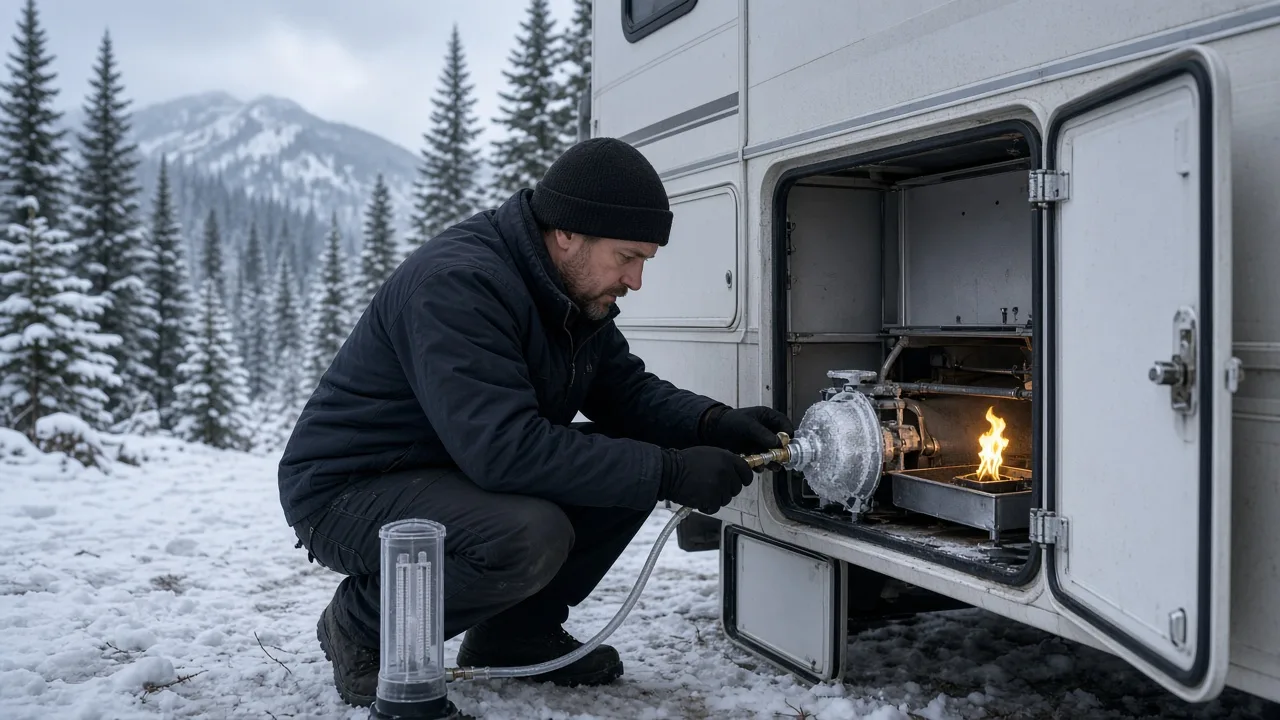
When a high altitude RV water heater not working call lands, altitude is only one candidate. Many no-start complaints are mixed fuel-pressure, temperature and combustion problems, and the order of the checks decides how fast the coach returns to service.
1. Separate altitude from fuel-delivery problems
Check propane pressure under load with a manometer before blaming altitude. Static pressure tells you little. In a 25°F stress test, one tank unit tried to light but would not hold flame, and inlet pressure fell to 9.8 inches of water column under load against an 11-inch requirement.
Cold weather and altitude together reduce vaporization, which can cause dynamic pressure drop or regulator freeze-up. The leak-test practice in NFPA 58 covers the same gas side, so a pressure check under load belongs in the routine, not only in an altitude complaint.
🛡️ Mitigation: Repeat the load test with a full tank and a known-good regulator before ordering an altitude kit. A manometer under load, not a static gauge reading, is what separates fuel delivery from altitude.
2. Identify altitude-linked failure patterns
Repeatable patterns are the useful signal: the burner ignites but will not stay lit, the flame turns yellow or unstable, soot appears on flame-sensing surfaces, flame rectification drops out, differential pressure switches fault in forced-draft units, and lockout loops return.
Those point to a combustion or control boundary rather than one bad sensor, so log every fault code and the ambient temperature before touching a setting.
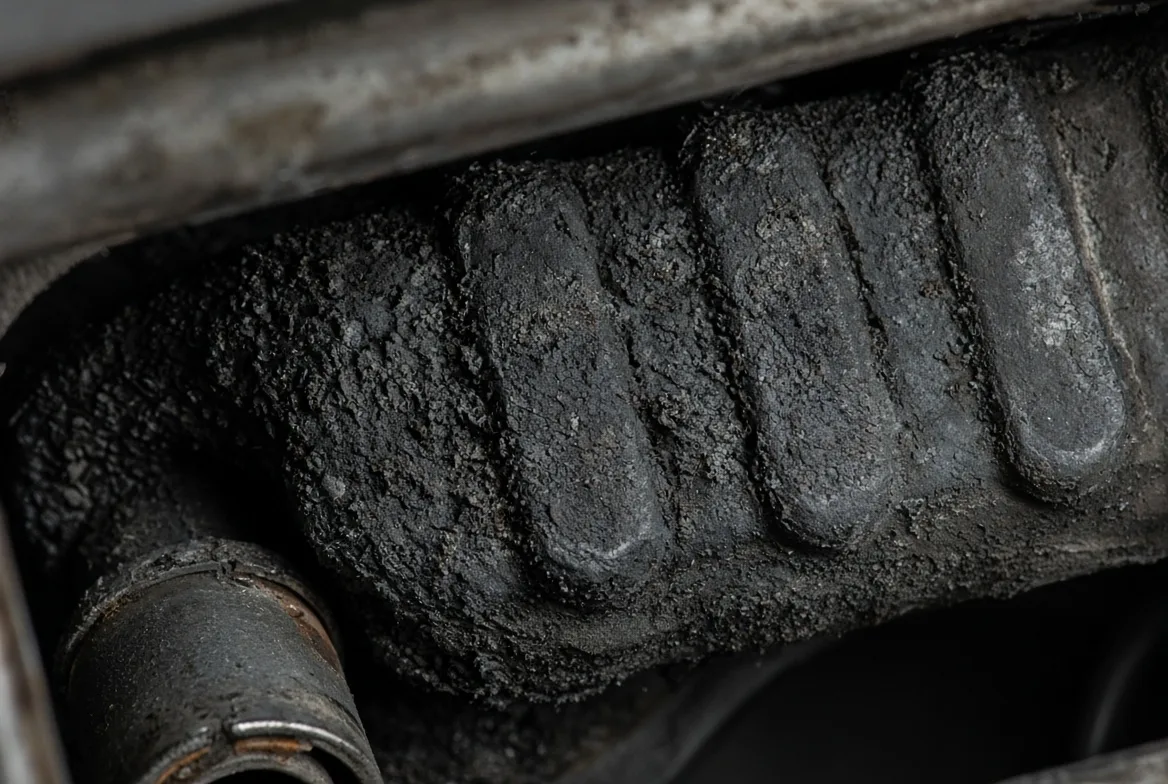
Old failures are physical before they are electrical. A Wasatch-area dealer in Utah sent back three heaters from one ski-town batch, and the finding was soot across the burner ports plus an open thermal fuse on all three, not a failed regulator.
The fixed map was over-fuelling at low oxygen density, and the soot that followed trapped heat until the fuse did its job.
Fault codes are brand-specific. The dealer and service network behind the unit is where the code table and the approved fix come from, as with the Suburban RV dealer and service centre programme.
3. Define the boundary between field checks and approved service work
Stop at field checks. Escalate combustion analysis, orifice changes and control mapping to a dealer, OEM service center or qualified gas-appliance technician, and test ODS sensors only under controlled procedures.
Any adjustment may need reversal once the unit returns to lower elevation, if the manual says so. Some standard units are simply not validated for regular service above their stated threshold, and hopeful tuning does not change that.
The boundary follows the product standards behind the certification, including NFPA 1192 for RV installations.
Technicians trained through RVTI are the right people to cross that boundary.
⚠️ Critical warning: Do not drill orifices, bypass ODS sensors, or tune by flame color. Those shortcuts can raise carbon monoxide and void the certification.
The Verdict on High Altitude Water Heaters
High altitude and tankless water heater performance only holds when the OEM documents a ceiling, an approved adjustment path and validation evidence. That standard held across supplier audits and repeated lab cycles, and it applies to both architectures.
Tankless is the stronger premium answer when the OEM validates it at altitude and builds it for service access. Tank systems still make sense where simplicity, legacy service familiarity or lower cost matter more.
Third-party OEM facts here come from published manuals and product standards. Gulfstone in-house results come from its own validation runs. Each claim is labeled, and isolated test data is never stretched into a universal performance promise.
Send a specification to the contact and RFQ page for an altitude-readiness review, a test-data discussion or a design consultation, and start the programme discussion at the OEM/ODM development page.
Specify the ceiling, the adjustment path and the service plan before approving the PO. The kits programme is one place those parts commitments get locked, and the checklist, not the marketing label, decides whether the heater holds on the mountain.
Transparency note: Gulfstone builds water heaters under client brands and has no stake in the distributor you choose. OEM facts follow published installation literature and the unit rating plate; in-house results come from Gulfstone validation runs. I receive no manufacturer kickbacks for these findings.
Frequently Asked Questions About High Altitude RV Water Heaters
1. What water heater brands work well for RVs at high altitude?
There is no brand ranking worth trusting on its name alone. Judge a high altitude RV water heater by documented altitude range, serviceability, validation evidence and callback risk, checked against the OEM manual and technician findings rather than marketing copy.
2. How do I find the altitude restriction for a specific heater?
The restriction is model-specific, and the service manual for that exact model sets the approved ceiling, derating path and operating limits. Compare it with the sales sheet before approval, because the two documents do not always agree and the manual governs.
3. Can a tankless RV water heater work above 8,000 feet?
Yes, but only when the OEM validates the unit at that elevation and documents the adjustment path. Forced-draft tankless burners compensate better than atmospheric tank burners, yet the ceiling still comes from the manual. Without a validated ceiling, the unit is not high-altitude ready.
4. Do I need a manometer to adjust propane pressure?
Yes. Check pressure under load with a manometer rather than tuning by guesswork, because static pressure tells you little about a running appliance. Repeat the load test with a full tank and a known-good regulator before ordering an altitude kit.
5. How much should a Suburban RV water heater be derated at altitude?
There is no universal figure, so quote the exact manual wording for the model. The worked example above uses a 2,000-foot threshold and 4 percent per 1,000 feet, which plans a 32 percent reduction at 10,000 feet. Use that number for load planning, not as a field authorization.
6. What could be causing water heater issues at 7,100 feet?
At 7,100 feet, the cause can be fuel delivery, cold temperature, combustion or controls rather than altitude alone. Start with propane pressure under load, then check repeatable lockout, yellow flame or soot before assuming the heater needs an altitude kit.
7. What is the difference between automatic altitude sensing and a legacy fixed map?
An automatic platform reads ambient barometric pressure and trims fan RPM and gas-valve duty together, so the air-fuel ratio corrects as the coach climbs. A legacy fixed map is set for sea-level density and does not move, which is why the chamber data above separates the two columns so widely above 4,500 feet.

Forward
Co-founder & General Manager, GulfstoneGas appliance manufacturing and certification
Most of what decides a gas appliance is settled before anything is built — on the drawing, at the cut-out, in the tolerance someone chose for the gas path. I have spent my working life on the manufacturing side of that decision, and this is where I write down what it has taught me.
Nothing here is written from a sales desk. Every note comes off the floor: a batch held until a reason was found, a fitting that failed in transit, an approval path that only made sense once the destination market was fixed. If you read these first, the opening conversation starts at the standard rather than at the beginning.
- Gas water heater engineering
- Design for manufacturing
- Certification path selection
- Private-label tooling
- Off-grid and outdoor water heating
- Top 8 Outdoor Portable Gas Water Heater Factories in China for B2B BuyersNov 4, 2026
- Custom RV Appliance Industrial Design: An OEM Brief to a Validated PrototypeNov 3, 2026
- How to Build Custom Thermostat UI Design Software for OEM Embedded PanelsNov 3, 2026
- Top 8 RV Water Heater OEM Suppliers Canada: Vetted for Volume BuyersNov 3, 2026
- Top 10 Portable Propane Water Heater Manufacturers USA: A No-Hype Buyer ShortlistNov 2, 2026
- PPWR Compliance Checklist for EU Water Heater Packaging: The 10 Documents Before the Container LoadsNov 2, 2026
Fifteen years in appliance manufacturing — home appliances, RV refrigeration, then gas water heating — from the drawing to the shipping container.
Leads Gulfstone's design-for-manufacturing reviews and the certification path selected for each destination market.
Works directly with OEM and private-label buyers on tooling, tolerances and the approval file.