Table of contents
- Key Takeaways
- What Does NFPA 1192 Cover, and Which ANSI Pathway Fits Your Build?
- How Does RVIA-Style Certification Work on the Line?
- 1. Engineering Review of Water Heater Architecture and Chassis Envelope
- 2. BOM Check for Listed Valves, Regulators, Hoses, Vents, and Plumbing Components
- 3. Bracket, Clearance, and Vibration-Isolation Verification
- 4. LP-Gas Routing Review for Abrasion Points, Bend Radius, Grommets, and Service Access
- 5. Exhaust and Combustion Air Termination Review
- 6. Plumbing Review for Inlet/Outlet Integrity, Relief Path, Drain Strategy, and Waste/Vent Coordination
- 7. Live Test Stage
- 8. Final Labeling and Compliance Packet Assembly
- QC Checklist: The Stop Values on the Line
- Where Do Gas-Line and Vent Checks Fail? Q&A With the Line Inspectors
- Why Do Insurers, Lenders and OEM Buyers Read the Sticker?
- Challenges & Limitations of NFPA 1192 Compliance
- The Verdict on NFPA 1192 Compliance
- Frequently Asked Questions About an RV Water Heater: NFPA 1192 Compliance
Key Takeaways
- NFPA 1192 is the governing RV safety standard for fuel gas systems, exhaust ventilation, plumbing, fire and life safety, and appliance integration.
- A signed certificate referencing the wrong standard edition carries no weight. Lock the edition number, currently the 2026 edition, in every purchase order.
- RVIA-style certification signals baseline code conformance, not premium materials or flawless assembly.
- Require signed leak-test records, component listing files, and current-edition compliance evidence before awarding business.
One nonconforming gas run, vent termination, or plumbing detail can stall certification, force line-side rework, and expose the OEM to warranty claims. The failure rarely shows up in a showroom. It shows up at the first gas leak test, or two years later in a service bay.
In factory audits, that gap reads as a delayed launch and a rework bill. The standard sets minimums across fuel gas, exhaust, plumbing and fire safety, so it anchors clearances, combustion air and exhaust routing in one document. Treat it as standalone and the cross-certification conflicts get missed.
The process below comes from the production line, a Q&A with the lead quality inspector and lead technician, and a teardown of a unit that failed its compliance test.
What Does NFPA 1192 Cover, and Which ANSI Pathway Fits Your Build?

For buyers asking about the difference between NFPA and ANSI standards, the answer lies in the applicable pathway and the unit type defined on the build sheet.
In practice, a standard is the rulebook, and NFPA 1192 is that rulebook for RV system safety. A certification program is the proof mechanism: inspection records, listing files, and test reports. Sourcing teams treat the two as interchangeable, but a signed certificate citing the wrong edition is worthless.
NFPA 1192 applies specifically to RVs. Adjacent pathways cover other product classes: park model RVs follow ANSI/RVIA A119.5, and the NFPA 1192 page lists the current edition. The spec package must name the exact build category, because the wrong label sends the test plan down the wrong path.
Buyers still write “ANSI A119.2” on sales sheets and drawings, a legacy label used inconsistently. Engineering documents should name the exact standard and edition.
Last quarter a client sent a spec labeled “ANSI A119.2” with no edition. Mei, the compliance lead, caught it in pre-production review and traced it to NFPA 1192 plus a separate park model pathway. That mismatch would have failed the first gas leak test.
💡 Key Insight: Treat the standard as the rulebook, certification as the proof, and the edition as a controlled variable.
Baseline terms for this guide:
- Direct-vent appliance: draws combustion air from outside and vents exhaust to the outdoors.
- LP-gas piping: tubing and lines that carry propane.
- Regulator: reduces gas supply pressure to the level required by the appliance.
- DWV/plumbing venting: removes sewer gas from the plumbing system.
- Flame spread: the rate at which a material burns under standardized test conditions.
- Listed component: a part certified by a listing agency recognized under the RVIA program.
- Certification record: the document trail that proves compliance.
NFPA 1192 runs on a regular revision cycle, so an outdated checklist is not permanent guidance. The current edition is 2026, with the next revision scheduled for 2029. Gulfstone locks the edition number in all purchase orders and re-verifies requirements with every code update.
How Does RVIA-Style Certification Work on the Line?
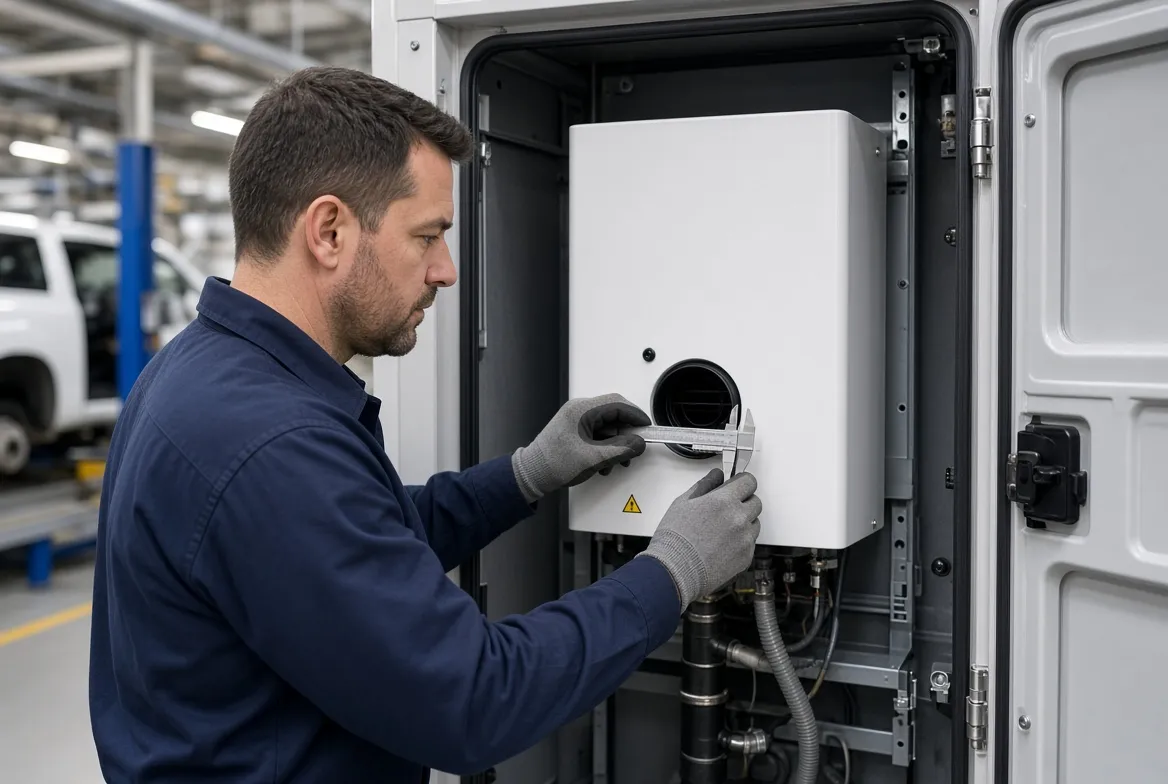
What does the RVIA sticker actually mean? It signals baseline conformance through a manufacturer certification program, not a promise of premium materials, flawless assembly, or durability. Think of a building inspection signoff: the structure meets minimum code, but nobody grades the finish work.
Code and workflow are separate. NFPA 1192 sets baseline expectations; the RV Industry Association program turns them into engineering reviews, inspected records, listed components, live tests, and 2,000-plus unannounced plant inspections a year. Listing marks come from a recognized agency such as UL or CSA.
The sequence below is what Gulfstone’s Foshan line runs and what third-party supplier audits check, stage by stage.
1. Engineering Review of Water Heater Architecture and Chassis Envelope
The lead engineer checks the chassis cutout by hand, matching heater size against the frame and door swing before any blueprints are printed. A drawing error here turns into a vent error on the line.
2. BOM Check for Listed Valves, Regulators, Hoses, Vents, and Plumbing Components
QC pulls the BOM and verifies that every gas and water component carries a listing mark and a current certificate. Unlisted valves, missing regulator vent limiters and mismatched hose ratings stop the build.
- Review the official listing file, not the supplier logo.
- Reject any component whose certificate has lapsed.
3. Bracket, Clearance, and Vibration-Isolation Verification
Line staff check bracket geometry, torque marks and anti-vibration supports around the burner and heat exchanger. Photos are filed in the build record, keyed to the serial number; the RV water heater engineering page covers the structural logic.
- Photograph the installed bracket and grommet contact points.
- Record clearance to the door frame.
4. LP-Gas Routing Review for Abrasion Points, Bend Radius, Grommets, and Service Access
Floor technicians trace every propane line by hand and feel for sharp frame edges. This is where propane safety most often fails in the field: a hose rubbed through at a pass-through, or a bend that stresses the flare.
- Confirm a thick rubber grommet at each metal pass-through.
- Check bend radii and service access that would force a future technician to stress the line.
5. Exhaust and Combustion Air Termination Review
QC checks termination location against door swing, storage bay walls and blocked-vent scenarios, then inspects the exhaust path, bug screen and combustion air opening. A termination that passes on a bench can fail once a door or slide-out obstructs airflow.
- Photograph the termination with the door open and closed.
- Flag any termination that sits behind a door swing or beside a storage bay.
6. Plumbing Review for Inlet/Outlet Integrity, Relief Path, Drain Strategy, and Waste/Vent Coordination
Staff confirm that the relief discharge path cannot spray onto electrical components and that winter drain access stays reachable.
- Check inlet and outlet support.
- Trace the relief valve discharge path and drain slope.
- Confirm DWV vent coordination.
7. Live Test Stage
The finished unit sits on the active test bench. Technicians pressurise the gas lines and spray soapy water over every joint, then run ignition, flame stability and hot water performance runs. Any leak, blocked vent or repeated ignition failure is a stop-ship until engineering signs off.
8. Final Labeling and Compliance Packet Assembly
QC confirms the data plate, warning labels and edition reference. The packet carries component listing files, test records, leak-test signoffs and installation instructions, and certification is complete only when the paperwork matches the physical unit.
What each stage leaves behind:
| Stage | What QC checks | Record filed |
|---|---|---|
| Engineering review | Cutout, frame and door swing | Signed drawing |
| BOM check | Listing marks and certificate dates | Listing file on record |
| Bracket and clearance | Torque marks, clearance to door frame | Serial-keyed photos |
| LP-gas routing | Grommets, bend radii, service access | Gas-route photos |
| Exhaust and air termination | Airflow with door open and closed | Termination photos |
| Plumbing | Relief path, drain slope, DWV vents | Plumbing signoff |
| Live test | Leak, ignition, flame, performance | Test log |
| Final labeling | Plate, warning labels, edition reference | Compliance packet |
QC Checklist: The Stop Values on the Line
| Check | Setpoint or method | Signoff |
|---|---|---|
| LP-gas test pressure | 90 psi nitrogen or dry air, capped outlets | QC inspector |
| Hold time | 15 minutes per zone | QC inspector |
| Allowable drop | 0 psi, no bubbles at any joint | Lead technician |
| Operating manifold pressure, loaded | 10–11 in. w.c. | QC inspector |
| Water-side hydrostatic | 150 psi for 60 seconds | Lead technician |
| Exhaust backflow check | Smoke-pencil trace, door open and closed | Lead technician |
| Label and packet check | Packet ID and edition stamp verified | Compliance lead |
Those setpoints follow common practice on RV gas water heaters and are the order of magnitude a buyer should expect. Hold each supplier to its own documented set and demand the signed log for the unit serial number.
The RVIA technical training session above walks the 2021 code changes clause by clause. When a supplier cites an older edition, the differences in this video are the ones its build record will be missing.
Where Do Gas-Line and Vent Checks Fail? Q&A With the Line Inspectors
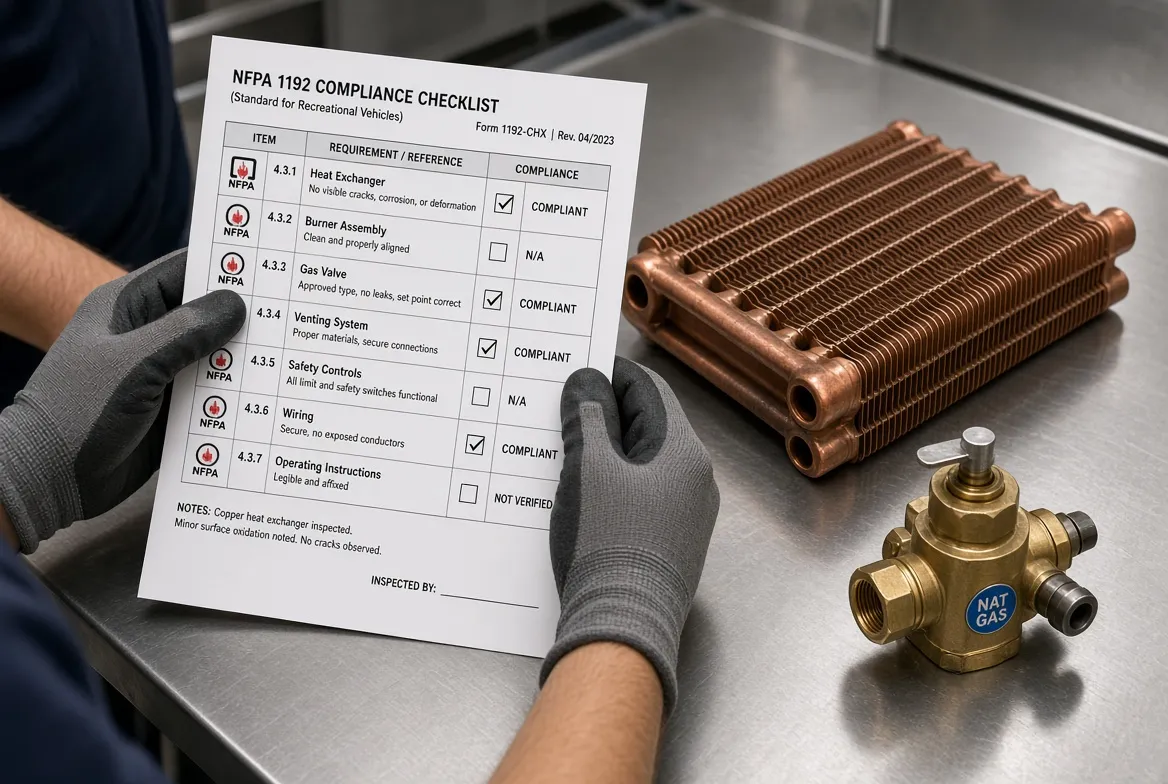
Q: What are the three most common pre-certification gas-line failures?
A: Unlisted hose or fitting, missing regulator vent limiter, and leaks at field-formed flare connections.
Q: What vent termination or exhaust errors appear most frequently?
A: Termination located behind a door swing, exhaust routed into a storage bay, and missing insect screens.
Q: Which defects only appear after vibration or heat cycling?
A: Cracked flare nuts, loose burner brackets, and chafed hoses at grommet pass-throughs.
Q: Which document omissions cause the most expensive rework?
A: Wrong edition listed on the test report, missing listing file for a valve, and no signed leak-test record on file.
Those answers are what RV appliance safety regulations look like in practice: the sticker is a program output, and the line record is the evidence.
🧠 Expert Insight: Ask any partner for the signed test packet before you accept the certification label. A supplier who hesitates is telling you something the sticker never will.
Why Do Insurers, Lenders and OEM Buyers Read the Sticker?
Why do insurance companies and lenders prefer RVIA-certified units? They read lower system risk and more complete documentation. A certified unit gives underwriters a known safety baseline: major systems meet a recognized standard, and the paperwork supports the claim. It does not grade craftsmanship.
Chief Engineers: Fewer Redesign Loops, Lower Recall Exposure
Certification shortens the integration path. Engineers compare the appliance listing against the chassis envelope once, not repeatedly. The RVIA framework and NFPA revision cycle give a fixed reference for clearances, which cuts redesign loops and recall exposure. One client cut a heater redesign from six weeks to ten days.
QC Managers: Repeatable Checks and Stronger Audit Trails
QC managers gain a repeatable stop and rework standard. The program defines what to inspect, what to record, and when to halt the line. Mei, the inspector, runs one checklist on every unit: listing verification, leak-test signoff, vent photography, and label validation. Trails stay searchable by serial number and serve as insurer evidence.
📈 ROI Check: Track first-pass yield and stop-ship rate over 90 days. A certified process should cut rework hours and shorten approval cycles.
Product Sourcing Leads: Easier Comparison, Fewer Approval Surprises
Sourcing leads can compare suppliers on a common compliance baseline. A complete packet shortens insurer and dealer approvals. Unit records, component listings, installation data, test logs, and inspection signoffs are on the certifications document library. For audits, connect with Amy Liang, Compliance Specialist.
Buyers sourcing a compliant RV water heater partner are not buying a boxed appliance. They are buying fewer production stoppages and fewer field surprises.
Challenges & Limitations of NFPA 1192 Compliance
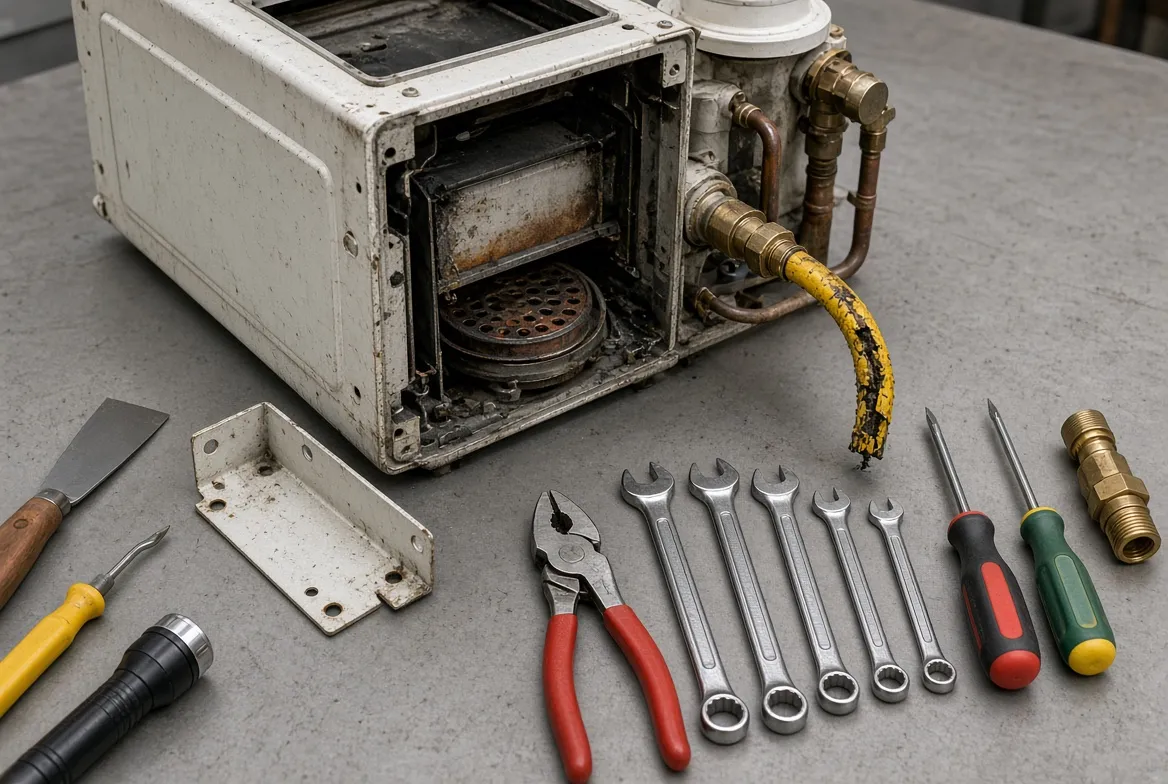
Buyers must always ask one simple question: what exact standard built this unit? Never trust a sticker alone. You need signed papers, test logs, and edition records. A brand claim, an attractive fit and finish, or a stamped label answers nothing about the gas run inside the wall.
Failed Teardown: Unmodified Water Heater Attempt
In the Foshan teardown analysis, an unmodified RV water heater passed a visual bench check. Mapping the full failure chain told a different story:
- Vent termination conflict: the vent sat behind the door swing and near a storage bay obstruction. Remedy: revise vent geometry, add shielding, and retest with the door open and closed.
- Clearance margin violation: the gap measured 8 mm against a 25 mm drawing minimum. Remedy: redesign the mounting bracket and add a photo QC hold point.
- Unsupported gas routing: the LP line crossed a steel frame edge without structural support. Remedy: reroute the line and update the routing drawing.
- Abrasion at pass-throughs: the hose rubbed against a raw frame edge. Remedy: add a grommeted penetration and clamp the new route.
- Unstable combustion under vibration: the burner bracket lacked vibration isolation. Remedy: add an isolation bracket and repeat flame stability testing.
- Missing water-side safeguards: the relief path had no defined drain route, and a bracket blocked drain access. Remedy: define relief discharge path, drain slope, and DWV vent coordination.
- Incomplete material evidence: the hose assembly had no accompanying listing file. Remedy: add listing files and a documentation control block to the build packet.
⚖ Trade-off: Corrected vent geometry and isolation brackets add engineering time, but they eliminate a predictable stop-ship failure mode.
Plumbing and Sanitation Consequences
RV plumbing system requirements are not just factory paperwork. Gulfstone verifies inlet and outlet support, relief path routing, drain slope, and waste/vent discipline. A bad drain route traps water, fouls the compartment, and hides a leak until the customer reports odor. The quality control process logs each check by serial number.
The Hard Limit
NFPA 1192 conformance is a safety baseline, not a durability warranty. It does not prove low-grade materials were never used, and it does not promise the unit will survive years of vibration and road salt. The record proves the build met the standard at inspection. It does not keep the build compliant later.
The Verdict on NFPA 1192 Compliance
For B2B procurement, ask whether the unit carries RVIA certification, then demand the proof: appliance records, line-side test data, and current-edition compliance evidence. NFPA 1192 defines the rules, the certification pathway proves conformance, and the manufacturing process decides whether it passes. Most failures hide there.
Two takeaways matter most. Never confuse safety certification with premium quality: a sticker proves baseline compliance, not superior materials or flawless assembly. And never approve a partner without line-side evidence, test records, and edition-specific paperwork. A signed certificate without matching factory records is a liability.
For OEM buyers, close every evaluation with this checklist: verify the standard pathway, certification program status, appliance integration details, pressure-test records, and rework history before signoff. The RV OEM solutions page sets out how those checks run on a vehicle platform.
Gulfstone runs the same tests and records on every RV heater it builds. Those records feed the after-sales claim structure when a unit fails in the field.
Start a review on the contact and RFQ page.
Transparency note: Gulfstone participates in manufacturing and certification preparation. Final compliance decisions rest with the applicable testing lab, code authorities, and market regulators. I receive no manufacturer kickbacks for these findings.
Frequently Asked Questions About an RV Water Heater: NFPA 1192 Compliance
1. What does the RVIA sticker actually mean?
The RVIA sticker means the unit meets baseline safety requirements through a manufacturer certification program, not that it uses premium materials or has flawless assembly. It is analogous to a building inspection signoff. The sticker is a program output, so buyers should request the line record and signed test packet behind it.
2. What exact standard was this unit built to?
Answering this requires unit-specific proof of the standard pathway, edition, installation method, and supporting records. A brand claim, attractive fit and finish, or a sticker alone is not sufficient. Engineering documents should name the exact applicable standard and edition, and Gulfstone locks the edition number in all purchase orders.
3. Why do insurance companies and lenders prefer RVIA-certified units?
Certification provides a known safety baseline and cleaner documentation, and standardized major systems are easier to price, finance, and insure. Certification does not prove superior craftsmanship. It proves major systems meet a recognized standard, and the paperwork supports that claim.
4. What is the difference between NFPA and ANSI?
The difference lies in the applicable standard pathway and the unit type defined on the build sheet. NFPA 1192 applies specifically to RVs. Adjacent ANSI pathways cover different product classes, including park model RVs under ANSI/RVIA A119.5. Engineering documents should always name the exact applicable standard and edition.
For supplier pre-qualification, program sourcing, or a line-side compliance audit, use the OEM/ODM development process to scope the work.
Product lines for the same RV platforms sit on the RV tankless gas water heater page.

Forward
Co-founder & General Manager, GulfstoneGas appliance manufacturing and certification
Most of what decides a gas appliance is settled before anything is built — on the drawing, at the cut-out, in the tolerance someone chose for the gas path. I have spent my working life on the manufacturing side of that decision, and this is where I write down what it has taught me.
Nothing here is written from a sales desk. Every note comes off the floor: a batch held until a reason was found, a fitting that failed in transit, an approval path that only made sense once the destination market was fixed. If you read these first, the opening conversation starts at the standard rather than at the beginning.
- Gas water heater engineering
- Design for manufacturing
- Certification path selection
- Private-label tooling
- Off-grid and outdoor water heating
- Top 8 Outdoor Portable Gas Water Heater Factories in China for B2B BuyersNov 4, 2026
- Custom RV Appliance Industrial Design: An OEM Brief to a Validated PrototypeNov 3, 2026
- How to Build Custom Thermostat UI Design Software for OEM Embedded PanelsNov 3, 2026
- Top 8 RV Water Heater OEM Suppliers Canada: Vetted for Volume BuyersNov 3, 2026
- Top 10 Portable Propane Water Heater Manufacturers USA: A No-Hype Buyer ShortlistNov 2, 2026
- PPWR Compliance Checklist for EU Water Heater Packaging: The 10 Documents Before the Container LoadsNov 2, 2026
Fifteen years in appliance manufacturing — home appliances, RV refrigeration, then gas water heating — from the drawing to the shipping container.
Leads Gulfstone's design-for-manufacturing reviews and the certification path selected for each destination market.
Works directly with OEM and private-label buyers on tooling, tolerances and the approval file.