Table of contents
- Key Takeaways
- Top 8 Camping Portable Water Heater Suppliers: The Buyer Shortlist
- Auditing a Gas Water Heater Leak and Hydro Test Line in China: 6 Steps to a Verified Line
- Sourcing the Build After the Shortlist
- Conclusion
- Frequently Asked Questions About Camping Portable Water Heater Sourcing
- 1. What Certification Does a Portable Camping Water Heater Need for the US, EU and Australia?
- 2. Can a Portable Propane Water Heater Be Used Indoors?
- 3. What Performance Specs Matter Most When Comparing OEM Models?
- 4. What Is the Normal Flow Rate for Portable Propane Camping Heaters?
- 5. How Are Portable Gas Water Heaters Leak Tested at the Factory?
- 6. How Do I Verify a Supplier Really Runs Leak Tests and Hot-Fire Tests?
Key Takeaways
- This shortlist of camping portable water heater suppliers in China ranks eight factories in a fixed procurement order, not as a blanket endorsement.
- Haobang is the scale pick; SEFFY is the most portable- and RV-focused name on the list.
- Verify model-level certificate scopes for every portable SKU before any deposit.
- The water-side hydrostatic test and the gas-side pressure-decay test must run at separate stations.
- Low-pressure startup below 0.3 PSI is the camping spec that decides field performance.
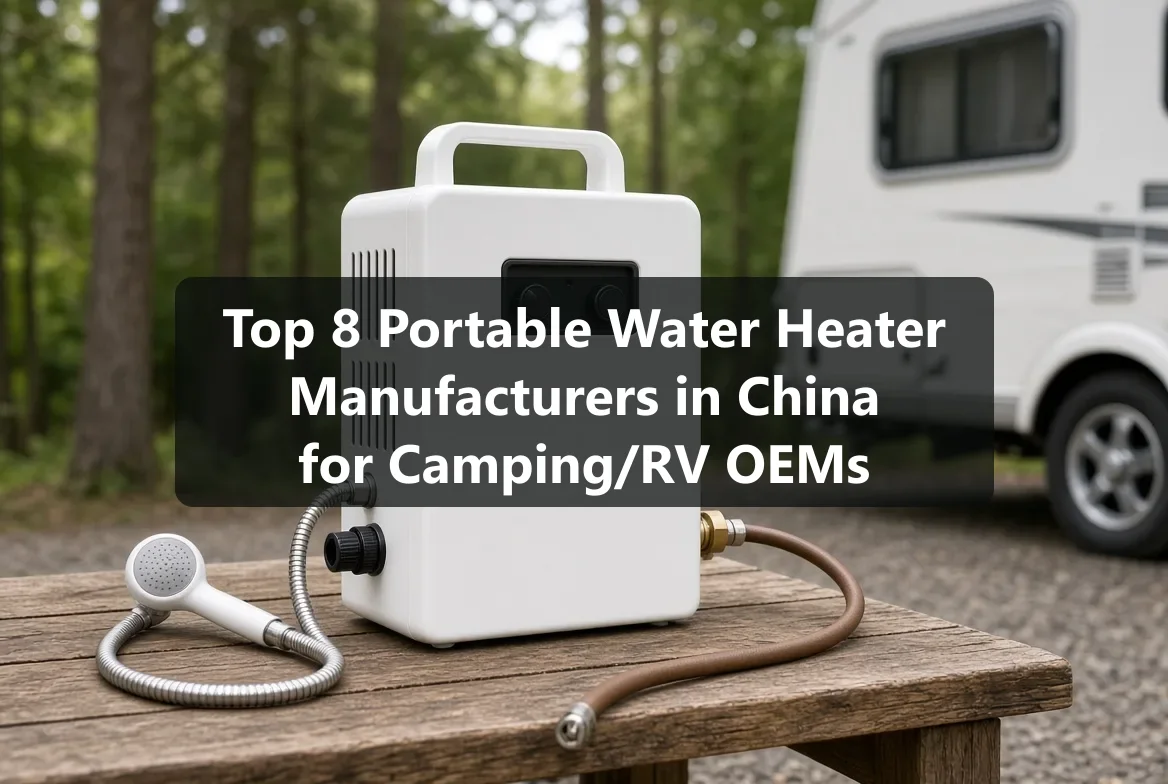
Most supplier lists sort by price and stop there. This one sorts eight portable water heater manufacturers and suppliers in China by whether they can carry a camping or RV OEM program: factory scale, portable-SKU depth, export paperwork and certificate scope.
Three weeks of audits, sample checks and certificate-file reviews sit behind the order. Each entry covers what the factory is strong at, where it stays thin, and what to confirm before an RFQ goes out. For category context, the Gulfstone portable water heater range shows how the product family splits.
⚠️ Caution: A generic CE or CSA certificate rarely names the portable SKU you are buying. Get the model-level scope in writing before the deposit leaves your account.
Top 8 Camping Portable Water Heater Suppliers: The Buyer Shortlist
The eight names below split into scale players, camping specialists and broad outdoor brands. Read the third column as the factory’s real platform, not its marketing line.
| Factory | Base | Platform and Strength | Best Fit For |
|---|---|---|---|
| Haobang | Zhongshan | Gas and electric, 500k units | High-volume gas programs |
| Vanka | Zhongshan | Gas heaters, flexible pilots | Mid-size OEM trials |
| SEFFY | Foshan | Outdoor, portable and RV gas | Camping/RV specialist lines |
| Gastek | Zhongshan | Multi-market gas OEM | Multi-market gas programs |
| Sanau | Zhongshan | Broad gas, stoves and heaters | Adjacent-category trials |
| Xiangji | Zhongshan | Full-chain gas, in-house cores | Compliance-heavy volume |
| ShuangMei | Zhongshan | Gas, electric, RV and camping | RV plus camping, one source |
| Everlead | Dongguan | Outdoor gear and camping kits | Multi-category outdoor brands |
A name in row one is not a better buy than a name in row six. The order follows a fixed procurement sequence: scale first, then fit, then compliance depth.
1. Haobang: Best Scale Pick for High-Volume Portable Heater Programs
Haobang has run out of Zhongshan since 1997: a 30,000㎡ plant, 100–150 staff and roughly 500,000 water heaters a year for export. Gas units, electric units and wall-hung boilers all leave the same site, with OEM/ODM support handled in-house.
Scale is not camping fit. Haobang is not an outdoor specialist, and portable SKU depth runs thinner than the dedicated brands below. Ask for ignition data at 0.3 PSI and under. Official MOQ sits near 500 units; in the January-to-March off-season, 200–300 often clears.
📌 Our Verdict: Haobang wins on manufacturing maturity. For a camping line, request a portable-specific certification matrix before signing, and do not assume boiler scale transfers to compact outdoor models.
2. Vanka: Best Mid-Sized Partner for Flexible OEM Trials
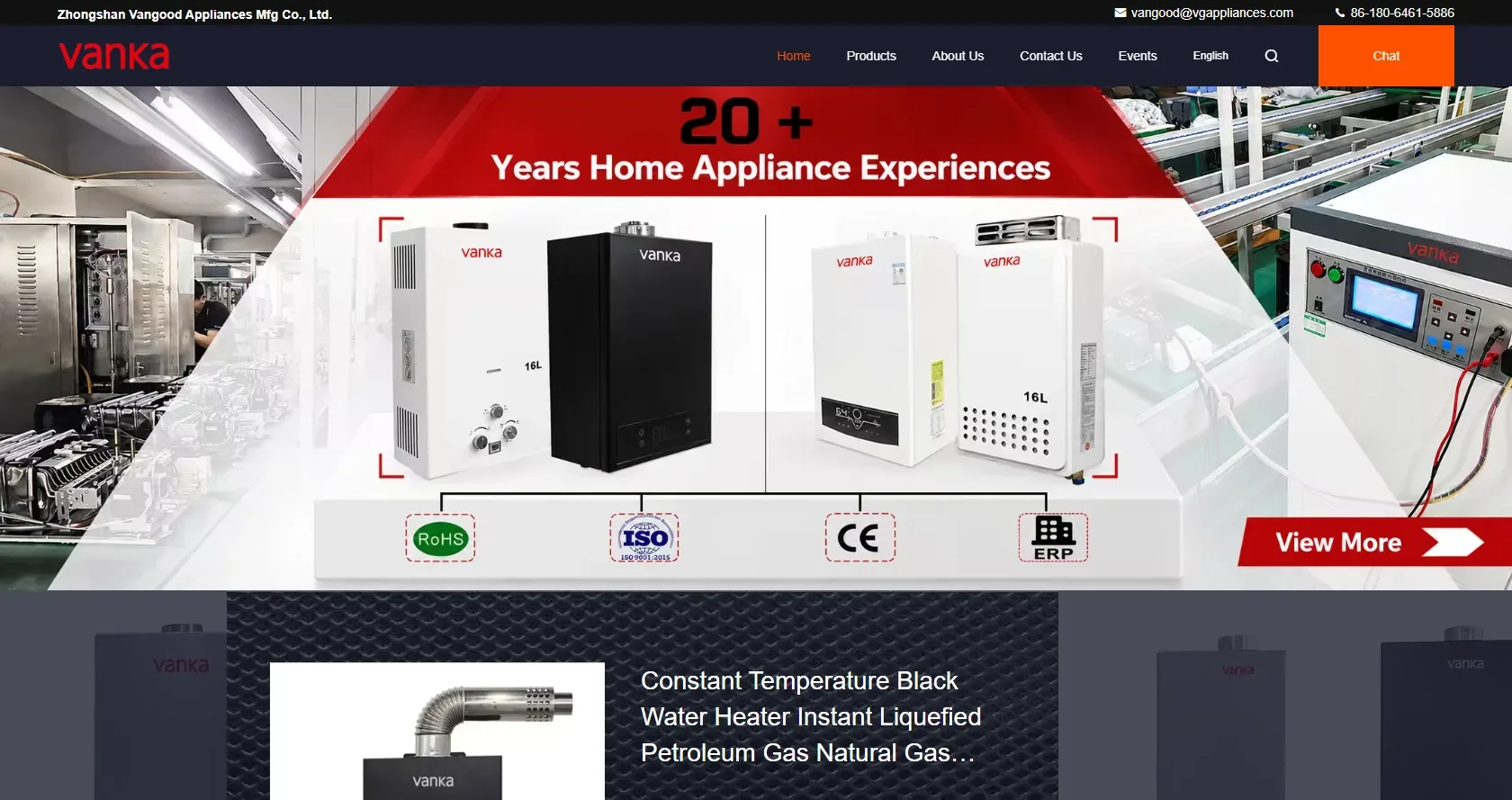
Vanka runs a 5,000㎡+ plant in Zhongshan with 50–100 staff, building gas water heaters, including outdoor and portable models, plus wall-hung boilers. OEM/ODM support and CE/ISO9001 claims are on the table.
Smaller size buys faster replies and lower trial MOQs, but it also means less public data. Sources list different start dates around 2001, so verify company history during onboarding. Four checks matter: the camping portfolio, the audit pack, certificate validity and pilot capacity.
📌 Our Verdict: Vanka’s size cuts both ways. Ask for model-level CE marking scope for your exact market, and a live video audit of the camping line, before any deposit.
3. SEFFY: Best Category-Focused Pick for Camping and RV Lines
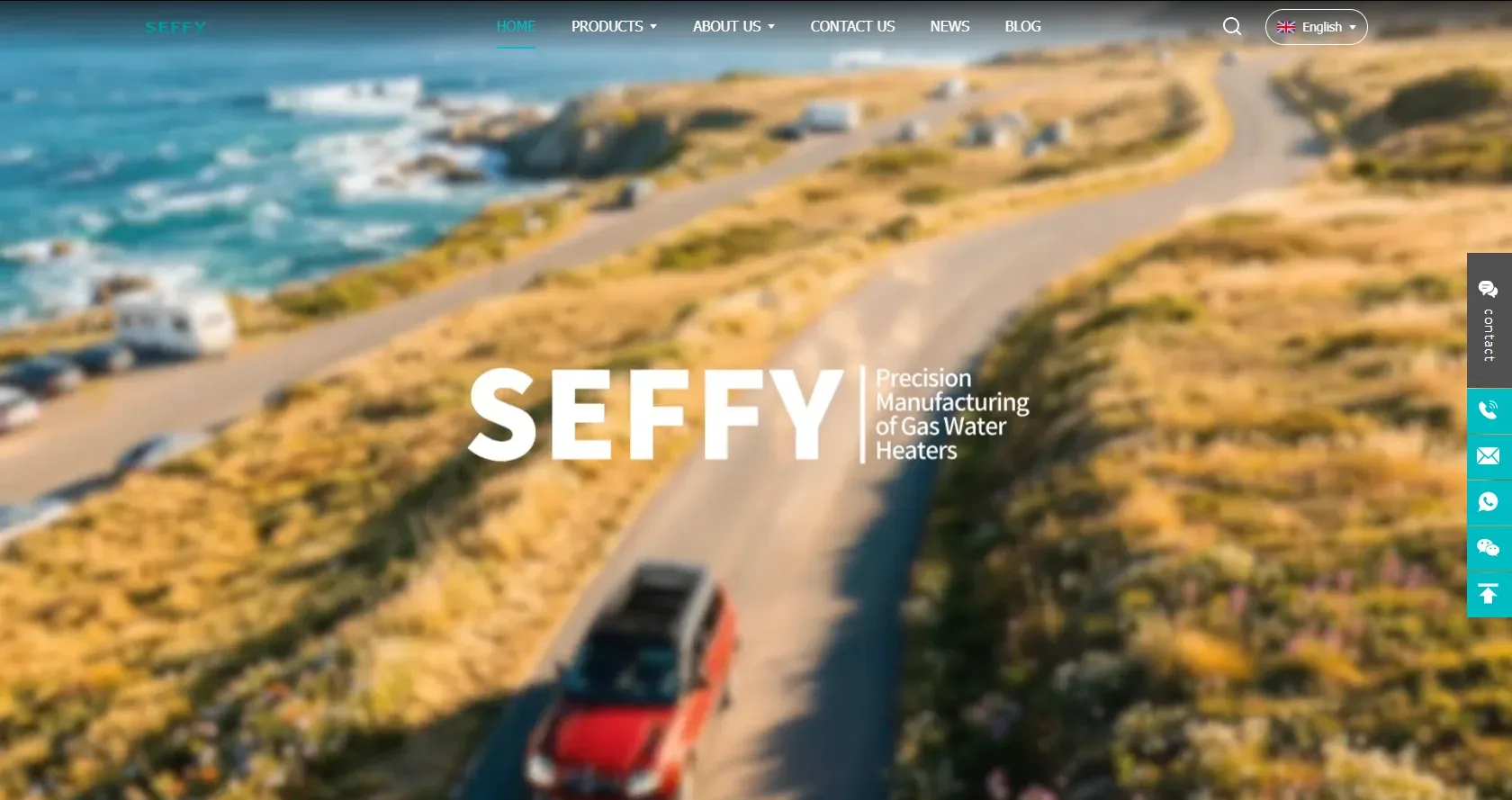
SEFFY, based in Shunde, Foshan, started in 2012 and runs a 10,000㎡ plant with 50–85 staff, claiming annual capacity near 500,000 units. The mix is portable, outdoor and RV gas water heaters, exported to 40+ countries under CE, AGA, CSA and ISO9001 claims.
Those claims are a starting point, not an approval. A SEFFY certificate file splits scopes by SKU, which is normal for a multi-market seller: CE and AGA for Europe, CSA for North America, AS/NZS for Australia.
Ask three questions. Does the temperature-control interface suit camping? Is the kit complete with showerhead, hose and valve? Can the factory ship regional variants without label mix-ups?
📌 Our Verdict: SEFFY is the most portable- and RV-focused name here. No purchase order until a SKU-level certificate matrix and a full accessory checklist are in hand.
4. Gastek: Best Multi-Market Gas OEM for Portable Relevance
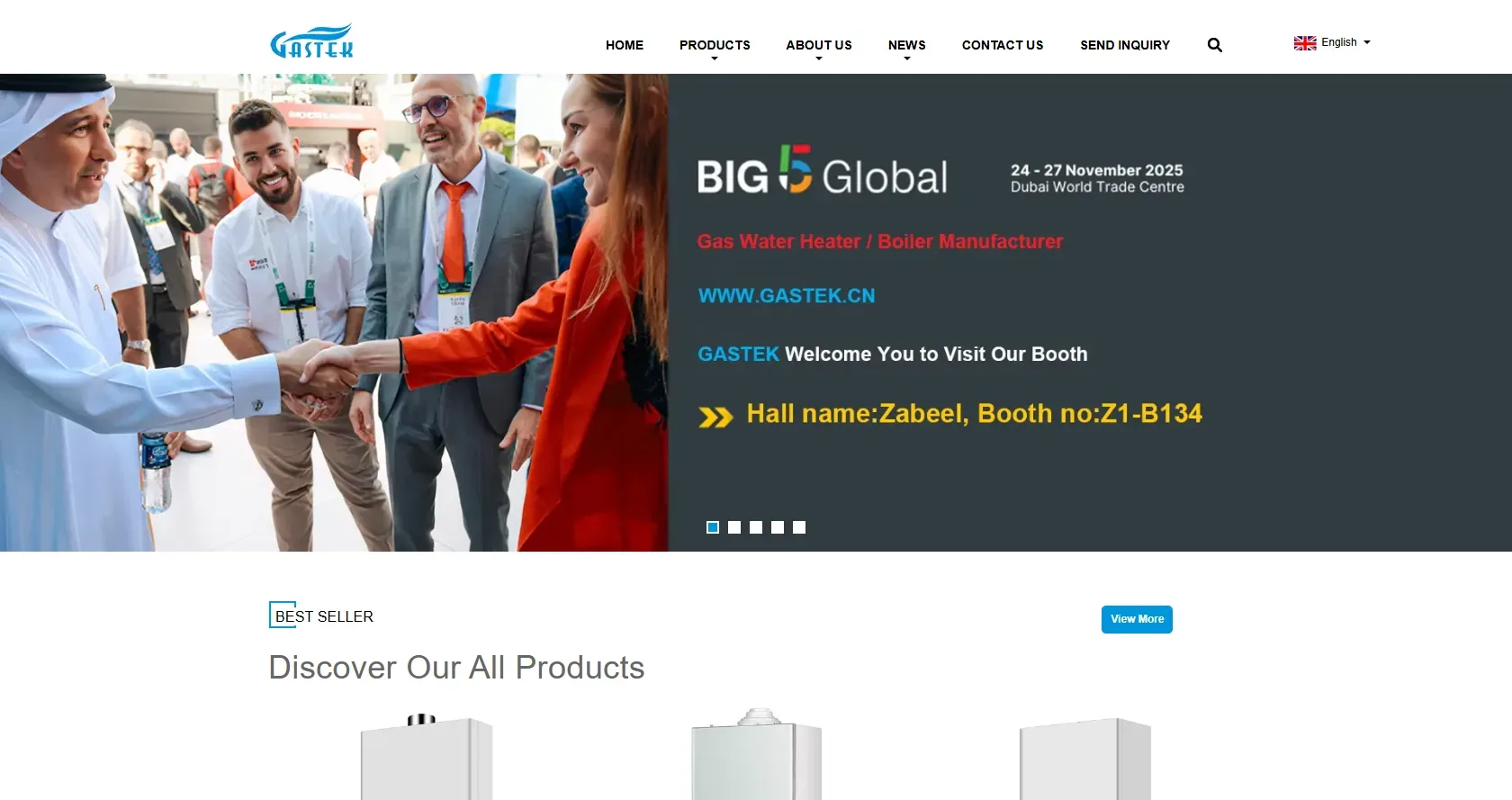
Gastek launched in Zhongshan in 2011 with roughly 50–200 staff. The core is OEM gas water heaters and gas boilers, with portable propane models in the mix, and certification claims spanning CE, CSA, AGA and ISO9001. That breadth suits buyers selling into several regulated markets.
A brand-level claim is not a model approval. Confirm four points: the portable lineup, burner and heat-exchanger materials, gas-pressure variants and recent end-of-line test records.
In one file check, a CE scope covered gas water heaters but never named the portable propane SKU, so the matrix went back to the factory.
📌 Our Verdict: Gastek fits an export-facing OEM with several market certifications. It does not fit a camping-only launch without extra model diligence.
5. Sanau: Best Broad Appliance OEM for Adjacent Camping Trials
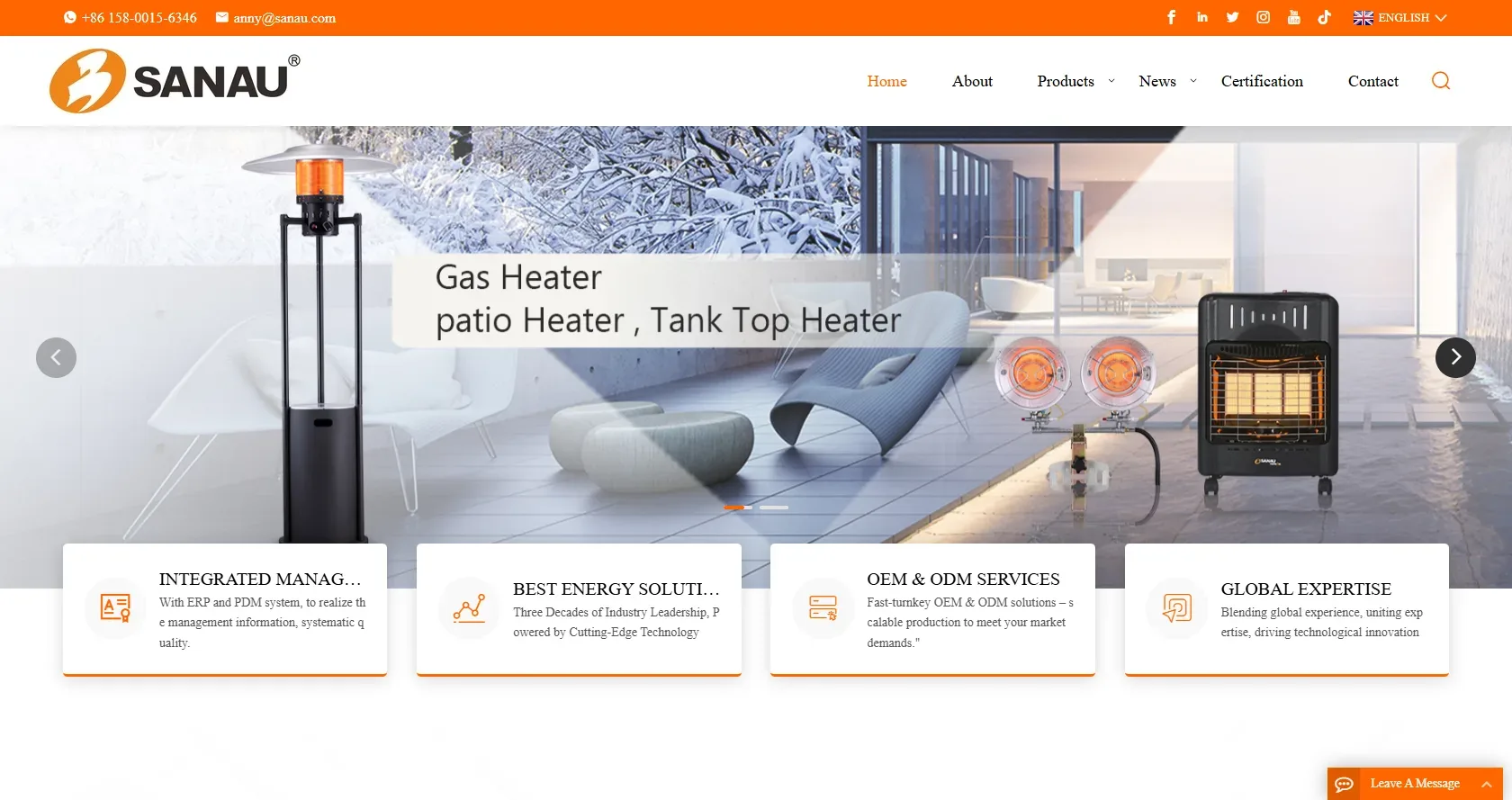
Sanau started around 2003 in Zhongshan with 100–200 staff. Water heaters, gas heaters and gas stoves run through one plant, with annual water-heater output near 200,000 units and OEM support alongside a small camping line.
Sanau makes sense when you already buy gas appliances and want to test a camping SKU without opening another factory. The risk is focus: camping is a side line, not the core. Ask whether the certificate pack holds per SKU, and whether Q3 heating season pulls capacity away from small camping orders.
📌 Our Verdict: Use Sanau for adjacent-category trials, not a dedicated camping program. Get a written peak-season capacity commitment and a SKU-level certificate matrix before the deposit.
6. Xiangji: Best Integration Play for Compliance-Heavy Volume
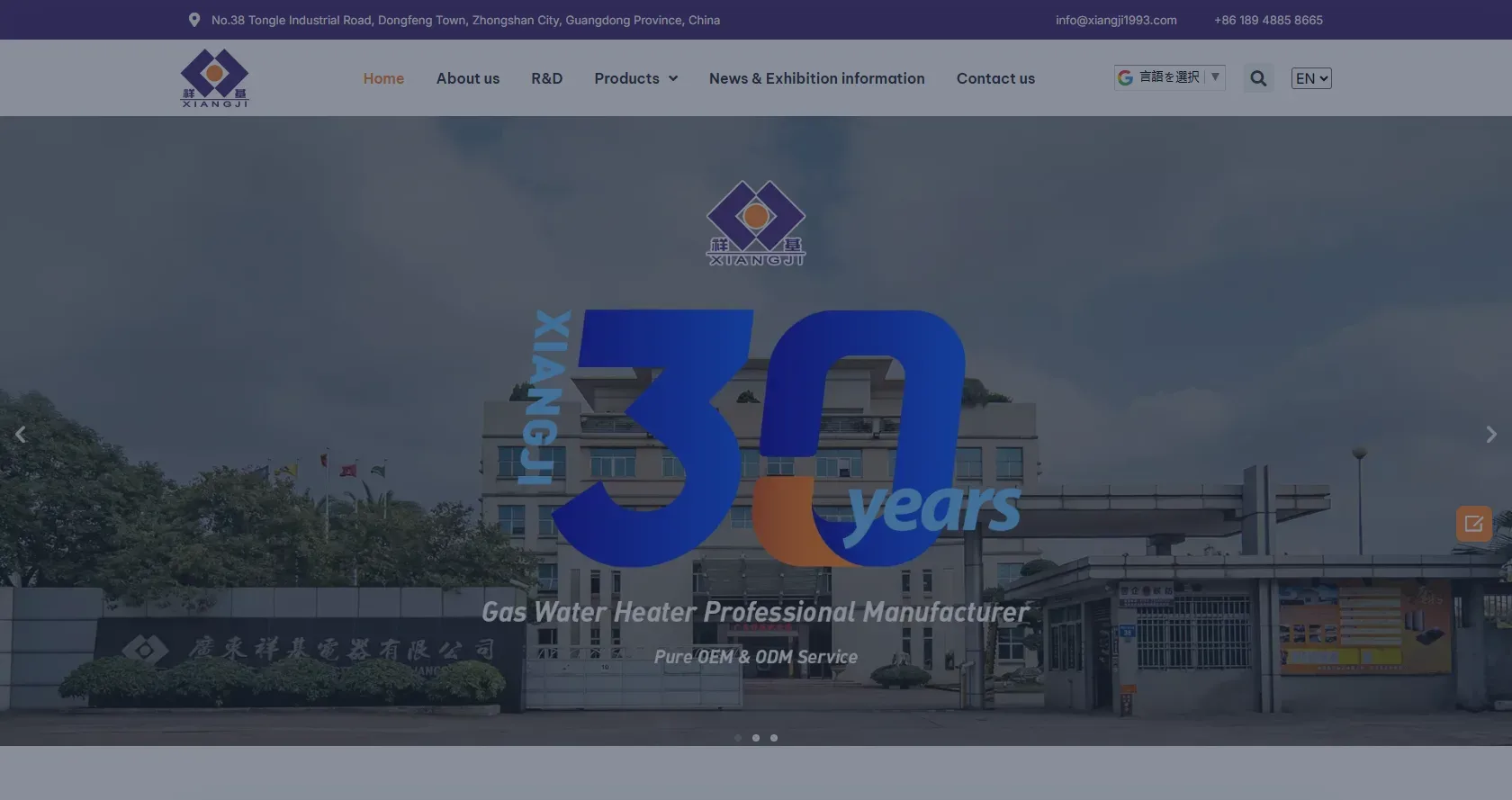
Guangdong Xiangji started in 1993, runs about 60,000㎡ with 800+ staff, and reaches annual capacity in the millions. Full-chain gas water-heater manufacturing runs in-house, including heat exchangers, which suits large programs that want upstream control.
Integration is the attraction and the warning. A platform this size can slow small custom runs, so ask for portable-specific design readiness, exact CSA Group, EN and AS/NZS certificate scopes, and a written sample schedule for niche outdoor SKUs.
📌 Our Verdict: Xiangji is a strong integration play for compliance-heavy volume programs. Treat its standard claims as a starting point, not as portable model approval.
7. ShuangMei: Best Dual-Line Source for RV and Camping
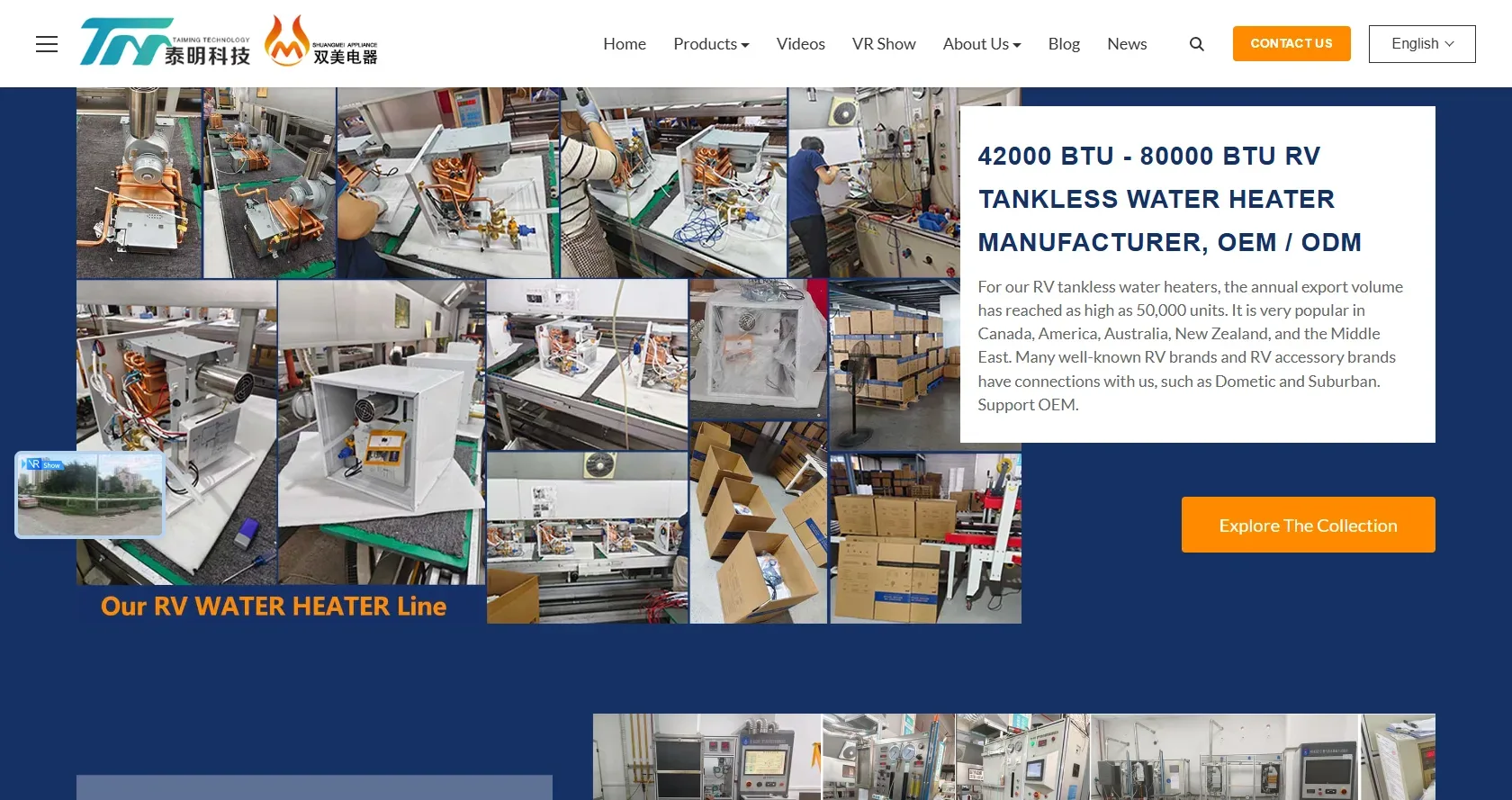
ShuangMei, tied to Taiming, sits in the 2015 establishment window in Zhongshan, running roughly 20,000–36,000㎡ with 60–100+ staff. Gas and electric water heaters, RV water heaters and camping lines share the site, with CSA, CE and AGA claims and OEM/ODM support.
The mix matters if you balance camping and RV programs, because one partner can quote a camper-van unit and a portable camping SKU. The risk is a verification project. Confirm the corporate and factory relationship behind the Taiming link, who owns each certificate, and how portable products differ from the wider RV and household lines.
📌 Our Verdict: ShuangMei fits buyers who need both RV and camping options from one Zhongshan source. Get a written line breakdown and confirm certificate ownership before the deposit.
Request a quote from ShuangMei
8. Everlead: Best Lifestyle Outdoor Partner for Multi-Category Brands
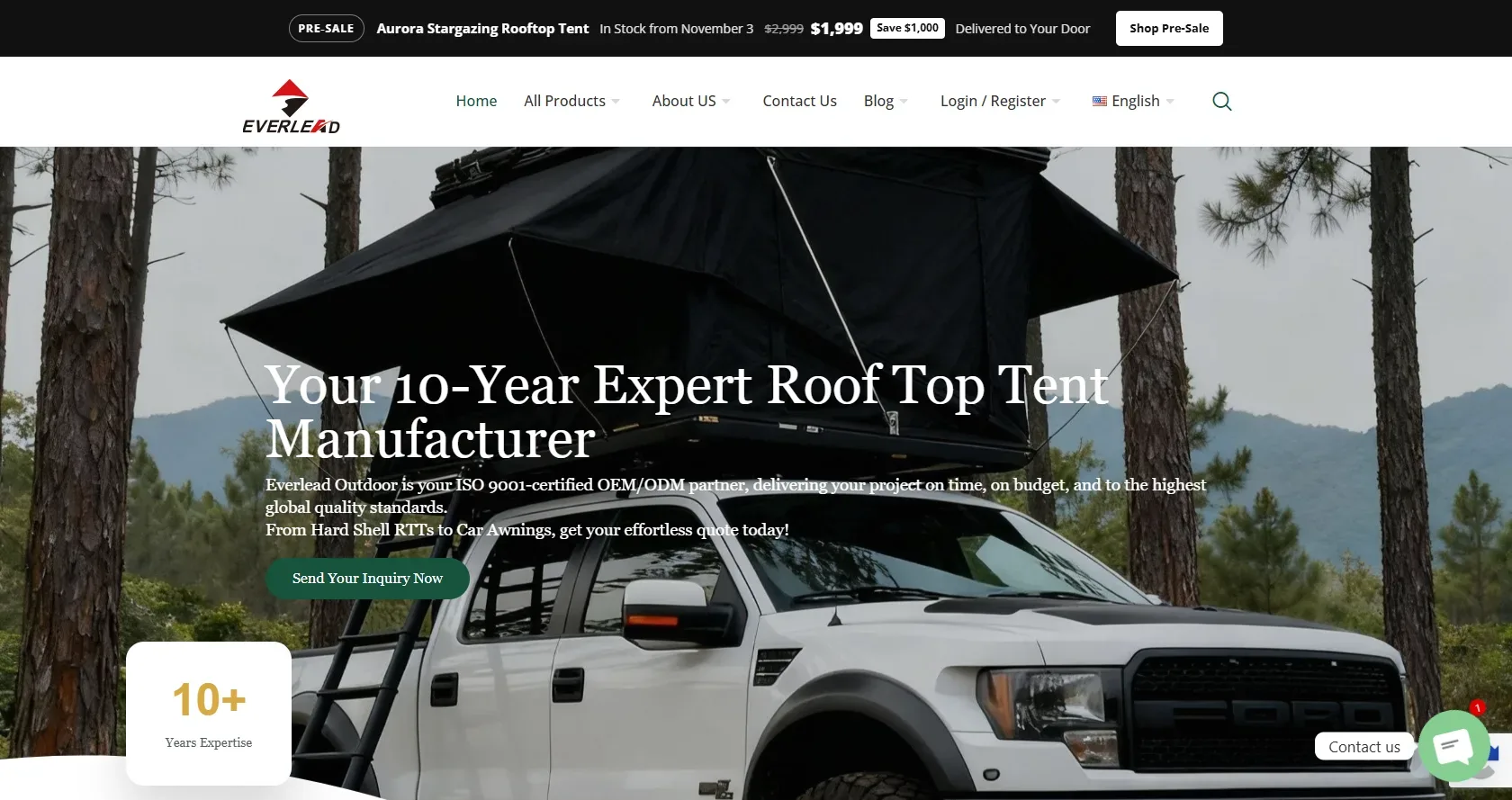
Everlead is a Dongguan outdoor-products maker with 10+ years in the category: portable gas water heaters, camping shower systems, rooftop tents and adjacent gear. As an OEM partner it offers thermostatic and knob-style heater options.
A field benchmark such as the BougeRV portable propane camping water heater is one comparison point. Against it, Everlead is the lifestyle-oriented partner.
That range is the buying angle, and breadth is not heater depth. Check camping specialization, battery-pump integration and real camp usability, plus whether it can carry certification-heavy propane programs.
📌 Our Verdict: Everlead is the most lifestyle-oriented name here. Use it for a multi-category outdoor program, then verify the heater file like a specialist.
Auditing a Gas Water Heater Leak and Hydro Test Line in China: 6 Steps to a Verified Line
A line audit turns on one rule: the water-side hydrostatic test and the gas-side pressure-decay test are two separate stations, never one blended step. This walkthrough covers portable tankless units only and mirrors the check that screens every supplier above.
On a recent Foshan line walk, the hydro station ran first, then pressure decay, then hot-fire burn-in. The water test covers the tank and heat exchanger. The gas test covers valves, joints and burner seals. If a factory blurs the two, walk away.
Step 1: Check Incoming Parts and Assembly Points
Start at incoming inspection. Open the heat-exchanger cartons and check braze points for pinholes, then inspect gas valves, burners, igniters, hoses and regulators. Match regulator inlet threads to the destination standard.
Watch the assembly line for torque drivers, wiring routes, seal placement and serial labels. Every unit needs a serial number tied to its test record, so pull one serial traceability sample. The quality-control gates generate the same records on Gulfstone’s own line, so a working file is easy to recognise.
Step 2: Run the Water-Side Hydrostatic Test
The water-side test comes first. On the lines audited here, the station holds the unit at 1.25 to 1.5 times MAWP for 3 minutes. A pass means no visible leak and no pressure drop above the written band.
Ask for the SOP, the gauge calibration date and the last 90 days of logs. Write down the setpoint, the hold time and the pass/fail band before leaving the station.
Step 3: Run the Gas-Side Pressure-Decay Test
The gas-side test is a separate station. Operators use dry air or nitrogen, then confirm each joint with bubble solution or a sniffer. Watch the decay hold and the joint-by-joint check.
End-of-line hot-fire burn-in comes next. The log must carry a timestamp and a serial number. Photograph the log header so the entries can be matched to physical units later.
Step 4: Compare Against Our Anonymized QC Snapshot
Gulfstone’s QA team pulled anonymized data from 12 recent portable tankless runs. These are our line numbers, not market-wide averages.
- Heat-exchanger line: 2.1% incoming reject rate, mostly pinhole braze leaks.
- Gas-valve line: 3.4% pressure-decay failures, mostly seat damage.
- Burner and igniter line: 1.8% no-start at low pressure.
- Final assembly: 0.9% seal leaks.
- Rework threshold: two failed decay tests trigger teardown.
Common defects foreign buyers miss: hose crimp burrs, regulator spring fatigue and loose igniter ground wires. The manufacturing drawing set shows where each of these sits in the build.
Step 5: Avoid the Three Audit Mistakes Buyers Make
Gulfstone’s lead QA director says three mistakes show up every month. First, buyers accept a generic CE claim with no scope; files often say “gas water heaters” and never name the portable SKU. Second, buyers fail to match gas pressure and fittings to the destination market. Third, they never ask for test records tied to serial numbers.
Line operator Chen put the valve problem plainly: “A 0.2 mm valve seat error fails the decay test every time.” Check certificate scope against the destination rule set, including the EU Gas Appliances Regulation and the CSA gas-fired appliance standards for North America.
Step 6: Use This Reusable Buyer Checklist
Turn the audit into RFQ actions:
- Ask for model-specific certification packets. The certification library shows the document shape to expect.
- Request the pressure-test SOP for both hydro and gas decay.
- Get heat-exchanger material specs, including braze filler and wall thickness.
- Confirm low-pressure startup thresholds for your target market.
- Ask for packaging and drop-test evidence.
- Require serial-numbered test logs for every batch.
🔬 QA Floor Note: A factory that cannot pull one serial number and hand you its test record in ten minutes has no traceability system. The paperwork exists for the audit, not for the order.
Sourcing the Build After the Shortlist
The shortlist narrows the field; the build decides the program. Once a factory clears the audit, the file moves into tooling, first-article approval and packaging before a container leaves Foshan.
The OEM/ODM programme covers that handover from drawing to shipment. Buyers handling cold-climate or high-altitude markets should read the extreme-conditions specification before the first RFQ.
💡 Key Insight: A factory that passes the line audit can still fail on documentation. Audit the file and the floor in the same visit.
Conclusion
Eight factories, four real camping specialists and four broad appliance makers. The order above is a procurement sequence, not a ranking of quality, and the certificate matrix is the file that decides whether a camping program survives customs and warranty.
Work the audit backward from the failure you cannot afford: a heater that will not light at 0.3 PSI, or a container held for a certificate that never named the model.
For a live comparison, the Gulfstone team reviews factory packs, joins supplier calls and builds the compliance checklist for an RFQ. No obligation attaches to the first pass.
I receive no manufacturer kickbacks for these findings.
Frequently Asked Questions About Camping Portable Water Heater Sourcing
1. What Certification Does a Portable Camping Water Heater Need for the US, EU and Australia?
For the US, look for model-level CSA/ANSI Z21.10.3 / CSA 4.3 coverage on gas-fired water heaters. Regulators reject brand-level claims that lack SKU-specific test papers. For the EU, check EN 26 plus CE marking and Gas Appliances Regulation compliance. For Australia and New Zealand, confirm AS/NZS 5263.1.2.
Scopes usually split by SKU in a certificate file review. Ask for a matrix naming the standard, model number and destination market for every portable model you import, and approve the RFQ only against that matrix.
2. Can a Portable Propane Water Heater Be Used Indoors?
No. A portable propane water heater is outdoor-only unless the manufacturer explicitly rates it for indoor use with proper venting. Carbon monoxide buildup is the main risk, and safety shutoffs do not replace ventilation.
Treat camping units as outdoor appliances. If a supplier claims indoor-safe operation, ask for the venting standard, clearance requirements and model-specific certification scope. Any indoor claim without a model-specific listing is a reject.
3. What Performance Specs Matter Most When Comparing OEM Models?
Focus on five specs: low-water-pressure startup, flow rate, BTU range, safety shutoffs, and gas pressure and fitting compatibility. Low-pressure startup matters most for camping. Units that struggled below 0.3 PSI failed camp use in testing.
Check flow rate at your target temperature rise, and confirm the shutoff type: flame-failure, overheat or low-oxygen. Match regulator and fitting threads to the destination market. A high BTU number means little if the unit will not light at low pressure.
4. What Is the Normal Flow Rate for Portable Propane Camping Heaters?
There is no single normal flow rate. Compare flow rate at your target temperature rise instead of relying on a headline number.
Confirm the BTU range, low-pressure startup and gas pressure and fitting compatibility for your market alongside it. Flow rate alone does not prove camping performance.
5. How Are Portable Gas Water Heaters Leak Tested at the Factory?
Portable gas water heaters are leak tested at two separate stations: a water-side hydrostatic test, then a gas-side pressure-decay test. The water-side station holds the unit at 1.25 to 1.5 times MAWP for 3 minutes.
On the gas side, operators use dry air or nitrogen and confirm each joint with bubble solution or a sniffer. Logs must carry a timestamp and a serial number.
6. How Do I Verify a Supplier Really Runs Leak Tests and Hot-Fire Tests?
Ask for serial-number-linked test logs. The water-side hydrostatic test and the gas-side pressure-decay test must run at separate stations. Request the pressure-test SOP, gauge calibration dates and the last 90 days of leak and hot-fire logs.
Pull one serial number and match it to a physical unit. Watch the decay hold, the bubble check and the hot-fire burn-in on the line. If the supplier cannot trace a serial number to a test record, treat the claim as unverified.

Forward
Co-founder & General Manager, GulfstoneGas appliance manufacturing and certification
Most of what decides a gas appliance is settled before anything is built — on the drawing, at the cut-out, in the tolerance someone chose for the gas path. I have spent my working life on the manufacturing side of that decision, and this is where I write down what it has taught me.
Nothing here is written from a sales desk. Every note comes off the floor: a batch held until a reason was found, a fitting that failed in transit, an approval path that only made sense once the destination market was fixed. If you read these first, the opening conversation starts at the standard rather than at the beginning.
- Gas water heater engineering
- Design for manufacturing
- Certification path selection
- Private-label tooling
- Off-grid and outdoor water heating
- Top 8 Outdoor Portable Gas Water Heater Factories in China for B2B BuyersNov 4, 2026
- Custom RV Appliance Industrial Design: An OEM Brief to a Validated PrototypeNov 3, 2026
- How to Build Custom Thermostat UI Design Software for OEM Embedded PanelsNov 3, 2026
- Top 8 RV Water Heater OEM Suppliers Canada: Vetted for Volume BuyersNov 3, 2026
- Top 10 Portable Propane Water Heater Manufacturers USA: A No-Hype Buyer ShortlistNov 2, 2026
- PPWR Compliance Checklist for EU Water Heater Packaging: The 10 Documents Before the Container LoadsNov 2, 2026
Fifteen years in appliance manufacturing — home appliances, RV refrigeration, then gas water heating — from the drawing to the shipping container.
Leads Gulfstone's design-for-manufacturing reviews and the certification path selected for each destination market.
Works directly with OEM and private-label buyers on tooling, tolerances and the approval file.