Table of contents
- Key Takeaways
- What Does Procurement Mean in Supply Chain?
- Which Manufacturers Make RV Appliances?
- The Ten-Step Bundling Sequence
- Negotiation Q&A: Gulfstone’s Sourcing and Technical Leads
- The Unified Pre-Load Inspection SOP
- Key Benefits: Why RV Parts Procurement Contracts Change the Math
- Where RV Appliance Bundling Breaks Down
- Final Verdict: When RV Appliance Bundling Pays Off
- Frequently Asked Questions About RV Appliance Procurement
A note on the figures. The cost comparisons and production numbers below come from Gulfstone client programs and floor observations in Foshan. Client-identifying details are withheld, so read them as evidence of a pattern, not an industry benchmark.
Key Takeaways
- RV appliance procurement bundling means sourcing, consolidating and shipping water heaters, grills and heating systems under one negotiated supply ecosystem.
- Bundling is not always ideal for projects with volatile order volumes, unstable product designs, or specialized appliances that need independent sourcing.
- It delivers value only when demand forecasts are stable, product categories share technical compatibility, and compliance requirements are mapped early.
- Maintain dual sourcing for critical valves and control boards, and keep 30 to 60 days of safety stock on hand.
- Many buyers overlook drawing alignment and compliance review. In one case, a 3mm flange gap triggered a nine-day production delay.
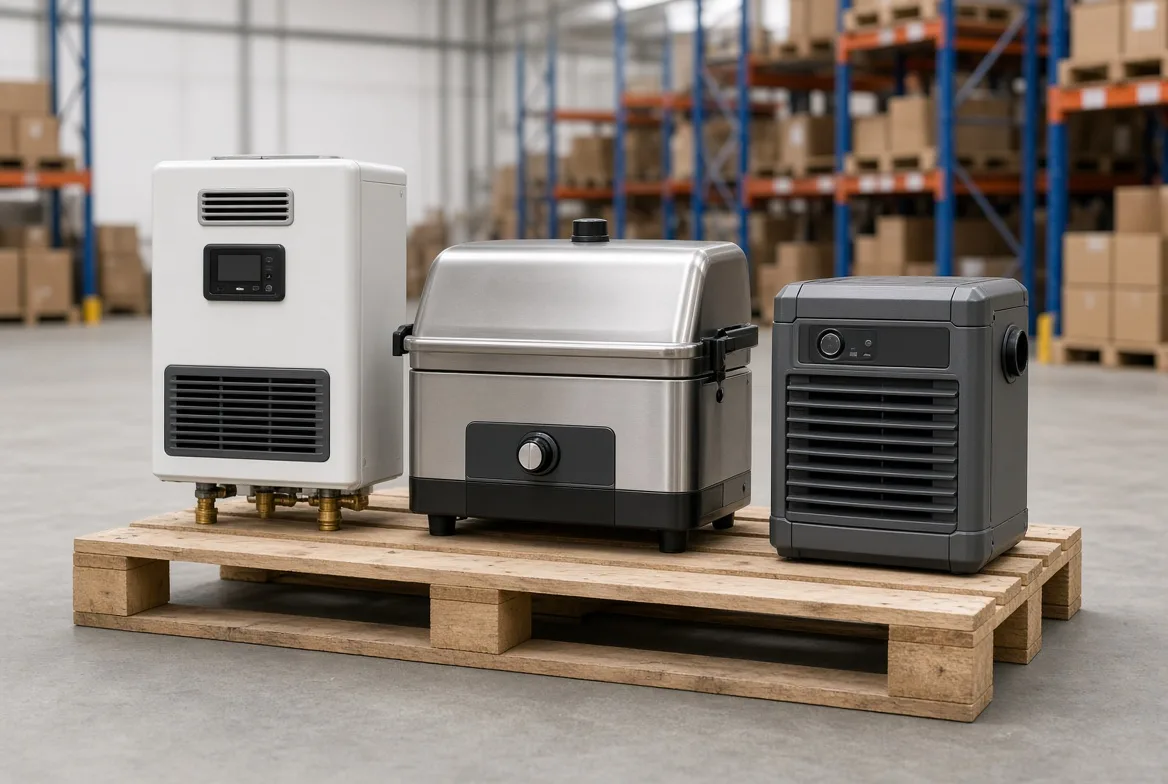
RV appliance procurement and supply chain covers the end-to-end practice of sourcing, consolidating and shipping water heaters, gas grills, heating systems and related outdoor appliance SKUs as one coordinated supply ecosystem — instead of managing a dozen disconnected purchase orders.
For this guide, Leo Chou, Senior Supply Chain & OEM Sourcing Specialist, joined factory-floor interviews with Gulfstone’s lead sourcing agent and lead technician to document the issues that surface in real production.
This guide stays tightly focused on RV water heaters, gas grills, heating systems and complementary outdoor appliance SKUs that can be negotiated, inspected and shipped as one integrated ecosystem.
This is not a consumer buying guide. It is a B2B margin and control strategy for RV OEMs running bundled appliance programs, including mandatory product safety requirements such as NFPA 1192 and the gas appliance standards published by CSA Group.
You will learn four core things: what procurement bundling truly is, how it operates on an execution level, where it protects gross margins, and where it can fail. I cover downsides objectively, including scenarios where bundling increases total costs rather than reducing them. The article closes with a brief conflict-of-interest disclosure.
What Does Procurement Mean in Supply Chain?
In an RV manufacturing context, procurement is the disciplined end-to-end process of sourcing, negotiating, approving, ordering and controlling every component that feeds the production line.
Buying represents only one single step; procurement covers the full end-to-end control process. For RV builders, RV appliance procurement bundling refines this concept.
It groups related appliance categories and accessory SKUs under one coordinated sourcing strategy. Pricing, technical fit, compliance, QC and freight are managed collectively instead of in isolated silos.
It is important to clarify what bundling is not. It is not simply asking one supplier for a volume discount. Nor does it mean automatically single-sourcing every critical component.
Across the 14 Foshan production zones, Gulfstone maintains dual sourcing for certain valves and control boards. Concentrating supply for these high-risk parts would increase operational risk, not reduce it.
Your BOM stakeholders will already recognize these key terms:
- Bill of materials (BOM): The approved parts list compatible with a specific RV floor plan.
- Golden sample: The signed reference unit used as the benchmark for all QC inspections.
- MOQ: The minimum order quantity a factory will tool up to produce.
- Source-to-contract: The full workflow from RFQ issuance through final signed supply agreement.
- Vendor-managed inventory and local safety stock: Inventory buffers held at the vendor site or close to your manufacturing plant.
- Line-fit compatibility: Whether a component drops into the pre-cut opening without extra rework.
- Landed cost: Unit price plus freight, duty, inspection and rework expenses.
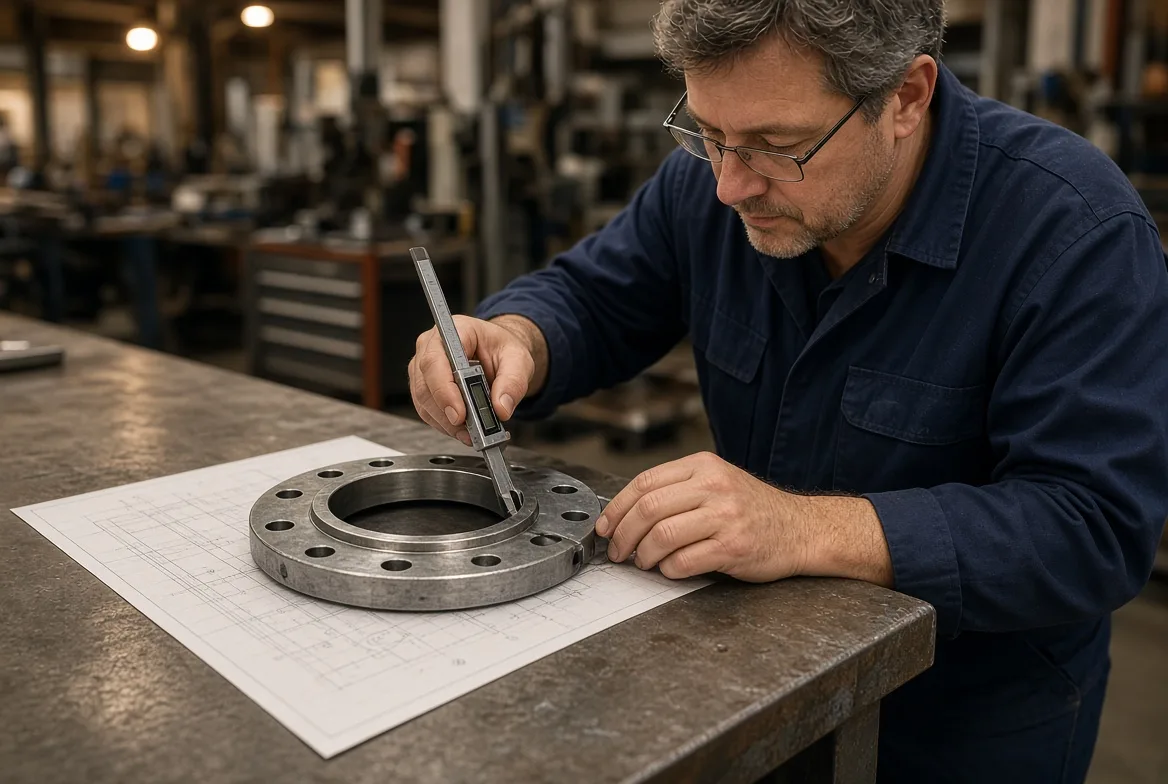
Gulfstone operates as both OEM and ODM partner, building products to client drawings or developing custom tooling on their behalf. Last quarter, the lead technician measured a heater flange against a client’s cutout and discovered a 3mm gap. The BOM marked the assembly as compatible, but the golden sample proved otherwise.
RV bundling differs from generic appliance purchasing because RV floor plans lock in core geometry. Cutout dimensions, power budgets, venting rules and gas-system constraints are all fixed.
Certification requirements are also non-negotiable, and NRTL listing marks such as CSA must accompany every shipment. The ANSI/NFPA 1192 standard governs RV vehicle construction, and this standard does not allow convenient last-minute part substitutions.
💡 Key Insight: Bundling succeeds when you evaluate geometry, compliance and freight as one unified decision. Separate these considerations, and your assembly floor will uncover mismatches.
Which Manufacturers Make RV Appliances?
The RV appliance market splits into three supplier groups. Large portfolio manufacturers produce appliances alongside broader building products.
RV-focused specialist brands engineer around fixed cutout geometry, 12V power limits and venting requirements. Integrated ecosystems pair in-house production with a network of audited partner factories.
This model follows a clear structure: one primary facility owns production for core categories, while a roster of pre-audited partners supplies remaining items.
Water heaters, grills and heating systems are then covered under a single purchase order and consistent inspection standard. The Foshan facility spans 72,000 square feet across 14 production zones, with more than 60 audited partner factories handling categories not manufactured in-house.
High-volume RV manufacturers, regional outdoor equipment wholesalers and distributors managing mixed-SKU container risk all leverage this structure for the same reason: fewer handoffs and fewer tolerance disputes.
When one vendor supplies the flange and another supplies the mounting bracket, no single party takes ownership of final fit.
Why bundling is built around the floor-plan BOM
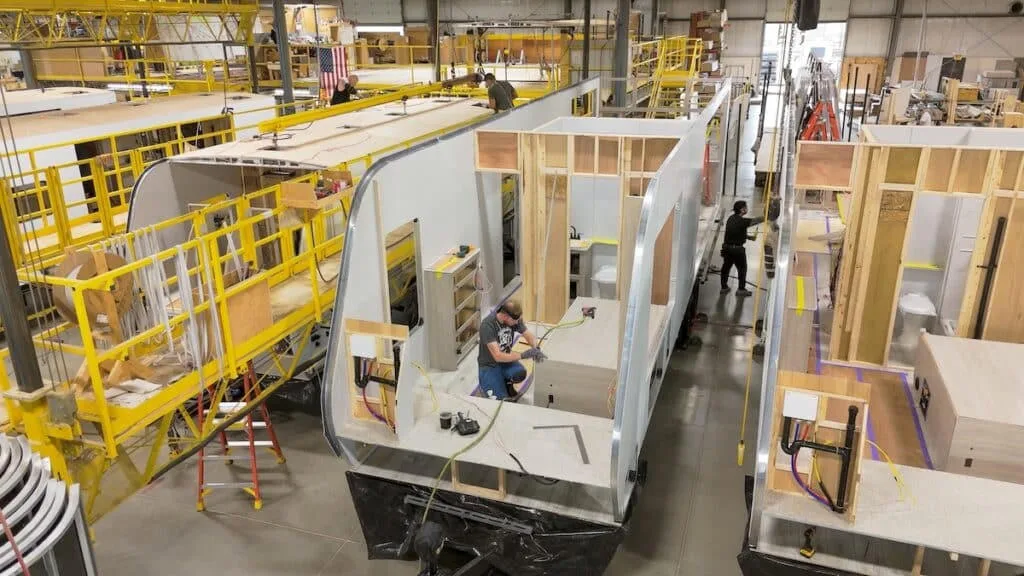
A floor plan is far more than a product name. It defines the complete parts architecture. Cutouts, gas lines, power feeds and venting paths are finalized before the sourcing team releases an RFQ.
This is why ad-hoc bundling initiatives fail. The lead technician sees this failure pattern every production season: “When the water heater flange, grill mount and heater control bracket come from three vendors with three different tolerance standards, the assembly line absorbs all the rework cost.”
Design your sourcing plan around the BOM, and competing category constraints disappear. Water heaters, grills, heating systems, control components, packaging specifications and spare parts requirements all align to one shared drawing set.
OEM component integration lives here. Review the RV OEM solutions page before locking in a bundled program.
Compliance must be addressed at this same stage. RV water heaters carry strict installation and listing requirements that cannot survive casual part substitutions.
Per-SKU compliance verification must be completed before mass production starts, not after freight is booked. A bundled program that skips this step will face delays at the receiving dock.
⚙️ Technical Detail: A bundled program is only as reliable as its tightest cutout tolerance. One inaccurate flange dimension can hold up an entire container.
The Ten-Step Bundling Sequence
These ten gate checks apply to every bundled appliance program:
- Forecast demand segmented by floor plan and season.
- Group technically compatible SKUs into one bundle.
- Align technical drawings and cutout dimensions.
- Verify compliance requirements for each individual SKU.
- Negotiate commercial terms across the full bundle scope.
- Approve golden samples.
- Schedule coordinated production windows.
- Carry out unified quality inspections.
- Consolidate container loading.
- Release shipment only after document review and QC sign-off.
Steps 3 and 4 are most commonly skipped by buyers. The lead technician once measured a heater flange against a client cutout and found a 3mm gap the BOM incorrectly marked as compatible. The team spent nine days reworking tooling to resolve the mismatch.
Negotiation Q&A: Gulfstone’s Sourcing and Technical Leads
Q: How do you kick off a bundle negotiation?
Lead sourcing agent: We request a 12-month forecast broken down by floor plan, then separate committed volume from directional volume. Only committed volume qualifies for locked pricing.
Q: Where does a pilot batch fit into this workflow?
Lead sourcing agent: Run one SKU from the bundle as a pilot first. If the pilot passes inspection, tooling credits roll into the remainder of the order.
Q: What value do annual volume commitments deliver?
Lead sourcing agent: They secure priority production capacity and metal-index pricing clauses. Volume alone cannot guarantee a Q3 production slot.
Q: How do tooling credits work?
Lead sourcing agent: Custom private tooling costs are amortized across the first committed production run. If the program terminates early, tooling stays with the factory unless the client purchases full ownership.
Q: How do you standardize packaging across different product categories?
Lead technician: One unified carton specification, one consistent pallet footprint and one shared barcode format. Mixed carton heights disrupt container load planning faster than any other factor.
Q: What about component-transparency clauses?
Lead technician: Valve and control-board supplier sources are documented in writing. Clients that maintain dual sourcing for these components reduce risk, and so does the factory.
🧠 Expert Insight: Committed volume buys guaranteed production capacity. Directional volume builds goodwill. Write forecast language clearly so all parties understand what they are agreeing to.
The Unified Pre-Load Inspection SOP
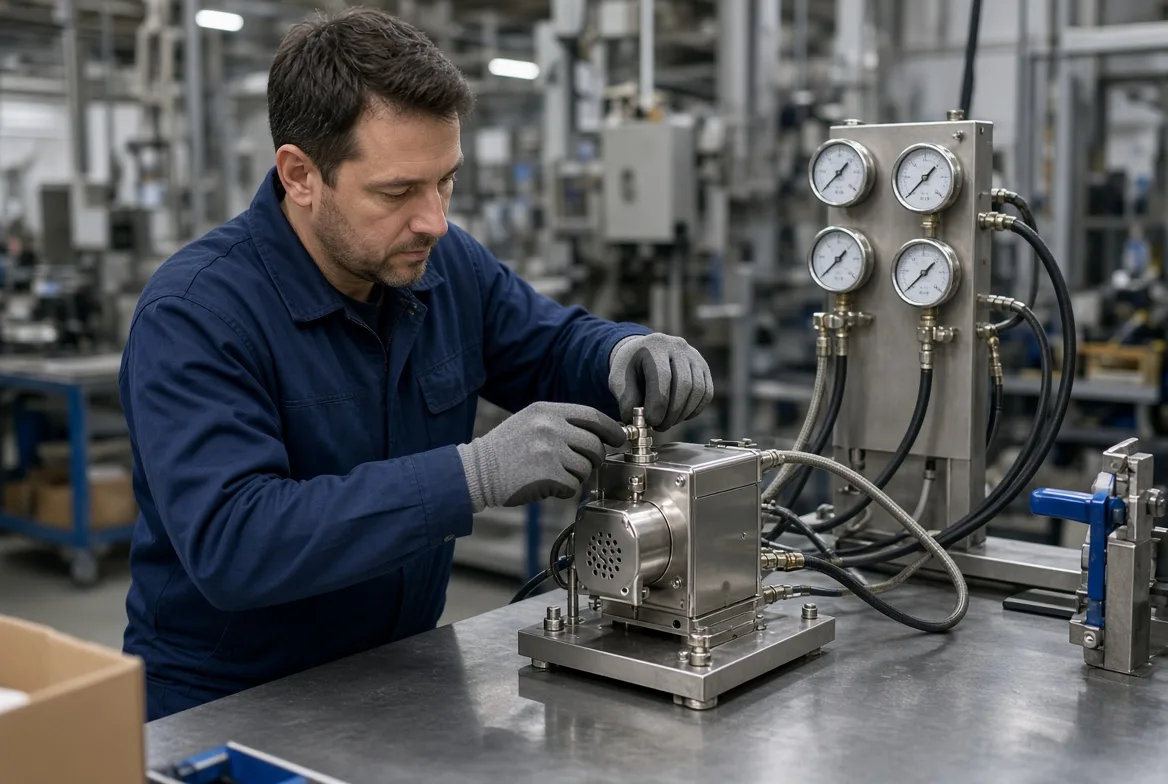
The QC supervisor runs this workflow before any container is sealed, with sign-off from the loading manager:
- Confirm model numbers and SKUs match the PO and floor-plan BOM.
- Validate listing marks and on-hand certification documentation.
- Inspect dimensions and cutout tolerances against the approved golden sample.
- Complete leak, pressure and electrical functional tests where applicable.
- Verify labeling, user manuals, barcodes and carton markings.
- Inspect carton compression, cushioning, palletization and loading sequence.
- Reconcile quantities, serial number ranges and pallet map before loading.
The loading manager takes photos of the final pallet map and files them alongside the full QC packet. For distributors shipping mixed-SKU containers, this documentation separates smooth receiving operations from costly chargebacks.
The checklist powering this SOP is a Python-generated PDF built in-house. It includes inspection gates, defect categorization, pass/fail fields, serial number logging, carton drop verification and document control sign-off blocks.
This checklist is not published for public download; it is shared with clients under NDA as an internal control document.
Key Benefits: Why RV Parts Procurement Contracts Change the Math
RV parts procurement contracts turn bundling from a purchasing preference into measurable savings and shop-floor control. Formalize this structure, and the bundled strategy delivers its intended value. Without this framework, you will revert to negotiating individual quotes separately.
1. Reduce landed cost across all SKUs. Fragmented sourcing splits freight, duty and PO administration overhead across dozens of vendors. One consolidated contract combines these into a single freight plan and one customs entry.
An anonymized internal CRM comparison of client programs shows bundled programs achieve lower landed costs compared to fragmented sourcing baselines.
Disclaimer: This is not a formal industry benchmark. The dataset covers fewer than twelve client programs with mixed seasonal conditions. Treat these figures as observed ranges, and recreate this comparison using your own quote history.
2. Turn annual volume into negotiation leverage. A standalone water heater PO only secures a unit price. A 12-month multi-SKU commitment unlocks flexible MOQs, tooling credits, packaging concessions and extended payment terms.
In Gulfstone client projects, the blended annual committed mix — not individual line-item pricing — shifted MOQ minimums and freight terms. The sourcing team negotiates only the committed volume slice to keep both parties accountable.
3. Improve line-fit compatibility before tooling. Aligned voltage draw, amp ratings, cutout dimensions, venting assumptions and carton specifications prevent assembly-line conflicts before production starts.
The technician caught a 3mm flange gap marked compatible on the BOM, which caused nine days of production delay. Contract language assigning clear ownership for tolerance control eliminates this type of issue entirely.
4. Cut coordination overhead. Fewer vendors mean fewer conflicting lead time promises, fewer gaps in certification paperwork and fewer partial shipments. One unified inspection standard replaces inconsistent quality processes from multiple suppliers.
| Dimension | Split-vendor model | Bundled ecosystem |
|---|---|---|
| Unit cost | Lowest per standalone quote | Parity |
| Freight | Billed separately by each vendor | One consolidated load |
| QC touchpoints | Repeated inspection at every factory | One unified SOP |
| Compliance workload | Rebuilt documentation per SKU | Centrally managed |
| Risk visibility | Fragmented information | Single pallet map & QC record |
The BOM performance data above comes from factory tours and floor-plan reviews, not marketing collateral. RV Industry Association shipment data highlights sharp seasonal demand swings, which is exactly why capacity commitments must be written into your contract.
📈 ROI Check: Track landed cost per floor plan, not per individual part. Always include freight, duty, inspection and rework expenses in your comparison.
For deeper cross-category integration, review the OEM & ODM solutions page.
Where RV Appliance Bundling Breaks Down
Three core pillars underpin any supply chain: supplier base, logistics flow and demand planning. Bundling impacts all three. Strong execution reinforces each pillar; loose execution introduces vulnerabilities. Last year across four RV client programs, five common failure points were documented, along with the corrective measures applied.
1. Supplier concentration risk can halt the line
Consolidating too much volume within one ecosystem means a single factory shutdown can pause your assembly line. One tooling failure idled a heater production line for 11 days. Compliance lapses and port congestion can trigger identical disruptions.
Maintain dual sourcing for critical valves and control boards. Hold 30 to 60 days of local safety stock or VMI for components that act as production bottlenecks.
2. Hidden economics enable sub-tier component swaps
Bundled pricing can obscure underlying costs. Tooling amortization, packaging upgrades, fuel surcharges and sub-tier component substitutions are wrapped into one all-in price.
Buyers frequently ask whether suppliers swap cheaper internal components to protect margins — this risk is real, especially for control boards. Mitigate it with formal component-transparency clauses and locked golden samples.
3. Mixed-SKU freight invites product damage
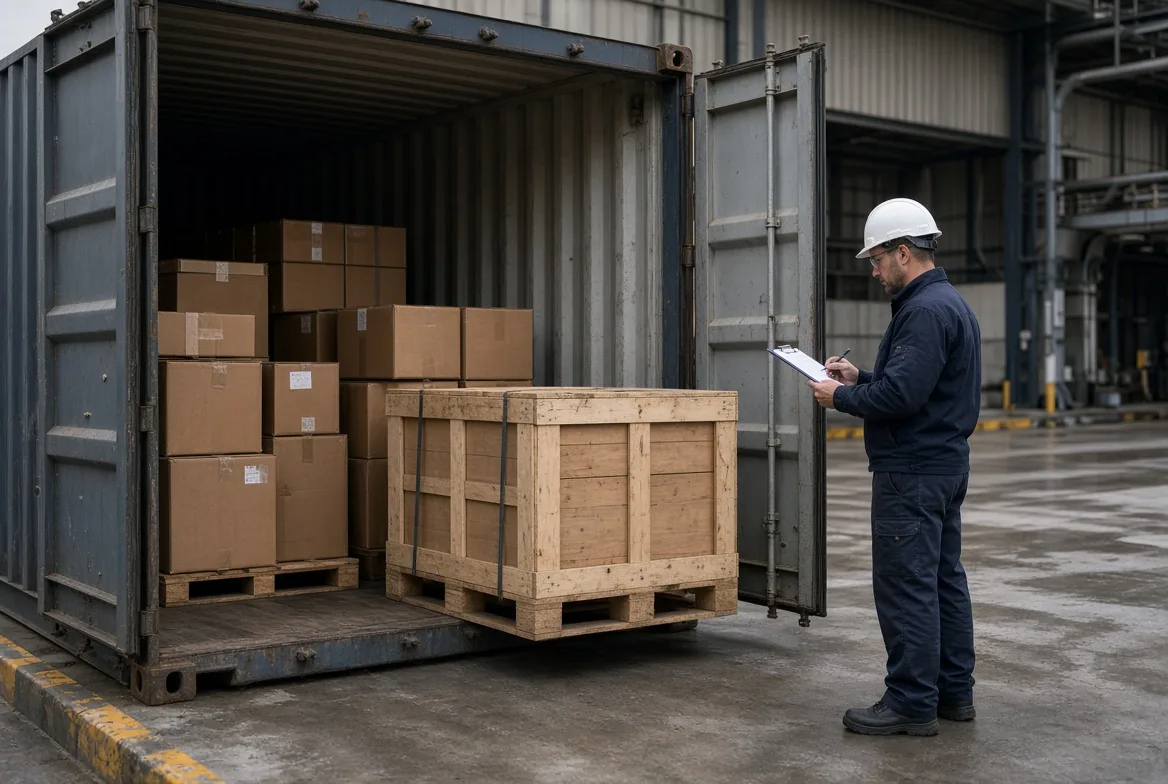
Heavy water heaters, fragile assemblies, gas components and small accessories cannot be stacked or protected using identical packaging. In a container stress test, inconsistent carton heights disrupted container stacking and caused dents to two finished units.
Prevent this with one standardized carton spec, uniform pallet footprint and a photographed pallet map stored in the QC packet.
4. Missing certification delays the full shipment
One incomplete compliance document package delays the entire shipment, not just one SKU. NRTL listing marks such as CSA must match line items on the commercial invoice exactly. One client lost nine days at port due to mismatched certification records.
Run a unified document review 30 days before vessel booking. The documents that travel with a shipment are catalogued on the certifications page.
5. Seasonal timing erases the planning advantage
Peak production windows, factory capacity competition and Lunar New Year shutdowns undermine bundling’s planning benefits. Late demand forecasts lose Q3 production slots to buyers who locked in commitments earlier. Pre-negotiate lead time buffers and confirm capacity in writing.
⚠️ Critical Warning: Bundling is not automatically the best choice for volatile volumes, unstable designs, or specialized appliances that require independent sourcing.
⚖️ Trade-off: You gain consolidated freight and one consistent QC standard, but accept tighter supply coupling. Late forecasts turn this coupling into production stoppages.
Final Verdict: When RV Appliance Bundling Pays Off
RV industry shipments continue to hit record levels while supply chain maturity improves. This growth makes procurement discipline more important than ever. Strong demand alone does not justify bundling every SKU; it simply raises the financial penalty for poor sourcing decisions.
Bundling delivers positive ROI only when four conditions are met: demand forecasts are stable, appliance categories share technical compatibility, compliance requirements are mapped early, and your supplier ecosystem can demonstrate rigorous inspection and freight coordination capabilities.
Satisfy all four conditions, and the model performs reliably. Real margin gains come from synchronized sourcing, synchronized QC and synchronized shipping — not chasing the lowest standalone unit price for individual appliances. One contract, one inspection standard, one container plan.
Use this final decision filter before committing: if your operation faces volatile demand, incomplete BOM governance, or heavy reliance on high-risk subcomponents, a hybrid model outperforms full bundling.
Bundle stable core appliances, source volatile low-volume SKUs separately, and dual-source all production-critical parts.
Sourcing disclosure: This article draws on internal process knowledge and anonymized commercial data from Gulfstone client programs. Cost savings vary widely based on your SKU mix, order volumes, certification requirements and shipment setup. I receive no manufacturer kickbacks for these findings.
Treat the observed performance ranges as directional guidance. It is worth recreating your own cost benchmark from your historical quotes.
If you would like a custom cost comparison built around your own data, request a bundled-procurement feasibility review via the Gulfstone contact page. Bring your floor-plan BOM and 12-month forecast, and Gulfstone will identify which categories are suitable for bundling and which should remain independently sourced.
Frequently Asked Questions About RV Appliance Procurement
1. What does procurement mean in supply chain?
In an RV manufacturing context, procurement is the disciplined end-to-end process of sourcing, negotiating, approving, ordering and controlling every component that feeds the production line. Buying represents only one step; procurement covers the full end-to-end control process.
RV appliance procurement bundling refines this concept, grouping related appliance categories and accessory SKUs under one unified sourcing strategy where pricing, technical fit, compliance, QC and freight are managed collectively.
2. Which manufacturers make RV appliances?
The RV appliance market splits into three groups. Large portfolio manufacturers produce appliances alongside broader building products.
RV-focused specialist brands engineer around fixed cutout geometry, 12V power limits and venting requirements. Integrated manufacturing ecosystems combine in-house production with audited partner factories.
Bundling is typically deployed within this third group because bundling is a sourcing execution mechanism rather than just a supplier vendor list.
3. What are the top three elements of a supply chain?
The top three elements of a supply chain are the supplier base, logistics flow and demand planning. Bundling impacts all three. Strong execution strengthens them; loose execution creates risk.
Last year across four RV client programs, recurring failure points were documented — from supplier concentration risk to mixed-SKU freight damage — alongside the mitigation tactics applied.
4. When does RV appliance bundling pay off?
RV appliance bundling delivers value when four conditions hold: forecasts are stable, appliance categories share technical compatibility, compliance requirements are mapped early, and your supplier ecosystem can demonstrate solid inspection and freight coordination capabilities.
If demand fluctuates heavily, BOM governance is incomplete, or a high-risk subcomponent gates production, a hybrid model works better: bundle stable core products and source volatile SKUs separately.

Forward
Co-founder & General Manager, GulfstoneGas appliance manufacturing and certification
Most of what decides a gas appliance is settled before anything is built — on the drawing, at the cut-out, in the tolerance someone chose for the gas path. I have spent my working life on the manufacturing side of that decision, and this is where I write down what it has taught me.
Nothing here is written from a sales desk. Every note comes off the floor: a batch held until a reason was found, a fitting that failed in transit, an approval path that only made sense once the destination market was fixed. If you read these first, the opening conversation starts at the standard rather than at the beginning.
- Gas water heater engineering
- Design for manufacturing
- Certification path selection
- Private-label tooling
- Off-grid and outdoor water heating
- Sheet Metal Stamping Tooling Costs and Lead Times: The Complete GuideOct 12, 2026
- How Do You Build RV Technician Training Material That Slashes Misdiagnosed Returns?Oct 11, 2026
- How Do You Build a High-Coverage RV Water Heater Spare Parts Kit for Fleets and Dealers?Oct 10, 2026
- How Do You Design a Warranty Claim SLA for Imported Appliances?Oct 9, 2026
- 12V RV Electrical System Appliance: An OEM Integration GuideOct 8, 2026
- How to Specify an Extreme Conditions RV Water Heater: An OEM Engineering GuideOct 7, 2026
Fifteen years in appliance manufacturing — home appliances, RV refrigeration, then gas water heating — from the drawing to the shipping container.
Leads Gulfstone's design-for-manufacturing reviews and the certification path selected for each destination market.
Works directly with OEM and private-label buyers on tooling, tolerances and the approval file.