Table of contents
- Key Takeaways
- What Is NFPA 1192 for RV Appliances?
- How Does RVIA Compliance Work for Appliances?
- 1. Confirm the target markets first
- 2. Define the appliance certification paths
- 3. Establish and lock the compliance BOM
- 4. Complete the NRTL submission package
- 5. Integrate certified appliances into the vehicle
- 6. Run the assembly-line pre-audit SOP
- 7. Assign ownership for each inspection node
- 8. Sort the global market differences
- What Does a Launch-Ready Compliance System Deliver?
- Why Do First-Pass Audits Fail? What Did 40+ Batches Show?
- Challenges and Limitations
- Final Verdict: The True Cost of Launch-Ready Compliance
- Frequently Asked Questions About RV Water Heater Certifications
A note on the figures. The pre-audit data and field observations below come from Gulfstone QC records and production-batch reviews in Foshan. Client-identifying details are withheld, so read them as evidence of a pattern, not an industry benchmark.
Key Takeaways
- RV water heater certifications are official documentation verifying that appliances meet the safety, performance and installation standards required for legal sale and installation.
- NFPA 1192 governs the RV vehicle itself, while dedicated appliance certifications cover the water heater as a component — the two never substitute for each other.
- Gas units comply with ANSI Z21.10.3 / CSA 4.3; electric storage or electric-assist units add UL 174.
- Lock the 17-item compliance BOM and the assembly-line test protocols before the first laboratory submission.
- Freezing design, testing and documentation before third-party review is what prevents retest cycles and budget overruns.
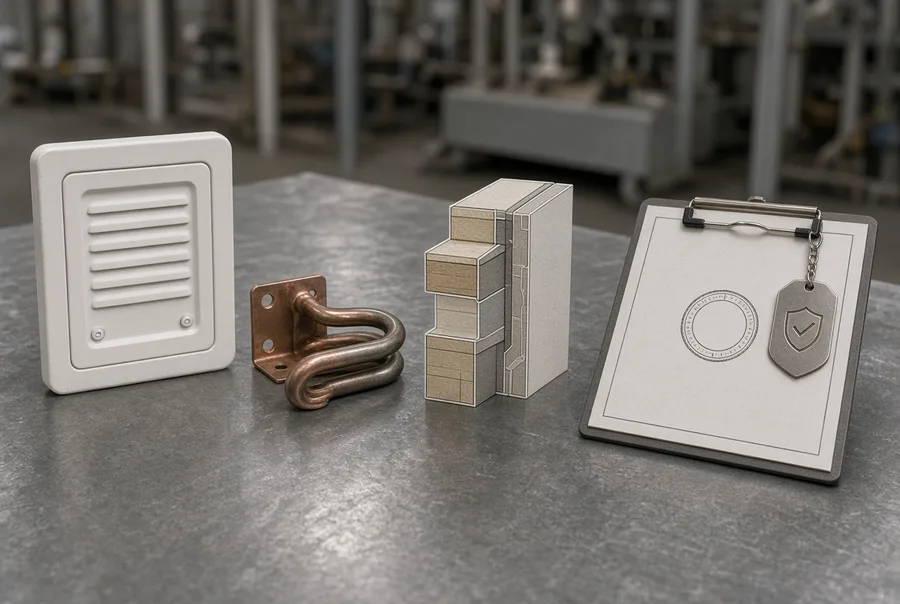
RV water heater certifications are official proof that a heating appliance satisfies the safety, performance and installation criteria required for legal sale and installation in a target market.
A single missing certificate, a flawed lab submission or an incomplete factory record can delay an OEM launch, block a shipment or halt an audit approval for months. It is one of the most common and most expensive pain points across the RV supply chain.
This guide draws on internal reviews of more than 40 pre-audit production batches, cross-checked against the official industry standard documents. It is written for senior OEM and procurement professionals who need launch guidance, not abstract technical jargon.
RV compliance is not one certificate. It is a system: appliance certification listings, RV vehicle installation compliance, periodic factory inspection and standardized after-sales service rules.
The RVIA seal certifies that member-manufactured vehicles meet the standards and pass regular audits. ANSI/CSA and UL standards form the underlying product framework, each with its own inspection rules, renewal cycles and service requirements.
This guide carries specific field data: the pre-audit failure modes seen most often on gas pressure relief valves and high-limit temperature switches, the assembly-line SOPs for flame-failure response, CO emissions and insulation resistance, and a compliance benchmark covering North America, Australia, New Zealand and Europe.
Our compliance benchmarking work also includes technical consultations with Guang Yang, a pressure vessel and third-party inspection specialist with field experience across SGS, TÜV and BV.
Design validation, laboratory submission, factory record management and RV vehicle integration must all align before a unit is launch-ready. The first step is to be precise about what each certification layer actually covers.
What Is NFPA 1192 for RV Appliances?
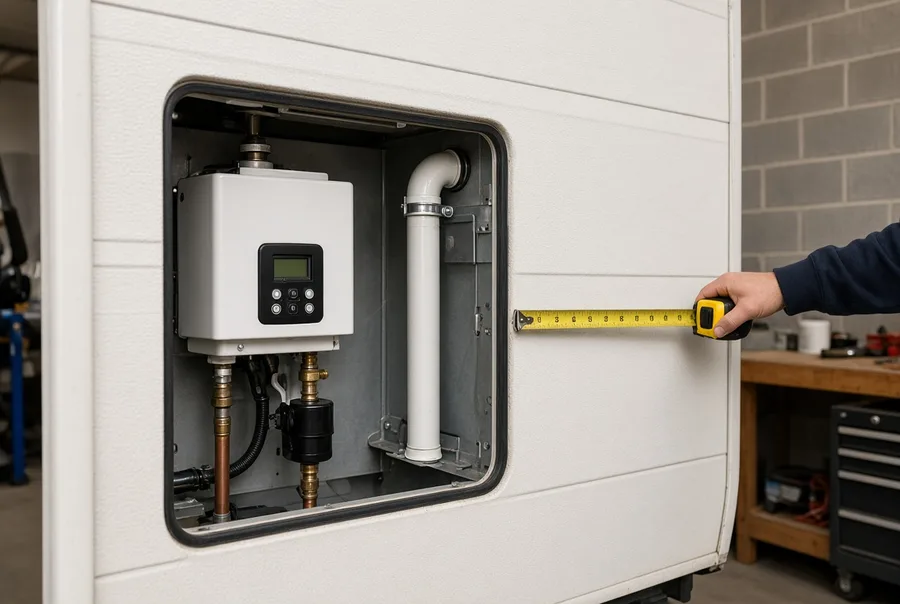
NFPA 1192 is the vehicle-level fire safety and life protection standard for new recreational vehicles. It sets mandatory rules for the installation, ventilation and safety protection of every appliance and system inside a finished RV. It does not replace standalone product certification for an individual appliance.
Our pre-audit reviews confirm the leading cause of OEM launch delays is confusing NFPA 1192 vehicle rules with component-level certification.
The relationship mirrors building codes and product safety: household appliances need independent safety certification, while the building’s wiring and gas piping must meet local construction codes. NFPA 1192 is the RV industry’s installation code.
Per official NFPA guidance, the standard is not a standalone design manual. It must be used together with the appliance-specific standards.
Four core benchmarks must be kept distinct to avoid compliance errors:
- ANSI Z21.10.3 / CSA 4.3: the unified standard for gas-fired water heaters, including instantaneous tankless models, with RV installation named in its official scope.
- UL 174: the standard for electric storage tank water heaters, applying only to RV units with a storage tank or electric auxiliary heating.
- NFPA 1192: the RV vehicle-level fire safety and life protection standard for new recreational vehicles, not a design certification for a standalone appliance.
- RVIA compliance program: a membership-based program requiring members to build to NFPA 1192 and other standards, subject to unannounced factory audits, with qualifying finished vehicles eligible for the official RVIA seal.
💡 Key Insight: NFPA 1192 governs the whole RV vehicle system, while independent appliance certifications govern individual component safety and performance. A market-compliant product needs both — neither substitutes for the other.
A common misconception is that a CSA or ETL appliance listing exempts a product from RVIA and NFPA vehicle compliance. The reverse error is just as common: RVIA membership does not replace mandatory appliance certification. Successful OEM programs hold dual compliance at both levels at once.
Each layer has its own failure mode. In one recent case, a fully certified water heater was rejected at factory inspection for vent routing that violated NFPA 1192 clearance.
In another, a vehicle audit failed on nothing but an outdated UL 174 file — two different problems needing two different fixes. Sorting the four tiers apart is the first module in Gulfstone factory training, and it is what eliminates cross-standard misunderstandings.
How Does RVIA Compliance Work for Appliances?
RVIA compliance operates at the finished-vehicle and manufacturer-membership level, not the component level. Member manufacturers commit to building to the established standards — primarily NFPA 1192 — and accept routine unannounced factory inspections. Only finished vehicles that pass full verification may carry the RVIA seal.
An individual water heater cannot hold RVIA certification on its own. It must meet a dedicated product standard instead: gas-fired units follow ANSI Z21.10.3 / CSA 4.3, while units with electric storage or auxiliary heating follow UL 174. Every certified unit must maintain production quality that matches the approved design.
Working with the Gulfstone lead quality manager, the review covered more than 40 pre-audit production batches verified on site, with full-shift monitoring of the burner test stations. The standardized RV water heater compliance launch sequence is laid out below.
1. Confirm the target markets first
Market positioning drives the engineering specification; it is not a documentation task handled after design. We sort projects into three groups: North America only, North America plus Australia and New Zealand, and North America plus EU or UK.
The market decides gas classification parameters, the certification document package, label specifications and ventilation design. A unit calibrated for an 11 in. WC propane manifold for North America cannot pass EU EN 26 without reworking injector sizing and flue terminal clearance.
2. Define the appliance certification paths
Gas-fired RV water heaters are certified primarily under ANSI Z21.10.3 / CSA 4.3, whose official scope names RV installation. Any unit with an electric storage tank or electric auxiliary heating must additionally meet UL 174.
Dual-function units — gas heating with 120V AC electric assist — must comply with both frameworks at once, with a single unified test plan filed for bench verification.
3. Establish and lock the compliance BOM
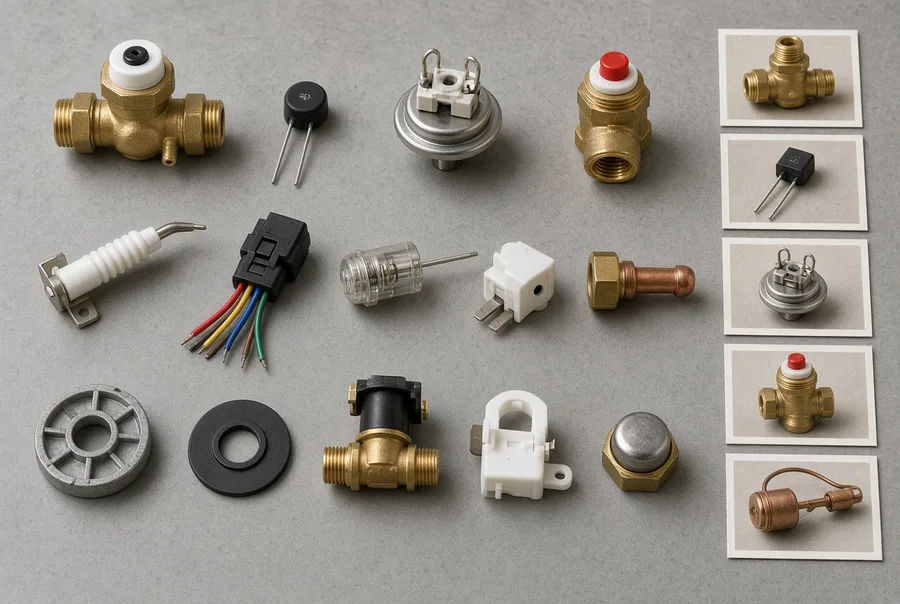
Before laboratory submission, Gulfstone finalizes and freezes the BOM for 17 safety-critical components: gas control valves, thermistors, ECO high-limit devices, pressure relief valve assemblies, insulating wiring and ignition components.
Each part is recorded with a fixed vendor number, drawing revision and sample photo in the master compliance file.
Locking critical component specifications early is essential. Any post-certification change to a safety component triggers a full retest review, not a simple document update.
4. Complete the NRTL submission package
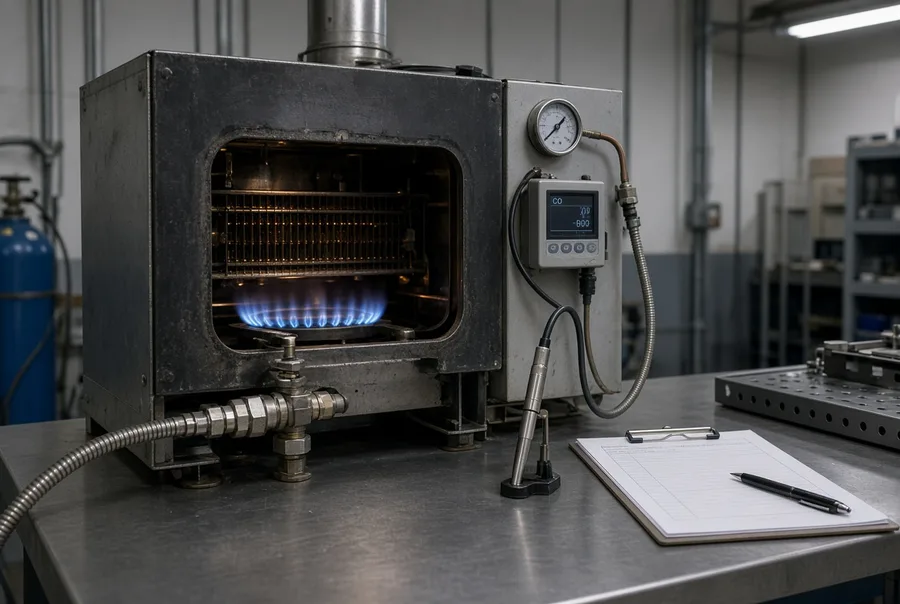
Samples go to the gas appliance testing laboratory only once the submission materials are complete: engineering drawings, product labels, user manuals, the critical component list, a formal test plan and revision-control records.
Procurement teams must forbid unauthorized component substitutions after certification. In one case, a client swapped thermistor suppliers to save $0.40 per unit, pushed the ECO trip temperature 9°F off and rendered an entire certified design non-compliant.
5. Integrate certified appliances into the vehicle
Independent component certification does not guarantee vehicle-level compliance. Final integration must align the certified appliance with NFPA 1192 installation rules and the OEM’s installation guidelines.
Under RVIA rules, member manufacturers build to NFPA 1192 and accept unannounced audits, with inspectors spot-checking production on site.
The integration team keeps its own compliance file: ventilation clearance drawings, gas pipeline routing specs and the current version of every appliance certification document. Review the RV OEM solutions work before locking a fitment.
6. Run the assembly-line pre-audit SOP
A full-process pre-audit standard runs on the factory line for every batch to protect first-pass audit success:
- Incoming component verification: cross-check safety-critical parts against the approved BOM revision and sample photos; quarantine anything non-compliant.
- Gas pipeline leak testing: pressurize manifolds to 1/2 PSI and monitor with leak-detection film for 60 seconds; zero leakage is mandatory.
- Ignition and flame stability testing: confirm full burner ignition within 5 seconds and a stable flame.
- Flame-failure response testing: cut the flame manually and record the full gas shutoff time; the internal standard is within 30 seconds, well under the 180-second industry upper limit.
- CO emission testing: measure air-free CO/CO₂ ratios at full and partial load; batch data runs 0.008 to 0.011, below the 0.02 official threshold.
- Pressure relief valve inspection: confirm the discharge line follows the design and installation guidelines, with no kinks or upward slopes.
- High-limit protection testing: trigger the ECO high-limit and confirm full gas shutoff plus a working manual reset.
- Electrical insulation resistance testing: run 500V DC on electric auxiliary components with a 1 MΩ minimum; a dry qualified unit typically measures above 20 MΩ.
- Serialized data recording: archive serial numbers, test data and inspection photos into the batch file in real time.
- Final shipment confirmation: hold every unit until the compliance records are signed and verified.
7. Assign ownership for each inspection node
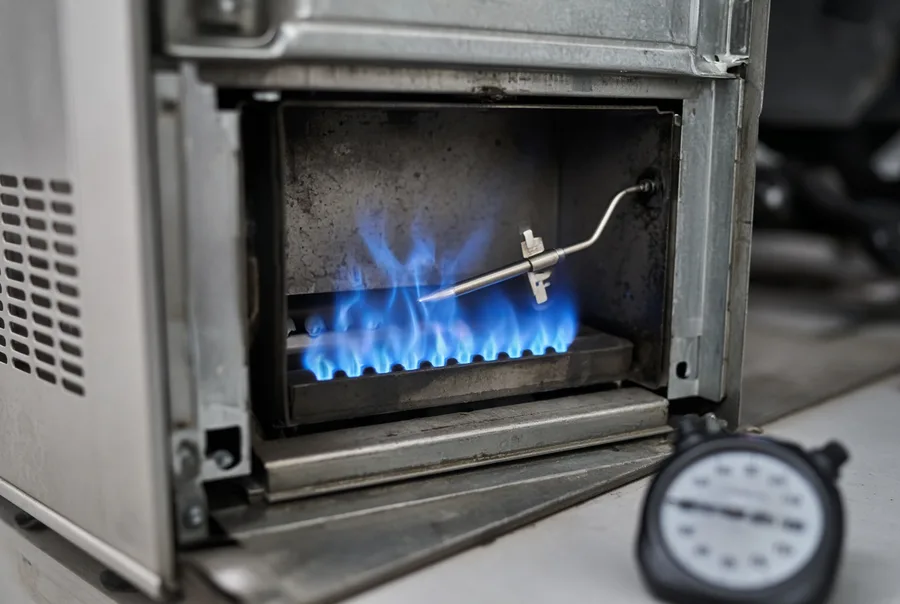
The lead quality manager owns incoming inspection and the final pre-audit release signature. Burner test technicians cover ignition, flame stability, the gas path and emissions. Final line auditors complete valve routing, electrical performance and record verification.
As one senior burner test technician put it: “A substandard gas control valve can still ignite normally. It fails to cut the gas supply promptly when the flame is lost — and that is the most common hidden cause of an audit failure.”
Every record generated at these nodes travels with the order through the quality control system.
8. Sort the global market differences
The table below summarizes the core compliance differences across major markets for engineering reference — not legal advice.
| Region | Appliance certification | Vehicle / installation standard | Core design adjustments |
|---|---|---|---|
| North America | ANSI Z21.10.3 / CSA 4.3 (gas); UL 174 (electric storage or assist) | NFPA 1192 plus the RVIA membership unannounced-audit program | Gas classification, manifold pressure, ventilation clearance, NRTL file revision control |
| Australia / NZ | AS/NZS gas appliance standards | AS/NZS caravan and RV installation specifications | Flue terminal clearance, LPG classification, injector and pressure calibration |
| EU / UK | EN 26 for instantaneous gas water heaters; CE / Gas Appliance Regulation; UKCA | EN 1949 for leisure-vehicle LPG systems | Combustion air intake, flue layout, full conformity documentation package |
📥 Download Resource: The one-page RV Gas Water Heater Pre-Audit Release Checklist covers every inspection node, sign-off owner and ship-or-hold decision. It is shared with clients under NDA rather than published for public download.
What Does a Launch-Ready Compliance System Deliver?
An NRTL listing shows an appliance has passed third-party testing and meets the applicable safety standard — ANSI Z21.10.3 / CSA 4.3 for gas, UL 174 for electric. That listing covers the component, not the NFPA 1192 vehicle installation rules or the RVIA factory audit.
Launch-ready products hold both, and that dual alignment produces three business returns.
Fewer certification retest cycles. Locking the 17-item safety-critical BOM before laboratory testing removes the retest risk created by post-certification component changes. Every safety component is fixed to a single part number and design revision, so production stays consistent with the certified sample.
That avoids the budget overrun a $0.40 thermistor swap already caused for one client.
Faster OEM supplier onboarding. A complete NRTL package — drawings, labels, manuals, test plan and revision records — lets supplier qualification finish in one pass instead of repeated document rounds. Standardized files let shipment and documentation travel together.
The build-to-drawing discipline behind them is set out on the manufacturing page.
Stronger distributor and dealer confidence. The RVIA seal is the market’s most visible credibility marker. The association runs more than 2,000 unannounced factory inspections a year.
A stable first-pass rate plus a documented compliance system moves a dealer’s attention from channel risk to launch schedule. The documents that travel with each unit are catalogued on the certifications page.
Why Do First-Pass Audits Fail? What Did 40+ Batches Show?
Across Gulfstone pre-audit batch records, three root causes account for most first-pass failures, each with a verified fix:
- Unauthorized silent component substitution → lock BOM revisions and quarantine by sample comparison.
- Non-compliant ventilation clearance and routing → add vehicle-level installation overlays and a dedicated compliance binder in the integration workshop.
- Non-compliant flame-failure response → adopt gas control valves with verified 30-second shutoff and keep a per-batch timing log.
| Failure mode | Root cause | Design and process correction | Effect |
|---|---|---|---|
| ECO / high-limit temperature drift | Unapproved thermistor vendor swap | Lock BOM revisions, match production units to certified sample photos | Production and certification files stay consistent; retests near zero |
| Ventilation clearance non-compliance | Installation guidelines not matched to the chassis | Add workshop-level installation overlays and vehicle compliance binders | 100% first-pass rate on NFPA 1192 spot checks |
| Slow flame-failure gas shutoff | Ordinary gas valves shut off late under full load | Upgrade to high-precision valves plus per-batch timing records | Held within 30s, far below the 180s ceiling |
📈 ROI Check: After the pre-audit SOP was standardized, the batch first-pass audit rate rose from 62% to 94%, cutting retest and rework cost.
Challenges and Limitations
Field installation and gas-system servicing must be done by certified technicians. The factory pre-audit system verifies the finished water heater only — it excludes on-site gas connection, flue terminal installation and field parameter adjustment.
Six hidden defects that pass the bench and fail the field
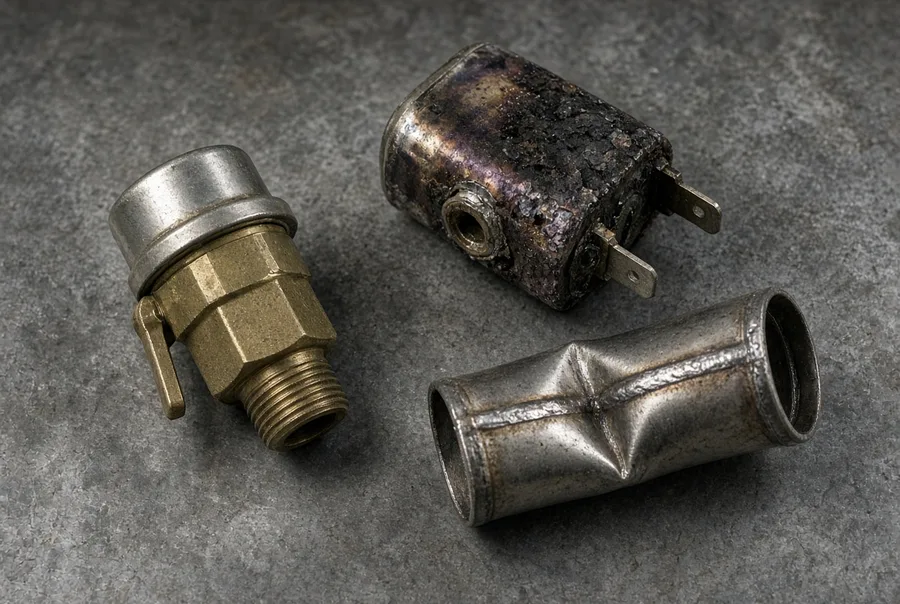
Batch reviews surface six latent defects that clear bench testing but cause field-audit failures:
- Pressure relief valve calibration drift: valves accurate at 150 PSI open 6–9 PSI early after pallet transport and storage.
- High-limit switch tolerance stacking: a ±3°F thermistor tolerance plus a ±4°F thermostat tolerance drives up to 9°F of ECO trigger deviation.
- Flue gas temperature overshoot: exhaust exceeds the bench target by 42°F at full load and low ambient temperature, below 40°F.
- Cycling aging thermal drift: thermal cutouts trigger 11°F late after 500 on/off cycles.
- Unstable insulation resistance: electric auxiliary insulation falls from 20+ MΩ to 1.4 MΩ in a humid environment.
- Undocumented component substitution: low-cost swaps break the link between production units and the certification file.
Why do bench-pass units fail in the field?
- Incomplete traceability: paper records fail to tie a tested sample to a shipped unit one to one.
- Uncontrolled design revisions: the approved lab drawing and the on-site production version diverge.
- Manual calibration deviation: technician judgment produces inconsistent flame calibration.
- Test environment difference: a constant-temperature dry bench cannot simulate low-temperature humid field conditions.
Where does the service boundary sit?
Manuals, labels and warranty terms must define three responsibilities clearly: factory production inspection, OEM vehicle integration and field service adjustment. The service deliverables and escalation path are owned by the after-sales terms.
Per the RV Technical Institute Level 3 certification requirements, RV water heater servicing is a specialized professional competency. Blur that boundary and gas safety liability flows back to the OEM.
⚠️ Critical reminders: a CSA or ETL component listing cannot replace RVIA vehicle compliance; prototype test qualification does not exempt ongoing factory audits; and global market iterations require targeted engineering redesign, not a label swap.
Final Verdict: The True Cost of Launch-Ready Compliance
Per the public RVIA membership fee schedule, a new manufacturer pays a $10,000 initiation fee plus $2,040 in annual base dues.
Those fees cover RVIA program membership only — not the total compliance investment for a launch. Full cost includes laboratory testing, design optimization, document control and ongoing audit maintenance.
Complete RV water heater compliance covers five layers: ANSI/CSA/UL component certification, NFPA 1192 vehicle installation, the RVIA factory audit program, locked factory production records and standardized field service boundaries.
Across more than 40 verified batches, the most cost-effective strategy is the same every time: freeze design, testing and documentation before the first third-party submission, and stop iterating against the retest budget.
OEM teams that standardize ventilation design at integration and log flame-failure data per batch launch far faster than teams that rely on remedial compliance after a failed audit. Treating membership fees as the total cost is the fastest route to an underfunded, delayed launch.
Sourcing disclosure: This article draws on internal process knowledge and anonymized data from Gulfstone client programs. Compliance requirements vary by market, and every specification must be confirmed with the certification bodies and your internal legal team before launch.
I receive no manufacturer kickbacks for these findings.
For compliance review, BOM optimization or a factory QA document consultation, start with the Gulfstone contact page. Component-level specs and test records travel with the order through the Gulfstone OEM and ODM program.
Frequently Asked Questions About RV Water Heater Certifications
1. What is UL 174 for electric water heaters?
UL 174 is the industry standard for electric storage tank water heaters. In an RV compliance context it applies only to units with a storage tank or electric auxiliary heating. A gas-only RV water heater does not require UL 174.
The standard covers component safety performance only — not RV vehicle installation compliance. Vehicle-level requirements sit with NFPA 1192.
2. What is NFPA 1192 for RV appliances?
NFPA 1192 is the vehicle-level fire safety and life protection standard for new recreational vehicles. It regulates the installation, ventilation and safety protection of all on-board appliances and systems.
It is not a substitute for independent appliance certification. A qualified RV product needs both component-level safety certification and vehicle-level NFPA 1192 installation compliance.
3. How do I know if my RV is RVIA certified?
Genuine RVIA certification is verified by the official RVIA seal on a finished vehicle, available only on qualifying products from member manufacturers. RVIA certification applies to finished vehicles, not to individual water heater components.
A water heater still requires independent ANSI/CSA/UL product certification regardless of the vehicle’s RVIA status.
4. How much does RVIA certification cost?
The official RVIA fee schedule sets a $10,000 initiation fee for new manufacturing members and annual base dues starting at $2,040.
Those fees cover membership and program audit eligibility only. They exclude laboratory testing, design modification, documentation management and the other compliance costs a product launch carries.

Forward
Co-founder & General Manager, GulfstoneGas appliance manufacturing and certification
Most of what decides a gas appliance is settled before anything is built — on the drawing, at the cut-out, in the tolerance someone chose for the gas path. I have spent my working life on the manufacturing side of that decision, and this is where I write down what it has taught me.
Nothing here is written from a sales desk. Every note comes off the floor: a batch held until a reason was found, a fitting that failed in transit, an approval path that only made sense once the destination market was fixed. If you read these first, the opening conversation starts at the standard rather than at the beginning.
- Gas water heater engineering
- Design for manufacturing
- Certification path selection
- Private-label tooling
- Off-grid and outdoor water heating
- Top 8 Outdoor Portable Gas Water Heater Factories in China for B2B BuyersNov 4, 2026
- Custom RV Appliance Industrial Design: An OEM Brief to a Validated PrototypeNov 3, 2026
- How to Build Custom Thermostat UI Design Software for OEM Embedded PanelsNov 3, 2026
- Top 8 RV Water Heater OEM Suppliers Canada: Vetted for Volume BuyersNov 3, 2026
- Top 10 Portable Propane Water Heater Manufacturers USA: A No-Hype Buyer ShortlistNov 2, 2026
- PPWR Compliance Checklist for EU Water Heater Packaging: The 10 Documents Before the Container LoadsNov 2, 2026
Fifteen years in appliance manufacturing — home appliances, RV refrigeration, then gas water heating — from the drawing to the shipping container.
Leads Gulfstone's design-for-manufacturing reviews and the certification path selected for each destination market.
Works directly with OEM and private-label buyers on tooling, tolerances and the approval file.