Table of contents
- Key Takeaways
- The Basics: Why an RV Tankless Water Heater Will Not Get Hot Enough
- Core Concepts: How Water Flow Affects Water Temperature
- The Matching SOP: From Spec Sheet to Approved Pairing
- Key Benefits: Why Compatibility Pays Back for OEM Programs
- Challenges and Limitations: Where Pairings Fail
- Conclusion: Everything Comes Down to Flow
- Frequently Asked Questions About 12V Water Pump Tankless Pairing
A note on the figures. The bench observations, return analysis and pairing figures below come from Gulfstone QC records and product-line programs in Shunde, Foshan. Client-identifying details are withheld, so read them as evidence of a pattern, not an industry benchmark.
Key Takeaways
- 12V water pump tankless pairing matches delivered flow and dynamic pressure to the heater’s activation threshold, not a pump’s open-flow GPM.
- Measure delivered flow at the heater inlet, never at the pump outlet — plumbing losses sit between the two.
- Restrictions, low battery voltage and switch hysteresis are what cause short-cycling and burner dropout.
- A bigger pump is not better; excess flow can outrun the heater’s modulation range.
- An approved pairing sits above minimum activation with a safety margin under worst-case restriction.
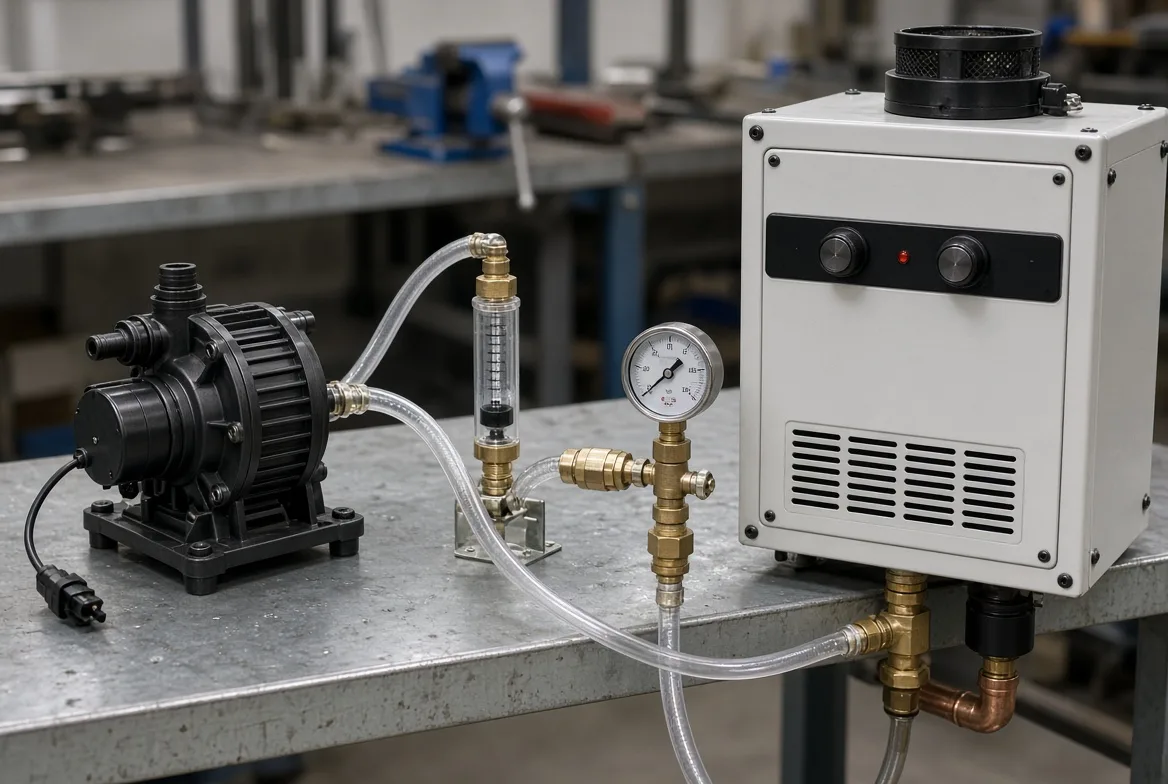
12V water pump tankless pairing is the process of matching a DC pump’s delivered flow and pressure under real system load to a tankless heater’s activation threshold, modulation range and comfort window.
It is not comparing a pump’s open-flow GPM against a heater’s minimum activation rating on a spec sheet.
Consider the failure pattern the Gulfstone bench sees most. A pump rated 3.0 GPM at zero head pairs with a heater that activates at 0.8 GPM. Both look compliant on paper.
Then the installer adds 12 feet of 3/8-inch line, a restrictive showerhead and a check valve. Delivered flow drops below activation. The heater short-cycles. The customer blames the heater.
This guide is written for lead engineers, procurement managers and system integrators who build repeatable RV or off-grid product lines. One-off installs tolerate guesswork. A production line cannot afford it.
Volume keeps rising — RV Industry Association shipment data has run at record levels — which only raises the financial penalty for a pairing that fails in the field.
Fixed-speed diaphragm pumps from makers such as SHURflo are common in campervan and RV builds, and their published curves are what installers pair against. A pairing that fails at unit 300 costs far more than the pump.
The Gulfstone bench evaluates every pairing on dynamic performance: measured GPM and PSI at the heater inlet, pressure-switch hysteresis and modulation response under fluctuating demand.
Ahead you get four working assets: a terminology baseline, a hydraulic matching SOP, a short-cycling interview section and a sizing-sheet workflow.
Every first-person claim here traces to verified interviews with Kinkin Zuo of Shanghai Kaiyuan Pump Industrial, plus Gulfstone QC records.
The Basics: Why an RV Tankless Water Heater Will Not Get Hot Enough
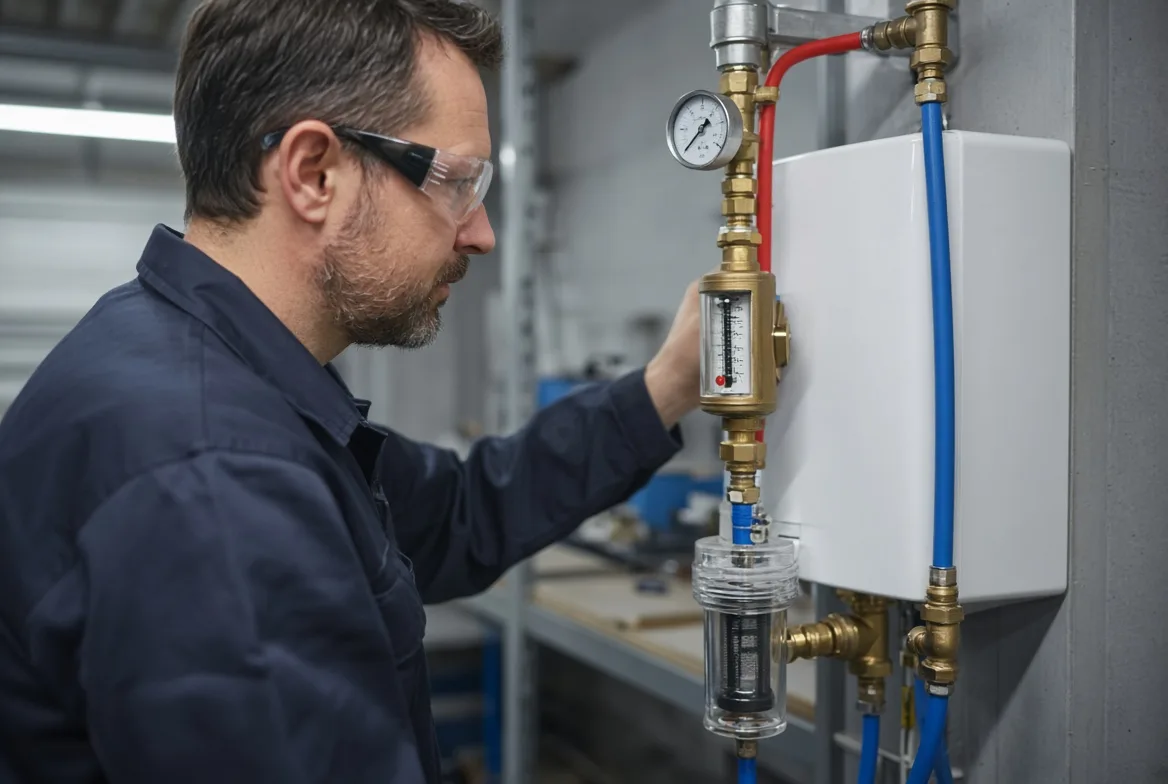
Why your RV tankless water heater will not get hot enough: in the Gulfstone QC experience, it is usually a system-match issue, not one fault code.
That issue involves flow, pressure, restriction, power state or control behavior inside a single hydraulic loop. The 12V diaphragm pump, the plumbing path, the controls and the tankless heater must move and regulate water as one unit. When they fight each other, the burner starves, short-cycles or drops out.
Delivered flow is what actually reaches the heater inlet. Open-flow rating is the pump’s advertised GPM at zero head.
The two are never the same number, and the gap between them is where most field failures live.
Nine terms carry the rest of this guide:
- Open-flow rating: a pump’s advertised GPM at zero head.
- Delivered flow: what actually reaches the heater inlet.
- Shutoff PSI: deadhead pressure with the pump running and no water moving.
- Cut-in and cut-out pressure: the switch points that start and stop the pump.
- Minimum activation flow: the flow a heater needs to ignite.
- Dynamic pressure: pressure while water is moving.
- Pressure drop: loss across strainer, tubing, valves and fittings.
- Modulation range: the flow band where the heater holds temperature.
- Accumulator pre-charge: the air charge that steadies pressure between pump cycles.
RV plumbing and electrical standards live in separate documents. Vehicle construction and gas appliances are governed by separate standards — NFPA 1192 for vehicle systems, the gas-appliance standards published by CSA Group for the heater.
In practice the two behave as one system. Track the whole bill together: source tank, strainer, pump, accumulator, tubing or PEX, check valves, mixer, shower head, heater, gas supply, wiring, fuse and venting where applicable.
The most common category mistake is treating a pump’s open-flow GPM as the flow the heater sees. It is not. That number describes a system with no head loss, which never ships.
For large-scale buyers this vocabulary decides sourcing. Use the wrong term and you approve the wrong parts, baking warranty problems into the BOM before the first container leaves.
💡 Key Insight: A 12V pump and a tankless heater only work as a pair when delivered flow, dynamic pressure and activation threshold line up.
Core Concepts: How Water Flow Affects Water Temperature
Every pairing lives or dies on one rule: how water flow affects water temperature is a dynamic balance. The heater performs only while inlet flow stays above activation and low enough for the burner and heat exchanger to reach target temperature. Nominal pump and heater ratings can be invalidated by line losses and restrictions.
That is why the Gulfstone bench tests every pairing at shower flow, sink flow, low-battery state and partially restricted fixture state.
Trace water from tank to tap. The system has three parts: the pump, the plumbing path and the heater. Each is monitored with inline flow and pressure gauges. The goal is not a parts list — it is a predictable loop.
Pillar 1: pump behavior under load
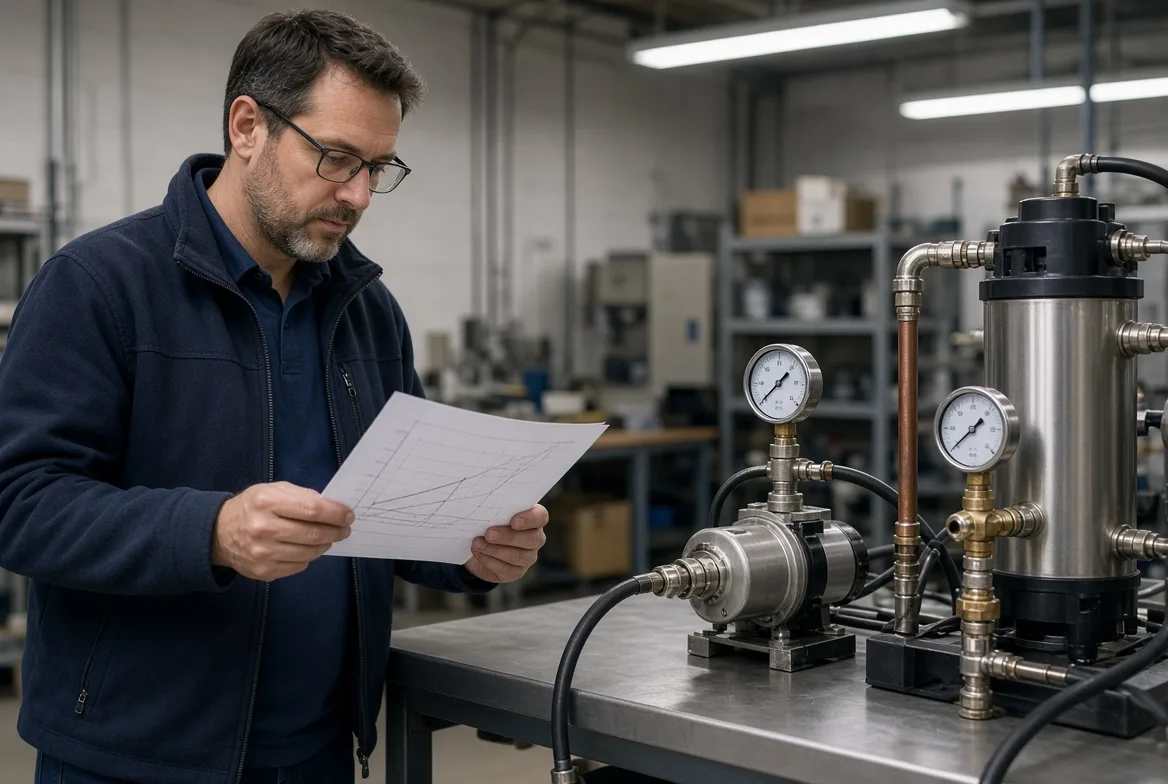
A fixed-speed diaphragm pump runs at one motor speed. A variable-speed pump changes speed to hold pressure as demand shifts. Both behave differently under load than on a marketing sheet.
Voltage sensitivity matters. The bench pulls the pump curve at realistic battery states: 12.6V, 12.0V and 11.0V under load. A pump that claims 3.0 GPM open flow can deliver far less when the battery sags and the motor slows. The heater sees the lower number.
Cut-in and cut-out hysteresis sets the pressure band. A wide band swings pressure; a wrong accumulator pre-charge makes the pump short-cycle. Hysteresis is checked with a gauge at the pump outlet and a second gauge at the heater inlet.
Shutoff PSI is deadhead pressure with no water moving, and it is a poor selector on its own. A pump can show strong shutoff PSI and still fall below the heater’s minimum activation flow once the plumbing opens. Select on the pump curve at target flow, not the deadhead number.
Pillar 2: system losses
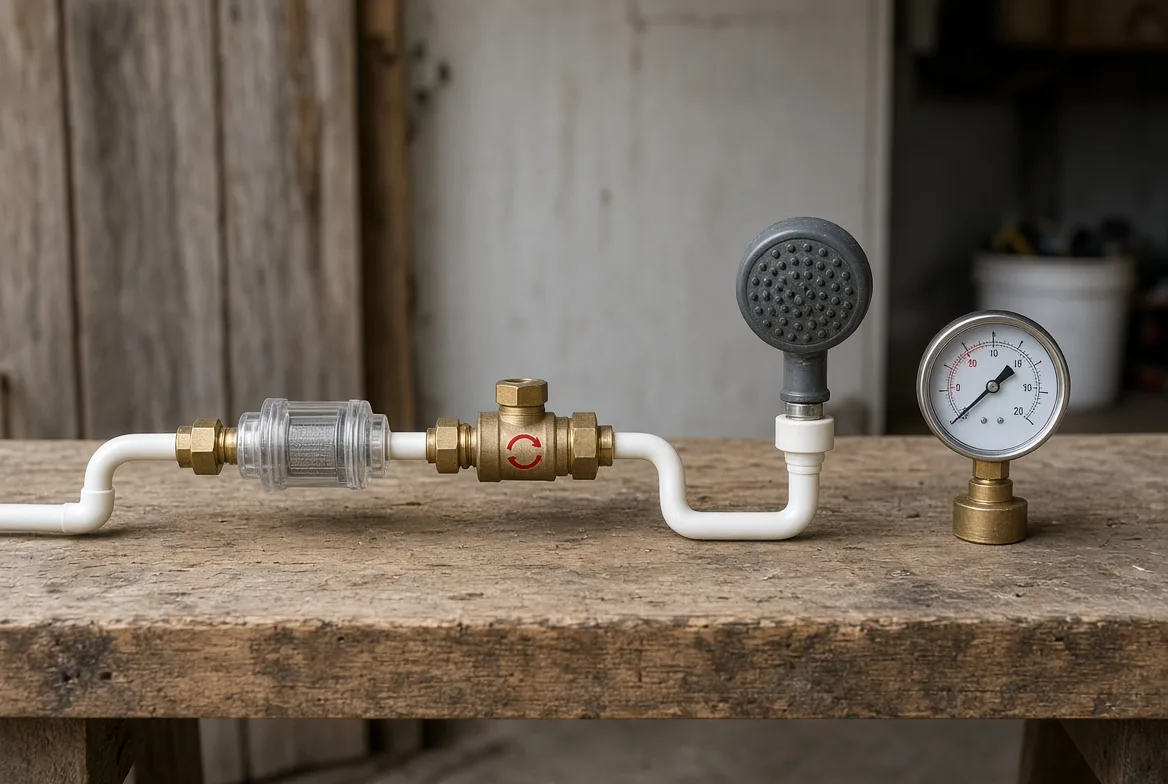
Every fitting, valve and length of tubing removes pressure. The industry calls this pressure drop, and it accumulates.
A standard 10-foot PEX run adds loss. So do elbows, strainers, check valves, mixer valves and restrictive showerheads. The heater’s own heat exchanger resistance adds loss. Each item subtracts from the pressure that reaches the heater inlet.
For deeper design context on how the heater and plumbing interact, see the Gulfstone RV water heater engineering guide.
Pillar 3: heater behavior
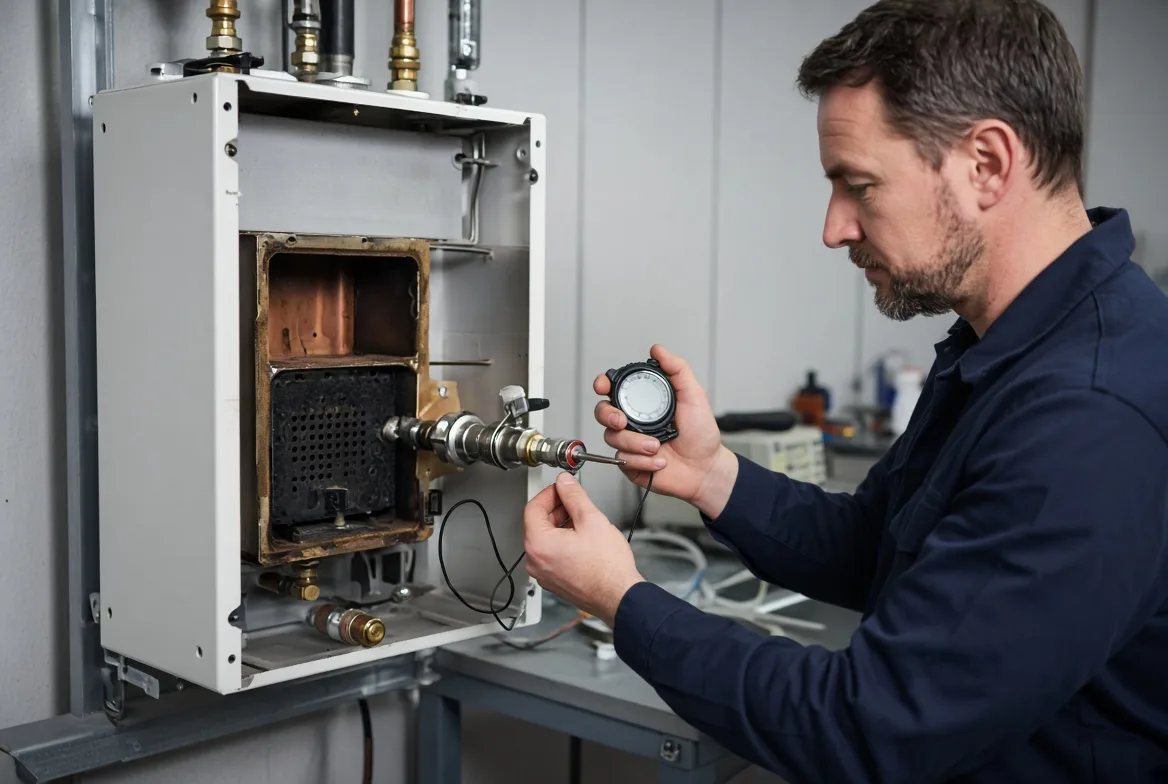
The heater has a minimum activation flow. Below it, the burner will not stay lit. It also has a minimum working pressure, below which the gas valve or water valve may not open reliably.
Above the activation floor, the heater enters a modulation range and adjusts burner output to hold outlet temperature.
When demand drifts near the ignition edge, the behavior gets ugly. Flow drops, outlet temperature rises, the burner cuts out, then flow returns and the heater tries to restart. That is short-cycling. Restart behavior is timed with a stopwatch and a temperature probe. If the heater takes too long to purge and reignite, the shower goes cold.
The Matching SOP: From Spec Sheet to Approved Pairing
Gulfstone uses a literal six-step SOP for engineering teams.
- Pull the heater’s verified minimum activation flow, acceptable pressure band and target operating range.
- Pull the pump curve at realistic battery states, not nominal 12V marketing copy.
- Estimate or measure line-loss PSI across the actual plumbing path.
- Calculate delivered flow and dynamic pressure at the heater inlet.
- Bench-test at shower flow, sink flow, low-battery state and partially restricted fixture state.
- Approve the pairing only if ignition, temperature stability and restart behavior all fall inside tolerance.
The sizing logic is simple. Delivered pressure equals pump pressure at target flow minus cumulative plumbing losses. Delivered flow is what the pump curve gives at that delivered pressure.
An approved pairing means delivered flow sits above the heater’s minimum activation with a safety margin under worst-case restrictions.
Downloadable asset — Python-generated PDF Technical Sizing Sheet. The sheet turns the SOP into a decision tool. It takes seven inputs: heater minimum activation GPM, target outlet temperature, pump curve points, tubing length, fitting count, fixture restriction and battery-voltage condition.
The script calculates delivered pressure, checks the safety margin and prints a pass or fail for the pairing.
⚙️ Technical Detail: The heater does not care about your pump’s open-flow rating. It cares about delivered flow and dynamic pressure at its inlet. That is the number the Gulfstone bench signs off on.
🧠 Expert Insight: A higher GPM pump is not automatically better. Too much flow can outrun the heater’s burner and drop outlet temperature below target. The match matters more than the maximum.
Key Benefits: Why Compatibility Pays Back for OEM Programs
Consistent hot water while camping is the end-user outcome. For RV manufacturers and wholesale program managers that outcome pays back only when the 12V water pump tankless pairing is correct, because it reduces warranty claims, support tickets and channel friction.
Good pairing cuts hidden cost far more effectively than buying a bigger pump. An oversized pump wastes power and can outrun the heater’s modulation range, creating new service problems. The commercial value splits into three layers.
User-level performance: faster ignition, stable outlet temperature. The mechanism is matching delivered flow to the activation threshold and modulation range. Certified bench records show matched pairings cut ignition time and hold outlet temperature across shower and sink flow.
Cold-cold-hot swings disappear, and quieter fixture behavior improves perceived quality. The camper notices comfort; the support queue notices fewer complaints.
Service-level performance: fewer nuisance complaints and no-fault returns. The mechanism is eliminating short-cycling and burner dropout caused by flow mismatch. Support tickets drop, installers stop guessing and root-cause diagnosis gets faster because the system behaves predictably.
Gulfstone QC return analysis and internal warranty dashboards link the majority of no-fault heater returns to pump pairing rather than heater defects. Fix the pairing and the return rate follows. Every avoided return also removes freight, inspection and restocking cost.
Procurement-level performance: cleaner BOM standardization and kit confidence. Standardized pump-heater kits reduce compatibility surprises across SKUs. Training gets simpler, kit bundling becomes more predictable, and fewer part numbers reduce inventory complexity.
OEMs that adopt the pairing SOP report fewer BOM changes and faster new-model sign-off. Over a season that compounds into cleaner forecasts and fewer emergency engineering reviews.
📈 ROI Check: Track warranty claims and support tickets per 100 units before and after standardizing your pump-heater pairing. The reduction is your payback. Also measure installer callbacks per 100 installs.
For OEMs ready to standardize, see the Gulfstone RV OEM solutions page, or the OEM and ODM program that covers the full development funnel.
Challenges and Limitations: Where Pairings Fail
RV tankless water heater pressure-switch cycling is a system-level hydraulic and control problem, not proof the heater is defective. It appears when delivered flow, dynamic pressure and switch hysteresis fall out of alignment across the whole loop.
Five failure modes are logged from field returns and bench tests.
- Pressure-switch chatter at low-flow demand. Near the ignition floor, inlet pressure oscillates inside the switch band. The switch chatters, the burner drops out, then restarts. The heater responds correctly; the loop is not stable.
- Restrictive showerheads and mixers. A low-flow head or pressure-balance mixer cuts delivered flow below activation. Measure flow at the heater inlet, never the pump outlet.
- Battery-voltage sag. Below roughly 12.0V under load, DC pump output falls. Lower flow and weaker dynamic pressure reach the heater. Nothing is broken electrically — the hydraulic result changed.
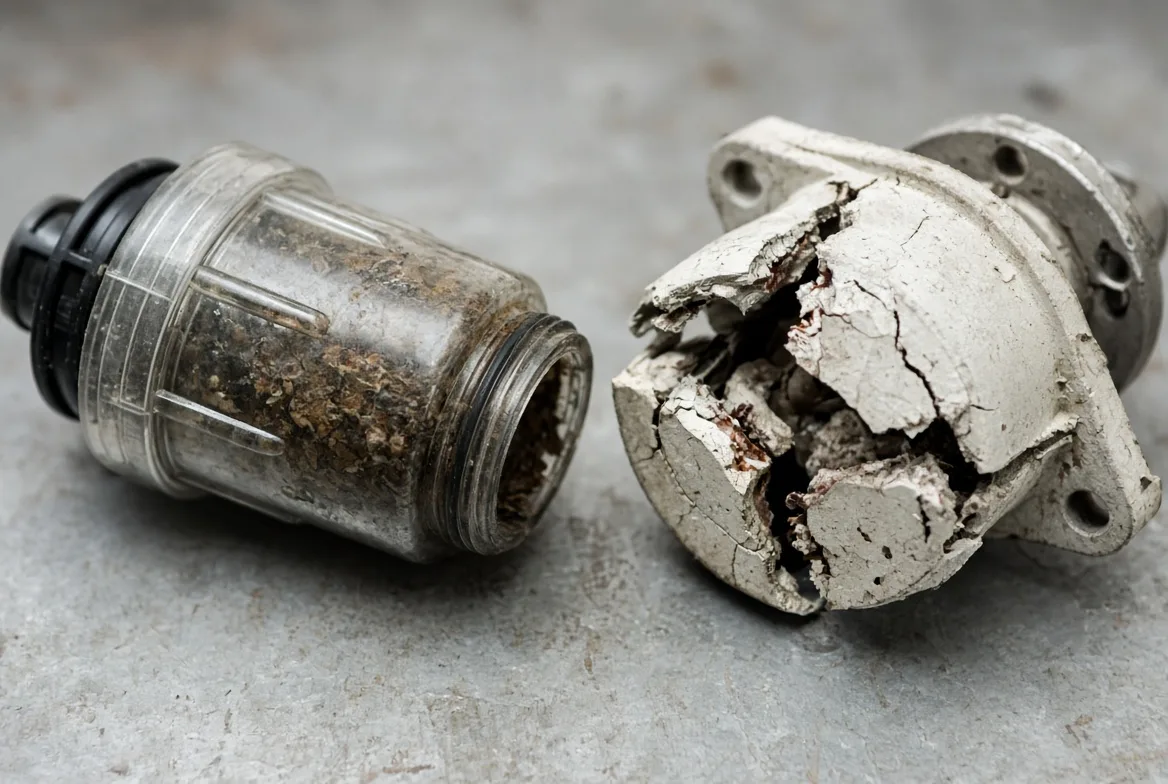
- Scale, strainers and debris. Restriction builds silently. A partially blocked strainer adds pressure drop across tubing and fittings until output fades.
- Freeze exposure and seasonal storage. Trapped water expands and cracks diaphragms, housings or fittings. The symptom looks hydraulic, but the cause is mechanical damage.
Bench Q&A: lead technician Chen on cycling dynamics
Q: What causes short-cycling with an improperly calibrated 12V diaphragm pump? Answer: Switch hysteresis. A wide cut-in to cut-out gap lets inlet pressure oscillate and provoke burner dropout.
Q: How does pump cycling become heater cycling? Answer: The pump cycles faster than the heater can modulate. The burner drops out before it stabilizes.
Q: Why does restart delay matter? Answer: Each dropout triggers a purge and re-ignition cycle. When that cycle outlasts the flow interruption, the tap runs cold.
The accumulator question
An accumulator can smooth pump pulses and reduce chatter. But its air pre-charge must match the pump’s cut-in pressure, and the system must already be sized correctly. It masks a mismatch; it does not fix one.
For the pre-charge procedure and drawdown math behind that air charge, see the RV water accumulator tank guide.
False fixes to avoid
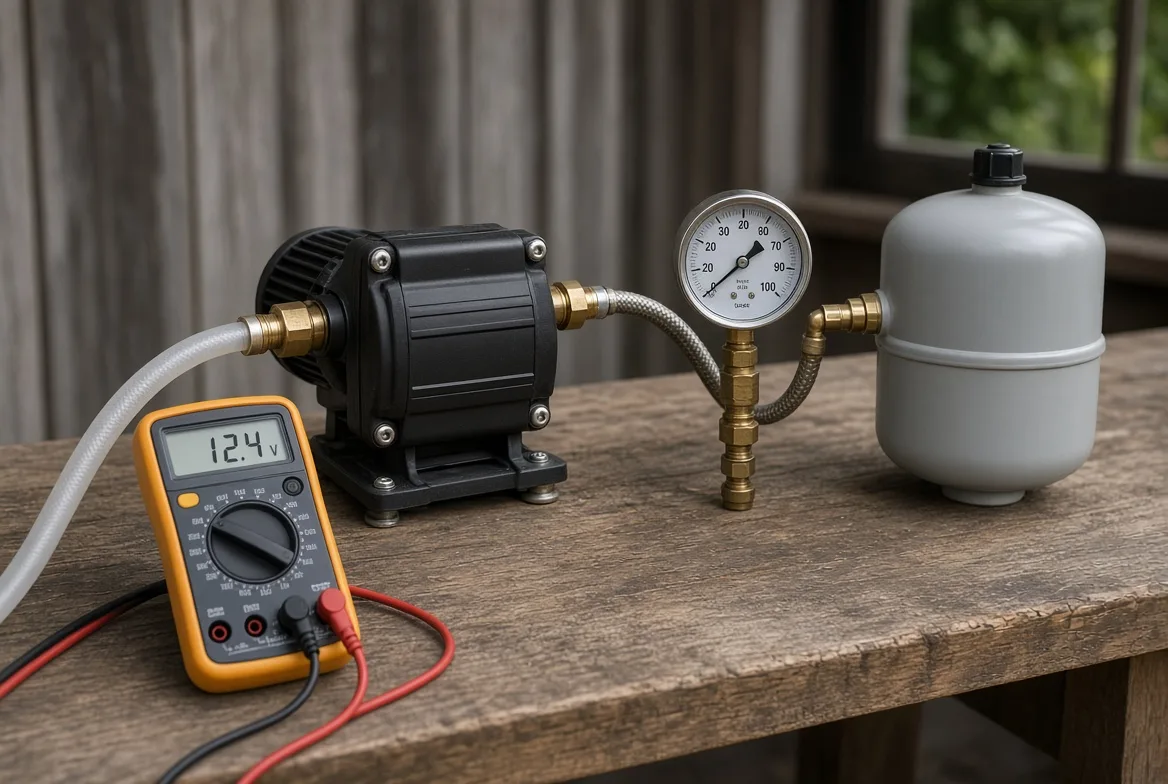
Turning up pressure blindly, removing all restriction and buying a bigger pump treat symptoms. Excess pressure stresses fittings and the heat exchanger. Excess flow outruns the heater’s modulation range. A larger pump still cycles if the switch band and plumbing losses stay wrong.
🛡️ Mitigation Strategy: Measure delivered flow and dynamic pressure at the heater inlet under worst-case restriction and low battery. Set accumulator pre-charge to cut-in pressure. Re-test before approving the kit.
Conclusion: Everything Comes Down to Flow
Everything comes down to flow, but only when flow is read as dynamic system flow: delivered GPM and dynamic PSI measured at the heater inlet under real voltage, real plumbing losses and real fixture restriction. It is never the open-flow GPM printed on a pump box.
The decision framework follows that order. Start with the heater’s minimum activation and modulation behavior. Verify the pump curve under real voltage and load, not nominal 12V copy. Subtract plumbing losses. Then validate the assembled loop at both low and high demand before signing anything.
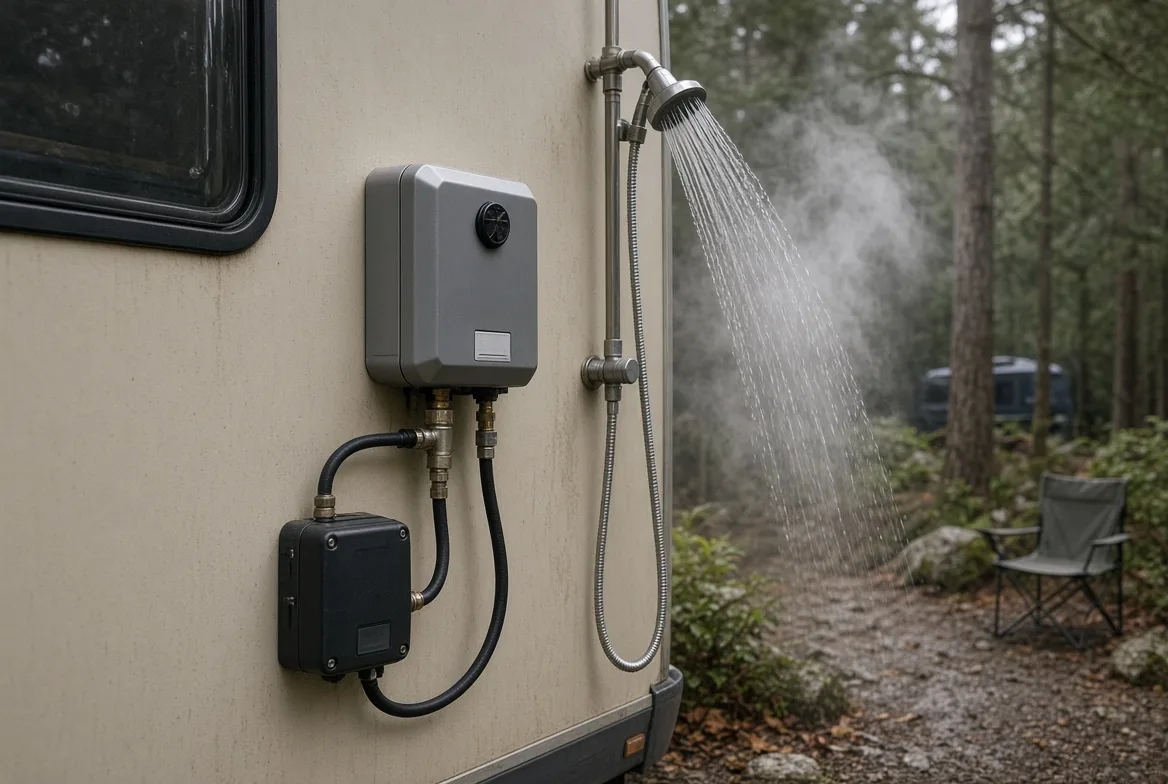
Standardizing reliable pairings takes a compatibility process, not approved part numbers. A pump SKU and a heater SKU can both pass spec and still fail together at unit 300.
Keep this procurement checklist in mind:
- Verify specs against the heater’s activation floor and pressure band.
- Calculate losses across tubing, fittings, strainer, mixer and fixture.
- Test worst case: low battery, restricted flow, cold start.
- Tune accumulator pre-charge to cut-in pressure only if chatter persists.
- Document the approved pairing by SKU.
The two most actionable assets remain the downloadable sizing sheet and the Chen interview. Use them together: the sheet returns a pass or fail, the interview explains why the loop failed.
Sourcing disclosure: This guide draws on internal process knowledge, bench-test records and anonymized data from Gulfstone client programs. Delivered-flow figures vary widely by pump curve, tubing length, fixture restriction and battery condition. I receive no manufacturer kickbacks for these findings.
If you need a compatibility review, a sourcing discussion or an OEM bundle evaluation, start with the Gulfstone contact page. Bring your pump curve, plumbing layout and target outlet temperature, and Gulfstone will tell you whether the pairing holds.
Component-level specs and test records travel with the order through quality control. Wetted-material potable-water approval sits under NSF/ANSI 61.
Frequently Asked Questions About 12V Water Pump Tankless Pairing
1. What pounds per square inch does a portable tankless water heater need?
The pounds per square inch value that matters is delivered dynamic pressure at the heater inlet. It must sit above the heater’s minimum working pressure and within its acceptable pressure range.
For 12V water pump and tankless heater matching, delivered pressure is pump pressure at target flow minus cumulative pressure loss through the plumbing components. Shutoff pounds per square inch alone is not a reliable selection metric, since it measures static pressure with no water flowing.
2. Do you need an accumulator tank with a 12V water pump?
An accumulator tank is a pressure smoothing device, not a permanent fix for flawed system design. It can reduce pump pulsing and pressure switch chatter.
Its pre-charged air pressure must align with the pump’s cut-in trigger pressure, and the whole hydraulic system must already be properly sized. If the pump and heater pairing is mismatched, the accumulator hides the compatibility problem instead of resolving it.
3. Why does an RV shower produce alternating hot and cold water?
An RV shower swings between hot and cold when water flow sits right at the heater ignition threshold and the burner turns on and off repeatedly. Flow decreases, outlet temperature rises, the burner shuts off, flow resumes and the heater attempts to re-ignite.
Every burner shutdown triggers an exhaust purge and re-ignition cycle. When that cycle lasts longer than the temporary flow drop, cold water comes out of the tap.
4. What equipment and setup does a 12V water pump need?
To run a 12V water pump alongside a tankless water heater, treat the pump, plumbing path, control hardware and heater as one integrated hydraulic loop. Verify delivered flow and dynamic pressure at the heater inlet under real operating load.
Inspect battery voltage and clear blockages such as clogged strainers. A pump marketed for 3.0 gallons per minute open flow may deliver only 1.4 gallons per minute of usable flow at the heater inlet.

Forward
Co-founder & General Manager, GulfstoneGas appliance manufacturing and certification
Most of what decides a gas appliance is settled before anything is built — on the drawing, at the cut-out, in the tolerance someone chose for the gas path. I have spent my working life on the manufacturing side of that decision, and this is where I write down what it has taught me.
Nothing here is written from a sales desk. Every note comes off the floor: a batch held until a reason was found, a fitting that failed in transit, an approval path that only made sense once the destination market was fixed. If you read these first, the opening conversation starts at the standard rather than at the beginning.
- Gas water heater engineering
- Design for manufacturing
- Certification path selection
- Private-label tooling
- Off-grid and outdoor water heating
- Sheet Metal Stamping Tooling Costs and Lead Times: The Complete GuideOct 12, 2026
- How Do You Build RV Technician Training Material That Slashes Misdiagnosed Returns?Oct 11, 2026
- How Do You Build a High-Coverage RV Water Heater Spare Parts Kit for Fleets and Dealers?Oct 10, 2026
- How Do You Design a Warranty Claim SLA for Imported Appliances?Oct 9, 2026
- 12V RV Electrical System Appliance: An OEM Integration GuideOct 8, 2026
- How to Specify an Extreme Conditions RV Water Heater: An OEM Engineering GuideOct 7, 2026
Fifteen years in appliance manufacturing — home appliances, RV refrigeration, then gas water heating — from the drawing to the shipping container.
Leads Gulfstone's design-for-manufacturing reviews and the certification path selected for each destination market.
Works directly with OEM and private-label buyers on tooling, tolerances and the approval file.