Table of contents
- Key Takeaways
- What Is an Injection Molding Tool?
- What Determines the Cost of an Injection Mold?
- Benchmark Ladder: Matching Tool Tier to Real Volume
- How Do You Audit a Third-Party Mold Quote?
- Where Does QA Intervene Before PO Approval?
- P20 Versus H13: The Steel Decision Behind the Quote
- RV-Specific Complexity Drivers
- Is Injection Molding Cost-Effective?
- Amortize Tooling to See the Real Cost per Part
- DFM Cuts CapEx Before Steel Is Cut
- Challenges and Limitations: Lifecycle Cost and Sourcing Risk
- Maintenance Frequency Tracks Material and Application
- Budget Mistakes and Offshore Trade-Offs
- Conclusion
- Frequently Asked Questions About Injection Mold Tooling
Key Takeaways
- Injection mold tooling cost is non-recurring CapEx for the cavity, core, cooling, ejection and moving actions. It is not a single price and it is not the molding machine.
- Quotes are built from geometry, projected area, cavity count, steel hardness, cosmetic class, action complexity, sampling scope and lifecycle target — in that order.
- P20 at 30 to 32 HRC suits a 500,000-shot program. H13 at 48 to 52 HRC holds polish through 1 million shots or more on cosmetic parts.
- Early DFM changes cut one RV water pump tool’s CapEx by 18% and pulled payback forward by 4 months.
- Budget 2% to 4% of new-tool value each year for preventive maintenance, plus a reserve for mid-life insert work.
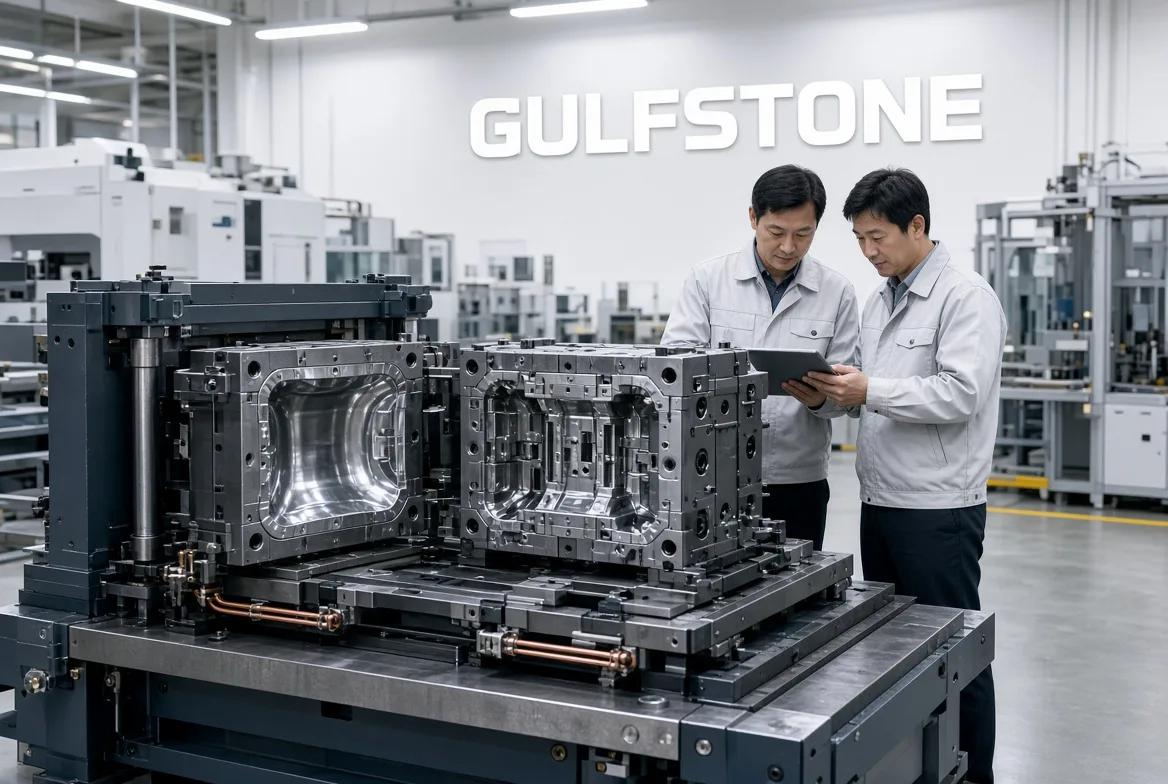
Senior buyers rarely question plastic resin costs. Then the tooling quote lands, and the spread across three suppliers can span three budget cycles for the same part drawing.
That gap derails more RV and outdoor equipment programs than any material increase. The number arrives as one line on a spreadsheet, with no breakdown of what is being cut into steel, how long the tool is expected to last, or what happens when the design moves.
A cheap mold turns expensive after rework, late engineering changes, short tool life, or a press too large for the part. Every number below comes from tooling reviews, DFM audits and post-launch maintenance logs on RV and outdoor programs at Gulfstone’s Foshan plant.
What Is an Injection Molding Tool?
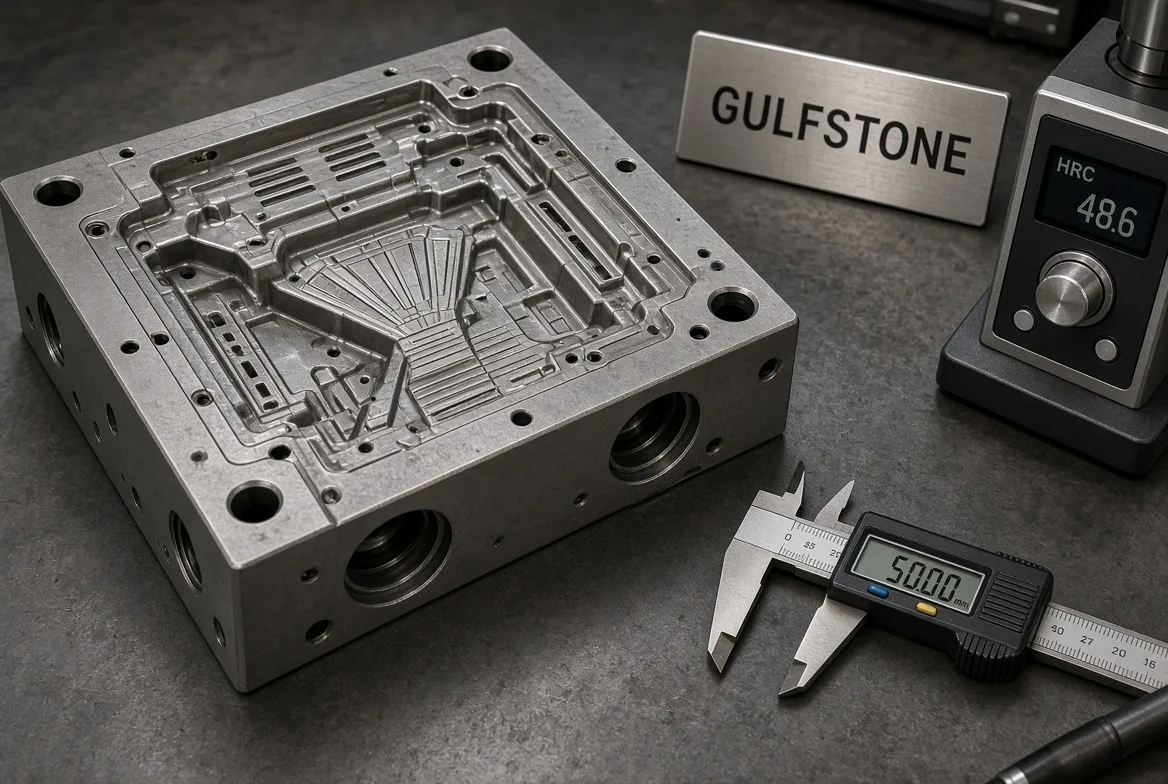
An injection molding tool is the precision-built production asset that contains the cavity, core, cooling, ejection and moving actions needed to shape molten plastic into a repeatable part. It is not the molding machine. The press supplies clamp force, heat and injection pressure; the tool holds the part geometry.
Buyers who blend the two lose control of the business case. Tooling is the one-time CapEx for design, steel or aluminum, machining, polishing, heat treatment, fitting and trials. Machine cost is the hourly rate or capital cost of the press, and it recurs on every run.
The tool itself is a stack of subassemblies, and each one is quoted separately because each one fails on its own schedule:
- Cavity and core — the negative and positive shapes that form the part
- Mold base — the structural frame that carries the stack
- Cooling lines — channels that pull heat out and set cycle time
- Ejector system — the pins and plates that push the part free
- Runner and gate system — feeds molten plastic to the cavity
- Slides, lifters and inserts — form undercuts and absorb wear
The tool is expensive because it turns a CAD model into hardened, machined, polished and trialed steel or aluminum that must survive repeated thermal and mechanical stress.
A water heater front panel that looked simple on screen needed draft, three shutoffs, a Class A surface, four bosses and venting before Manager Chen would release it to machining.
At the top level, prototype tools run aluminum for low volume. Production tools run hardened steel and carry the volume.
The SPI mold classification system published by PLASTICS remains the common reference for those tiers, and its numbers are tighter than most buyers assume: Class 103, the P20 middle tier, is specified for 250,000 to 500,000 cycles, not “500,000 and up.”
💡 Key Insight: Tooling cost is a one-time CapEx that fixes part quality and cycle time. Machine cost is a recurring expense. Never blend them in a quote comparison.
What Determines the Cost of an Injection Mold?
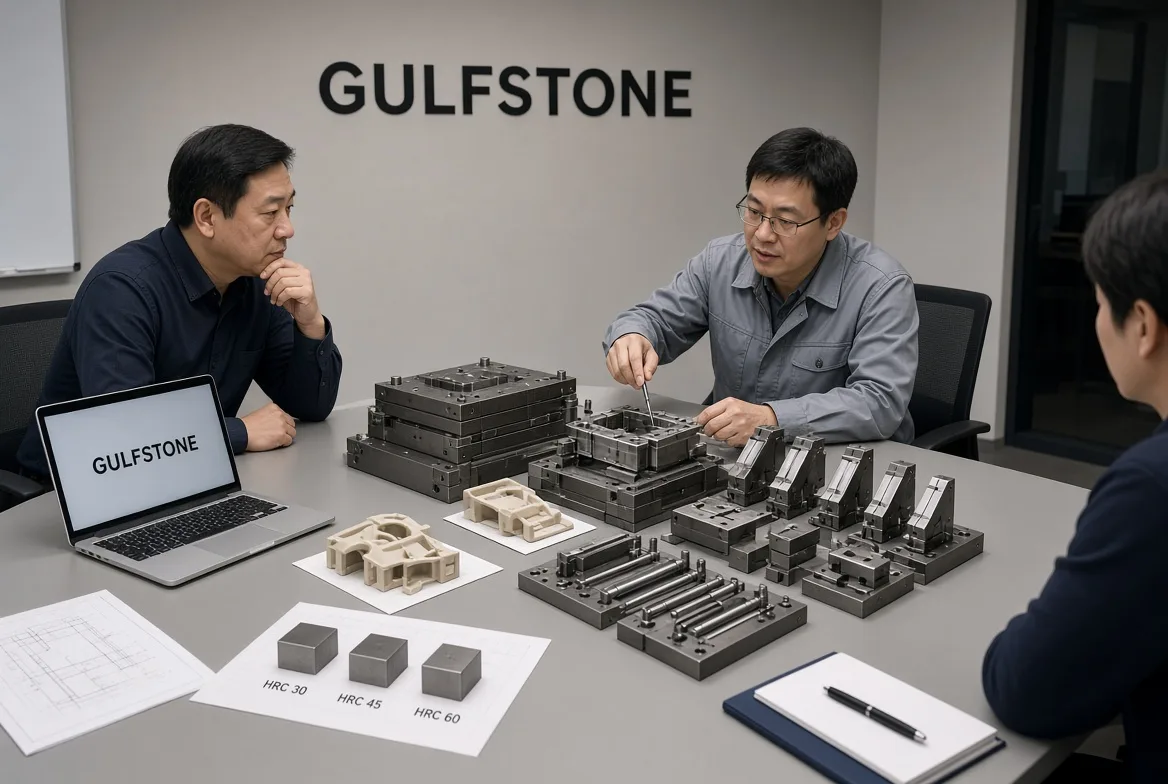
A mold is priced by geometry and projected area, cavity strategy, steel choice and hardness, cosmetic class, action complexity, sampling scope and lifecycle target — not by part weight or supplier location. Those last two sit near the bottom of the list, which is why they make weak negotiating levers.
Every inbound quote gets broken into the same lines before price is discussed. If a supplier cannot show them, the quote is a guess:
- Part geometry and projected area
- Tool material and hardness target
- Cavity count and family-tool decisions
- Sliders, lifters, inserts and undercut mechanisms
- Hot runner versus cold runner
- Texture, polish and cosmetic surface class
- T1 sampling, correction loops and validation scope
Projected area matters more than buyers expect because it sets the press size. A large housing can force a bigger machine, and the tool quote can look reasonable while the program economics collapse on machine hour rate. That flag goes up before anyone signs.
Benchmark Ladder: Matching Tool Tier to Real Volume
Four tiers cover almost every RV and outdoor program. Comparing a quote across tiers produces a meaningless spread, because the tools are not built for the same job.
Prototype or soft tooling uses aluminum and runs 5,000 to 10,000 shots. Design is still moving, so nobody hardens steel yet.
Aluminum bridge tooling covers roughly 10,000 to 50,000 shots. It fits a brand testing a new SKU at low volume before committing to a steel program.
Production steel tooling means P20 at 30 to 32 HRC, built to a 500,000-shot target. This is the workhorse tier for most appliance parts.
Complex multi-cavity tooling runs H13 at 48 to 52 HRC, often with hot runners and several actions, targeting 1 million shots or more.
Put your own annual volume against those tiers before you compare prices. A single-cavity P20 tool quoted against a four-cavity H13 tool is not a saving; it is a different program. The tier you land in should also match a documented mold class, which is what makes a lifecycle claim checkable rather than a sales line.
How Do You Audit a Third-Party Mold Quote?
The audit runs in order, before any purchase order moves. Skip the order and you are renegotiating a mistake.
Start by verifying part volume, annual demand, resin and the surface-class target. Then overlay the 3D model against the quote and hunt for hidden cost triggers: draft, shutoffs, ribs, bosses, wall transitions and undercuts.
The design-for-manufacture review conventions that a good tool shop applies at this stage are public, so a buyer can run the same check before the quote arrives.
Next, confirm whether the tool is single-cavity, family or multi-cavity, and test whether the hot runner claim actually pays back at your forecast volume. Review the T1 and T2 revision assumptions and the tool ownership terms. Finally, separate one-time NRE from recurring molding cost and setup fees.
Step two catches the most expensive surprises. A half-degree draft deficiency can add thousands in rework after the first trial shot.
💡 Expert View: Asked where buyers most often misread a tooling quote, mold maker Jason Lee points to the tool-life line rather than the price. “A quote that names the steel but not the shot target is telling you nothing,” he said. “P20 and H13 can carry the same cavity count and differ by two times on maintenance over five years. Price the tool against the volume, not against the last supplier you used.”
His mold-making profile tracks that steel-versus-life trade from inside a tool shop, and it lines up with the maintenance logs on RV programs.
Where Does QA Intervene Before PO Approval?
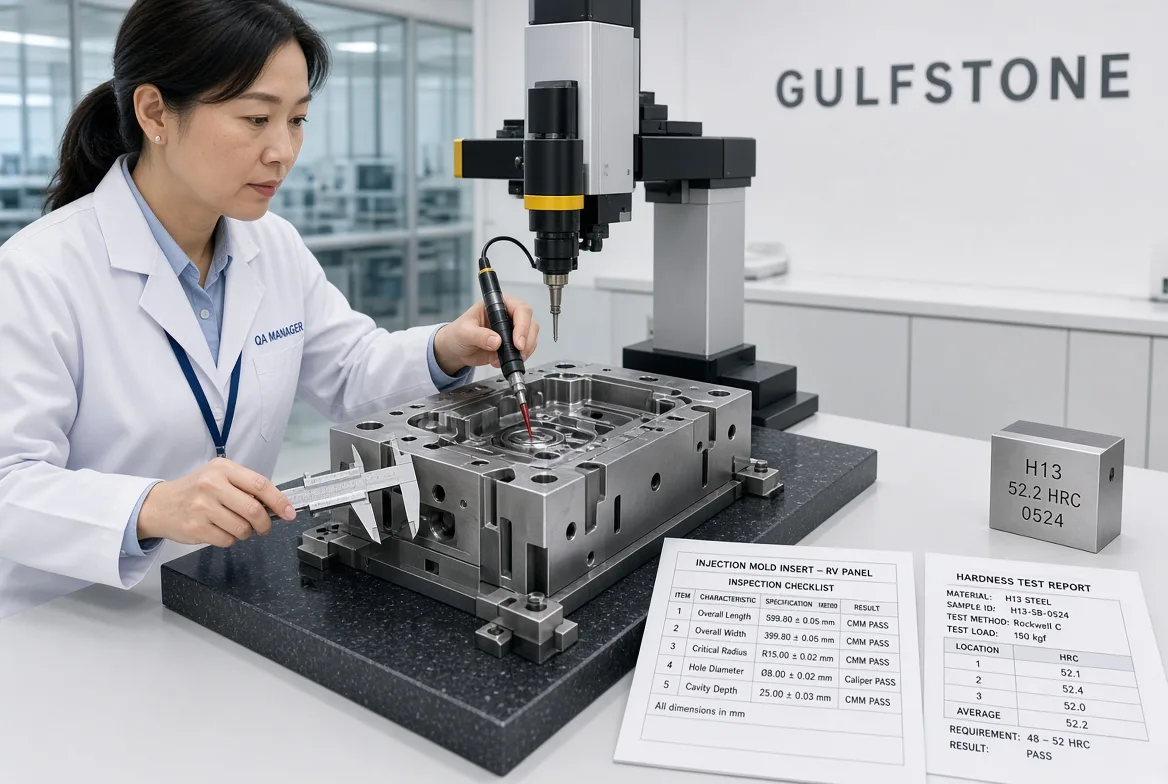
QA Manager Jingjing Lu signs off on the tool design review, not just the finished part. Before a purchase order is raised, she checks draft angles, gate placement, vent paths and likely weld-line zones.
That review sits inside the wider quality control checkpoints at the pre-production stage, and the drawings it reads come out of the manufacturing process.
Gate placement is where the review earns its money. Last quarter Lu flagged a gate landing directly on a Class A face of a water heater front panel — a defect that would have forced a polish revision fee after the tool was cut. Catching it on the drawing review kept that cost out of the PO.
✅ Check: Sign off on gate location, draft and venting at design review. Fixing them in steel costs five to ten times what it costs on a drawing.
P20 Versus H13: The Steel Decision Behind the Quote
For a custom RV water heater front panel at a 500,000-shot lifecycle, the steel-versus-aluminum argument is the wrong debate. The real choice is P20 against H13, as Manager Chen frames it.
“P20 saves you money on day one,” Chen said, tapping the hardness spec on the print. “But this panel carries exterior texture, and polish stability matters after every service pull. H13 holds its surface through thermal fatigue at 48 to 52 HRC. We add two days of machining and raise CapEx. We cut maintenance intervals over the life of the tool.”
The trade is two extra days of machining and a higher CapEx line, set against longer maintenance intervals over the life of the tool. For 500,000 shots of a visible shell, H13 wins on total cost. For an internal bracket nobody sees, P20 is usually the right call.
That decision is weighed on hardness, polish stability, thermal fatigue, expected resin and maintenance interval — never on steel price alone. The material callout should follow the ASTM tool-steel grade that the heat-treat specification actually names.
RV-Specific Complexity Drivers
Generic cost articles skip what drives quotes on these programs:
- Louver vents that need thin, deep ribs and tight venting
- Snap-fits that require lifter actions and precise shutoffs
- Mounting bosses that demand core pins and balanced cooling
- Exterior shell texture that tolerates zero visible weld lines
- Side ports that add slides and force gate repositioning
- Anti-vibration mounts whose tolerance stacks must hold on a moving chassis
Each item adds machining hours and correction risk, and that is where the real number lives. A part with two slide actions can carry 20% to 30% more tool cost than the same footprint without them.
The surface and color standards for a visible shell should be written into the drawing before tool kickoff, then verified at trial by a lab such as Intertek.
Is Injection Molding Cost-Effective?
Injection molding is cost-effective, but only when volume, tool life, scrap control and revision discipline are strong enough to amortize the fixed tooling spend.
A $120,000 tool delivered a $0.18 part; a $40,000 tool became a $0.50 part after rework. The difference is whether tooling is managed as an economic asset or judged on the price tag alone.
Higher multi-cavity NRE raises the upfront number but cuts unit cost and stabilizes output. Above 200,000 parts a year, a four-cavity tool often pays back within nine months. Below that, start single-cavity and model breakeven against your own forecast, not a supplier’s optimism.
The clip above follows a tool from steel block to finished mold, which is the sequence a quote is paying for. Watch for the machining and polishing stages — those hours are the bulk of the CapEx line.
📈 ROI Check: Run your forecast through our landed cost model to see the total-cost impact, then request a tooling review before signing the PO.
Amortize Tooling to See the Real Cost per Part
Amortized tooling per part equals tooling NRE plus planned maintenance plus an expected major refurbishment reserve, divided by lifetime good parts.
For an RV water pump housing, a $95,000 tool with a $15,000 maintenance reserve and 500,000 good parts adds $0.22 per part. Cut good parts to 250,000 through scrap or early failure, and that per-part cost doubles.
Two levers move the denominator. Scrap is the obvious one, checked against SPI mold-class guidance and supplier trial reports. Tool life is the quieter one, and post-launch maintenance records show most tooling overruns come from revision churn rather than steel price.
That is why the amortization model belongs in the original business case, not in a post-mortem after the first T2 loop runs long.
DFM Cuts CapEx Before Steel Is Cut
In a recent OEM RV camping water pump project, early DFM changes reduced wall thickness, removed avoidable undercut complexity and cut final tooling CapEx by 18%. The saving came from fewer machining hours, fewer actions, simpler polishing and fit work, and fewer T1 corrections.
Payback accelerated by four months, and assembly-line interruptions dropped to zero in the first production quarter. Executives get lower landed cost at scale, faster payback, more stable supply and cleaner margin forecasts.
None of it required a cheaper supplier. It required reviewing the part against the tool before steel was ordered, and confirming the revised part still met the safety listing requirements that the end product is sold under.
Challenges and Limitations: Lifecycle Cost and Sourcing Risk
No single lifespan fits every program. Tool life depends on mold class, steel grade, resin abrasiveness, maintenance discipline and operating conditions, which is why lifecycle cost and maintenance fees belong in the ownership model from day one.
Annual preventive maintenance runs about 2% to 4% of new-tool value. Mid-life repairs and insert replacements need their own reserve, and a major refurbishment or rebuild triggers review once repair cost reaches 40% to 50% of new-tool value.
Abrasive filled resins wear gates and inserts faster. Cosmetic outer shells need polish upkeep, and tight-tolerance mating features need a dimensional check after every service pull. In a 500,000-shot RV front-panel program, plan $6,000 annual PM and an $18,000 insert reserve, with routine PM set by cycle count.
Maintenance Frequency Tracks Material and Application
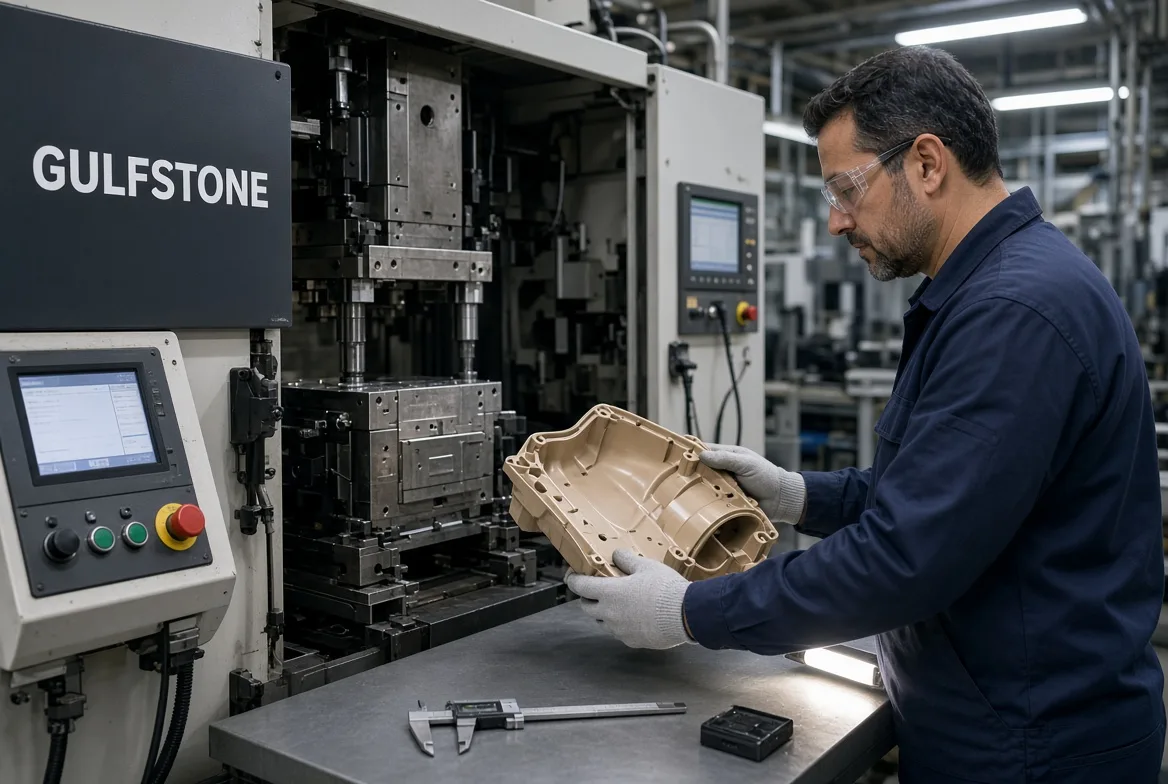
Glass-filled parts take their first inspection at 75,000 cycles. Unfilled ABS stretches to 125,000. Heavier service follows wear, and the interval shortens again if gate wear shows on the first inspection sample.
Cycle count is the honest trigger, not calendar time. A tool that runs hard for six months needs its PM sooner than one that sat idle for a year, and the tool-steel wear mechanisms behind those intervals are covered in the ASM materials reference.
⚙️ Technical Detail: A three-plate hot runner setup adds roughly 15% to 20% to tool cost, but it eliminates runner regrind and shortens cycle time. It only pays back above roughly 200,000 shots.
Budget Mistakes and Offshore Trade-Offs
Buyers confuse machine cost with mold cost. Others approve weak DFM and pay later through engineering change orders. Many underestimate the T1 and T2 correction loops entirely, and low quotes often omit tool ownership, warranty or transfer clauses.
Offshore quotes can save money upfront, but weak DFM review, QA gaps and logistics accountability can erase that gain. One $72,000 offshore quote beat a $104,000 domestic build, then poor DFM drove $16,000 in ECOs and two air-freight trials added $7,400.
Late design changes carry their own tax. A post-T1 boss move added six weeks and $9,800 in rework, retrial and polish, from a CAD edit that looked like 30 minutes.
That risk is priced on the OEM/ODM page when a program keeps design open past tool kickoff, and the certification consequences of a late material change sit on the certifications page.
⚖️ Trade-off: Offshore tools can cut CapEx 20% to 30%, but DFM review, third-party QA and transfer terms must be funded up front or the saving disappears at the first correction loop. The RV Industry Association is the reference point for how US-market RV components are validated, which sets the floor a transferred tool must still meet.
Conclusion
A defensible tooling number is a range that only becomes decision-useful once geometry, volume, steel choice, cavity strategy and maintenance assumptions are fixed. Headline ranges are a starting point, not an answer.
DFM discipline often matters more than quote-shopping. Steel and cavity strategy must follow lifecycle volume rather than habit, and maintenance belongs in the original business case, not the first surprise invoice.
Demand an auditable quote, an amortization model and a maintenance reserve. That rule lets procurement challenge any quote, engineers see which geometry inflates NRE, and product managers build a clear break-even story.
The economics are explained here as they run on the floor. The cheapest tooling route is not the recommendation; the right tool for the full program life is. If the part must drop into an existing RV envelope, the fitment framework lives on the RV OEM solutions page, and the plant and tool room is documented on the factory page.
For a second opinion on a tooling quote, send the part drawing and forecast volume through the contact and RFQ page, or start with the OEM/ODM development funnel. The after-sales terms cover what happens when a tool needs service in the field.
Transparency note: Gulfstone builds gas water heaters under client brands and ships them from Foshan, so it has a commercial interest in how these products are specified.
Material grades and tolerances in this article are illustrative of the class of part, not a released Gulfstone drawing, and any figure used in a purchase decision should be confirmed against a factory record. I receive no manufacturer kickbacks for these findings.
Frequently Asked Questions About Injection Mold Tooling
1. How much do injection molding machines cost?
Machine cost is not part of a tooling quote. It is the hourly rate or capital cost of the press, and press size drives it — a large housing can force a larger machine at a higher rate. Tooling is the separate one-time CapEx for design, steel, machining, polishing, heat treatment, fitting and trials.
2. How long does an injection mold last?
Tool life depends on mold class, steel grade, resin abrasiveness, maintenance discipline and operating conditions, so there is no single lifespan. Soft aluminum tools run 5,000 to 10,000 shots, aluminum bridge tools 10,000 to 50,000, P20 production tools target 500,000, and H13 complex tools target 1 million or more.
3. What is an injection molding tool?
An injection molding tool is the precision-built asset that holds the cavity, core, cooling, ejection and moving actions needed to shape molten plastic into a repeatable part. It is not the press. The press supplies clamp force, heat and pressure; the tool holds the geometry.
4. Is injection molding cost-effective?
Yes, when volume, tool life, scrap control and revision discipline can amortize the fixed tooling spend. The same part can cost $0.18 from a $120,000 tool and $0.50 from a $40,000 tool once rework is counted, so the price tag alone predicts very little.
5. Why is my tooling quote higher than a competing one?
Usually because the tools are not equivalent. Cavity count, steel hardness, slide and lifter count, hot runner, cosmetic class and trial scope all move the number, and a quote that omits them is a guess. Compare quotes line by line against the same tier before treating the gap as a saving.
6. Should I choose P20 or H13?
Choose by lifecycle and cosmetics. P20 at 30 to 32 HRC suits an internal part on a 500,000-shot program. H13 at 48 to 52 HRC holds polish through thermal fatigue on a visible, textured shell, at the cost of extra machining days and higher upfront CapEx.
7. What does preventive maintenance cost on a mold?
Plan on 2% to 4% of new-tool value each year, plus a reserve for mid-life inserts. Review a rebuild once repair cost reaches 40% to 50% of new-tool value, and set PM by cycle count rather than calendar time.

Forward
Co-founder & General Manager, GulfstoneGas appliance manufacturing and certification
Most of what decides a gas appliance is settled before anything is built — on the drawing, at the cut-out, in the tolerance someone chose for the gas path. I have spent my working life on the manufacturing side of that decision, and this is where I write down what it has taught me.
Nothing here is written from a sales desk. Every note comes off the floor: a batch held until a reason was found, a fitting that failed in transit, an approval path that only made sense once the destination market was fixed. If you read these first, the opening conversation starts at the standard rather than at the beginning.
- Gas water heater engineering
- Design for manufacturing
- Certification path selection
- Private-label tooling
- Off-grid and outdoor water heating
- Top 8 Outdoor Portable Gas Water Heater Factories in China for B2B BuyersNov 4, 2026
- Custom RV Appliance Industrial Design: An OEM Brief to a Validated PrototypeNov 3, 2026
- How to Build Custom Thermostat UI Design Software for OEM Embedded PanelsNov 3, 2026
- Top 8 RV Water Heater OEM Suppliers Canada: Vetted for Volume BuyersNov 3, 2026
- Top 10 Portable Propane Water Heater Manufacturers USA: A No-Hype Buyer ShortlistNov 2, 2026
- PPWR Compliance Checklist for EU Water Heater Packaging: The 10 Documents Before the Container LoadsNov 2, 2026
Fifteen years in appliance manufacturing — home appliances, RV refrigeration, then gas water heating — from the drawing to the shipping container.
Leads Gulfstone's design-for-manufacturing reviews and the certification path selected for each destination market.
Works directly with OEM and private-label buyers on tooling, tolerances and the approval file.