Table of contents
- Key Takeaways
- Leading 10 Portable Water Heater Factories in China: The Vetted Shortlist
- What Are the Four Stages of Vetting a Portable Water Heater Factory in China?
- Sourcing the Build After the Shortlist
- Conclusion
- Frequently Asked Questions About Portable Water Heater Manufacturers China
- 1. What Certifications Should a Buyer Request First?
- 2. Is a Gas or Electric Portable Heater the Better Fit?
- 3. What Should You Request Before Paying for Samples?
- 4. Why Does Direct-Factory Sourcing Usually Beat a Generic Broker?
- 5. Is a Portable Gas Heater Suitable for RV Use?
- 6. How Do Portable Gas Water Heaters Actually Work?
- 7. What Testing Proves a Unit Is Safe to Ship?
- 8. How Fast Can a Private-Label Program Start?
Key Takeaways
- This shortlist of portable water heater manufacturers China covers ten factories, judged on product scope, export readiness and compliance discipline.
- Vangood is the established pick for an outdoor portable gas water heater program.
- Anto and JNOD fit electric and instant tankless lines. Neither is a propane camping specialist.
- Confirm who owns the certificate file before you pay for samples.
- Vet every unit with 100% combustion and gas safety testing, not batch sampling.
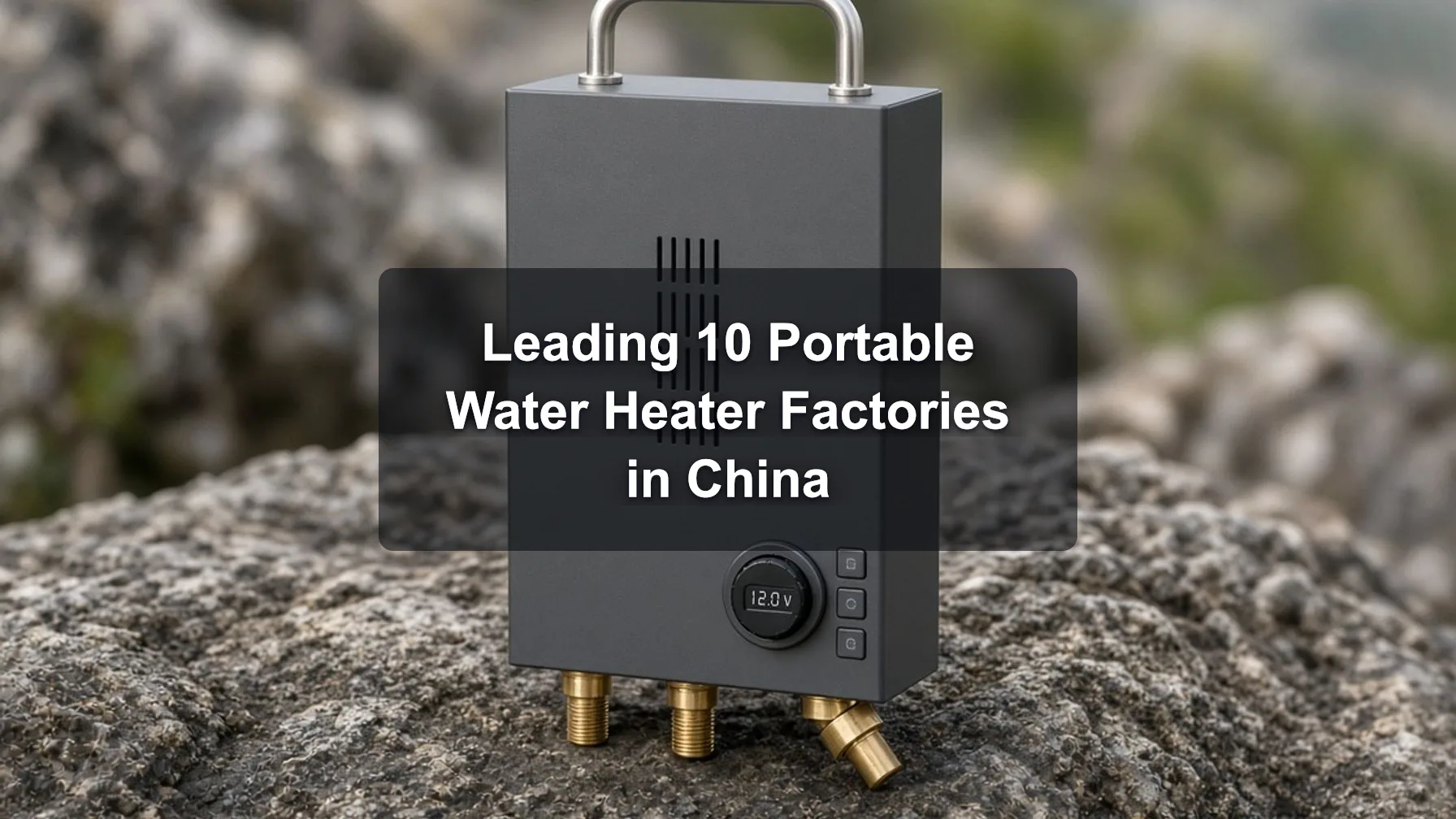
Ten China-based factories, checked for OEM and ODM fit and sorted by the platform each one actually builds. Portable gas and portable electric are different supply chains, and most of the ten do only one of them well.
Each factory was judged on four points: what it builds today, how ready it is to export, whether the water heater paperwork survives an article-level audit, and how the range fits an importer or a private-label program. The same four checks sit inside the quality control standard Gulfstone applies to its own lots.
⚠️ Caution: A certificate logo on a brochure proves nothing. The model-level test record and the named file holder decide whether a unit ships. Confirm both before a purchase order, not after the container lands.
Leading 10 Portable Water Heater Factories in China: The Vetted Shortlist
Ten factories, one row each, sorted by the platform each one builds. The platform column matters as much as the ranking: several names on this list are not portable specialists yet, and the row says so where it applies.
| Factory | Base | Platform and Strength | Best Fit For |
|---|---|---|---|
| Vangood | Zhongshan | Outdoor gas, OEM/ODM | Camping and outdoor kitchens |
| Anto | Zhongshan | Electric storage, POU | Electric RFQs, low MOQ |
| JNOD | Foshan | Instant electric tankless | Private-label tankless lines |
| Anlabeier | Zhongshan | Instant electric, boilers | Small custom projects |
| Haobang | Zhongshan | Broad gas range | Multi-category bundles |
| Nobin | Zhongshan | Large gas, boilers | Volume gas programs |
| Xiangji | Zhongshan | Full-chain gas | Component-control buyers |
| Aokesi | Zhongshan | General gas appliances | Multi-category gas bundles |
| Free Energy | Shunde | Low-NOx gas, modules | Emissions-led heating |
| Jaye Heater | Huizhou | Heating elements | Element sourcing only |
Read the platform column before the ranking. A factory that wins a gas-camping brief loses the electric one outright, and the last name on this list supplies a component rather than a finished appliance.
1. Vangood: Best Established Pick for Outdoor Portable Gas Water Heater Programs
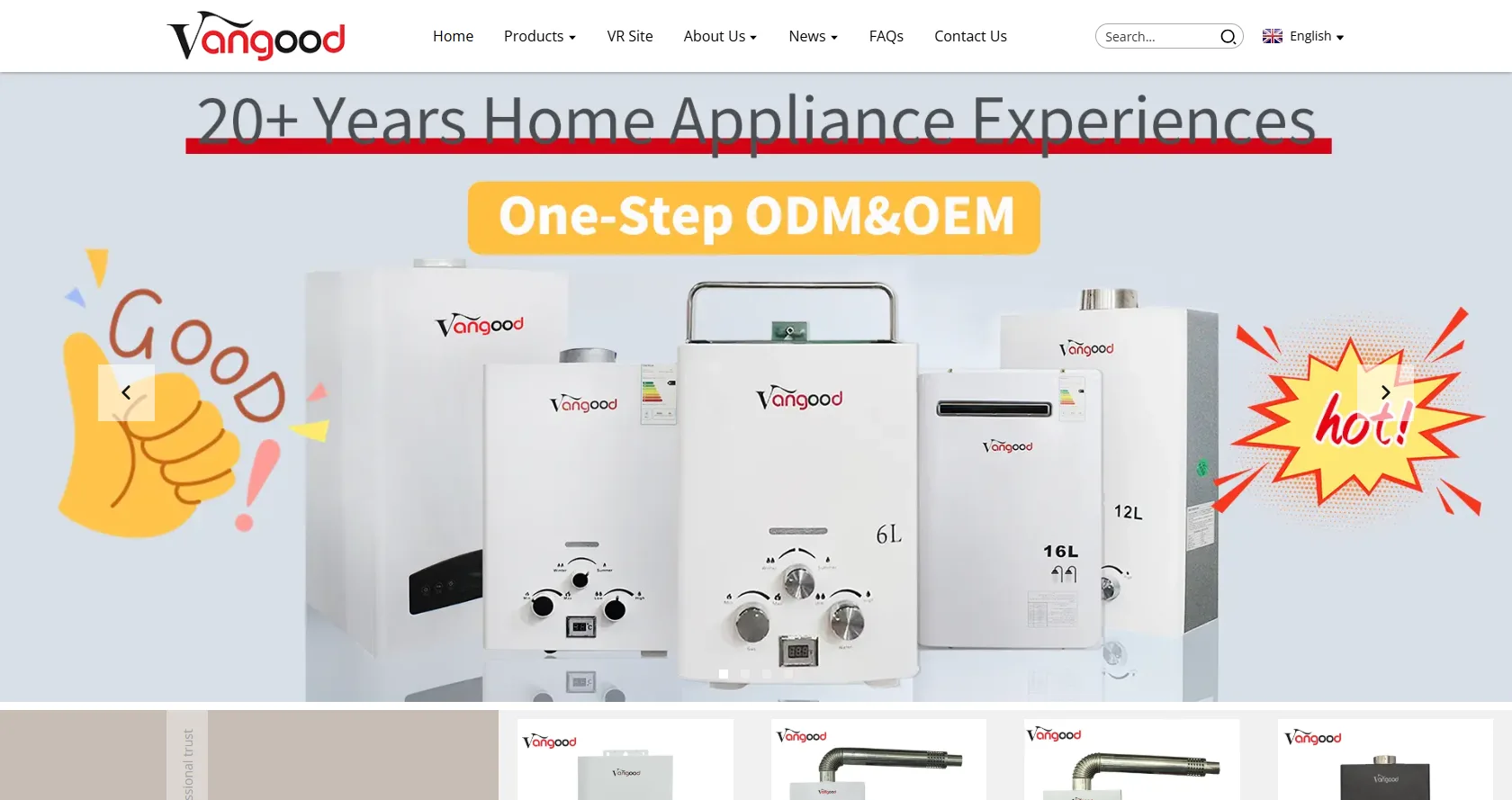
Vangood leads this shortlist for outdoor gas work, and the fit rests on product alignment rather than on public pricing or blanket certification claims. Its range already leans toward outdoor use, and the factory takes OEM and ODM work directly.
Founded in 2001 in Zhongshan Dongfeng, it builds roughly 150,000 gas water heaters a year and runs an integrated component supply that shortens sourcing loops. Camping and outdoor-kitchen positioning is visible across the storefront, and the OEM and ODM work maps onto the development funnel Gulfstone runs from drawing to line plan.
📌 Our Verdict: Verify CE, CSA or AGA file ownership, portable-specific safety features, low-water-pressure startup and retail packaging scope before committing.
2. Anto: Best Electric-Specialist Option for Point-of-Use and Non-Gas Projects
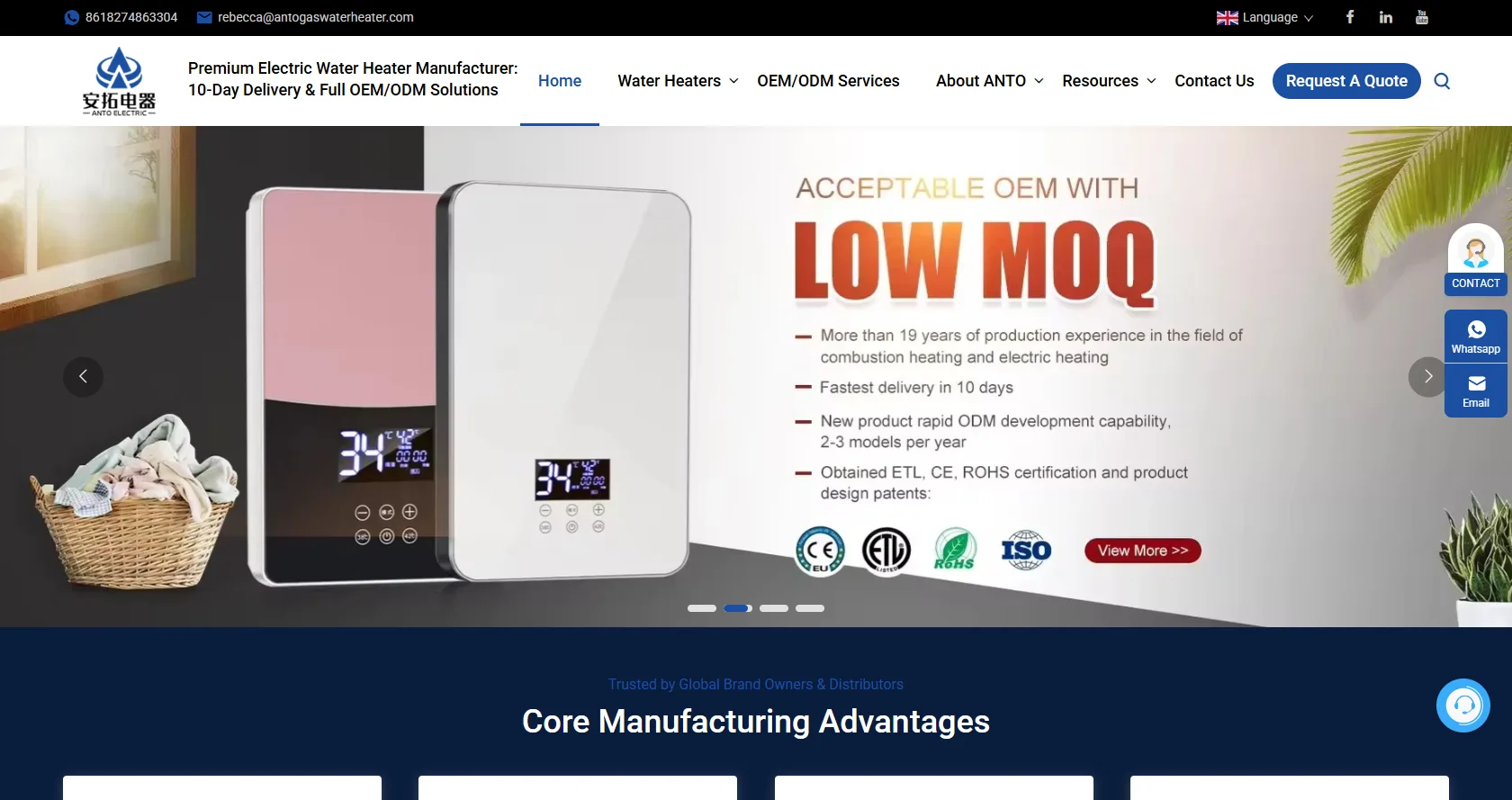
Anto is the stronger electric and point-of-use pick, not a portable propane camping match. Founded in 2001, it runs about 10,000 square metres with more than 200 employees and exports to over 50 markets.
It builds storage, instant and point-of-use electric heaters with OEM and ODM support, which fits compact-portability RFQs. The gap is gas, so do not force a propane camping program onto this line. Check the CE/RoHS/ETL/UL pathway the certifications page sets out, plus packaging flexibility.
📌 Our Verdict: Strong electric and point-of-use match. Ask who holds the exact certificate file, not for a logo on a brochure.
3. JNOD: Best Export-OEM Choice for Instant Electric Tankless Lines
JNOD earns its slot on export-oriented instant electric manufacturing, not on camping gas. Founded in 2009 in Foshan Shunde, it runs about 6,800 square metres with annual capacity near 300,000 units.
Multiple patents back its export OEM work in instant electric heaters and whole-house hot-water systems. Shortlist JNOD for private-label electric tankless with real engineering depth, and validate outdoor housing and certification scope before a PO. Price it against a landed cost model, not a unit quote.
📌 Our Verdict: Strong export-OEM fit for electric tankless lines. Verify certificate ownership and portable housing readiness independently.
4. Anlabeier: Best Smaller Patent-Backed OEM for Niche Electric Programs
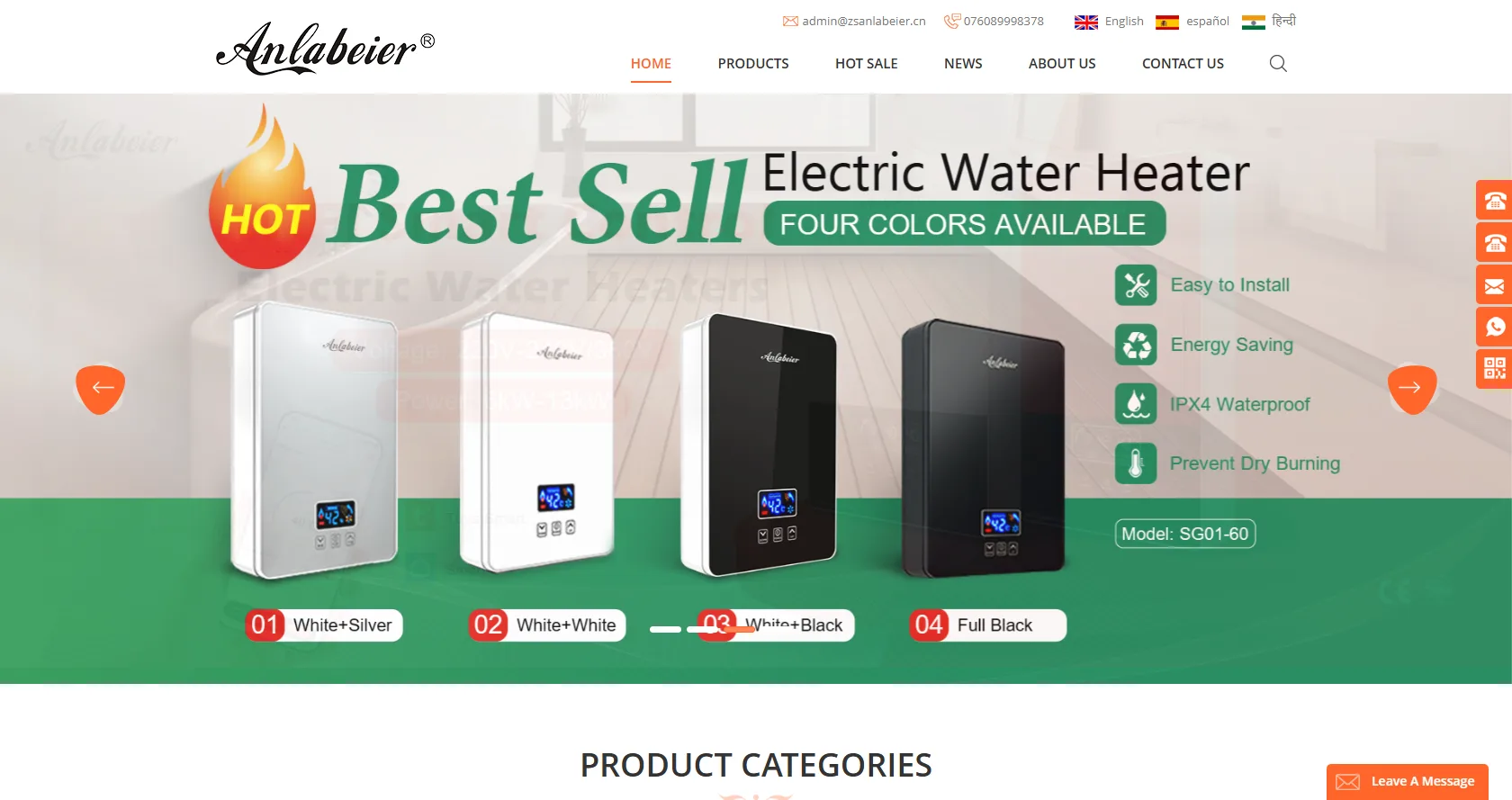
Anlabeier is not a portable gas volume play. Founded in 2010, it runs about 5,000 square metres and concentrates on instant electric water heaters and electric boilers.
Patent depth is real here, and so are the limits. This suits smaller custom electric projects where a buyer wants a responsive OEM partner rather than a large catalog, so confirm portable use-case experience, tooling responsiveness, and whether the factory can carry your target compliance path and after-sales parts plan before a PO.
📌 Our Verdict: A niche electric specialist. Do not assume gas-portable capability. Ask for a live tooling walkthrough and a sample compliance file.
Request a quote from Anlabeier
5. Haobang: Best Broad-Line Gas Factory for Scale and Range
Haobang covers the full spread of gas water heaters, and its appeal is breadth and scale rather than portable specialisation. Founded in 1997, it runs more than 30,000 square metres at roughly 500,000 units a year.
The mix spans gas water heaters, wall-hung boilers and instant electric models, all with OEM and ODM support. That suits a buyer who needs several gas categories from one factory and one contract.
Portable-camping readiness still needs buyer-side validation. Broad portfolio depth is not the same as a portable line, so ask for portable SKU evidence and unit-level combustion and gas-safety reports.
📌 Our Verdict: Strong broad-line gas factory for scale. Before a PO, ask for portable SKU evidence, certificate file ownership and unit test reports.
6. Nobin: Best for Larger Gas Programs That Need Automation and Export Reach
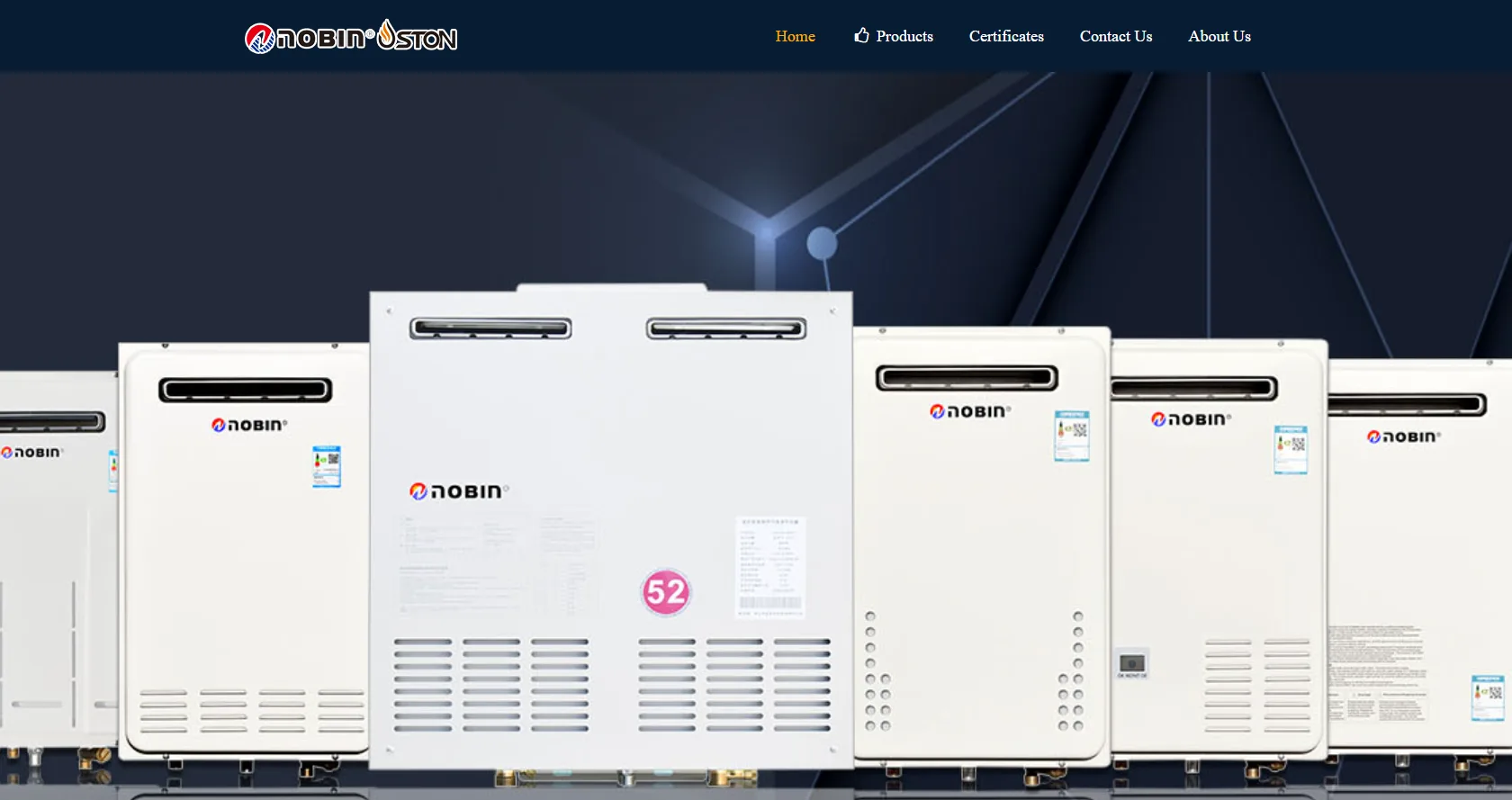
Nobin fits large-capacity gas water heaters, wall-hung boilers and serious export programs, not ultra-compact camping models. Founded in 2005, it has more than 300 employees, five automated lines and buyers in over 40 export countries.
It runs its own brand plus OEM work for international brands, which supports volume and automation rather than compact portable capability. That distinction is the whole decision.
Before a PO, test three things: whether compact portable SKUs exist at all, how spare parts are stocked and shipped, and whether the compliance packet matches your destination market rather than only the domestic line.
📌 Our Verdict: Convincing for larger gas platforms and export operations, not portable-only shortlists. Verify compact portable SKUs, spare-parts handling and destination-market compliance.
7. Xiangji: Best High-Volume Integrated Supply-Chain Player for Gas OEM
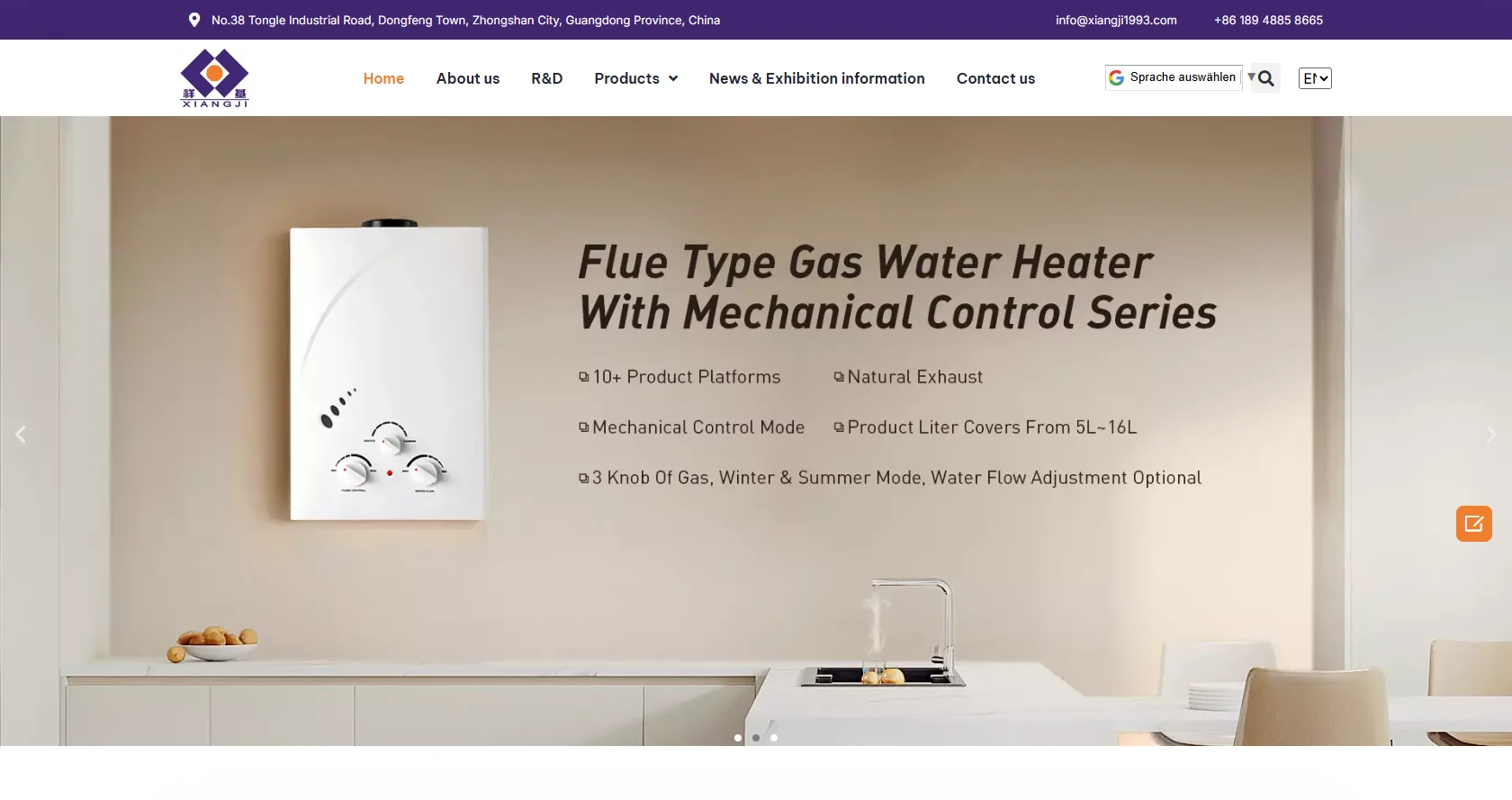
Xiangji stands out for factory integration and scale, but a buyer still has to confirm portable-program flexibility and MOQ fit. Founded in 1993, it runs around 60,000 square metres with more than 800 employees and capacity above seven million sets a year.
Full-chain integration covers heat exchangers, combustion systems and finished gas water heaters. That is component control for a buyer who needs it, and a price lever that smaller factories cannot match.
Small brands should verify mold protection, willingness to run a portable SKU, certification ownership and MOQ practicality before assuming this scale fits a niche outdoor launch. Scale alone does not guarantee niche flexibility.
📌 Our Verdict: Run a live portable-SKU trial and get MOQ terms in writing before you design around this factory.
8. Aokesi: Best General Gas-Appliance Exporter to Validate for Water Heater Specialization
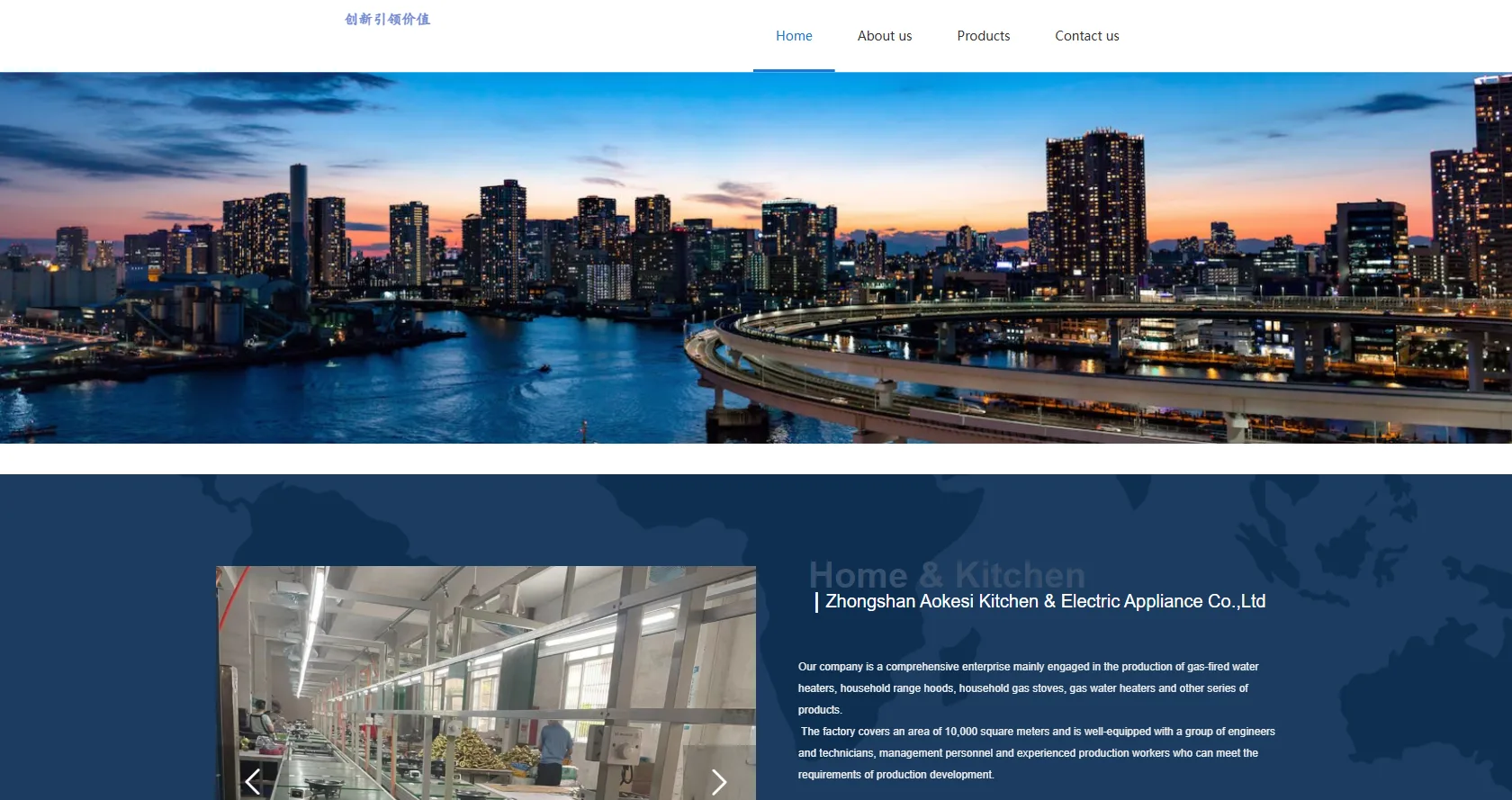
Aokesi is a general gas-appliance exporter to validate for water heater specialization, not a proven portable or RV specialist. It builds gas water heaters, range hoods and gas stoves from roughly 10,000 square metres.
That breadth suits buyers bundling several gas SKUs behind one container, though public detail on portable or RV-specific heaters is thinner than the stronger specialists offer. Treat Aokesi as a shortlist candidate, not a blind yes: verify dedicated outdoor models, certificate files and real safety-test experience.
📌 Our Verdict: Good for multi-category gas bundles. Do not award a portable or RV program until you see model-specific certificate files and safety-test evidence.
9. Free Energy: Best Low-NOx and Energy-Saving Gas Heating Projects
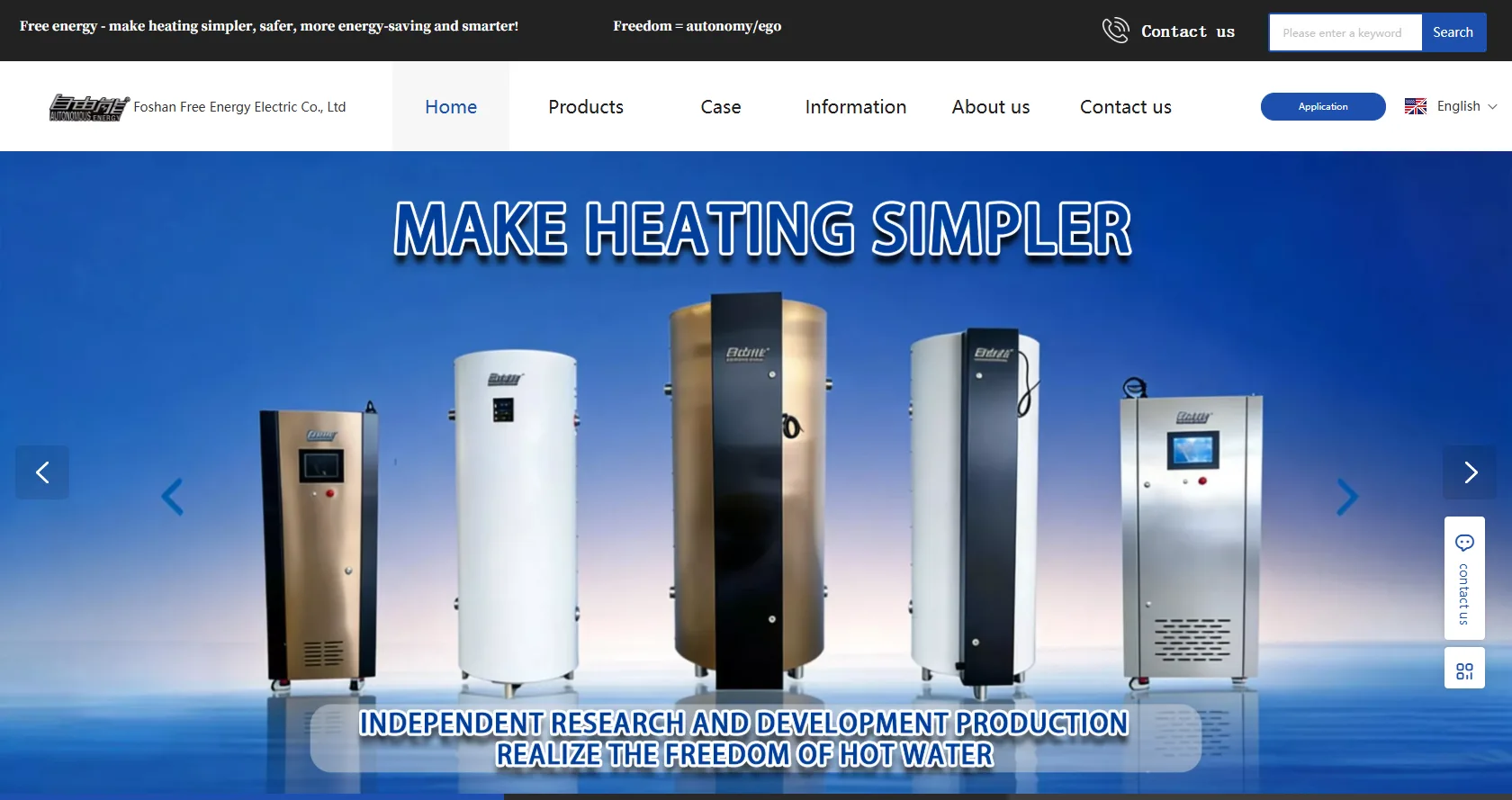
Free Energy is not a camping-first portable brand. Founded in 2016 in Shunde, it builds gas storage water heaters, full-premixed module boilers and steam generators, with low-NOx and energy-saving engineering plus customization support.
It matters when emissions, efficiency or custom gas-heating architecture outweigh portability. For a standard portable outdoor heater SKU, it matters much less.
Vetting here flagged three questions: does the portable line actually exist, who owns the compliance files, and can the factory supply retail documentation rather than engineering claims alone?
📌 Our Verdict: A strong low-NOx, energy-saving gas partner. Not a camping specialist until the line, certificate ownership and retail documents clear.
⚡ Power Move: Get the certificate holder’s name in writing before sampling.
Request a quote from Free Energy
10. Jaye Heater: Best Component Partner for Custom Heating Elements
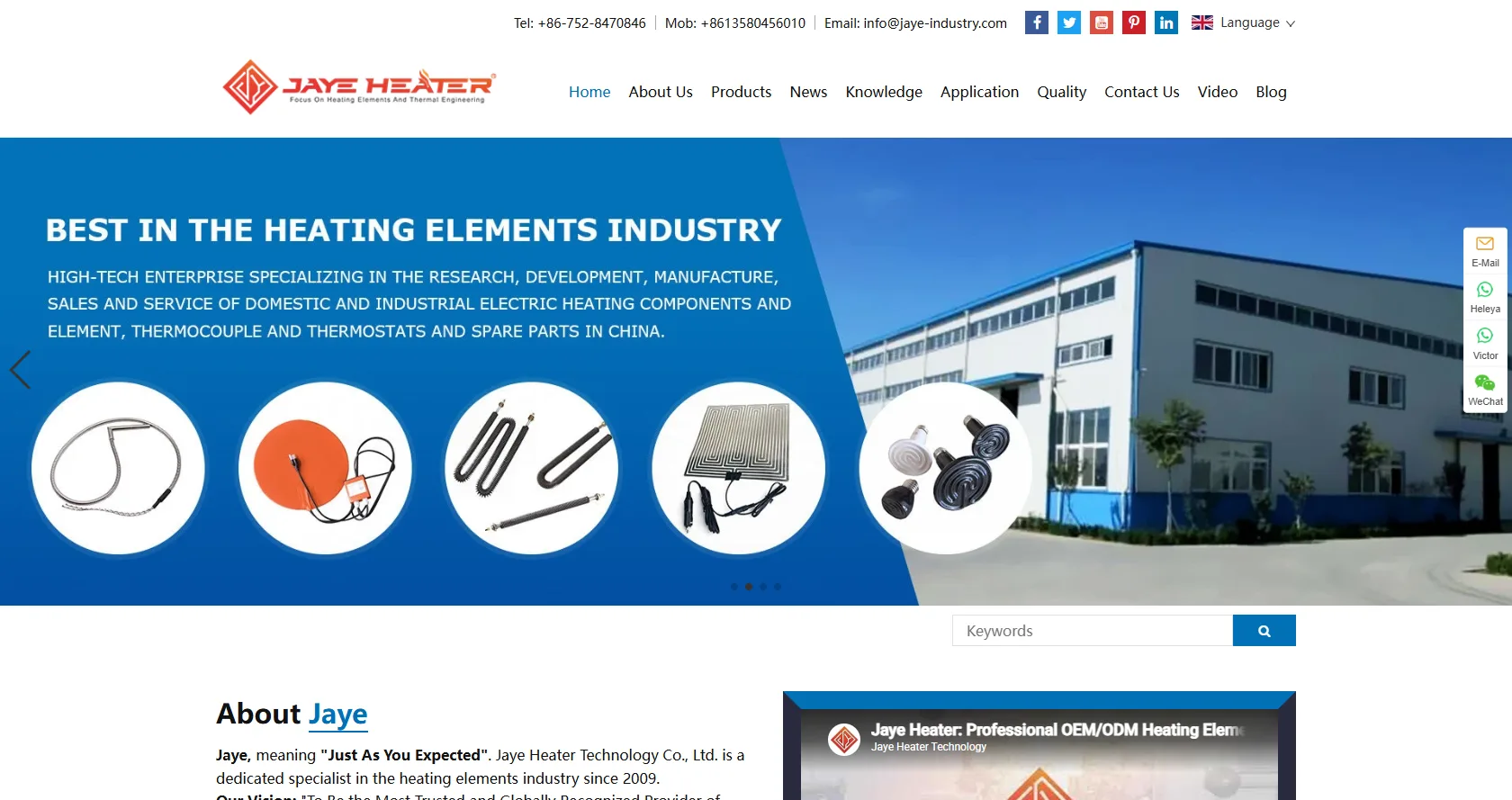
Jaye Heater is a component supplier for OEM and ODM customization, not a finished portable water heater factory. Based in Huizhou, it makes industrial and portable heating elements, including flange immersion heaters and custom high-power heating rods.
That serves brands and assemblers that need component-level engineering support. It does not make Jaye a finished-heater OEM, and treating it as one misreads the whole supply position.
If you split the element supplier from the finished-unit factory, answer one diligence question first: who owns final product integration, the compliance boundary and after-sales risk?
📌 Our Verdict: Use Jaye for element engineering, not as a finished-heater OEM. Get the integration owner in writing.
Request a quote from Jaye Heater
What Are the Four Stages of Vetting a Portable Water Heater Factory in China?
100% pressurized leak testing is the first gate. On the Foshan floor with QA Manager Jingjing Lu and Technician Wang, every unit ran through 100% combustion and gas safety testing instead of the usual batch sampling.
That standard is the same one a buyer should hold a shortlisted factory to, not a Gulfstone-only practice.
1. What Should You Lock Before a Sample Is Released?
Lock six inputs on day one: destination market, gas type, pressure range, temperature-rise target, ignition method, and the approvals that market demands — CE under European Commission rules, CSA, or AGA.
Put document control in place before tooling, not after. A partial certificate packet stops customs clearance and retail review at the same point, and one missing page halts both. The stage closes with a signed scope sheet and a certificate checklist that names the file holder for every model you intend to order.
2. Why Does DFM Review Happen Before the Sample?
DFM review covers burner layout, heat exchanger architecture, gas-valve selection, ignition reliability, enclosure durability, hose routing and serviceability, all before a sample is built. That review is the front end of the manufacturing process behind any OEM build.
It also catches enclosure fit problems before tooling money is spent. A weak gas valve once cost two extra days of DFM review at low pressure, and it removed a field complaint that would have arrived a year later. The stage closes with a DFM report where every open risk is closed or carries an owner and a date.
3. What Do You Test When the Sample Arrives?
Test ignition stability, leak points, anti-freeze behaviour, labelling, drop resistance and any private-label packaging or cosmetic change. Never approve cosmetics until packaging matches the approved colour target.
Technician Wang flagged one leak point at the hose joint during a sample run, the clamp spec changed, and the unit went back on the bench. The stage closes with a signed sample report and a packaging drop-test record, both kept with the certificate file.
4. Which Gates Run Before the Container Ships?
The sequence is fixed: combustion verification, gas leak checks, water-path pressure testing, carton review, barcode and carton-mark validation, then compliance-document sign-off. No gate is optional. The North American path rests on a CSA Group report and a UL listing for any electrical side.
Over a 12-month portable appliance cycle, this direct-factory QC system held field defects below 0.5%. The figure is anonymized telemetry across portable appliance lines, not a brochure claim.
🔬 QA Floor Note: Jingjing Lu put it plainly: a certificate logo on a brochure means nothing. The unit test record and the file owner decide the release.
Sourcing the Build After the Shortlist
A shortlist narrows the field, and the build decides the rest. Certification scope is the part buyers underestimate, and the certifier matters as much as the mark: ETL listings are verified through Intertek, and the RoHS directive governs the restriction itself rather than the lab’s own rules.
For a vehicle-mounted program, check the RV Industry Association component expectations before the fitment drawing is signed. For an outdoor or overland enclosure, start from the portable water heater range and match the unit footprint to the pack size you ship.
💡 Key Insight: Rank factories by platform first, then by certificate ownership. A factory that wins the gas comparison can lose the electric one outright.
Conclusion
Portable water heater manufacturers in China do not compete in one market. They split into portable gas, instant electric tankless, broad-line gas at scale, and component supply, and the right name depends on which brief you are sourcing for.
Match the factory to the platform before comparing price, confirm who owns the certificate file before paying for samples, and run 100% combustion and gas safety testing rather than sampling. Vangood leads the outdoor gas slot, Anto and JNOD cover electric, and Xiangji and Haobang carry the volume categories.
Send the BOM and target market through the contact and RFQ page for a factory fit check. Bring the destination market and the platform you need, and the shortlist narrows from there.
I receive no manufacturer kickbacks for these findings.
Frequently Asked Questions About Portable Water Heater Manufacturers China
1. What Certifications Should a Buyer Request First?
Start with the market pathway, not a logo. For Europe, ask for CE and Gas Appliances Regulation evidence. For North America, request CSA-oriented reports. For Australia, confirm AGA relevance.
Add electrical approvals if the unit uses an igniter or comes from an electric line. Demand model-specific reports, factory-name consistency, and current expiry or version dates, because a certificate naming a trading company or an expired file will not clear a sourcing review.
2. Is a Gas or Electric Portable Heater the Better Fit?
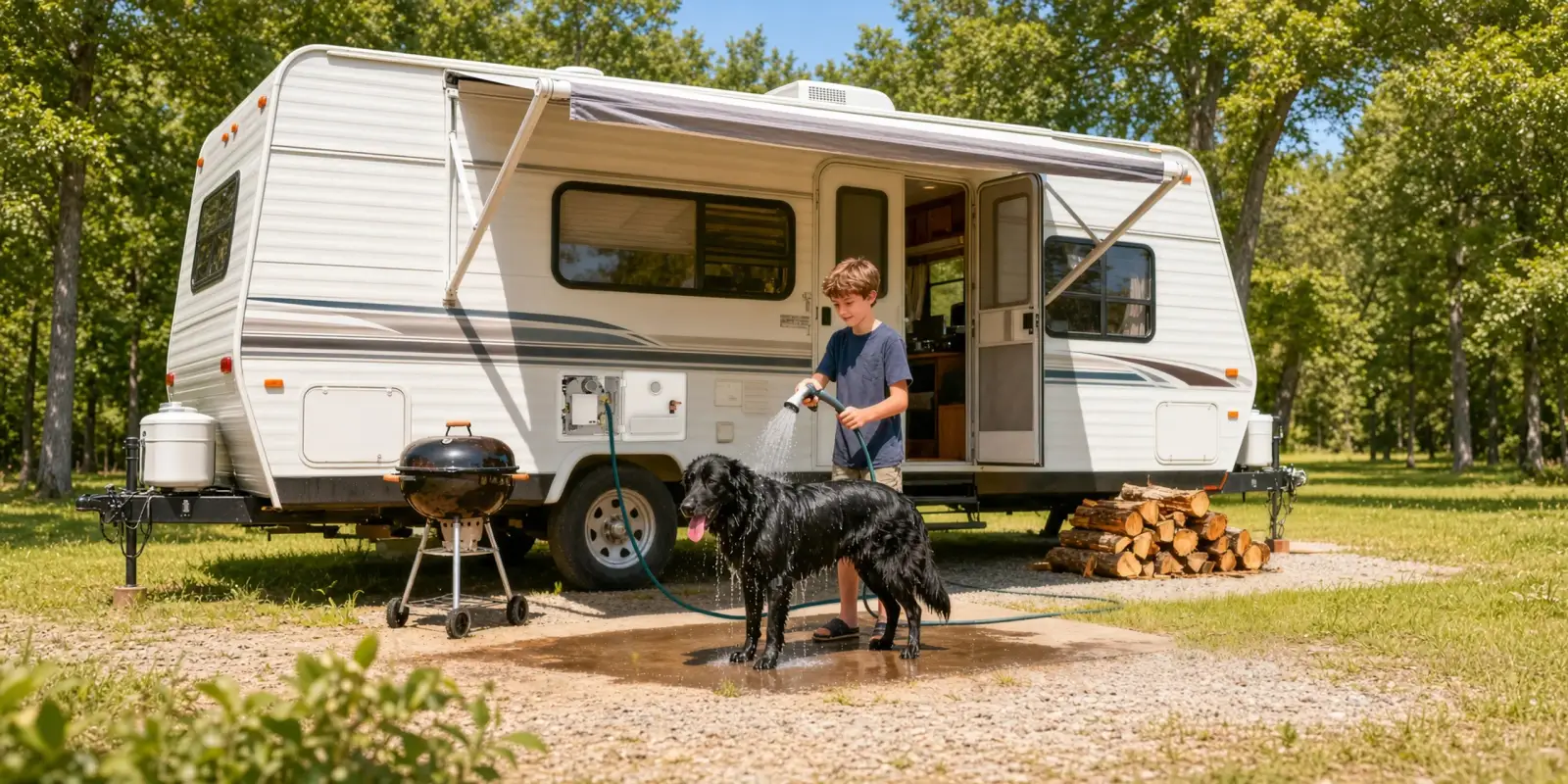
Choose by sourcing fit rather than by consumer preference. Propane tankless gas suits RV, camping and off-grid mobility programs, where no shore power is available on site.
Electric models suit stable-power, point-of-use or indoor-adjacent programs instead. Match the platform to your channel first, then confirm certification scope, the spare-parts plan and packaging.
3. What Should You Request Before Paying for Samples?
Request the current catalogue, a portable-model list, destination-market compliance status, tooling ownership terms, the spare-parts policy, QC video evidence and the packaging spec. Confirm in writing who handles corrective actions.
These items expose factory fit faster than a quotation does. If the factory cannot name both the certificate holder and the corrective-action owner, pause the process there.
4. Why Does Direct-Factory Sourcing Usually Beat a Generic Broker?
Direct factories on a shortlist like this one give you DFM access, faster document control, tighter corrective-action loops and clearer accountability when a safety issue appears.
A broker adds a handoff between you and the people who build the unit. That handoff is where certificate ownership, part numbers and test records get lost.
5. Is a Portable Gas Heater Suitable for RV Use?
A propane tankless model is the usual fit for RV use when you need off-grid mobility and no reliable shore power. Confirm the market certification for the vehicle type before ordering.
Electric models fit stable-power, point-of-use or indoor-adjacent programs instead. Match the platform to the installation first, then confirm certification scope, the spare-parts plan and packaging.
6. How Do Portable Gas Water Heaters Actually Work?
A burner and heat exchanger do the water heating, while a gas valve and ignition system control combustion. Burner layout, exchanger architecture and ignition reliability are the parts that fail first.
Review all three before sample release. Every approved unit should then get 100% combustion and gas safety testing rather than batch sampling.
7. What Testing Proves a Unit Is Safe to Ship?
100% combustion and gas safety testing on every unit, plus water-path pressure testing, leak checks and a signed sample report. Batch sampling leaves untested units in the container.
Document sign-off closes the sequence. Keep the test records with the certificate file, because the two are read together at customs and at retail onboarding.
8. How Fast Can a Private-Label Program Start?
The clock starts at sample approval and spec freeze, not at first contact. DFM review and the sample stage set the pace, and a certificate gap is what delays most launches.
Plan the certification pathway alongside the tooling, not after it. Starting both in stage one keeps the launch date attached to the build rather than to the paperwork.

Forward
Co-founder & General Manager, GulfstoneGas appliance manufacturing and certification
Most of what decides a gas appliance is settled before anything is built — on the drawing, at the cut-out, in the tolerance someone chose for the gas path. I have spent my working life on the manufacturing side of that decision, and this is where I write down what it has taught me.
Nothing here is written from a sales desk. Every note comes off the floor: a batch held until a reason was found, a fitting that failed in transit, an approval path that only made sense once the destination market was fixed. If you read these first, the opening conversation starts at the standard rather than at the beginning.
- Gas water heater engineering
- Design for manufacturing
- Certification path selection
- Private-label tooling
- Off-grid and outdoor water heating
- Top 8 Outdoor Portable Gas Water Heater Factories in China for B2B BuyersNov 4, 2026
- Custom RV Appliance Industrial Design: An OEM Brief to a Validated PrototypeNov 3, 2026
- How to Build Custom Thermostat UI Design Software for OEM Embedded PanelsNov 3, 2026
- Top 8 RV Water Heater OEM Suppliers Canada: Vetted for Volume BuyersNov 3, 2026
- Top 10 Portable Propane Water Heater Manufacturers USA: A No-Hype Buyer ShortlistNov 2, 2026
- PPWR Compliance Checklist for EU Water Heater Packaging: The 10 Documents Before the Container LoadsNov 2, 2026
Fifteen years in appliance manufacturing — home appliances, RV refrigeration, then gas water heating — from the drawing to the shipping container.
Leads Gulfstone's design-for-manufacturing reviews and the certification path selected for each destination market.
Works directly with OEM and private-label buyers on tooling, tolerances and the approval file.