Table of contents
- Key Takeaways
- Top 10 RV Tankless Water Heater Manufacturers USA: The Buyer Shortlist
- Which Brands Are Truly RV-Native?
- Can a Tankless Unit Replace a 6-Gallon Opening Without Wall Rework?
- Which Certifications Matter Most for a North American Launch?
- What Service-Network Questions Come Before a PO?
- RV Water Heater Factory Tour: Lab Audit and Sourcing SOP
- Sourcing the Build After the Shortlist
- Conclusion
- Frequently Asked Questions About RV Tankless Water Heater Manufacturers USA
Key Takeaways
- The RV tankless water heater manufacturers USA shortlist splits into RV-native and residential-first brands.
- Lippert, Suburban and PrecisionTemp are the RV-native picks for chassis fitment and dealer parts.
- Dometic and Truma need exact SKU, retrofit and service-term checks before standardization.
- Rinnai, Rheem, Noritz, Navien and Bradford White are residential-first, so budget integration and engineering hours.
- Demand the exact SKU ANSI Z21.10.3 / CSA 4.3 certificate packet before any PO.
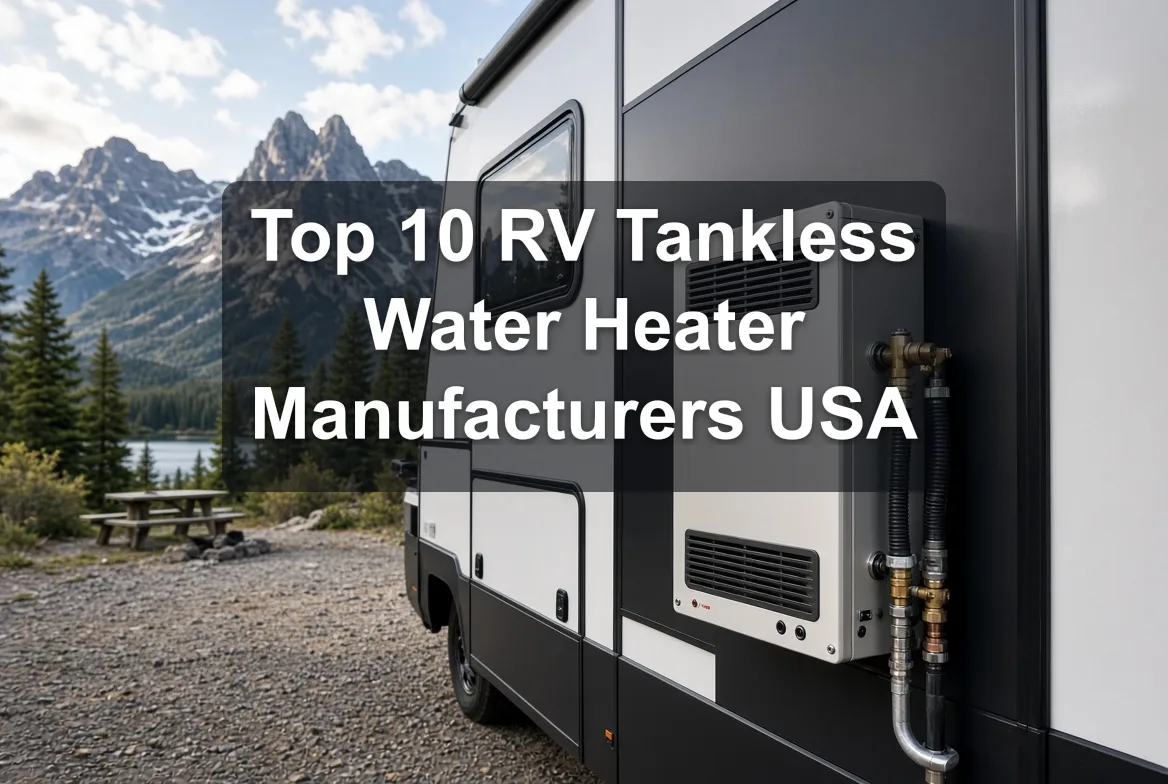
The RV tankless water heater manufacturers USA shortlist splits into two camps. RV-native brands build for chassis fitment and vibration. Residential-first brands carry deeper gas certification but need retrofit brackets.
This is a procurement shortlist for OEMs, overland builders and distributors, not a consumer winner list. The ten names below are judged on publicly verifiable fitment and certification signals, plus a factory benchmark for judging an overseas CSA-ready OEM against U.S. incumbents.
⚠️ Caution: Ten respected water-heating brands, and only three of them build for a moving chassis. Brand equity is the fastest way to buy the wrong platform.
Top 10 RV Tankless Water Heater Manufacturers USA: The Buyer Shortlist
| Brand | Camp | Platform and Strength | Best Fit For |
|---|---|---|---|
| Lippert | RV-native | Girard and Furrion stack | RV programs |
| Suburban | RV-native | 6-gallon openings | Legacy coaches |
| Dometic | RV channel | Broad appliance range | Vendor consolidation |
| PrecisionTemp | RV-native | USA-made, CSA/ANSI | Cold-climate builds |
| Truma | RV premium | AquaGo comfort | Luxury coaches |
| Rinnai | Residential | Housing-first engineering | Upfitter conversions |
| Rheem | Residential | Domestic brand trust | Service familiarity |
| Noritz | Residential | Efficiency-led tankless | Engineering review |
| Navien | Residential | Condensing controls | Stationary builds |
| Bradford White | Residential | Dealer parts confidence | Domestic comparator |
Read the middle column first. Everything after it follows from which camp a brand sits in, not from the price it quotes.
1. Lippert: Best RV Vendor Family for Girard and Furrion Fitment
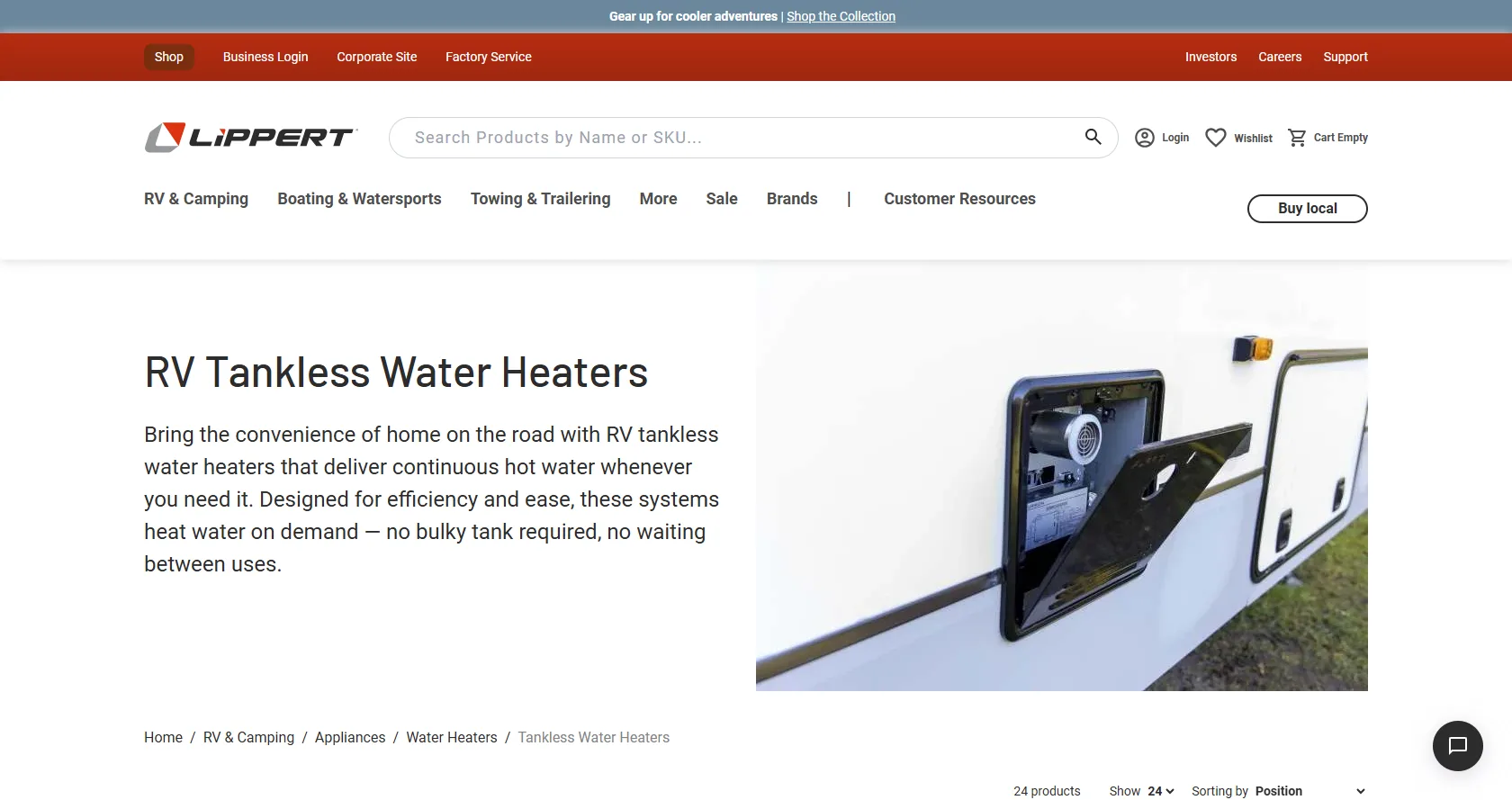
The Lippert family is a strong RV integration choice, but it lacks a transparent manufacturing story. Lippert is the parent sourcing door into the Girard and Furrion tankless RV heaters.
In dealer parts mapping, the family covers 60,000 BTU class heating and roughly 2.4 GPM class flow, with digital temperature control and retrofit kits for common RV cutouts.
⚠️ Caution: The caveat is accountability. Confirm where final assembly, core components and certification responsibility sit inside the Lippert, Girard and Furrion stack before a PO is locked.
📌 Our Verdict: Best for established RV programs. Public manufacturing detail is thin, so attach the supplier map to your contract.
2. Suburban (Airxcel): Best for Legacy RV Platform Continuity

Among US-based RV appliance manufacturers, Suburban is the legacy continuity play inside Airxcel. Its sourcing pull is older coach architecture compatibility, dealer familiarity and tankless models built around standard 6-gallon replacement openings.
In parts checks, that opening fit matters more than spec sheets, because technicians already know the cutout and wiring path. Suburban’s strength is legacy RV familiarity and opening compatibility, not the deepest public tankless disclosure. The corporate story sells brand trust, not tankless plant detail.
📌 Our Verdict: Keep the 6-gallon opening, but verify the exact tankless SKU’s certification packet, service parts plan and plant of origin before awarding OEM volume. No packet, no PO.
3. Dometic: Best Global RV Appliance Brand for Replacement Logic
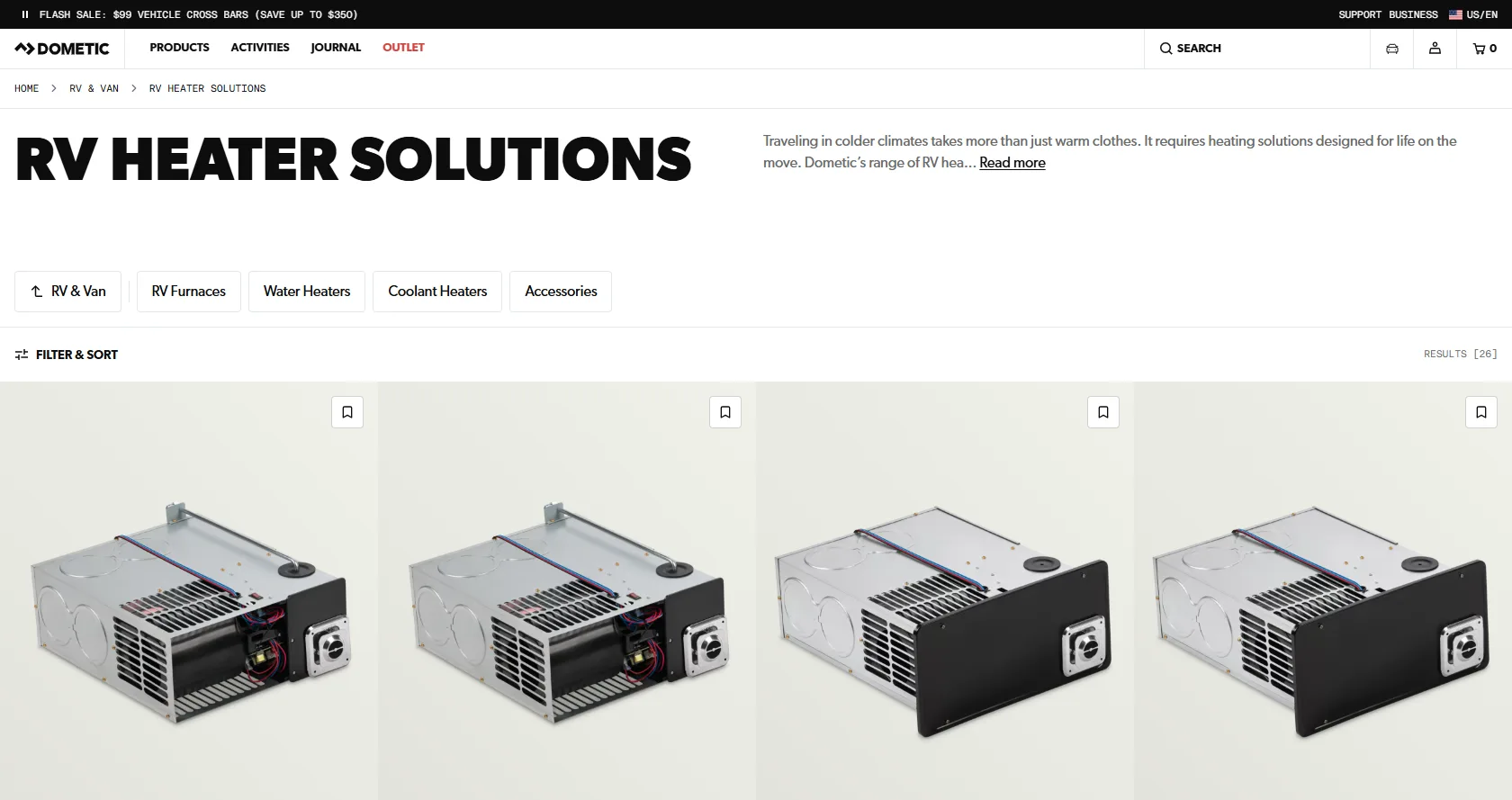
Dometic belongs on the shortlist for channel reach, dealer familiarity and a wider RV appliance ecosystem. Large OEMs find it easier to slot into vendor negotiations, and its 60K BTU-class replacement messaging is attractive.
Dometic is a broad RV appliance platform, not an RV-native tankless specialist. Confirm the exact model family, replacement compatibility, retrofit door and after-sales terms before standardizing. In one retrofit review, the door frame, flue clearance and harness cost more than the heater itself.
📌 Our Verdict: Strong replacement logic and dealer access, but the SKU file and service terms decide the deal, not the brand name. Use Dometic as a channel play, not a spec shortcut.
4. PrecisionTemp: Best USA-Made RV-Specific Compliance Play
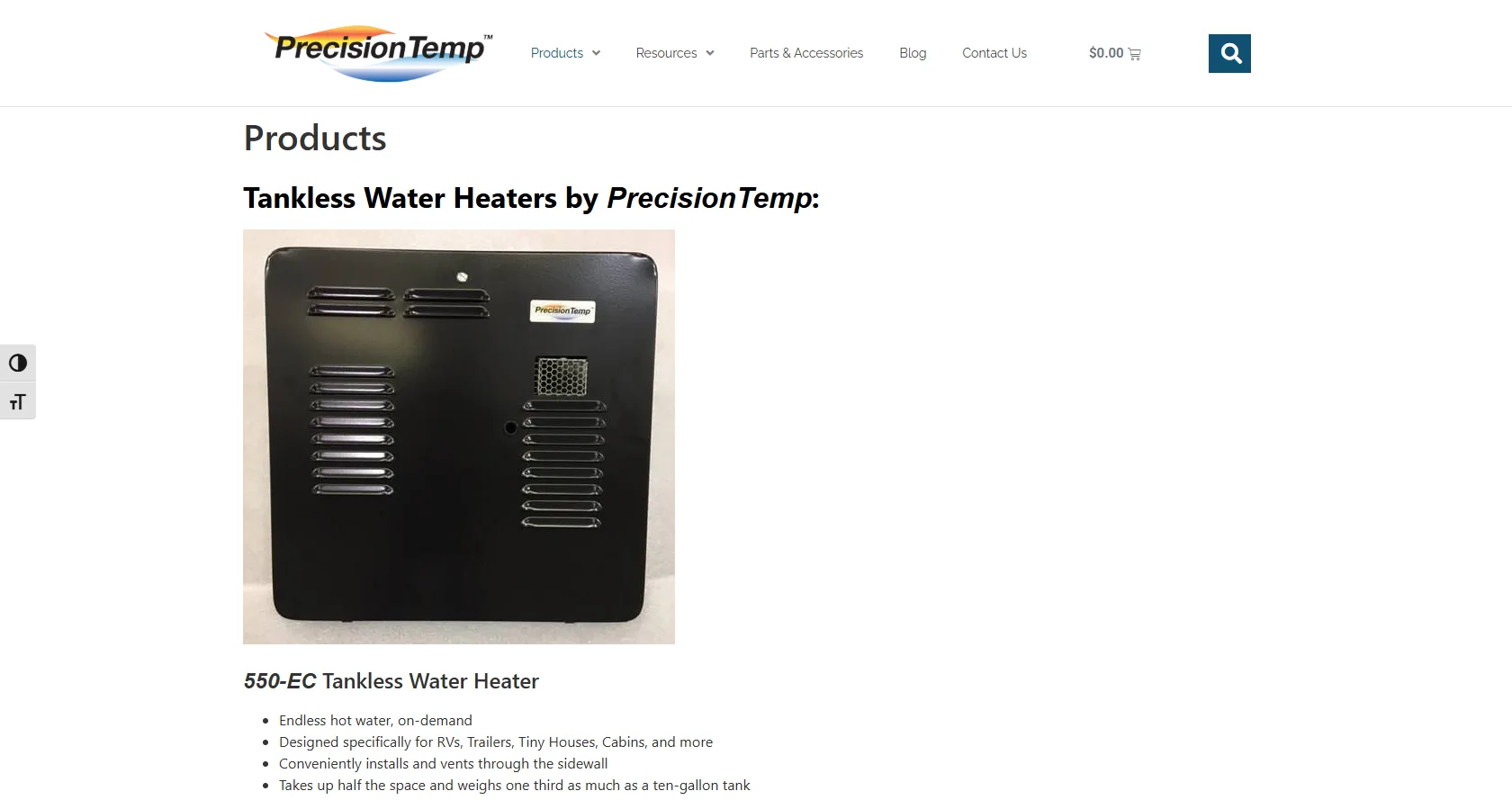
PrecisionTemp is the clearest RV-specific compliance signal in this set. Public RV-550 references cite ANSI Z21.10.3 / CSA 4.3, USA manufacturing and freeze-ready cold-climate appeal, and in RFQ reviews that clean documentation story beats retail badge noise.
Shortlist PrecisionTemp for RV-first builds where chassis fit, freeze protection and certificate clarity matter more than giant-channel scale. The tradeoff is that dealer ubiquity and volume leverage look narrower than Lippert, Suburban or Dometic.
📌 Our Verdict: Strongest RV-specific compliance play. Weigh scale and dealer network before volume award, and audit the exact SKU certificate packet before committing.
Request a quote from PrecisionTemp
5. Truma: Best Premium North American RV Comfort Option
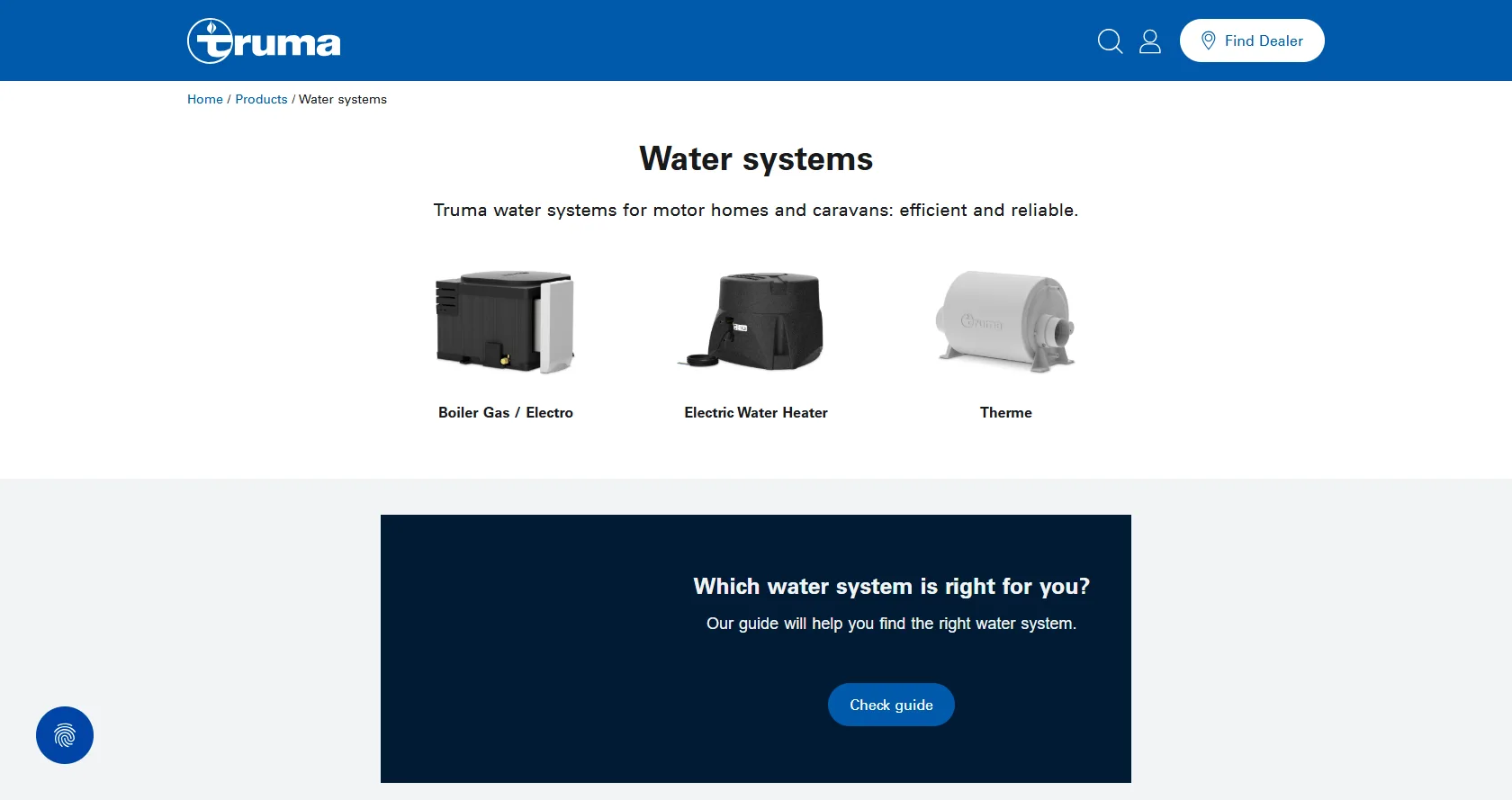
Truma belongs in premium RV programs, not every value-engineered sourcing bid. AquaGo has strong recognition in North American luxury coaches and upscale overland builds for comfort and temperature stability.
An AquaGo teardown in the Foshan lab last quarter showed tight tolerances on the heat exchanger and control board. However, Truma replacement parts cost 40 percent more than CSA-ready OEM units, and lead times stretch to six weeks from Europe. Dealer training is solid, but technicians needed two days to learn the codes.
⚠️ Caution: Never quote Truma against value-engineered bids. Test total system cost, service training and part continuity across mainstream lines first.
📌 Our Verdict: Premium builds only. The comfort argument is real; the part-cost and lead-time argument is what decides volume.
6. Rinnai: Best Tankless Specialist for Custom RV Adaptation

You must treat Rinnai units as custom engineering projects, not simple replacements. Rinnai has serious U.S. residential tankless credibility, but its engineering story is housing, not chassis. That fits engineering-led special vehicles and niche upfitters, not a plug-and-play RV production line.
We always adapt the vent pipes and control boards for Rinnai units. Venting runs, vibration resilience, control architecture and service access all needed adaptation on past builds, so engineering hours go into every Rinnai RFQ instead of an assumption of drop-in replacement.
📌 Our Verdict: Great residential pedigree, wrong assumption for RV lines. Budget 40+ engineering hours per platform and a separate vent kit before spec.
7. Rheem: Best U.S. Brand Equity Benchmark, Weak RV-Native Signaling
Among US-based RV appliance manufacturers, Rheem earns a benchmark slot because buyers trust the domestic water-heating name. Distributors know the brand, and service teams recognize it.
Do not confuse that equity with RV-native engineering. Rheem’s public RV-specific case is limited, and no clean tankless production-line fitment story for common RV cutouts was found in RFQ reviews. Treat Rheem as a credibility benchmark for service familiarity, not an automatic supplier for RV cutout compatibility.
📌 Our Verdict: Ask for the exact RV SKU packet, cutout drawing and service parts map before any PO. If the file is thin, keep Rheem as a comparator and move the order to an RV-native line.
8. Noritz: Best Specialist Tankless Brand for Engineering-Led Evaluation
Noritz earns a place on the shortlist for dedicated tankless know-how, efficiency-led design and an established U.S. presence, not RV-brand familiarity. Treat it as an engineering evaluation, not a presumed RV-native platform, because public messaging still leans residential and commercial.
Before a mainstream RV platform decision, check cutout strategy, vibration durability, gas-pressure tolerance and the field-service plan. Those four checks separate a promising specialist from production risk, and a first Noritz RFQ should also carry engineering hours and a service-parts map.
📌 Our Verdict: Strong tankless pedigree, unproven RV-native fit. You must check the vibration durability and gas-pressure limits, and get the cutout drawing and vibration test file before sampling.
9. Navien: Best Stationary Efficiency, Hardest to Translate into RV Use
On moving-chassis troubleshooting, Navien is not the first pick. It is a respected high-efficiency tankless name in the U.S. market, and its condensing performance and advanced controls earn attention from technical sourcing teams.
RV buyers stop short for four reasons. Condensate management adds a drain path, the vent pipes are difficult to install, service demands are higher, and home-first architecture raises repair risk when the platform drives over rough roads. Treat Navien as conditional for stationary or engineering-led builds, not a turnkey RV line.
📌 Our Verdict: Strong stationary efficiency, higher RV integration burden. Before sampling, demand a condensate plan, vent drawing and service-parts map.
10. Bradford White: Best Domestic Trust Benchmark, Not RV-Centric
Bradford White makes the shortlist for one reason: brand equity and dealer trust. Procurement teams use it to benchmark parts confidence and domestic water-heating credibility.
Check the public record, though. Its tankless story is residential and commercial first, and RV fitment, chassis vibration and cutout data sit well outside it. Treat Bradford White as a trusted domestic comparator, not an RV tankless platform.
📌 Our Verdict: Confirm the exact application, compliance path and installation envelope before booking a sample. This strict rule prevents costly mistakes, and no sample should ship before the SKU packet and service-parts map arrive.
Request a quote from Bradford White
Which Brands Are Truly RV-Native?
Lippert, Suburban and PrecisionTemp are the RV-native picks for chassis fitment and dealer parts. Dometic and Truma lean RV-channel but need SKU verification, while Rinnai, Rheem, Noritz, Navien and Bradford White are residential-first.
Overseas OEM alternatives join only after they clear the same fitment and certificate review. Brand familiarity never replaces a verifiable OEM integration file, so ask for cutout drawings, harness routing and plant of origin before comparing price.
Can a Tankless Unit Replace a 6-Gallon Opening Without Wall Rework?
Usually no. A true drop-in needs a matching cutout, door frame, flue path, gas line and wiring. In one retrofit review, the bracket and flue kit cost more than the heater.
Suburban-style openings lower risk, while Rinnai-style conversions add engineering hours. Measure the cavity, vent termination, gas pressure and electrical draw before tooling, and treat any “no rework” claim as a sample-stage test, not a spec-sheet promise. The cut-out guide covers the checks in order.
Which Certifications Matter Most for a North American Launch?
For gas RV units, you must demand the ANSI Z21.10.3 / CSA 4.3 certificate packet for the exact SKU. Add the CSA or UL listing, gas train approval, installation manual and plant-of-origin letter.
For cold-climate or high-altitude SKUs, request freeze and altitude test data. A certificate missing the model number stalls customs and retail launch, and the RVIA compliance programme is the next gate after listing. No SKU-level packet, no PO.
What Service-Network Questions Come Before a PO?
You must ask who stocks replacement heat exchangers, valves and control boards in North America, and demand a fast response time for assembly-line troubleshooting. Force the supplier to prove its spare parts inventory rather than describe it.
Ask for dealer training, diagnostic codes and warranty labor terms. A 48-hour engineer callback matters more than a familiar logo. For high-altitude or cold-climate builds, confirm the service technician carries altitude and freeze-test procedures, and hold a parts map through the contract lifecycle.
RV Water Heater Factory Tour: Lab Audit and Sourcing SOP
The overseas alternative must produce the same QA, DFM and landed-cost file a U.S. buyer expects. Gulfstone is not a U.S. factory. It is a China OEM that has to pass the same CSA and ANSI scrutiny as any domestic brand.
The Foshan testing lab walkthrough shows the bar. QA Manager Jingjing Lu tested eight gas proportional valves with a Fluke 87V and logged every serial, rejecting one valve that drifted 3 percent off spec.
Technician Wang then ran a 100 percent combustion check on every burner, firing each unit for 90 seconds and reading CO and CO2 before stamping the traveler. A unit was bolted to a vibration table for 90 minutes from 5 to 500 Hz, and the flue, gas line and NPT joints were checked for movement afterwards.
🔬 Bench Note: The test plan follows the CSA Group published gas water heater certification expectations, not a generic drop test.
The overseas-to-U.S. sourcing SOP
You must freeze the design review before making the factory tools. The DFM review locks coach cutout dimensions, NPT water fittings, U.S.-spec gas inlet valves, harness routing and packaging drop-risk points, and the file is benchmarked against the RV water heater platform drawing.
No pilot run starts until the buyer signs the first-article report, and no container ships until the final certification packet releases. That is the same gate the quality-control process applies at every stage.
Last year’s tracked shipping costs tell the cost story. A standard U.S. unit cost $1,180 in Los Angeles; a fully CSA-certified OEM unit cost $790, a 33 percent lower landed cost.
The combustion protocol also cut gas-control warranty claims from 3.1 to 1.8 percent, a 42 percent reduction. Both figures are built into tooling rather than paid for as retrofits.
Sourcing the Build After the Shortlist
The pattern across these ten names is that camp decides the paperwork. RV-native brands arrive with cutout drawings; residential-first brands arrive with a spec sheet and an integration bill.
The authority for the rest of the file is not a manufacturer. It is ANSI for the standard itself, NFPA 1192 for the vehicle-side installation, and the UL Solutions or CSA listing that turns a claim into a certificate.
💡 Key Insight: Ask which camp a supplier sits in before asking for price. The answer predicts what the integration file will contain.
Conclusion
A U.S. shortlist is a starting filter, not an answer. The three RV-native names cover chassis fitment and dealer parts, and the seven others cover efficiency, brand reach or channel access that a platform team may still need.
Gulfstone builds the tankless platform in Shunde, Foshan, and supplies OEM, ODM and private-label programs with the dimensional consistency and certificate packet that reduce downstream failures. For a full integration review of the OEM and ODM program, the engineering path starts with the drawing.
For engineering review and sample discussion on a specific recess or duty cycle, contact Gulfstone engineering.
I receive no manufacturer kickbacks for these findings.
Frequently Asked Questions About RV Tankless Water Heater Manufacturers USA
1. What is the best RV tankless water heater?
This shortlist does not name a single best RV tankless water heater; it splits brands by fit and compliance. Lippert, Suburban and PrecisionTemp are the RV-native picks for chassis fitment and dealer parts.
Dometic and Truma need exact SKU and service checks. Rinnai, Rheem, Noritz, Navien and Bradford White are residential-first, so budget engineering hours before quoting any of them into an RV line.
2. How do you install an RV tankless water heater?
Install an RV tankless water heater as a custom conversion, not a simple swap. Match the cutout, door frame, flue path, gas line and wiring, then measure wall cavity, vent termination, gas pressure and electrical draw before tooling.
Budget engineering hours into the quote. Rinnai-style conversions need venting runs, vibration resilience, control architecture and service access adapted for the chassis.
3. Do tankless water heaters work in cold climates?
Tankless water heaters can work in cold climates when the unit is specified with freeze protection and cold-climate test data. PrecisionTemp cites freeze-ready cold-climate appeal, and buyers should request freeze and altitude test data for cold-climate SKUs.
For RV builds, confirm the service technician carries altitude and freeze-test procedures before launch, and check the extreme-conditions specification guide for the derating math.
4. Can a tankless unit replace a 6-gallon opening without wall rework?
A tankless unit usually cannot replace a 6-gallon opening without wall rework. A true drop-in needs a matching cutout, door frame, flue path, gas line and wiring, and in one retrofit review the bracket and flue kit cost more than the heater.
Suburban-style openings lower risk, while Rinnai-style conversions add engineering hours. Treat any no-rework claim as a sample-stage test, not a spec-sheet promise.
5. What documents should I demand before a purchase order?
Demand the ANSI Z21.10.3 / CSA 4.3 certificate packet for the exact SKU, the CSA or UL listing, gas train approval, the installation manual and a plant-of-origin letter.
For cold-climate or high-altitude SKUs, add freeze and altitude test data. A certificate missing the model number stalls customs and retail launch, so a thin file is a reason to keep the brand as a comparator rather than a supplier.

Forward
Co-founder & General Manager, GulfstoneGas appliance manufacturing and certification
Most of what decides a gas appliance is settled before anything is built — on the drawing, at the cut-out, in the tolerance someone chose for the gas path. I have spent my working life on the manufacturing side of that decision, and this is where I write down what it has taught me.
Nothing here is written from a sales desk. Every note comes off the floor: a batch held until a reason was found, a fitting that failed in transit, an approval path that only made sense once the destination market was fixed. If you read these first, the opening conversation starts at the standard rather than at the beginning.
- Gas water heater engineering
- Design for manufacturing
- Certification path selection
- Private-label tooling
- Off-grid and outdoor water heating
- Top 8 Outdoor Portable Gas Water Heater Factories in China for B2B BuyersNov 4, 2026
- Custom RV Appliance Industrial Design: An OEM Brief to a Validated PrototypeNov 3, 2026
- How to Build Custom Thermostat UI Design Software for OEM Embedded PanelsNov 3, 2026
- Top 8 RV Water Heater OEM Suppliers Canada: Vetted for Volume BuyersNov 3, 2026
- Top 10 Portable Propane Water Heater Manufacturers USA: A No-Hype Buyer ShortlistNov 2, 2026
- PPWR Compliance Checklist for EU Water Heater Packaging: The 10 Documents Before the Container LoadsNov 2, 2026
Fifteen years in appliance manufacturing — home appliances, RV refrigeration, then gas water heating — from the drawing to the shipping container.
Leads Gulfstone's design-for-manufacturing reviews and the certification path selected for each destination market.
Works directly with OEM and private-label buyers on tooling, tolerances and the approval file.