Table of contents
- Key Takeaways
- Top 10 Camping Water Supply Systems: The Buyer Shortlist
- How Much Water Should a Camping System Be Sized For?
- Does a Camping System Need a Pump on a Pressurized Source?
- Can a Basic Camping Filter Remove Viruses?
- How Should an OEM Engineer Integrate a Water Supply With a Heater?
- Sourcing the Build After the Shortlist
- Conclusion
- Frequently Asked Questions About Camping Water Supply
Key Takeaways
- A water supply for camping is a complete system decision, not a single product.
- Split potable and wash loops: one gallon per person daily for drinking, one to two more for washing.
- Add a pump only for unpressurized sources; pressurized hookups need a regulator and a check valve.
- Basic filters stop bacteria and protozoa but not viruses; never label a filter SKU as a purifier.
- For heater loops, use 10mm ID hose, prefilter upstream, and target 1.5 to 3 PSI.
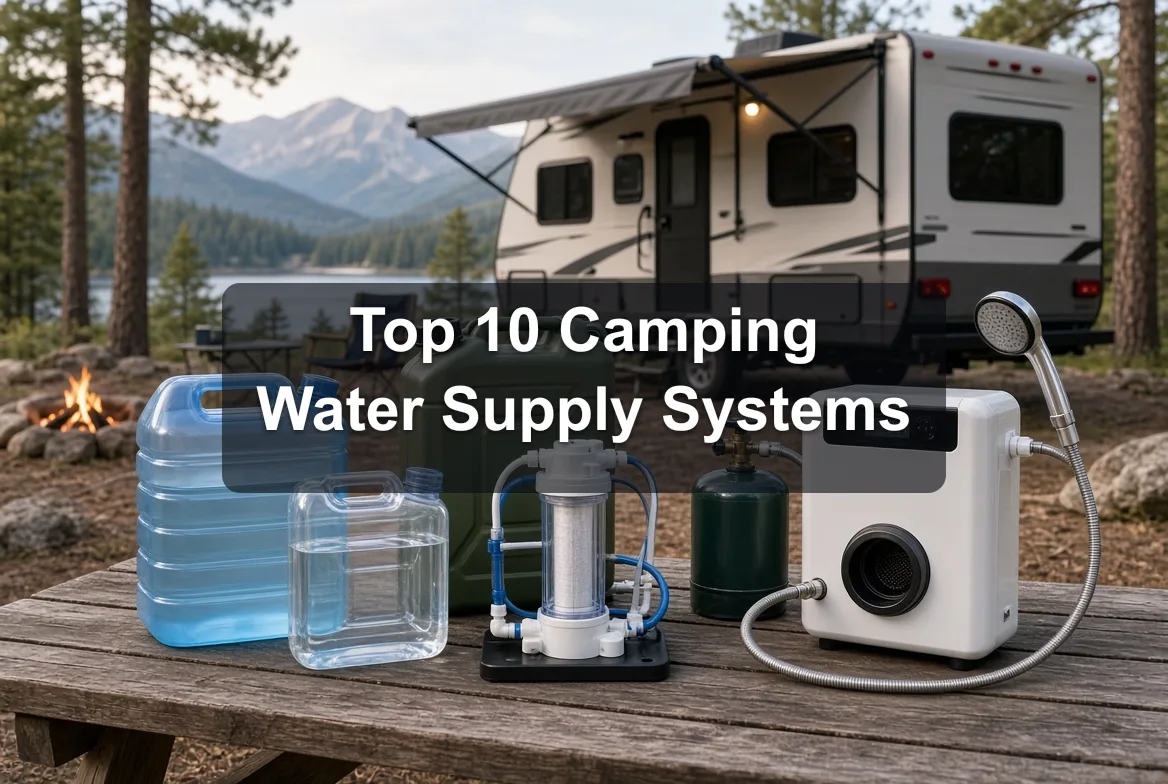
A water supply for camping is a complete system decision, not a single product. Procurement and engineering buyers must balance purification, storage, pump-fed delivery, RV filtration, heating, and fixed-site treatment.
These ten benchmark brands are reviewed across those layers, not as a backpacking-only roundup. The method pairs benchmark analysis with an OEM lens on design for manufacturing, compliance and failure prevention, and maps each layer back to the portable water heater range.
⚠️ Caution: The most expensive mistake in this category is buying a filter and printing “purifier” on the carton. Filters and purifiers are different tested classes, and a retail audit will catch the gap.
Top 10 Camping Water Supply Systems: The Buyer Shortlist
| Brand | Layer Covered | Platform and Strength | Best Fit For |
|---|---|---|---|
| MSR | Purifiers | Hollow-fiber, NSF P248 | Spec benchmark |
| LifeSaver | Jerrycan purifier | Pressurized virus removal | Off-grid groups |
| Katadyn | Gravity filters | 0.1-micron, 2 LPM gravity | Basecamps |
| Sawyer | Ultralight filters | Compact, long filter life | Backup kits |
| Reliance | Rigid storage | Spigot jug, retail pack | Dealer floors |
| Scepter | Rugged jerrycans | Thick military walls | Durability first |
| RotopaX | Vehicle mounts | Modular exterior mounting | Overland builds |
| Camco | RV accessories | Hoses, regulators, fittings | Hookup service |
| Guzzle H2O | In-vehicle UV | Point-of-use UV | Premium vans |
| Diamond H2O | Fixed-site plant | Softening and reverse osmosis | RV parks |
Read the table by layer, not by price. No single brand below covers more than two of the five layers, which is exactly why a camping water supply is assembled rather than bought.
1. MSR: Best Purifier Benchmark for High-Trust Drinking Water
MSR is the spec benchmark for purification, not a low-cost OEM source and not a full-loop platform for storage, pumping or heater integration. In the water loop, MSR solves safe drinking water only.
The Guardian line sets the reference. Advanced hollow fiber media, self-cleaning behavior and NSF Protocol P248 credibility give buyers a hard performance yardstick, and those were the specs suppliers struggled to match. Use MSR to test flow rate and clog behavior, not as a template for a volume SKU.
📌 Our Verdict: MSR is the spec benchmark for purifier performance. It is a poor cost model for a high-volume OEM build.
⚡ Power Move: Use MSR’s flow and clog data as the purifier spec, then quote a lower-cost pump-free build.
2. LifeSaver: Best Pressurized Jerrycan Purifier for Off-Grid Drinking Water
A portable water supply for camping is strongest with LifeSaver when a buyer needs pressurized, virus-focused drinking water in a jerrycan format. The unit stores and purifies in one body: you fill it, pressurize it, and dispense at the tap, which mirrors real off-grid drinking water better than a squeeze filter.
For B2B buyers the virus and bacteria removal claims carry weight, because standard filters miss viruses. One jerrycan serves several campers, so group usability beats ultralight filters. The tradeoff is bulk and weight, so position it for preparedness or premium camp systems and never as an RV plumbing replacement.
📌 Our Verdict: Win on virus-focused group drinking water. Skip it for ultralight SKUs.
⚡ Power Move: Pair a jerrycan purifier with a separate wash loop instead of stretching one unit across both duties.
Request a quote from LifeSaver
3. Katadyn: Best Gravity and Group Filtration Reference
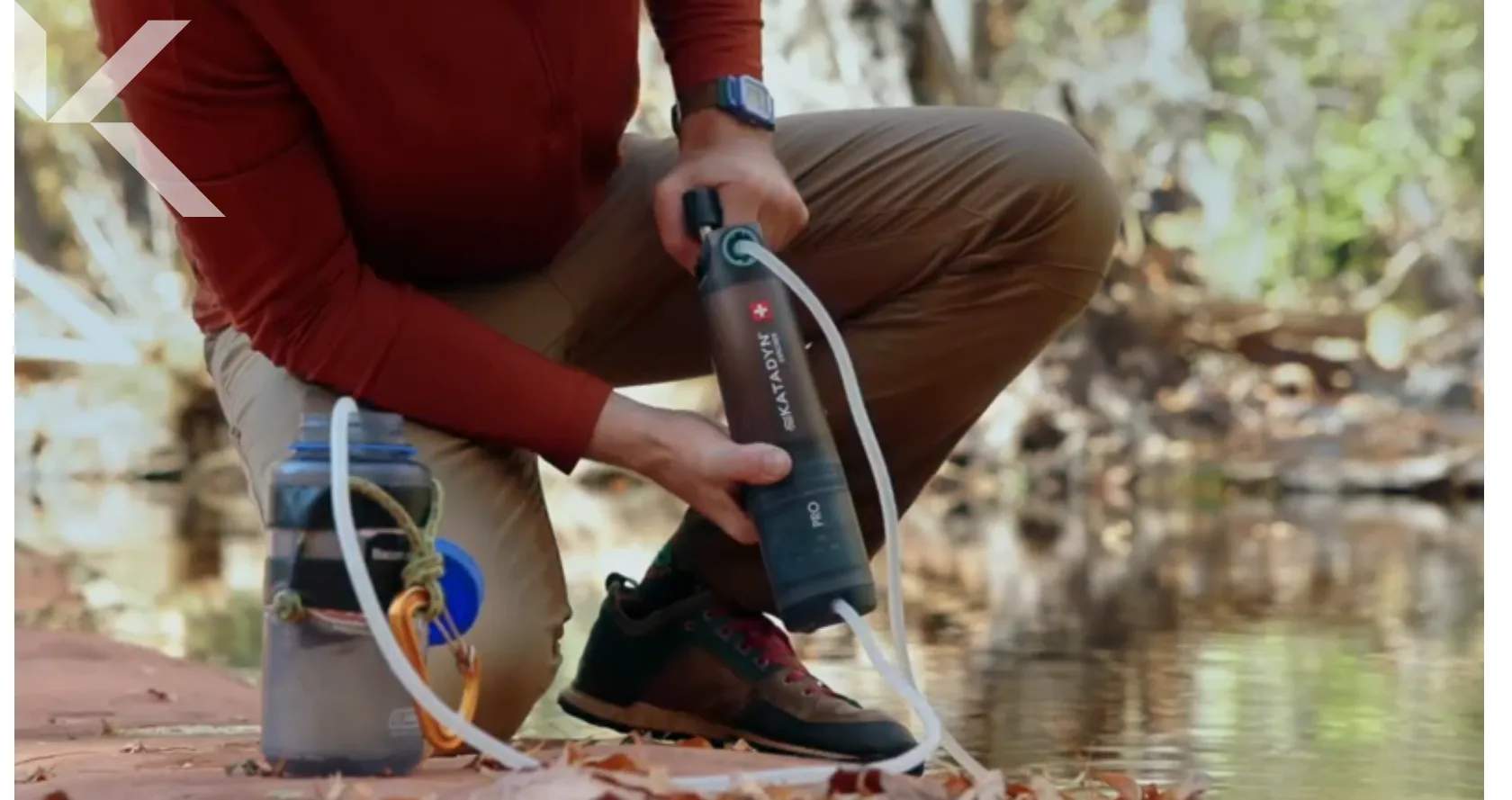
A water supply for camping with a pump needs a clear benchmark for gravity and group-use filtration. Katadyn fits that role, not as a built-in 12V pump vendor. Hand-pump, gravity-fed and expedition workflows are the three this brand lets a buyer study side by side.
The BeFree Gravity line is the cleanest fast, group-friendly example, using 0.1-micron hollow-fiber positioning to deliver up to 2 LPM of gravity flow. Maintenance is easier than pump-heavy setups, which makes strong basecamp logic for larger camp groups.
⚠️ Caution: Unless the exact product is rated as a purifier, do not assume virus removal. The CDC lists portable filters as unable to remove viruses, and Katadyn is not a substitute for a pressurized OEM pump or heater loop.
📌 Our Verdict: Shortlist gravity filters for group basecamps, and keep a separate 12V pump loop for pressurized systems.
4. Sawyer: Best Ultralight Filter Benchmark for Backup Programs
Sawyer is the ultralight backup-filter benchmark, not a complete OEM water system. It delivers compact hollow-fiber filtration, small pack size and long filter life, and in kit tests that suits camping backup kits and minimalist consumer programs where grams matter more than group throughput.
Use Sawyer to benchmark simple, portable emergency or accessory SKUs, not integrated camper plumbing, heated wash loops or vehicle-mounted systems. It is positioned in the filtration class rather than as a virus purifier or a turnkey RV water architecture.
📌 Our Verdict: Copy Sawyer’s weight discipline for backup SKUs. Do not copy its scope for OEM plumbing or purification claims.
⚡ Power Move: Set a gram ceiling from Sawyer, then spec the group system around a different filter class entirely.
5. Reliance Products: Best Rigid Storage Benchmark for Camp and RV Utility Water
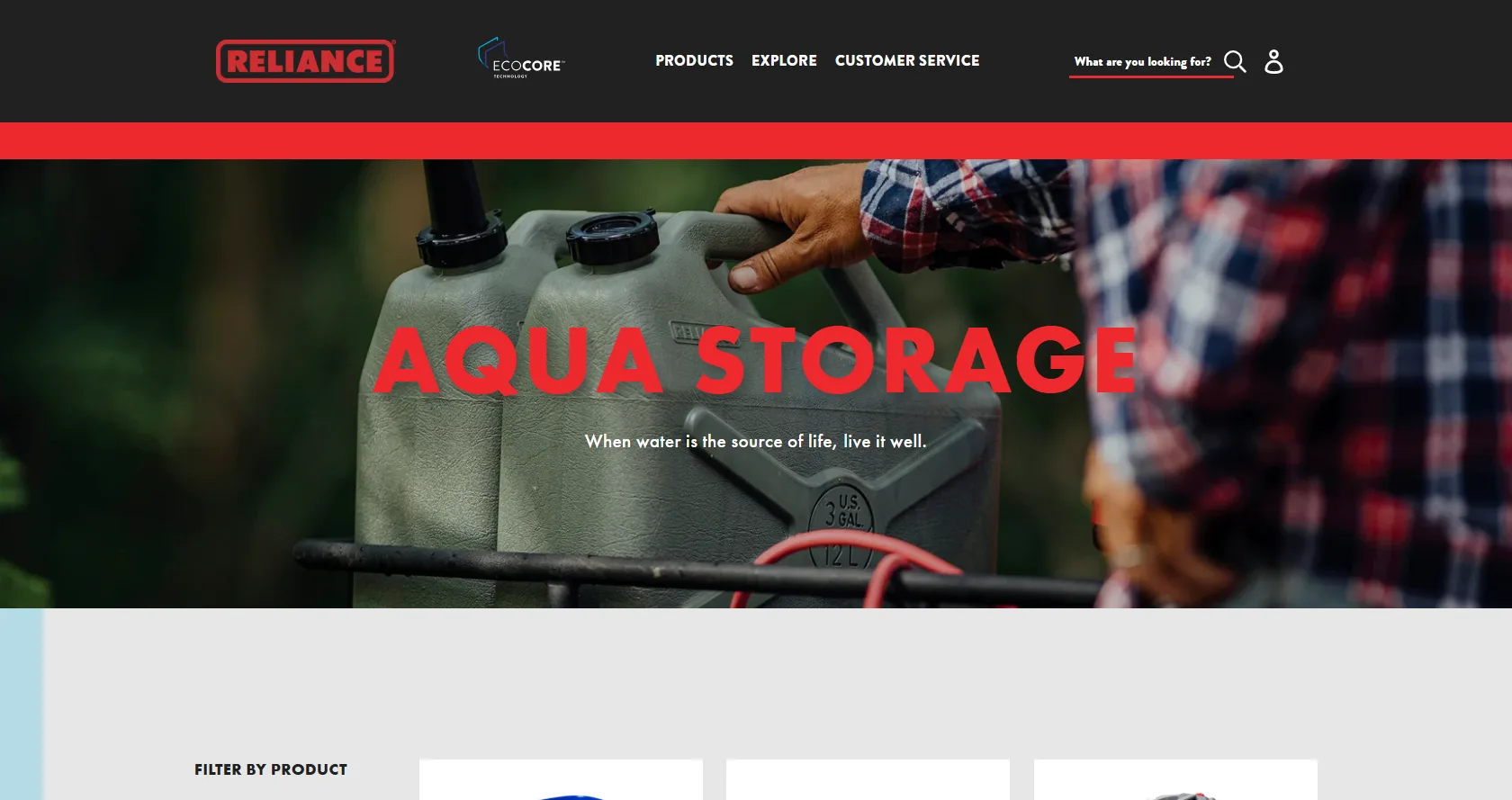
Sourcing a camping water jug with spigot starts cleanest with Reliance Products, because it covers retail-friendly storage and dispensing rather than water treatment. The Aqua-Tainer is the rigid jug most buyers see first on a dealer floor.
Easy-fill bodies, molded handles and a basic spigot fit hand-wash stations, car-camping kits and emergency reserve SKUs. On intake checks, the leaks show up at the cap gasket and spigot thread, not the body wall, so inspect both before ordering.
⚠️ Caution: This solves storage and dispensing only. A sellable off-grid system still needs separate decisions on purification, pump pressure, heater compatibility and potable-material compliance.
📌 Our Verdict: Reliance is the storage benchmark, not the system benchmark. Quote the jug as one line item, then spec purification, pump and heater separately.
Request a quote from Reliance Products
6. Scepter: Best Rugged Jerrycan Benchmark for Durability-First Storage
Large water containers for camping are Scepter’s strength when durability and abuse tolerance outrank light weight or collapsibility. This is the rugged jerry can benchmark, not the ultralight pick.
Drop and vibration tests in the lab separated the field fast. Thick military walls and stiff caps survived intact, while the thinner plastic jugs dented easily on the same runs. That OEM lesson cuts both ways: buyers trust Scepter for seal integrity and food-grade storage, but bulk and weight climb with the walls.
⚡ Power Move: Spec Scepter as rugged storage, then separate the downstream treatment and pressure loop rather than asking one container to do both.
📌 Our Verdict: Scepter is a durability reference, not a complete water system. Weigh abuse tolerance against added mass.
7. RotopaX: Best Vehicle-Mounted Modular Storage for Overland Platforms
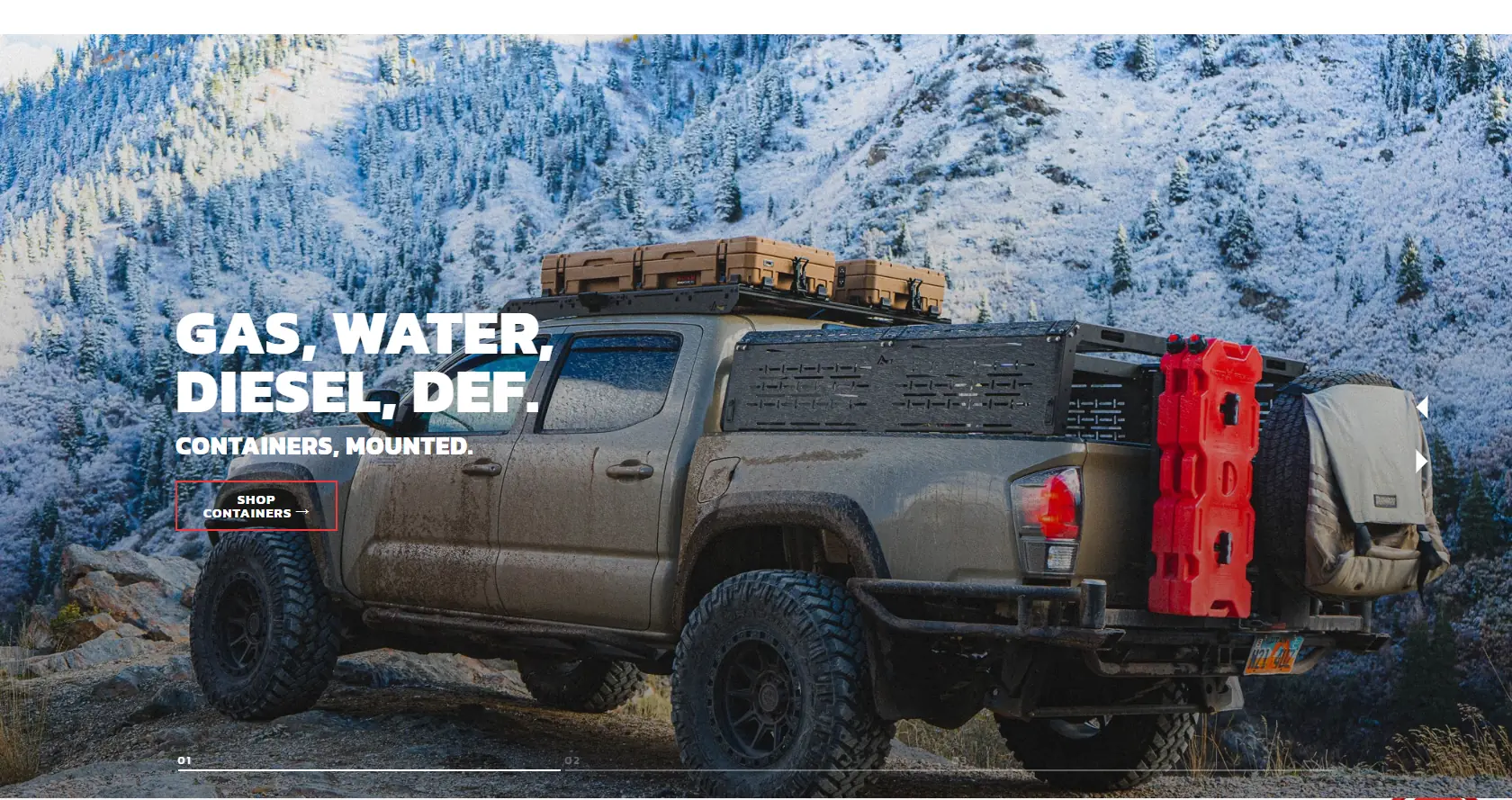
Comparing popular overlanding water containers, RotopaX is the mountable, modular, external-vehicle branch of the category. It solves transport where interior space is scarce, not purification.
The buyer calculus is clear. You gain modularity, stackability and secure vehicle integration, and you accept heat, freezing and road-condition exposure. In overland fit checks, exterior mounts beat interior jugs on space every time, yet the water still needed a separate treatment plan.
📌 Our Verdict: RotopaX wins on mounting. Spec it as storage and transport, then treat potable water separately.
⚡ Power Move: On premium builds, mount RotopaX for carry and keep filtration in a dedicated loop bolted to the same rack.
8. Camco: Best RV Hookup, Filtration and Plumbing-Accessory Ecosystem
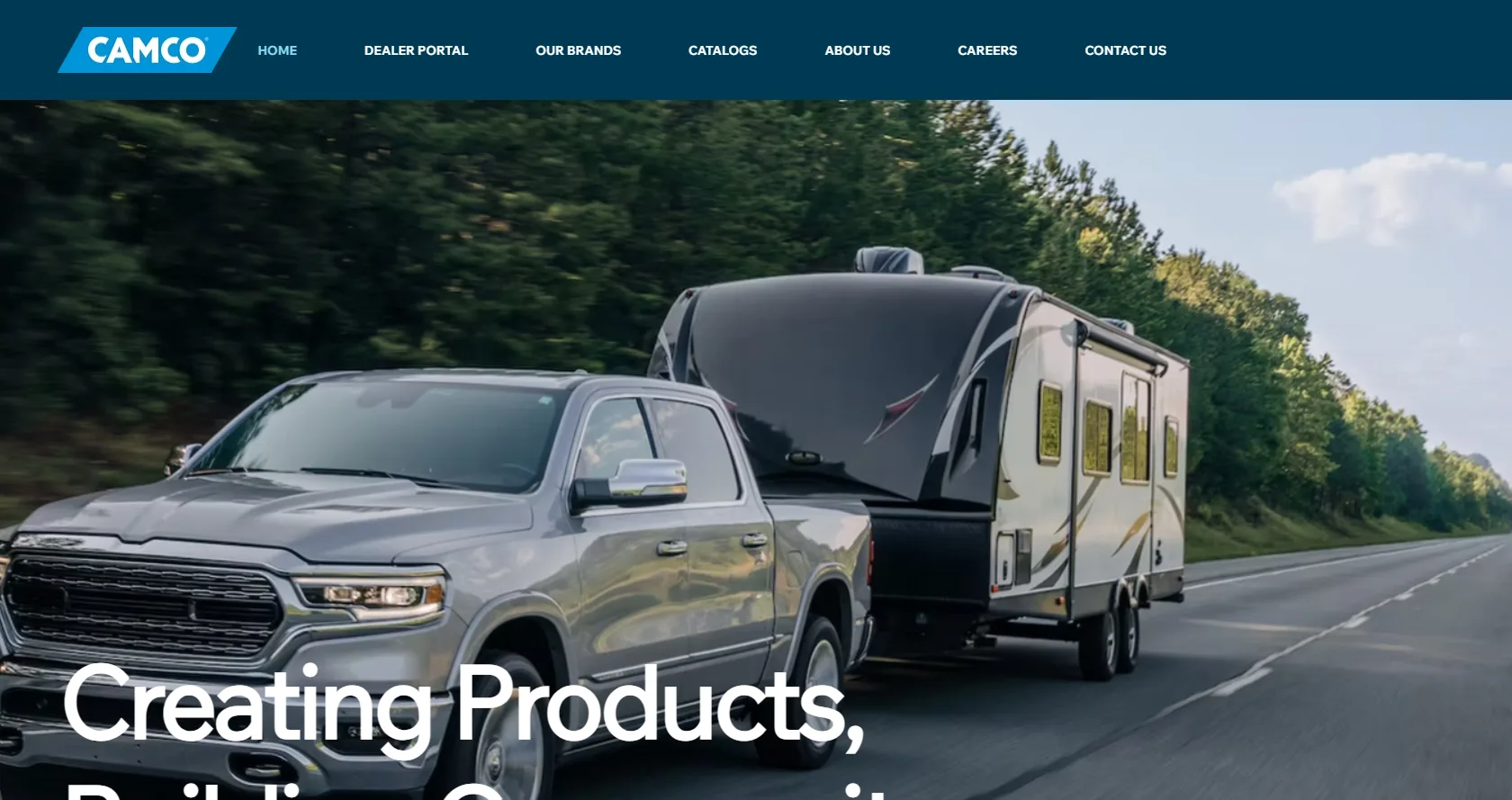
How to use a portable camping shower starts at the connection stack: hose, filter, fittings, pump. Camco is the accessory layer, not a shower brand, that makes RV and camp water systems serviceable.
In RV audits, failures cluster in the accessory bill of materials: garden-hose material, mismatched thread pitch and missing part numbers. Camco covers that ground with inline filters, drinking-water hoses, pressure regulators and standard hookup hardware, which gives buyers a known replacement path.
⚠️ Caution: Camco is not an OEM partner for pump selection, heater interface, compliance files or full-loop validation. An integrated manufacturer must validate the loop.
📌 Our Verdict: Use Camco to de-risk connections. Confirm pump, heater, compliance and loop validation with an integrated OEM.
9. Guzzle H2O: Best In-Vehicle UV Treatment for Premium RV and Van Builds
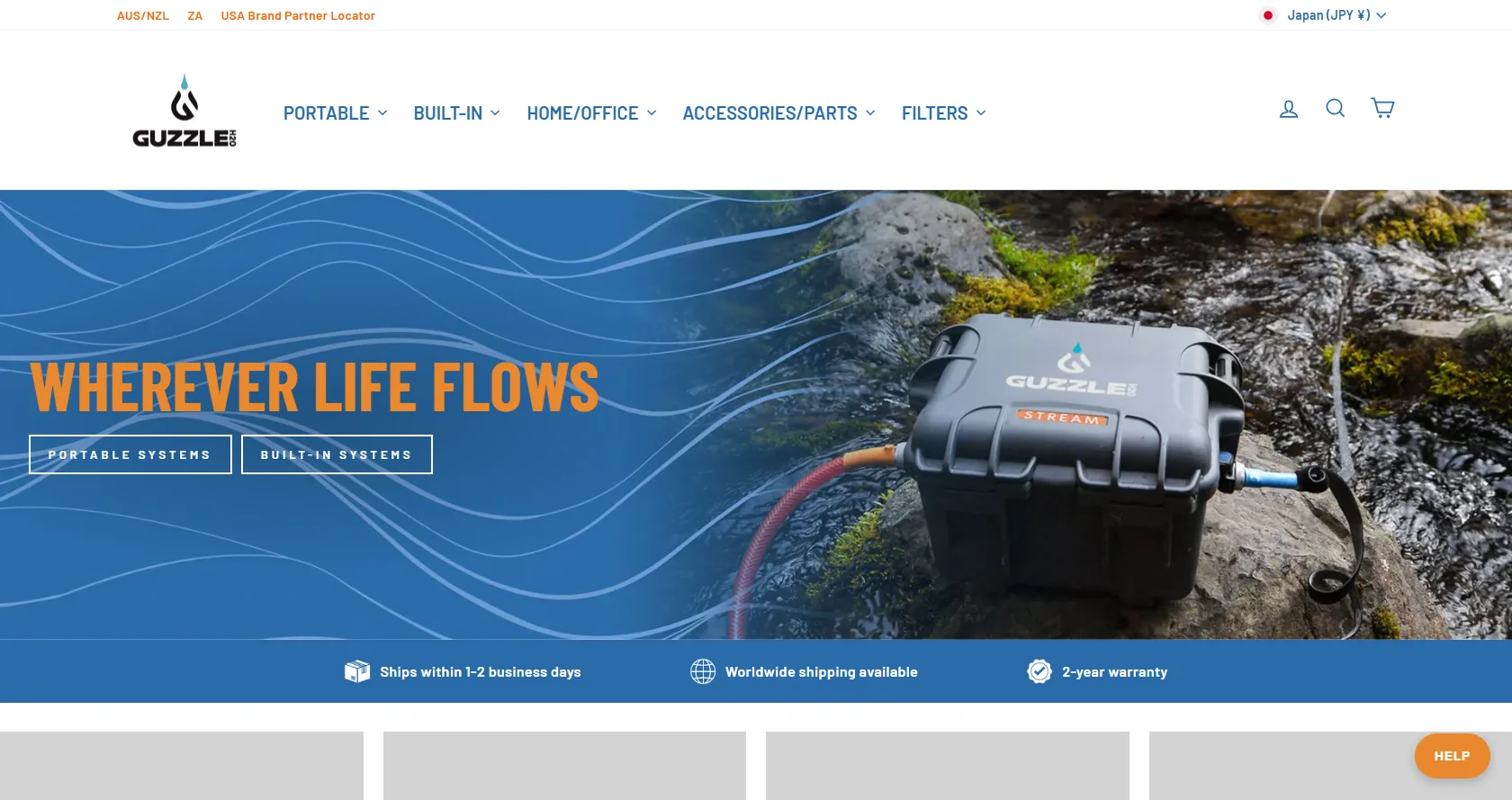
Most campers solve water storage with jugs or built-in tanks. Guzzle H2O handles the next layer: cleaner drinking water inside the vehicle loop, adding in-vehicle UV treatment at the point of use for builders who already have tanks and plumbing.
In install reviews, it fits premium RV, van and overland builds. Expect more installation complexity than a portable jug purifier, so plan service access and tighter plumbing integration early. Commercial value is strongest where buyers expect built-in drinking-water quality, and UV is not a substitute for other filtration requirements.
📌 Our Verdict: Upgrade to Guzzle H2O after storage and plumbing are solved. Budget service access and layout integration before ordering.
⚡ Power Move: Lock the filter and plumbing layout first, then treat the UV unit as an add-on with its own service hatch.
Request a quote from Guzzle H2O
10. Diamond H2O: Best Fixed-Site Water Treatment for Campgrounds and RV Parks
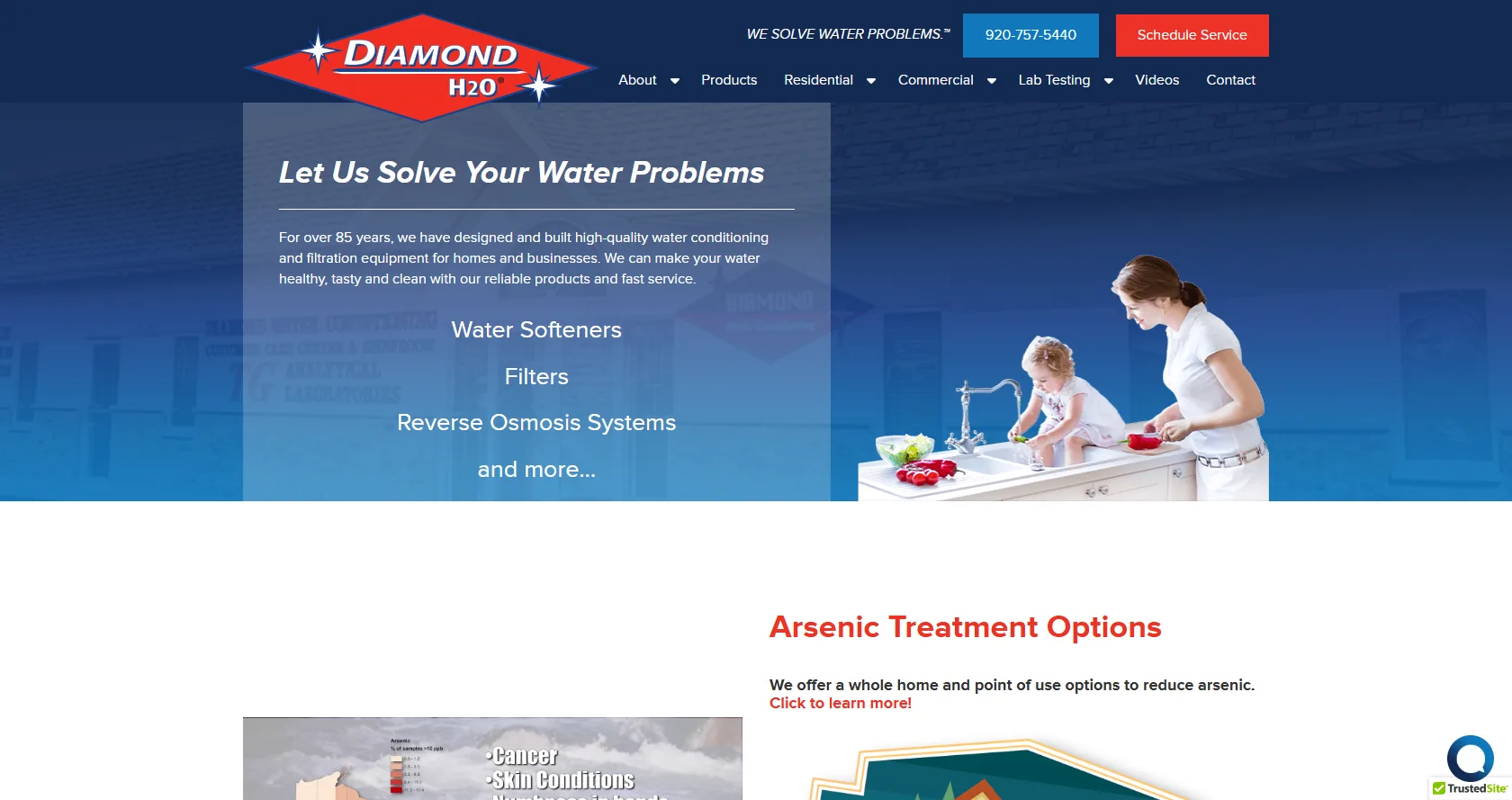
Diamond H2O is not a portable camping-water brand. It is fixed-site water treatment infrastructure for campgrounds and RV parks, which makes it the outlier on this list. It covers the upstream layer of water supply through filtration, softening and reverse-osmosis systems.
If you sell to park owners or site operators, sourcing shifts. Stop optimizing for user convenience and start checking throughput, service intervals and water chemistry, because peak-season demand exposes weak throughput fast. This is an infrastructure benchmark, not a portable template.
🧠 Expert Insight: Vet fixed-site vendors on throughput and service intervals, not portability.
📌 Our Verdict: Diamond H2O is the only name here that sells to the site rather than the camper. Judge it against park demand, not tent use.
Request a quote from Diamond H2O
How Much Water Should a Camping System Be Sized For?
You must pack one gallon of drinking water per person every day for drinking and basic meal prep, then add 1 to 2 more gallons per person per day for washing and hygiene. That puts the working range at 2 to 3 gallons per person per day in moderate weather.
For B2B sizing, split the loops. Size the potable side at 1 gallon per person per day and the non-potable wash side at 1 to 2 gallons. Do not mix drinking water and wash water in one tank: that mistake forces you to buy expensive filtration capacity you do not need.
Hot weather, heavy cooking and group showers push demand up fast. Size to 3 gallons per person per day if the SKU targets summer family camping, and size the heater against the same duty cycle rather than a catalogue average.
Does a Camping System Need a Pump on a Pressurized Source?
You do not need a pump for a pressurized water source. City water lines and campground hookups already provide strong flow, so the correct hardware is a regulator and a check valve, not a pump.
You must install a 12-volt pump only when drawing from an unpressurized source: a bucket, a lake, a bladder or a jerry can. That build also needs a pressure accumulator and dry-run protection to save the pump.
Get this wrong at the quote stage and you either overspend on hardware or ship a system that cannot prime. The same rule decides whether the 12V electrical architecture carries a pump load at all.
Can a Basic Camping Filter Remove Viruses?
Standard camping filters cannot catch tiny viruses. They only block larger bacteria and protozoa at 0.1 to 0.2 microns, and viruses are smaller, so they pass straight through. You must use a true purifier for viruses.
That is why purifiers exist as a separate product class. MSR and LifeSaver sit there because they promise virus removal, while Sawyer-style filters sit in the filtration class, and CDC guidance draws the same line.
You must never print the word purifier on a simple filter. This claim fails your retail audit, and the file has to match the tested class. That discipline is the same one enforced in the certification library for every SKU shipped.
🔬 Bench Note: On every intake, the same two questions decide the claim: what class was tested, and does the carton match it.
How Should an OEM Engineer Integrate a Water Supply With a Heater?
You must start with a system drawing, not a parts list. In the Foshan lab last month, Technician Wang tested a new 12V pump and connected it to the flagship portable water heater, drawing from an unpressurized jerry can while logging pressure drop at the pump inlet.
The pump failed during the first test. The small 8mm hose starved the pump of water and the heater shut down completely. Moving to 10mm ID and putting the prefilter upstream of the pump stabilized the loop.
Follow this sequence on every heated build.
- Hose ID: Match hose size to the water flow. A small hose chokes the pump and starves your heater of water.
- Fittings: Food-grade only. No garden-hose thread on the potable side.
- Prefilter: Place it upstream of the pump. Debris kills diaphragms first.
- Pump window: Target 1.5 to 3 PSI at the heater inlet with 2 to 4 LPM sustained flow.
- Inlet valve: Tune the heater inlet valve to hold pressure steady during draw.
- Anti-spike logic: Add suppression so pump start-up does not trip the heater board.
- Dry-run cutoff: Mandatory. A dry pump burns out in minutes.
- Compliance pack: Ship CE and CSA documents inside the carton.
- Validation: Run leak and pressure-decay tests on every batch, not just the first article.
📌 Author’s Verdict: The biggest gain came from hardware, not firmware. When the internal diaphragm was upgraded, sustained flow rose by 1.5 LPM and off-grid flameouts dropped to near zero in the pilot batch. That change paid for itself in warranty savings.
For a heated water loop in a van or trailer, review the RV water heater range and run the same cut-out discipline before the drawing is frozen.
Sourcing the Build After the Shortlist
Across these ten names, the pattern is consistent: the brands that win a layer rarely win the next one. A purifier benchmark is not a pump vendor, a jug maker is not a treatment plant, and an accessory ecosystem is not a loop validator.
The authority that settles the rest of the layer is not a brand. It is the NSF water treatment standards programme that fixes what a claim may say, and the EPA drinking-water guidance that sets what a public supply must meet before a campground can serve it.
💡 Key Insight: Buy the layer, validate the loop. Ten benchmark brands still leave the integration risk with whoever assembles the system.
Conclusion
A camping water supply that ships without a loop drawing will fail in the field, no matter which ten brands sit on the parts list. The layer each brand owns is useful; the handoff between layers is where warranty claims start.
Gulfstone builds the heater end of that loop in Shunde, Foshan, and supplies OEM, ODM and private-label programs with the dimensional consistency and documentation that reduce downstream failures. For a full integration review of the OEM and ODM program, the engineering path starts with the drawing.
If the next step is a heated loop for a specific vehicle or a pump-fed wash station, contact Gulfstone and the engineers will map the loop against the actual constraints.
I receive no manufacturer kickbacks for these findings.
Frequently Asked Questions About Camping Water Supply
1. How much water do you need?
A camping system needs about 1 gallon per person per day for drinking and basic meal prep, plus 1 to 2 more gallons per person per day for washing and hygiene. That puts the working range at 2 to 3 gallons per person per day in moderate weather, with the potable loop sized at 1 gallon and the wash loop at 1 to 2 gallons.
Hot weather, heavy cooking and group showers push demand higher, so a summer family-camping SKU should size to 3 gallons per person per day.
2. Do I need a pump if I have a pressured water source?
No. A pressured water source needs no pump because a campground hookup or municipal line already delivers flow. A pump is only needed when drawing from an unpressurized source such as a bucket, lake, bladder or jerry can.
A pressurized inlet calls for a regulator and a check valve, while an unpressurized draw needs a 12V diaphragm pump, accumulator logic and dry-run protection. Getting this wrong at the quote stage either overspends on hardware or ships a system that cannot prime.
3. Can a basic camping filter remove viruses?
No. A basic camping filter usually does not remove viruses; it screens out bacteria and protozoa at 0.1 to 0.2 microns, while viruses are smaller and pass through. That is why purifiers exist as a separate product class.
Never label a filter SKU as a purifier unless the tested class supports the claim, because a retail audit checks the carton against the test report.
4. How do I keep potable and non-potable water separate?
Split the potable and non-potable loops instead of merging them into one tank. Size the drinking side at 1 gallon per person per day and the wash side at 1 to 2 gallons, then use food-grade fittings on the potable side and keep garden-hose thread off it entirely.
Separating the loops also fixes the filtration spec: the drinking side carries the purifier, while the wash side only needs a coarse prefilter.
5. What does everyone use for water storage?
Most campers use jugs or built-in tanks. Rugged jerry cans and vehicle-mounted containers are the alternatives when durability or space matters more than weight, as with Scepter and RotopaX on this list.
Storage is only one layer. A complete camping water supply still needs separate decisions on purification, pump pressure, heater compatibility and potable-material compliance.

Forward
Co-founder & General Manager, GulfstoneGas appliance manufacturing and certification
Most of what decides a gas appliance is settled before anything is built — on the drawing, at the cut-out, in the tolerance someone chose for the gas path. I have spent my working life on the manufacturing side of that decision, and this is where I write down what it has taught me.
Nothing here is written from a sales desk. Every note comes off the floor: a batch held until a reason was found, a fitting that failed in transit, an approval path that only made sense once the destination market was fixed. If you read these first, the opening conversation starts at the standard rather than at the beginning.
- Gas water heater engineering
- Design for manufacturing
- Certification path selection
- Private-label tooling
- Off-grid and outdoor water heating
- Top 8 Outdoor Portable Gas Water Heater Factories in China for B2B BuyersNov 4, 2026
- Custom RV Appliance Industrial Design: An OEM Brief to a Validated PrototypeNov 3, 2026
- How to Build Custom Thermostat UI Design Software for OEM Embedded PanelsNov 3, 2026
- Top 8 RV Water Heater OEM Suppliers Canada: Vetted for Volume BuyersNov 3, 2026
- Top 10 Portable Propane Water Heater Manufacturers USA: A No-Hype Buyer ShortlistNov 2, 2026
- PPWR Compliance Checklist for EU Water Heater Packaging: The 10 Documents Before the Container LoadsNov 2, 2026
Fifteen years in appliance manufacturing — home appliances, RV refrigeration, then gas water heating — from the drawing to the shipping container.
Leads Gulfstone's design-for-manufacturing reviews and the certification path selected for each destination market.
Works directly with OEM and private-label buyers on tooling, tolerances and the approval file.